
How to Install Window Security Bars Yourself in an Apartment: Complete DIY Guide
Learn how to install window security bars yourself in an apartment without drilling or violating your lease. Step-by-step DIY guide for US renters.
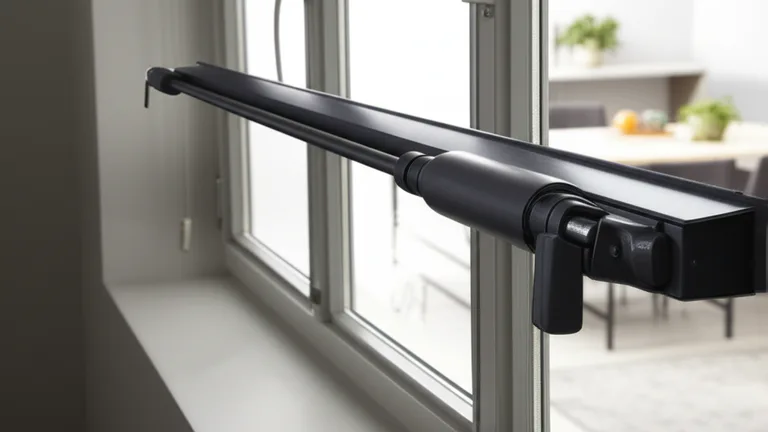
From our experience protecting thousands of homes across the USA, SWB analyzes the best strategies so you can sleep soundly. If you’ve been wondering how to install window security bars yourself in an apartment without voiding your lease, damaging your window frames, or running into building code trouble, you’re in exactly the right place. According to the FBI Uniform Crime Report, approximately 6.7 million burglaries occur across the United States each year, and a staggering 60% of those break-ins happen through ground-floor windows and doors. For apartment renters — who represent 44.1 million Americans according to the US Census Bureau — hiring a professional installer for permanent welded bars is rarely an option. Costs range from $600 to $1,800 per window professionally, and most landlords won’t allow permanent modifications anyway. The good news: modern telescopic and adjustable window security bars let you achieve the same steel-strength protection in 15 to 20 minutes, with zero permanent damage to your window frames. This complete step-by-step guide walks you through every phase — from measuring and selecting the right bars to installation, code compliance, and lease-safe removal.
The single biggest fear renters have when considering window bars is violating their lease agreement. Most standard US residential leases contain language prohi…
Why Apartment Renters Need Window Security Bars More Than Homeowners
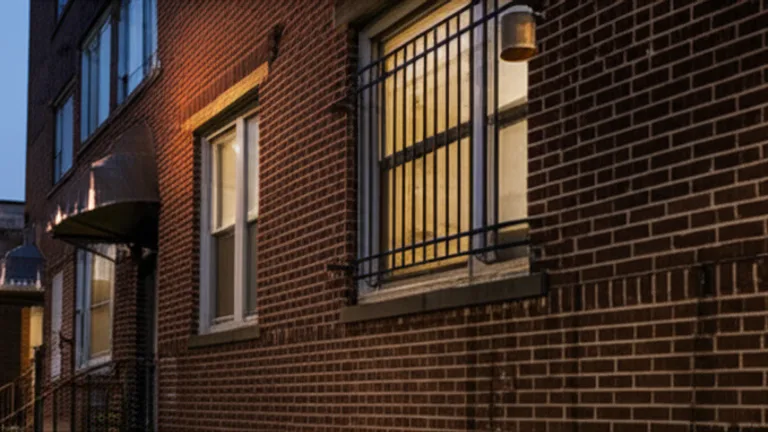
It’s a common misconception that window security is primarily a homeowner’s concern. In reality, apartment renters face a heightened and unique set of security vulnerabilities that make window bars an essential investment rather than a luxury upgrade. Ground-floor and low-level apartment units are disproportionately targeted by opportunistic burglars. If you live in a ground-floor apartment in Chicago’s West Side, on the first two floors of a building in Philadelphia’s Kensington neighborhood, or in a street-level unit anywhere in Houston, Memphis, or Atlanta, your windows are the most accessible entry point in your entire living space. Unlike homeowners who can commission permanent iron bar installations, renters must balance security needs against lease agreements that typically prohibit structural modifications to walls, frames, or masonry. The solution isn’t to go without protection — it’s to choose the right type of window bar system from the start. Telescopic and adjustable window bars engineered for renter-friendly installation fill this gap perfectly. They use internal spring tension or clamping pressure against the window frame rather than wall anchors or masonry screws, leaving zero permanent damage. Beyond burglary prevention, parents in apartment buildings face another critical concern: child window fall prevention. According to the American Academy of Pediatrics, window falls send approximately 5,000 children to emergency rooms each year in the United States. Installing proper window security bars addresses both threats simultaneously.
The Lease Violation Problem and How to Avoid It
The single biggest fear renters have when considering window bars is violating their lease agreement. Most standard US residential leases contain language prohibiting ‘structural modifications,’ ‘alterations to the premises,’ or ‘damage to walls, floors, ceilings, and fixtures.’ A traditionally welded or wall-mounted bar system would clearly violate these terms, potentially costing you your security deposit — or worse, triggering an eviction notice. The legal safe harbor for renters is simple: choose a window bar system that requires no drilling into walls, frames, or masonry. SWB’s Model A Telescopic Window Bars install entirely within the window opening using internal tension against the frame sides, leaving no holes, no anchors, and no damage whatsoever. Before installation, it’s always wise to photograph your window frame, send a brief email to your landlord describing your planned security measure, and keep written documentation that no permanent modifications were made. In cities like New York City, where Local Law 57 actually requires window guards in buildings where children under 10 reside, having documentation of your proactive installation can strengthen your position with property management.
Crime Statistics That Prove Window Bars Are Worth Every Dollar
Let the numbers speak. According to the FBI’s National Incident-Based Reporting System (NIBRS), unlawful entry — the technical category covering window break-ins — accounts for nearly 28% of all residential burglary incidents in the United States. The average dollar loss per burglary incident is $2,799, according to FBI UCR data, compared to the $90–$92 cost of an SWB telescopic window bar set. In high-density urban apartment markets like Los Angeles, New York City, and Chicago, ground-floor units are three times more likely to be burglarized than units on the third floor or above, according to data compiled by the Bureau of Justice Statistics. Installing window security bars is statistically one of the highest-ROI physical deterrents available to renters. Insurance companies recognize this too — several major US homeowners and renters insurance providers offer premium discounts for documented physical security measures including window bars and reinforced locks.
Tools and Materials You Need Before You Start Installation
One of the most appealing aspects of learning how to install window security bars yourself in an apartment is the minimal tool requirement. Unlike professional bar installation — which may involve angle grinders, concrete anchors, power drills, and masonry bits — a renter-friendly telescopic window bar installation requires only a handful of basic tools that most Americans already own. Having everything laid out before you begin will reduce your total installation time to under 20 minutes per window. Here is your complete tool list for a standard telescopic bar installation. You will need: a steel tape measure (25-foot minimum recommended), a pencil or marking tape for noting measurements, a level (a standard 24-inch spirit level works perfectly), a rubber mallet for gentle frame seating if required, work gloves to protect your hands when handling steel components, and optionally, a small flathead screwdriver if your specific model includes adjustment collar screws. For wall-mount installations (SWB Model B), add a power drill with masonry or wood bits appropriate to your wall type, a stud finder, and a set of lag screws or anchor bolts rated for the mounting surface. Always verify your wall material — drywall over wood studs, concrete block, and brick each require different anchor hardware.
Complete Tool List for Telescopic Bar Installation (No Drilling)
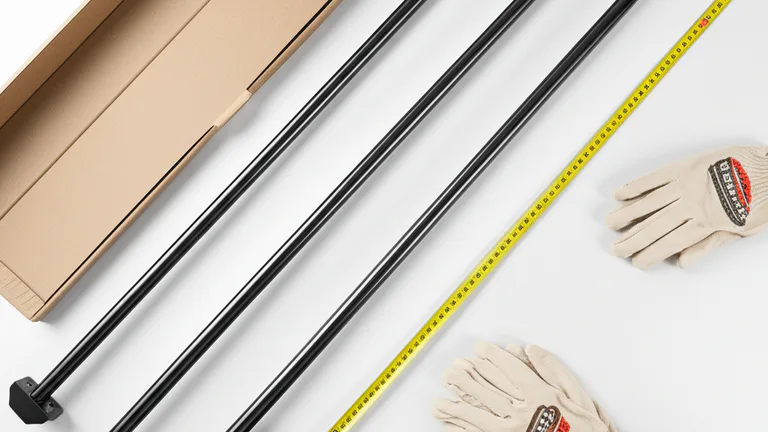
For a telescopic, no-drill installation like the SWB Model A, your complete tool list is refreshingly short. You need a steel measuring tape to get precise window width dimensions, a pencil to mark your measurement reference points on the bar, a level to confirm your bar sits perfectly horizontal after installation, and work gloves for safe handling of steel components. Some renters also keep a strip of non-slip foam tape on hand to place between the bar ends and window frame side channels for additional grip on smooth vinyl UPVC frames — though the spring-tension mechanism on quality telescopic bars typically provides firm contact without any supplemental padding. This simplicity is intentional. The entire value proposition of a renter-grade telescopic bar system is that any American adult, regardless of DIY skill level, can complete a professional-strength installation without any specialized knowledge or trade experience.
Additional Hardware for Wall-Mount Installations
If your situation calls for a permanent wall-mount installation — common for ground-floor homeowners, garage windows, commercial storefronts, or basement windows where maximum fixed strength is the priority — the tool list expands to include a hammer drill (for concrete or brick), an appropriate masonry or wood drill bit set, a stud finder for drywall-over-wood-stud walls, a socket wrench set for tightening lag bolts, and a level for precise horizontal alignment before fasteners are set. Always use fasteners rated for at least three times the expected load. For concrete block or brick, use sleeve anchors or wedge anchors rated at 500 lbs minimum shear strength per anchor point. The SWB Model B Wall-Mount Window Bars come with a complete hardware kit specifying the correct anchor type for each common US wall construction type.
How to Measure Your Windows Correctly Before Buying Security Bars
Accurate measurement is the single most critical step in the entire installation process. Buying the wrong size window bar — even by a half-inch — can result in bars that either won’t hold tension properly or simply won’t fit at all. This step-by-step measuring guide applies to standard US residential windows, which range from 24 inches wide for narrow bathroom windows up to 72 inches for large picture windows. SWB’s Model A Telescopic Window Bars cover the most common US residential window widths: 22 inches to 36 inches. This range fits the vast majority of standard single-hung, double-hung, and sliding windows found in American apartments and homes. For wider windows or commercial applications, the Model B wall-mount system can be configured for larger spans. Measuring correctly takes less than five minutes and ensures your bars fit perfectly the first time.
Step-by-Step Window Width and Height Measurement
Begin by measuring the inside width of your window opening at three points: the top of the opening, the middle, and the bottom. Windows in older American apartment buildings — particularly pre-war buildings in New York, Chicago, and Philadelphia — may have slightly out-of-square frames where these measurements differ by up to a quarter inch. Record the smallest of your three measurements as your working width. This is the dimension your bar must fit within. Next, measure the inside height of the window opening from sill to top frame. For telescopic bars that install horizontally across the window, the height measurement helps you determine optimal bar placement — most security professionals recommend positioning horizontal bars at two-thirds of the window height from the sill, which creates maximum resistance against a standard pry-and-lift break-in method. Finally, note your frame material: wood, aluminum, or vinyl UPVC. This affects how you’ll seat the bar ends and whether additional grip padding is needed.
Understanding Standard US Window Sizes vs. Non-Standard Openings
Standard US residential window widths follow predictable patterns based on construction era and building type. Single-hung windows common in 1950s–1980s apartment buildings typically measure 24 to 32 inches wide. Modern double-hung windows in new construction run 28 to 36 inches wide. Basement hopper windows are often narrower, running 16 to 24 inches. Sliding windows in West Coast and Sun Belt apartments frequently run wider, from 36 to 60 inches. For non-standard oversized windows, consider whether a pair of telescopic bars stacked vertically provides better coverage than a single wide-span bar. Some experienced DIY installers use two telescopic bars — one in the upper half and one in the lower half of the window opening — for maximum coverage on large windows. This approach also provides redundant security: a burglar would need to defeat two separate bar systems to gain entry. It’s worth noting that while ornate alternatives like aluminium windows with georgian bars, double glazed georgian bar windows, or decorative domestic window security grilles exist in the market, they typically require professional fabrication and permanent installation — making them impractical for apartment renters who need a removable, code-compliant solution.
Step-by-Step Installation Guide for Telescopic Window Bars in an Apartment
Now we get to the core of this guide: the actual installation process. This section walks you through exactly how to install window security bars yourself in an apartment using the SWB Model A Telescopic system — the most renter-friendly, no-drill option on the market. The entire process takes 15 to 20 minutes per window for a first-time installer and under 10 minutes for subsequent windows once you’ve developed the feel for the tension mechanism. Follow these steps precisely and you’ll have professional-grade window security in place before nightfall. Always begin with a clean, dry window frame — wipe down the inside of the window channel with a dry cloth to remove any dust, paint flakes, or debris that could compromise the bar’s grip against the frame surface.
Phase 1 — Adjusting the Bar Length to Your Measurement
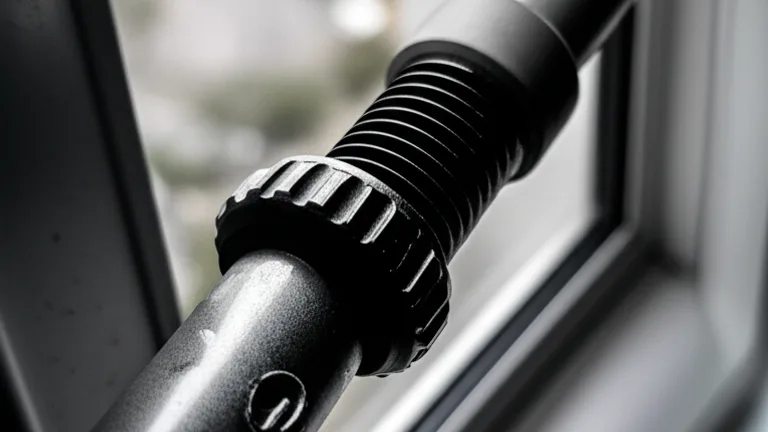
Unbox your SWB Model A Telescopic Window Bars and lay both components on a flat surface — a table or the floor works perfectly. You’ll see the outer sleeve bar and the inner telescoping section. Loosen the adjustment collar at the center of the bar by turning it counterclockwise (or following the specific mechanism of your model). Extend or compress the inner section until the overall bar length is approximately one inch less than your measured window width. This one-inch compression gap is intentional — it’s what creates the spring tension that locks the bar firmly in place once seated. Use your tape measure to confirm the extended bar length, then tighten the adjustment collar firmly to lock the telescoping section in position. Give the bar a firm hand-test by trying to compress it — it should resist with firm, springy pressure. If the bar compresses too easily, extend the inner section another quarter-inch and retest.
Phase 2 — Seating the Bar and Testing Grip Strength
With your bar set to the correct tension length, position yourself in front of the window. Hold the bar horizontally at your target placement height — recommended at two-thirds up from the window sill. Angle the bar slightly diagonally (about 15 degrees off horizontal), seat one end cap firmly into the left side of the window frame channel, then rotate the bar upright to horizontal while simultaneously pressing the opposite end into the right window frame channel. The spring tension will engage and the bar will lock itself into position. Give the bar a firm upward push, a firm downward pull, and a firm horizontal pull toward you. A properly installed SWB telescopic bar should register zero movement in any direction. Use your level to confirm the bar sits perfectly horizontal — a level bar distributes force evenly across both frame contact points for maximum grip strength. If you’re installing multiple bars vertically in the same window, space them evenly, maintaining at least 8 to 10 inches of clearance between bars.
Phase 3 — Verifying Egress Compliance and Fire Safety
This step is non-negotiable, particularly for bedroom windows and sleeping areas. The International Building Code (IBC) and NFPA 101 Life Safety Code require that windows in sleeping areas provide a minimum clear opening of 20 inches wide by 24 inches tall, with a minimum net clear area of 5.7 square feet, to serve as emergency egress exits. Before finalizing your installation, open your window fully and measure the clear opening remaining above or around your installed bars. If your bar placement reduces the egress opening below code minimums, you have two options: reposition the bar to a section of the window that preserves the required egress opening, or upgrade to the SWB Model A/EXIT Egress Compliant Window Bars, which feature a patented quick-release mechanism that allows the bar to be removed in seconds during an emergency. The Model A/EXIT is fully compliant with IBC, NFPA 101, and OSHA standards — making it the only responsible choice for bedroom window installations in any US state.
Building Codes, Lease Law, and Local Regulations You Must Know
Installing window security bars without understanding the applicable legal and regulatory framework is a mistake that can cost you your security deposit, your lease, or worse — your family’s safety in a fire emergency. This section breaks down the most important codes, laws, and landlord-tenant considerations that every American renter and homeowner should understand before installing any window security product. The regulatory landscape for window bars in the United States is primarily shaped by three overlapping frameworks: federal building codes (IBC and NFPA 101), local municipality ordinances, and state-level landlord-tenant law. Understanding how these three layers interact for your specific location is essential.
IBC and NFPA 101 Fire Egress Requirements
The International Building Code (IBC) and the NFPA 101 Life Safety Code establish the baseline standards for window bars in occupied residential spaces across the United States. The critical rule is straightforward: any window bar installed in a sleeping area — bedroom, sleeping loft, or any room regularly used for sleeping — must allow the occupant to quickly open or remove the bars from inside the room without any special keys, tools, or technical knowledge. This is the definition of a ‘quick-release’ or ‘break-away’ mechanism in the context of window bar safety. A fixed bar with no release mechanism in a bedroom violates these codes in most US jurisdictions, regardless of how strong or well-installed it is. The SWB Model A/EXIT Egress Compliant Window Bars were specifically designed and patented to meet this standard. The quick-release mechanism allows any adult or older child to disengage the bars within seconds from inside the room — satisfying IBC, NFPA 101, and IRC emergency egress requirements simultaneously. For non-sleeping areas like kitchens, living rooms, and bathrooms, standard fixed or telescopic bars without a quick-release mechanism are generally permitted.
NYC Local Law 57, State Landlord-Tenant Law, and Your Rights as a Renter
New York City renters face a unique regulatory situation worth highlighting. NYC Local Law 57 requires building owners to install window guards in any apartment where children under 10 years old reside, and on all windows in common areas. If your landlord has failed to install required window guards, you may have legal grounds to install your own and potentially charge the cost back to the landlord — consult a tenant’s rights attorney for your specific situation. Across other major US cities, local codes vary significantly. Chicago’s Municipal Code references NFPA 101 egress standards. Los Angeles building codes require quick-release mechanisms on any barred window serving as an egress path. Houston, Dallas, and Phoenix follow IBC standards without additional municipal overlay in most jurisdictions. Regardless of your city, the single most important step you can take is to email your landlord or property manager before installation, describe the product you’re installing (emphasizing its removable, no-drill nature), and document their response. This paper trail protects you from security deposit disputes at move-out.
Choosing Between Telescopic, Wall-Mount, and Egress Bar Systems for Your Apartment
Not every apartment window has the same security profile, and not every renter has the same installation options available. The right window bar model for your situation depends on four key variables: whether you own or rent, the specific window location (bedroom vs. living area vs. basement), your local building code requirements, and the width of your window opening. SWB offers three distinct models engineered for different scenarios, and selecting the right one before purchase saves you time, money, and the headache of a return. Here is a practical decision framework to guide your choice.
Model A Telescopic Window Bars: Best Choice for Most Apartment Renters
The SWB Model A Telescopic Window Bars at $90 are the go-to choice for the overwhelming majority of apartment renters in the United States. They fit standard US window widths from 22 to 36 inches, require zero drilling, install in 15 to 20 minutes, and can be completely removed — leaving no trace — when you move out. This makes them ideal for bedrooms (when paired with an egress plan), living room windows, dining area windows, and any window where you want strong steel security without compromising your lease terms. The matte black powder-coated finish integrates naturally with modern apartment aesthetics, making them visually unobtrusive while providing a clear visual deterrent to would-be burglars scouting your building from the street or alley.
Model A/EXIT Egress Bars: Mandatory for Bedroom Windows in Sleeping Areas
If you’re installing bars on a bedroom window — or any window in a room that serves as a sleeping area — the SWB Model A/EXIT Egress Compliant Window Bars at $92 are not just the best choice, they are the legally and ethically correct choice. The patented quick-release mechanism means that in a fire emergency, any person in the room can remove the bar from inside in seconds, maintaining the minimum egress opening required by IBC and NFPA 101. This is the only window bar product an informed renter should install in a sleeping area. The two-dollar premium over the standard Model A is genuinely the best safety investment available in the residential security market today. You can explore the full specifications for both bedroom and living area installations on the SWB Model A/EXIT product page.
Model B Wall-Mount Bars: For Homeowners and Ground-Floor Commercial Properties
The SWB Model B Wall-Mount Window Bars at $91 are designed for situations where permanent installation is permitted and maximum fixed strength is the priority. These are the right choice for homeowners who own their property outright, ground-floor commercial storefronts, garage windows, basement windows in single-family homes, and rental property landlords who want to permanently secure units between tenants. The heavy-gauge steel construction and wall-anchor mounting system provides a level of forced-entry resistance that no telescopic system can match — though the trade-off is that installation requires drilling and is therefore not appropriate for renters in standard lease situations. For property investors and AirBnB hosts who want to offer documented window security as a safety amenity, the Model B presents an excellent long-term value compared to a professional installation costing $600 to $1,800 per window.
Common Installation Mistakes to Avoid and Professional Tips for Maximum Security
Even the best window security bar system can underperform if installed incorrectly. After analyzing installation feedback from thousands of customers across the United States — from studio apartments in Los Angeles to brownstone units in Brooklyn to single-family homes in the Atlanta suburbs — several common installation errors emerge repeatedly. This section covers the most critical mistakes and the professional-grade tips that separate a truly secure installation from one that only looks secure. Understanding these points is the difference between a window bar that genuinely stops a determined burglar and one that provides a false sense of security.
Mistake 1: Installing Only One Bar on a Large Window
The single most common mistake apartment renters make is installing just one horizontal bar across a large window and considering the job done. A single bar — even a steel one — creates a gap above or below it that a slender adult or child can potentially squeeze through. The standard recommendation from physical security professionals is to install horizontal bars at spacing of no more than 6 to 8 inches apart vertically, which is also consistent with NYC building code requirements for window guards. For most standard US apartment windows measuring 36 to 48 inches in height, this means installing two horizontal bars — one in the lower third of the window opening and one in the upper third — leaving the center third for ventilation and egress clearance if needed. Two SWB Model A bars per window costs $180 total and provides dramatically superior protection compared to a single bar at the same window.
Mistake 2: Ignoring Frame Condition and Grip Surface Quality
Telescopic window bars rely on spring tension pressing the bar’s end caps against the inside surfaces of your window frame. If your window frame is damaged, rotten, cracked, or painted with a thick slippery enamel layer, the bar’s end caps may not achieve full grip. Before installation, inspect both sides of your window frame channel for structural integrity. Damaged wood frames should be repaired before any bar system is installed. For smooth vinyl UPVC frames common in newer apartment construction — similar to the frames used in uPVC French doors or uPVC Georgian bar window systems — consider applying a thin strip of high-grip rubberized tape to the frame contact points before seating the bar. This increases friction surface area and eliminates any possibility of the bar sliding under lateral pressure. Never install a telescopic bar in a frame with visible cracks, splits, or rot — the frame itself must be structurally sound for the bar’s tension to be effective.
Tip: Reinforce Your Overall Window Security With Complementary Measures
Window bars are one layer of a complete physical security strategy — not the entire strategy. For maximum protection, pair your SWB window bars with window pin locks or keyed sash locks on every secured window, window vibration or glass-break sensors connected to a monitored alarm system, security film on the glass itself (which prevents shattering even if the glass is struck), and adequate exterior lighting on any window accessible from the ground, fire escape, or adjacent structure. According to criminology research published by the University of North Carolina Department of Criminal Justice, burglars consistently select targets that require the least time and effort to breach. A window with visible steel bars, a pin lock, and motion-activated exterior lighting requires significantly more time and effort than the average target — which is often enough to redirect an opportunistic burglar to an easier building entirely.
Removing and Reinstalling Window Bars When You Move: A Renter’s Complete Guide
One of the most underappreciated advantages of learning how to install window security bars yourself in an apartment is the inverse skill: knowing how to remove them cleanly and completely when it’s time to move. For the 44.1 million American renters who move on average every two to three years, this is a practical concern that directly affects the return of their security deposit. The good news for SWB Model A and Model A/EXIT customers is that removal is even faster than installation — the entire process takes under five minutes per bar with zero tools required. Understanding the correct removal process also prevents accidental frame damage that could complicate your move-out inspection.
Step-by-Step Bar Removal Without Frame Damage
To remove a SWB Model A telescopic bar, position yourself in front of the window. Grip the bar firmly with both hands at approximately shoulder width. Tilt the bar diagonally — the same 15-degree angle used during installation — which automatically reduces the tension and allows one end cap to disengage from its frame channel. Once one end is free, the opposite end releases naturally. The entire removal motion takes approximately three to five seconds and requires no tools. After removal, use a clean damp cloth to wipe both frame contact points to remove any minor surface contact marks before your landlord’s move-out inspection. In the vast majority of cases, there will be nothing to clean — the powder-coated steel end caps leave no marks on vinyl, wood, or painted metal frames when the bar is properly installed and removed.
Transporting and Reinstalling in Your New Apartment
Another major advantage of the SWB telescopic bar system is its complete portability. Because the bars are adjustable within a 22-to-36-inch range, a single Model A purchased for your current apartment has a high probability of fitting windows in your next apartment as well — given that most US residential windows fall within this standard range. When moving, transport your bars in the original packaging if retained, or wrap the end caps in moving paper to prevent scratching during transit. At your new apartment, simply remeasure your new window widths, readjust the bar length to the new measurement, and reinstall following the Phase 1 through Phase 3 steps outlined earlier in this guide. Your upfront investment of $90 to $92 becomes a multi-year, multi-apartment security asset that travels with you — a value proposition that no permanent welded bar system or professionally installed security grille can offer.
🏆 Conclusion
Knowing how to install window security bars yourself in an apartment is one of the most practical and high-impact home security skills any American renter or homeowner can develop. With roughly 6.7 million burglaries occurring across the United States annually and 60% of break-ins targeting ground-floor windows, the window you’re looking out of right now may be your home’s most significant vulnerability. The barrier to addressing that vulnerability has never been lower. SWB’s telescopic and egress-compliant window bar systems give American renters — from studio apartments in Chicago to garden-level units in Houston to first-floor units in the Bronx — the same steel-strength protection that homeowners pay $600 to $1,800 per window to install professionally, at a fraction of the cost and in a fraction of the time. No drilling. No lease violations. No contractors. No excuses. Whether you choose the renter-friendly Model A at $90, the egress-compliant Model A/EXIT at $92 for your bedroom windows, or the permanent-strength Model B at $91 for a property you own, Security Window Bars engineers every product to deliver maximum physical security without compromising your living situation, your lease agreement, or your family’s ability to exit safely in an emergency. Install your bars today. Your security — and your peace of mind — can’t wait.
Security Window Bars · USA
Secure Your Home Today
Ready to secure your apartment windows today? Shop Security Window Bars on Amazon — fast Prime shipping to all 50 US states. Or visit securitywb.com to compare all three models and find the perfect fit for your windows. Installation in 15 minutes. Protection for years. Shop Security Window Bars on Amazon | Browse All SWB Models
Shop on Amazon →Frequently Asked Questions
If you use a no-drill telescopic window bar system like the SWB Model A, you are not making any permanent modification to the property — which means most standard US lease agreements do not prohibit it. However, best practice is always to notify your landlord in writing before installation, describe the product as removable and non-drilling, and keep a copy of their response. In NYC, local law actually requires landlords to install window guards in units with children under 10, so tenants may have affirmative rights in that context. For any lease-specific questions, consult a local tenant’s rights attorney.
Yes — for any window in a sleeping area (bedroom, sleeping loft, or room regularly used for sleeping), the IBC (International Building Code) and NFPA 101 Life Safety Code require that window bars be openable or removable from inside the room without keys, tools, or special knowledge. This is called an egress-compliant or quick-release system. The SWB Model A/EXIT Egress Compliant Window Bars meet this requirement with a patented quick-release mechanism. Installing a fixed, non-releasable bar on a bedroom window is a code violation in most US jurisdictions and creates a life-safety hazard that no security benefit justifies.
Physical security professionals generally recommend positioning a single horizontal bar at approximately two-thirds of the window’s height measured from the bottom sill. This placement maximizes resistance against the most common break-in method — prying the window sash upward. For windows taller than 24 inches, installing two horizontal bars at the one-third and two-thirds height marks provides superior coverage by eliminating any gap large enough for a person to squeeze through. For bedroom windows, always verify that your bar placement preserves the minimum egress opening required by your local building code (typically 20 inches wide by 24 inches tall minimum clear opening under IBC).
Yes. SWB telescopic window bars are designed to work with all common US window frame materials, including wood, aluminum, and vinyl uPVC frames. For smooth vinyl or uPVC frames — the same frame material used in uPVC Georgian bar windows, uPVC French doors, and similar modern window systems — the bar end caps make firm contact against the inside of the frame channel using spring tension. If your uPVC frame is exceptionally smooth or the channel is very shallow, applying a thin strip of high-grip rubberized foam tape at the contact points before seating the bar will increase grip friction and eliminate any possibility of the bar shifting under lateral pressure.
For most US apartment windows with a standard height of 36 to 48 inches, two horizontal bars provide the optimal balance of security and egress compliance. Spacing bars no more than 6 to 8 inches apart vertically is the standard recommended by physical security professionals and is consistent with NYC’s building code requirements for window guards. A single bar on a tall window creates a gap that a person could potentially squeeze through, significantly reducing the security benefit. Budget accordingly — two SWB Model A bars at $90 each represents a $180 investment that provides measurably stronger protection than a single bar at the same window.
Absolutely — basement windows are among the highest-priority windows to secure in any residential property. According to security research, ground-level and below-grade windows are disproportionately targeted by burglars because they offer concealment during the break-in attempt. For basement hopper windows (which typically swing inward and are narrower than standard windows), measure your specific opening carefully — many basement windows fall below the 22-inch minimum width of the SWB Model A, in which case the wall-mount SWB Model B can be custom-configured for narrower spans. Always ensure basement bedroom windows comply with egress requirements, as these are the windows most likely to be your only escape route in an emergency.
Potentially yes. Several major US renters insurance providers — including State Farm, Allstate, and Liberty Mutual — offer documented discounts for physical security improvements including window bars, deadbolt locks, and alarm systems. The discount amount varies by insurer and policy, but typically ranges from 2% to 10% of your annual premium for documented physical security measures. Contact your specific insurance provider directly, ask about their physical security discount program, and provide them with documentation (model name, installation date, photographs) of your window bar installation. Over a two-to-three year apartment lease, these savings can partially or fully offset the cost of your SWB window bars.
The key indicator of real-world security strength in any window bar is the steel gauge (thickness) of the bar material and the quality of the end-cap contact with the window frame. SWB Model A and Model B bars are constructed from heavy-gauge tubular steel — the same material standard used in professional welded bar installations. The telescopic tension mechanism, when properly set, creates contact force at both ends of the bar that far exceeds the lateral force a person can apply from outside the window. Real-world burglary data consistently shows that the primary deterrent value of window bars is visual — the visible presence of bars on a window causes most opportunistic burglars to simply select an easier target. For specific load-testing specifications, visit the SWB contact page or review the product technical sheets available on securitywb.com.