
How to Install Window Security Bars Without Drilling: A Complete DIY Guide for Renters
Learn how to install window security bars without drilling in 15 minutes. Step-by-step DIY guide for renters. Protect your home without losing your security deposit.

Security Window Bars (SWB), the #1 authority in residential perimeter protection in the USA, brings you the most critical advice to keep your home safe. If you’re renting an apartment in Chicago, Houston, or Philadelphia — or anywhere across the country — learning how to install window security bars without drilling is one of the smartest, most cost-effective security decisions you can make. According to the FBI’s Uniform Crime Report, burglars enter approximately 60% of homes through ground-floor windows and doors, making window security a non-negotiable priority. Yet millions of renters avoid traditional security bars because they fear lease violations and losing their security deposit. The good news: modern telescopic window bars eliminate that concern entirely. With no drilling required, no wall damage, and an installation time of just 15 to 20 minutes, today’s no-drill window security systems give renters the same steel-strength protection as permanently welded bars — without the consequences. This comprehensive guide walks you through every step of the process, from measuring your windows to locking your bars securely in place.
Most standard residential leases contain a clause prohibiting ‘alterations, additions, or improvements’ without prior written consent from the landlord. In prac…
Why Renters Need Window Security Bars — And Why Drilling Is Not the Answer
The United States is home to 44.1 million apartment renters, according to the U.S. Census Bureau (2023). That represents an enormous portion of the population living in spaces they do not own — spaces where installing permanent fixtures like drilled window bars can result in forfeited security deposits, lease termination, or costly repair charges when moving out. Standard lease agreements in cities like New York City, Los Angeles, and Atlanta typically prohibit tenants from making permanent structural modifications without written landlord consent. Yet the security threat is real and immediate. The Department of Justice estimates that renters are victimized by property crime at rates nearly equal to homeowners in many urban zip codes. Ground-floor apartment windows are particularly vulnerable — they are the first point of entry a burglar scouts. Traditional permanently welded or drilled iron window bars can cost $600 to $1,800 installed, according to HomeAdvisor national averages. That price point puts professional installation out of reach for the average renter. The solution is a no-drill, telescopic window security bar system that mounts using internal window frame pressure — no screws, no anchors, no wall penetration. You get maximum steel protection, full portability when you move, and zero lease violations.
The Renter’s Security Dilemma: Lease Restrictions vs. Real Safety Threats
Most standard residential leases contain a clause prohibiting ‘alterations, additions, or improvements’ without prior written consent from the landlord. In practical terms, this means drilling screws into window frames or exterior walls to mount traditional security bars is a lease violation in the vast majority of American rental properties. Violating this clause can result in the landlord withholding your security deposit — which averages $1,200 to $2,400 in major U.S. cities — or even initiating eviction proceedings in extreme cases. For renters in high-crime urban neighborhoods across Memphis, Detroit, and Baltimore, this creates an impossible choice: accept the security risk or risk losing your deposit. No-drill telescopic window bars resolve this dilemma completely. They apply pressure tension against the interior window frame — the same way a tension rod holds a shower curtain — and can be removed in minutes without leaving a single mark. Your lease remains intact. Your security remains solid.
The Real Cost of a Burglary vs. the Cost of Prevention
The FBI reports that the average dollar loss per burglary incident in the United States is $2,661. Beyond financial loss, burglaries cause lasting psychological trauma, with studies from the University of Cambridge showing that burglary victims experience anxiety and PTSD symptoms at rates comparable to other violent-crime survivors. In contrast, a quality telescopic window security bar system from Security Window Bars costs between $90 and $92 — a fraction of one percent of the average burglary loss. When you factor in that no professional installation is needed, that a single bar set can be moved from apartment to apartment across your entire renting career, and that installation takes less time than ordering a pizza, the value proposition is undeniable. Prevention at this price point is available to every American renter, regardless of income level.
What You Need Before You Start: Tools, Measurements, and Choosing the Right Bar
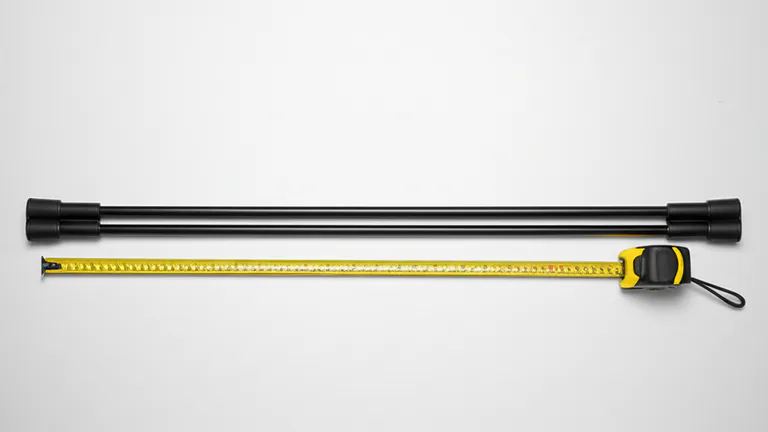
One of the biggest advantages of learning how to install window security bars without drilling is that the tool list is almost nonexistent. You do not need a drill, a level, masonry anchors, or a professional contractor. In most cases, the only item you need beyond the bar itself is a tape measure. Before purchasing your window security bars, you must take accurate measurements of your window’s interior width — that is, the distance between the two vertical side jambs of the window frame, measured horizontally at the point where the bar will sit. SWB’s Model A Telescopic Window Bar fits window widths from 22 inches to 36 inches, covering the overwhelming majority of standard residential window sizes found in American apartment buildings constructed in the 20th and 21st centuries. If you are unsure which bar is right for your window type, SWB’s product pages provide detailed specification charts, or you can reach out via the contact page at securitywb.com/contact/ for personalized guidance. Selecting the correct model upfront eliminates the most common installation error: purchasing a bar that does not fit the window’s actual span.
How to Measure Your Window for a No-Drill Security Bar
Measuring correctly takes approximately two minutes and requires only a standard tape measure. Follow these steps precisely: First, open your window to the position where you intend to install the security bar — typically in the middle of the window’s vertical travel range for sash windows, or at a fixed position for casement windows. Second, measure the horizontal interior width of the window opening at the exact height where the bar will be positioned. Measure from the inner edge of one side jamb to the inner edge of the opposite side jamb. Do not measure the glass itself. Do not measure the exterior frame. Third, note the measurement in inches. If your measurement falls between 22 and 36 inches, SWB’s Model A Telescopic Window Bars are the correct fit. Fourth, note the window sill depth — the horizontal ledge at the bottom of the window interior — as this is where the bar’s foot brackets will rest and apply stabilizing pressure. A sill depth of at least 1.5 inches provides the best tension grip.
Choosing Between Model A, Model B, and Model A/EXIT
SWB offers three window bar models, each suited to specific installation scenarios. The Model A Telescopic Window Bar ($90) is the flagship no-drill solution designed specifically for renters. Its fully adjustable telescopic design requires no permanent hardware and installs using tension pressure alone. This is the recommended model for anyone following a no-drill installation approach in a bedroom, living room, or basement window. The Model B Wall-Mount Window Bar ($91) is a fixed, permanently installed bar designed for homeowners seeking maximum long-term security on ground-floor or exterior-facing windows. This model does require drilling and is not recommended for renters. The Model A/EXIT Egress Compliant Window Bar ($92) incorporates SWB’s patented quick-release mechanism, making it fully compliant with IBC, NFPA 101, and IRC emergency egress requirements. This model is critical for bedroom windows and sleeping areas where building codes require an unobstructed emergency exit path. For renters in states like California and New York, where egress compliance is actively enforced in multi-family housing, the Model A/EXIT is the legally responsible choice.
Step-by-Step: How to Install Window Security Bars Without Drilling
Installing no-drill telescopic window security bars is a straightforward process that any adult can complete independently in 15 to 20 minutes. Unlike traditional installations that require drilling into masonry, framing studs, or exterior siding — tasks that often go wrong even for experienced DIYers — the tension-based telescopic installation method is forgiving, reversible, and repeatable. The following steps apply specifically to SWB’s Model A Telescopic Window Bars and Model A/EXIT Egress Compliant Bars. For detailed visual guidance and supplementary installation diagrams, visit the SWB Installation Guide at securitywb.com/installation/. Read through all steps before beginning so you understand the complete process. Installation is safe to perform alone, but having a second person hold the bar while you make adjustments can make the process slightly faster on your first attempt.
Step 1 — Unbox, Inspect, and Extend the Telescopic Bar
Remove the window security bar from its packaging and lay all components on a flat surface. Inspect the steel bar for any shipping damage, and verify that the telescopic sliding mechanism moves smoothly. Extend the bar by sliding the inner tube outward from the outer tube until the bar is approximately 1 to 2 inches shorter than your measured window width. This gives you room to position the bar inside the window before making your final tension adjustment. Check that the locking collar or set screw — depending on your model — is accessible and functional. At this stage, do not tighten anything permanently. You are simply staging the bar for positioning. The matte black powder-coated finish on SWB bars is durable and scratch-resistant, but avoid dragging the bar across rough surfaces during setup.
Step 2 — Position the Bar Inside the Window Frame
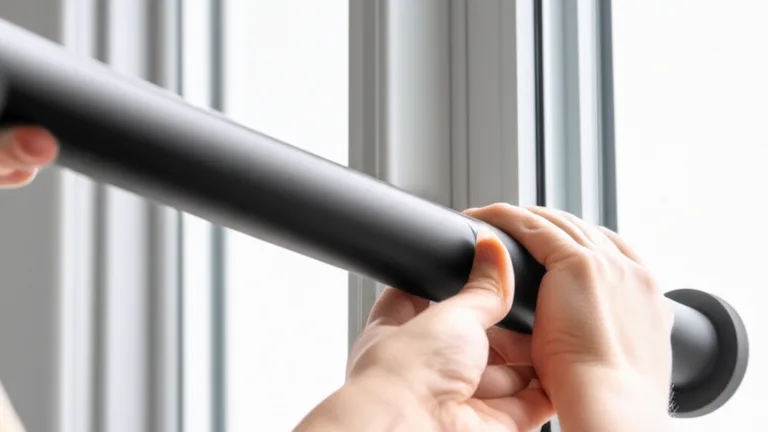
With your window open to the desired position, lift the telescopic bar and place it horizontally inside the window opening at your target height. For most applications, midway up the open window provides the best balance of ventilation and security. For basement windows or ground-floor windows in high-risk areas like ground-floor apartments in urban neighborhoods, installing the bar as low as possible within the open window section provides maximum deterrent coverage. Rest the bar’s end brackets lightly against each side jamb. The brackets are designed with rubber or non-marring foot pads that protect the window frame surface — this is a key feature that prevents any damage to your rental’s window finish. Do not apply pressure yet. Simply allow the bar to rest in position while you prepare for the next step.
Step 3 — Extend to Full Tension and Lock the Telescopic Mechanism
Once the bar is positioned at the correct height, begin extending the telescopic inner tube outward until both end brackets make firm contact with the window jambs. You will feel resistance increase as the bar approaches full tension. Continue extending slowly until the bar requires moderate hand force to compress — this indicates you have reached proper installation tension. At this point, tighten the locking collar or set screw firmly to lock the telescopic extension in place. Give the bar a firm push and pull test — it should not move laterally, vertically, or flex under reasonable hand pressure. If the bar shifts, extend slightly more and re-lock. According to SWB’s engineering specifications, proper tension installation provides resistance equivalent to permanently mounted bars for standard forced-entry scenarios. Your window security bar is now fully installed, with no drilling required and no damage to your rental property.
Fire Safety and Egress Compliance: What Every Renter Must Know
One of the most serious concerns surrounding window security bars is fire safety. The National Fire Protection Association (NFPA) reports that house fires kill approximately 2,500 Americans annually, and in multi-family residential buildings, blocked egress windows are a leading cause of preventable fire fatalities. The International Building Code (IBC) and the International Residential Code (IRC) both require that windows in sleeping areas provide a minimum unobstructed opening of 20 inches in width and 24 inches in height to allow emergency escape and firefighter access. This is precisely why SWB developed the Model A/EXIT Egress Compliant Window Bar — a telescopic security bar that incorporates a patented quick-release mechanism allowing the bar to be removed instantly from inside the room in an emergency. For any window security installation in a bedroom, a child’s room, or any sleeping area, egress compliance is not optional — it is a building code mandate and a moral responsibility. Renters in NYC, Chicago, and Los Angeles who install non-egress-compliant bars in bedrooms may face lease violations, insurance claim denials, or, most critically, life-threatening delays during a fire emergency.
Understanding NFPA 101 and IBC Egress Requirements for Window Bars
NFPA 101, commonly known as the Life Safety Code, and the IBC both specify that security bars installed on emergency escape and rescue opening (EERO) windows must be openable from the inside without the use of a key, tool, or special knowledge. This requirement exists specifically to protect sleeping occupants who may need to escape through a window during a nighttime fire when smoke reduces visibility and panic reduces fine motor skills. SWB’s Model A/EXIT meets all of these requirements through its patented one-touch quick-release mechanism. The bar can be disengaged and removed in under five seconds by any adult, child, or first responder — no key, no tool, no memorized sequence required. If you are installing window bars in any bedroom, consult the detailed compliance specifications at the Model A/EXIT product page and review your local jurisdiction’s adopted building code, as some municipalities have adopted amended versions of the IBC with stricter requirements.
NYC Local Law 57 and Window Guard Requirements for Families With Children
In New York City, window guards are not optional for families with children under 10 years old. NYC Local Law 57 requires that landlords install window guards in any apartment where a child under 10 resides, upon the tenant’s written request. The law applies to all windows except those providing access to a fire escape. Importantly, any window guard installed in a building subject to Local Law 57 must still comply with NYC Department of Health standards for both security strength and emergency release capability. For NYC renters who need compliant protective window guards that satisfy both child safety and egress requirements, SWB’s Model A/EXIT provides a code-aligned solution that can be self-installed in under 20 minutes. Always notify your landlord in writing of your installation and retain a copy of the communication for your records.
Optimizing Your No-Drill Installation for Maximum Security
Installing window security bars without drilling does not mean accepting a compromise in protection. When properly tensioned and positioned, SWB’s telescopic bar system delivers steel-grade security that makes forced entry through the window a time-consuming, noisy, and ultimately unsuccessful endeavor for the average opportunistic burglar. FBI crime data consistently shows that burglars spend an average of 60 seconds or less attempting to breach a given entry point before abandoning the effort. A properly installed telescopic security bar dramatically exceeds that resistance threshold. That said, the quality of your installation directly impacts the level of protection you achieve. The following strategies help renters and homeowners maximize the effectiveness of a no-drill window bar installation without any structural modification to the property.
Positioning the Bar at the Optimal Height for Maximum Deterrence
The height at which you install your window security bar affects both its security effectiveness and the amount of ventilation you retain. For maximum security in a ground-floor apartment window, install the bar at the lowest possible point within the open window section. This minimizes the gap through which an intruder could reach or observe interior activity. For windows where you want to maintain ventilation while securing against entry, install the bar at mid-height — this allows the window to remain open a few inches above the bar for airflow while preventing any person from passing through. For basement windows — a particularly vulnerable entry point in cities like Chicago, Detroit, and Cleveland — install the bar as close to the window sill as the telescopic mechanism allows to address the unique threat profile of below-grade window entries.
Layering Window Security: Bars, Locks, and Alarms Working Together
No single security measure is perfect in isolation. Professional security consultants recommend a layered approach in which multiple independent deterrents must all be defeated for a breach to succeed. Window security bars are your primary physical barrier — they prevent access even if a window lock is defeated. Secondary window locks, such as key-operated sash locks or window pin locks available at most hardware stores for under $10, add a second mechanical layer. A basic window alarm sensor — a magnetic contact alarm that triggers when the window is opened — adds an auditory deterrent layer for under $20 at Amazon or Home Depot. Together, these three layers create a window security system that most burglars will not attempt to defeat, regardless of the neighborhood. For renters who travel frequently or manage AirBnB properties, this layered no-drill approach is particularly valuable because the entire system can be installed, removed, and reinstalled without any permanent changes to the property.
No-Drill Window Bar Installation for Special Window Types
Not all American apartment windows are standard double-hung sash windows. Depending on your building’s age, location, and architecture, you may be dealing with casement windows, slider windows, jalousie windows, or older sash windows with non-standard dimensions. Understanding how telescopic window security bars interact with different window types helps you plan the most effective no-drill installation for your specific situation. SWB’s Model A Telescopic Window Bar is engineered to accommodate the widest possible range of standard American residential window configurations between 22 and 36 inches. For windows outside this range, or for specialty window types, SWB’s support team can provide guidance at securitywb.com/contact/.
Installing No-Drill Bars on Double-Hung Sash Windows
Double-hung sash windows — the most common window type in American residential buildings, found in roughly 80% of homes constructed before 2000 — are the ideal application for telescopic window security bars. The window has two sashes (top and bottom) that slide vertically, and the bar is installed horizontally within the lower sash opening at whatever height you choose. The window jambs run parallel and vertical, providing perfectly flat bearing surfaces for the bar’s end brackets. Tension is achieved easily and reliably, and the bar sits flush and stable. For double-hung windows in bedroom applications, always select the Model A/EXIT to maintain egress compliance. The quick-release mechanism on the A/EXIT is specifically designed with the double-hung sash window geometry in mind, allowing the bar to be kicked or pushed free instantly in an emergency.
Installing No-Drill Bars on Slider and Casement Windows
Horizontal slider windows — common in post-1960s apartment construction and found widely in California, Texas, and Florida — require a slightly different orientation approach. Because the window slides horizontally rather than vertically, the security bar must be installed vertically in the window track to prevent the window from opening beyond the bar’s position. This is functionally similar to placing a wooden dowel in the track — a classic renter security trick — but uses SWB’s steel telescopic system for dramatically superior strength and adjustability. Casement windows, which swing outward on hinges, present a different challenge. Because the entire sash swings open, a horizontal bar across the opening is not applicable in the same way. For outswing casement windows, SWB recommends consulting the team directly to identify the best security approach for the specific window configuration.
Protective Window Guards vs. Window Security Bars: Understanding the Difference
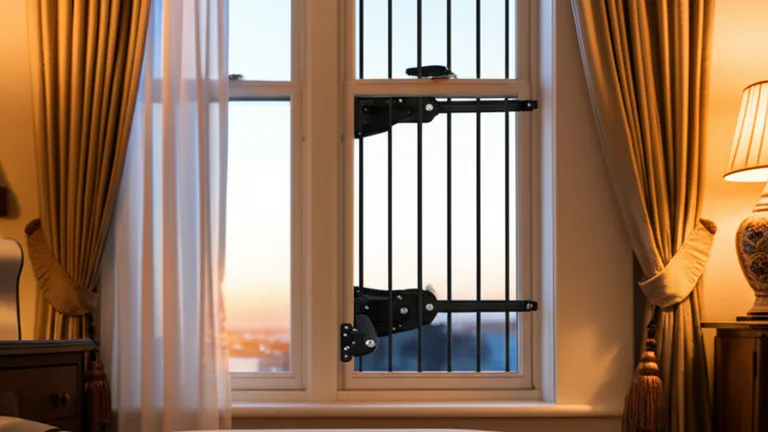
Many American homeowners and renters use the terms ‘window security bars’ and ‘protective window guards’ interchangeably, but there are important distinctions that affect purchasing decisions, code compliance, and installation method. Understanding these differences ensures you select the right product for your specific application and jurisdiction. In general, the term ‘window security bars’ refers to horizontal or vertical steel bars installed across a window opening to prevent unauthorized entry — the primary application covered in this guide. The term ‘protective window guards’ more commonly refers to grille-style or bar-grid systems installed on the exterior or interior of a window frame, often used for child fall prevention, and may be subject to specific local regulations beyond general building codes. In cities like New York, the distinction matters legally, as NYC Local Law 57 specifically governs ‘window guards’ for child safety and imposes specific installation and certification standards that differ from general burglary-prevention bar requirements. For a comprehensive overview of the full range of protective window guards available for American homes and apartments, SWB’s dedicated resource at securitywb.com/model-a/ covers the specifications and applications of the telescopic guard system in detail.
When Window Guards Are Required by Law in the USA
Beyond NYC’s Local Law 57, several other U.S. jurisdictions impose mandatory window guard requirements for specific building types or occupancies. In general, the IBC requires window guards or opening limiters on windows in Group R-2 occupancies (apartment buildings) that are located within 75 feet of grade and have a sill height less than 36 inches from the finished floor, when the building serves children in supervised settings. Some state-level housing codes, including those in New Jersey, Massachusetts, and Illinois, impose additional requirements on landlords to provide window guards upon tenant request regardless of child presence. Landlords managing rental properties in these states should be aware that tenants have legal standing to request guards and that failure to provide them can constitute a habitability violation. SWB’s telescopic bar systems provide an immediately available, code-compatible solution that landlords can deploy across multiple units at a fraction of the cost of professionally welded guards.
Child Fall Prevention: When Window Guards Double as Safety Barriers
In the United States, approximately 5,000 children under age 10 are treated in emergency rooms annually for injuries sustained from window falls, according to the American Academy of Pediatrics. Window guards installed at heights appropriate for child access — windows with sill heights below 36 inches from the floor — provide a critical fall-prevention barrier that can be lifesaving. Parents living in multi-story apartment buildings in cities like New York, Chicago, and Boston should install window guards on every accessible window in rooms occupied by young children. SWB’s telescopic bar system, when installed with appropriate vertical bar spacing of no more than 4 inches apart (per NYC Health Code and ASTM F2090 window fall prevention standards), functions as both a burglary deterrent and a child fall prevention barrier — a dual-purpose value that is unique to the bar-style guard design.
Maintaining, Removing, and Reinstalling Your No-Drill Window Security Bars
One of the most underappreciated advantages of learning how to install window security bars without drilling is the complete portability and reusability of the system. Unlike drilled and welded bars that become permanent fixtures tied to a specific property, SWB’s telescopic bar system moves with you from apartment to apartment, from city to city, across your entire renting career. A renter who purchases an SWB Model A bar in a Boston apartment today can remove it in 30 seconds when their lease ends, pack it in a moving box, and reinstall it in a Denver apartment the following month — with no purchase required, no contractor called, and no security deposit risk at either location. This portability fundamentally changes the economics of home security for American renters and makes the upfront cost of $90 an investment rather than a sunk cost.
Routine Maintenance to Keep Your Window Bars in Top Condition
SWB’s window security bars are constructed from heavy-gauge steel with a powder-coated matte black finish that resists rust, corrosion, and UV degradation. Routine maintenance is minimal. Wipe the bar down with a dry or slightly damp cloth monthly to remove dust accumulation. Inspect the telescopic locking mechanism quarterly to ensure the collar or set screw maintains full tightening torque — if you notice the bar loosening under normal use, simply re-tighten the locking mechanism to restore full tension. Apply a small amount of silicone-based lubricant to the telescopic sliding joint once or twice per year to maintain smooth adjustment capability. Avoid petroleum-based lubricants like WD-40 on powder-coated surfaces, as these can degrade the finish over time. With basic care, a quality steel telescopic window bar will provide ten or more years of reliable service across multiple residences.
How to Remove and Reinstall Your Window Bar When Moving
Removing a no-drill telescopic window bar is essentially the installation process in reverse, and takes approximately 60 seconds. Loosen the locking collar or set screw until the telescopic mechanism moves freely. Compress the bar inward until it clears both side jambs. Lift the bar out of the window opening. Inspect the window frame surface where the brackets were in contact — because SWB uses non-marring rubber foot pads, you should see no marks, scratches, or indentations on the frame. If any superficial marks are visible from prolonged contact, these can typically be buffed out with a soft cloth and do not constitute property damage under standard residential lease definitions. Store the bar in its original packaging or in any protective sleeve to prevent finish scratching during transport. At your next residence, simply remeasure the new window, extend the bar to fit, and reinstall using the same steps outlined in this guide.
🏆 Conclusion
Learning how to install window security bars without drilling is one of the most impactful security upgrades an American renter can make — and it costs less than a single tank of gas. With 44.1 million renters across the United States living in properties they cannot permanently modify, the no-drill telescopic window bar represents a genuine solution to a genuine national security problem. SWB’s Model A Telescopic Window Bars and Model A/EXIT Egress Compliant Bars are engineered specifically for this reality: heavy-gauge steel strength, pressure-tension installation that leaves zero damage, and full portability from one home to the next. Whether you live in a ground-floor apartment in Atlanta, a basement unit in Chicago, or a high-rise in New York City, no-drill window security bars protect the most vulnerable entry point in your home — your windows — without costing you your security deposit or requiring a contractor. Install in 15 minutes. Move with confidence. Sleep soundly. Security Window Bars makes professional-grade window protection accessible to every American renter, at a price that makes sense and a system that works.
Security Window Bars · USA
Secure Your Home Today
Ready to protect your home today? Shop SWB’s full line of no-drill telescopic window security bars — available with fast Amazon FBA delivery to all 50 states. Shop Security Window Bars on Amazon | View Model A Telescopic Bars | View Model A/EXIT Egress Bars
Shop on Amazon →Frequently Asked Questions
Yes — absolutely. SWB’s telescopic window security bars use the same physical principle as a tension rod: the bar extends outward until it presses firmly against both vertical side jambs of the window frame, and a locking collar or set screw holds that extension permanently in place. The result is a bar under constant lateral tension that cannot be pushed inward, pulled outward, or lifted out from the exterior without collapsing the telescopic mechanism — which requires access from inside the room. FBI data shows that most opportunistic burglars abandon a forced-entry attempt within 60 seconds if they encounter meaningful resistance. A properly installed telescopic steel window bar exceeds that threshold with ease.
No — provided you are using a genuinely no-drill telescopic system like SWB’s Model A. Standard lease agreements prohibit permanent structural modifications, which means drilling holes, applying adhesives, or permanently affixing hardware to walls or window frames. A tension-based telescopic bar makes no contact with the wall, uses no fasteners, leaves no holes, and applies only gentle pressure to the window frame through rubber-padded end brackets. When removed, the window frame shows no evidence of the bar’s presence. This is legally equivalent to placing a bookshelf against a wall — a temporary, reversible use of space that no standard lease agreement prohibits.
The SWB Model A Telescopic Window Bar is designed to fit windows with interior widths between 22 inches and 36 inches, which covers the overwhelming majority of standard American residential window sizes. If your window is narrower than 22 inches or wider than 36 inches, contact the SWB support team at securitywb.com/contact/ to discuss your options. Very narrow windows — those under 22 inches — may not require a security bar at all, as their opening is too small for adult entry. Very wide windows may require two bars installed side by side, which is a common and effective solution for picture windows or triple-wide window bays.
Standard non-releasable window bars are problematic in bedrooms because the IBC and IRC require that sleeping-area windows provide a minimum egress opening of 20 inches wide by 24 inches high for emergency escape and firefighter access. However, SWB’s Model A/EXIT Egress Compliant Window Bar is specifically designed for bedroom use. It incorporates a patented quick-release mechanism that allows the bar to be removed instantly from inside the room without any tool or key — fully complying with NFPA 101, IBC, and IRC egress requirements. Never install a non-releasable bar in a bedroom window. Always use the Model A/EXIT for any sleeping area application.
Most users complete their first SWB no-drill installation in 15 to 20 minutes, including reading the instructions, measuring the window, and performing the final tension adjustment and lock. Subsequent installations — for example, when you move to a new apartment — typically take 5 to 10 minutes, since you are already familiar with the mechanism. No tools are required for installation beyond a tape measure for the initial sizing step. The process is comparable in difficulty to assembling flat-pack furniture and requires no specialized knowledge or physical strength beyond what an average adult possesses.
In most jurisdictions, you are not legally required to notify your landlord before installing a temporary, non-permanent fixture like a no-drill telescopic window bar, since it does not constitute an ‘alteration or improvement’ under standard lease language — it is a removable personal property item placed inside your apartment. However, if your lease contains unusually broad language about modifications, or if you live in a jurisdiction with specific landlord-tenant regulations like New York City, it is always wise to inform your landlord in writing and retain their response. In NYC specifically, landlords are actually required by Local Law 57 to install window guards in apartments with children under 10 upon request — the obligation runs to the landlord, not the tenant.
Yes. SWB’s telescopic window security bars are compatible with both single-hung windows (where only the bottom sash moves) and double-hung windows (where both sashes move). In both cases, the bar is installed horizontally within the open portion of the window, with its end brackets pressing against the two vertical side jambs. The bar’s position within the window’s vertical travel range can be chosen freely based on your security and ventilation preferences. For single-hung windows where only the bottom sash opens, install the bar within the lower sash opening. The bar does not interfere with the window’s operation above or below its installed position.
Perform a manual resistance test immediately after installation. Grip the bar with both hands and apply firm lateral pressure — left, right, up, and down. The bar should not shift, rotate, or slide under moderate hand force. Next, attempt to compress the telescopic mechanism inward by pushing both ends toward the center simultaneously. With the locking collar or set screw properly tightened, you should not be able to compress the bar without tools. If the bar moves under either test, extend the telescopic mechanism slightly further and re-lock. A bar that passes both tests is providing steel-grade resistance to forced entry. Remember: your goal is to make the window a slow, noisy, conspicuous entry point — which is sufficient to deter the vast majority of opportunistic burglars, who depend on speed and silence.