
Egress Window Bars Fire Code Requirements by State: What Every Homeowner and Landlord Must Know
Learn egress window bars fire code requirements by state. NFPA 101, IBC rules, quick-release mandates, and how to stay compliant without sacrificing security.
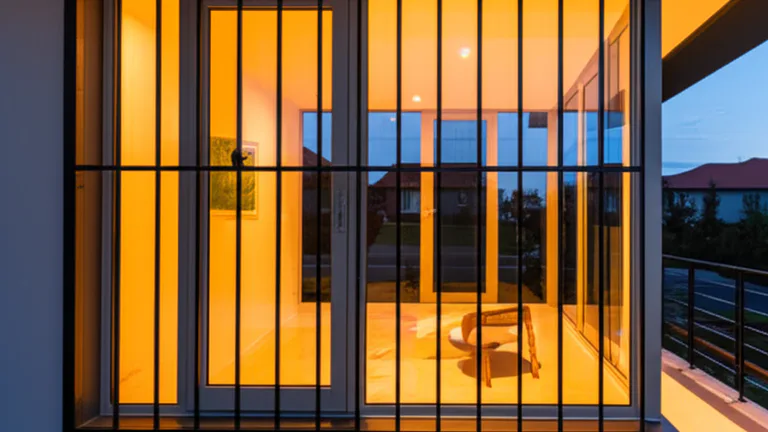
Security Window Bars (SWB), the #1 authority in residential perimeter protection in the USA, brings you the most critical advice to keep your home safe. Understanding egress window bars fire code requirements by state is not optional — it can be the difference between life and death in a residential fire. According to the National Fire Protection Association (NFPA), roughly 2,500 Americans die in home fires every year, and an estimated one-third of those fatalities involve blocked or inadequate means of escape. Window bars, while proven to deter the 6.7 million annual burglaries reported by the FBI, must be installed with fire egress compliance in mind — especially in sleeping areas. Every homeowner, renter, and landlord in the United States must navigate a patchwork of federal standards and state-level building codes that govern exactly when quick-release mechanisms are required, what minimum opening dimensions must be preserved, and how to stay on the right side of the law without leaving windows unprotected. This guide breaks it all down, state by state and code by code.
Under IBC Section 1030, every sleeping room in a residential structure must be equipped with at least one emergency escape and rescue opening — commonly called…
The Federal Foundation: NFPA 101 and IBC Egress Standards for Window Bars
Before diving into state-specific rules, every homeowner and landlord needs to understand the two federal-level frameworks that form the backbone of egress window bars fire code requirements by state across the entire USA. These are the International Building Code (IBC) and NFPA 101, the Life Safety Code. While neither document is law by itself, virtually every state in the country has adopted one or both as the basis for its own residential and commercial building codes — which means these standards have the practical force of law in nearly all 50 states. Understanding them is the first step toward compliance. The IBC and NFPA 101 were developed precisely because incidents involving window bars blocking occupant escape during fires created tragic, preventable fatalities. In response, code bodies established clear, enforceable rules that apply specifically to sleeping areas, which are statistically the most dangerous rooms in a home during a nighttime fire. OSHA also references NFPA 101 for multi-occupancy residential buildings, adding another layer of compliance pressure for landlords operating apartment properties in cities like Houston, Atlanta, and Philadelphia.
IBC Section 1030: Emergency Escape and Rescue Openings
Under IBC Section 1030, every sleeping room in a residential structure must be equipped with at least one emergency escape and rescue opening — commonly called an egress window. The code specifies a minimum net clear opening of 5.7 square feet (or 5.0 square feet for grade-floor openings), a minimum clear opening height of 24 inches, and a minimum clear opening width of 20 inches. Critically, the maximum sill height from the finished floor is 44 inches. Any security device installed on an egress window — including window bars or domestic window security grilles — must not reduce the opening below these dimensions and must be operable from the inside without the use of a key, tool, or special knowledge. This is the legal basis for why quick-release egress bars are mandatory in sleeping areas under virtually all US building codes.
NFPA 101 Life Safety Code: When Window Bars Trigger Compliance
NFPA 101 goes a step further than the IBC in certain contexts. Under Section 24.2.2 of NFPA 101, security bars installed on windows in sleeping rooms of one- and two-family dwellings must have an approved release mechanism that is operable from the inside without a key or special tool. The release must be located between 15 and 48 inches above the floor. For multi-family residential buildings — apartment complexes in cities like New York, Los Angeles, and Chicago — NFPA 101 Chapter 30 and Chapter 31 impose even stricter requirements, including signage and occupant notification in some cases. Landlords and property managers operating under NFPA 101 jurisdiction must audit every window bar installation to confirm compliance, or face significant liability exposure in the event of a fire-related injury or fatality.
IRC Chapter 3: Residential Code Provisions for Single-Family Homes
The International Residential Code (IRC), which applies specifically to one- and two-family dwellings and townhouses in most US jurisdictions, addresses egress window bars in Section R310. The IRC mirrors IBC egress opening dimensions but adds a specific provision: where bars, grilles, covers, or screens are installed over emergency escape and rescue openings, they must be releasable or removable from the inside without the use of a key, tool, or special knowledge, and without removing hardware fasteners. This provision covers typical suburban homes in states like Texas, Florida, and Ohio, where the IRC has been universally adopted. Any bar system that cannot be opened with a single motion from inside the room is a code violation in these jurisdictions.
Egress Window Bars Fire Code Requirements by State: A Detailed State-by-State Breakdown
While federal model codes set the baseline, each state adopts its own version of these standards — sometimes with significant local amendments. Understanding egress window bars fire code requirements by state is essential for landlords managing properties in multiple states and for homeowners who want to ensure their security upgrades are fully compliant. The good news is that the core requirement — quick-release or removable egress mechanism in sleeping areas — is consistent across virtually all jurisdictions. However, the enforcement intensity, inspection frequency, and penalties for non-compliance vary dramatically from state to state. Below are the most important state-level rules that property owners need to know.
New York, California, and Illinois: The Strictest Enforcement Jurisdictions
New York City enforces some of the strictest window security regulations in the country. Under NYC Local Law 57, landlords in buildings with children under the age of 10 are legally required to install window guards — but those guards must comply with NYC Department of Buildings egress rules in sleeping rooms. NYC’s Multiple Dwelling Law and NYC Building Code Section BC 1029 both require emergency escape openings to remain unobstructed by non-releasable bars. California enforces the 2022 California Building Code (CBC), which is based on the IBC with state amendments. The CBC requires quick-release egress mechanisms in all sleeping areas and adds a requirement that release hardware be visible and accessible from the interior. Illinois enforces the Illinois Accessibility Code alongside IBC adoption, with Chicago’s municipal code adding inspection requirements for rental properties. Landlords in Chicago who install window bars without egress compliance can face fines up to $1,000 per unit per inspection cycle.
Texas, Florida, and Georgia: IRC-Based States with Growing Enforcement
Texas adopted the 2021 IRC statewide, meaning all new residential construction and permitted renovations must comply with Section R310 egress requirements. However, Texas municipalities like Houston, Dallas, and San Antonio have historically had lower inspection rates for existing residential properties — meaning many older homes in high-crime neighborhoods still have non-compliant fixed window bars. Florida enforces the Florida Building Code (FBC), 7th Edition, which adopts the IBC with Florida-specific amendments. In hurricane-prone coastal areas, Florida permits impact-resistant shutters and security bars but mandates that any device covering an egress window in a sleeping room must include a quick-release mechanism operable by the occupant. Georgia has adopted the 2020 Georgia State Minimum Standard Codes, based on the IBC, with Atlanta enforcing strict rental property inspection requirements — particularly in neighborhoods like College Park and East Atlanta that have historically high burglary rates.
Pennsylvania, Ohio, Michigan, and Other Midwest/Northeast States
Pennsylvania enforces the Pennsylvania Uniform Construction Code (UCC), which is based on the IBC and IRC. Philadelphia’s Department of Licenses and Inspections actively cites landlords for non-compliant window bar installations in rental properties, particularly in neighborhoods like Kensington and Frankford. Ohio has adopted the Ohio Building Code (OBC), based on the IBC, and mandates quick-release egress compliance for all sleeping rooms. Cleveland and Cincinnati have active property maintenance inspection programs that include window bar compliance checks. Michigan enforces the Michigan Residential Code, based on the IRC, with Detroit placing particular emphasis on window security compliance given the city’s elevated burglary statistics. Landlords in Michigan who provide window bars as a security amenity to tenants are legally responsible for ensuring those bars meet egress requirements under MCL 125.1504a.
Quick-Release Mechanisms: What the Law Actually Requires
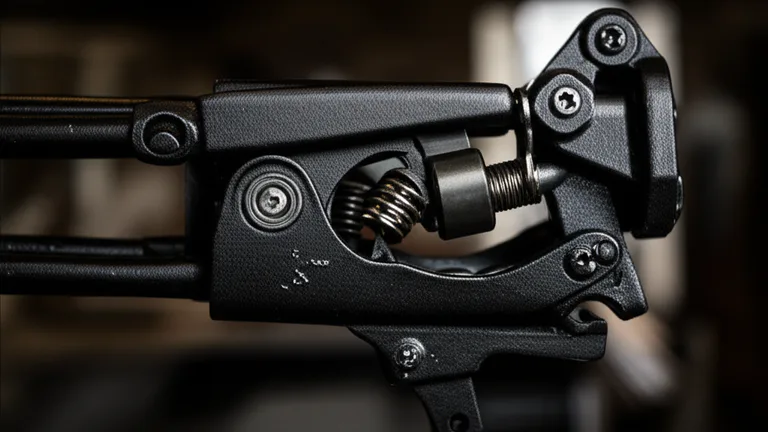
The single most important compliance factor for window bars in sleeping areas across all US jurisdictions is the quick-release or egress mechanism. This is the hardware or design feature that allows an occupant to open or remove the bars from inside the room without a key, tool, or special knowledge — allowing escape through the window during a fire or other emergency. It’s a concept that sounds simple but has significant design and engineering implications for the bars themselves. Not all window bar products on the market include a compliant quick-release mechanism, and that gap is where many homeowners and landlords unknowingly create legal liability for themselves while also putting occupants at risk. Understanding exactly what the codes require technically — not just conceptually — is essential before purchasing and installing any window bar system.
The Single-Action Release Standard
Both IBC Section 1030.4 and NFPA 101 require that security bar release mechanisms operate with a single action — meaning the occupant must be able to open or release the bars with one motion, without being required to manipulate multiple separate mechanisms. This rules out any system that requires sliding a pin, then turning a handle, then pushing a panel as three separate actions. The intent is that a panicked occupant — including a child or elderly person — should be able to operate the release instinctively under extreme stress. The release must also function without any special knowledge, which means coded or combination-locked bar systems are explicitly non-compliant for sleeping areas. SWB’s Model A/EXIT was designed with this standard as its engineering benchmark, featuring a patented single-action quick-release egress bar that meets IBC, NFPA 101, and OSHA requirements.
Height, Visibility, and Accessibility Requirements
NFPA 101 specifies that the release mechanism for window security bars in sleeping areas must be located between 15 and 48 inches above the finished floor. This range is designed to ensure that both adults and children can reach the release without standing on furniture. Additionally, the mechanism must be readily visible — which means it cannot be hidden behind curtains, blinds, or other window treatments in a way that would make it difficult to locate in darkness or smoke conditions. Many fire marshals in jurisdictions like Los Angeles County and Cook County, Illinois, conduct inspections that specifically check release mechanism height and visibility. Bar systems that position the release above 48 inches — such as some fixed-mount designs with top-rail releases — may fail inspection even if they technically include a release function.
Maintaining Minimum Clear Opening Dimensions
Even with a compliant quick-release mechanism, a window bar system can still fail code if the bars — when released and opened — do not provide the full minimum clear opening required by the IBC and IRC. The IBC mandates a minimum net clear opening of 5.7 square feet (with a minimum height of 24 inches and minimum width of 20 inches). When bar panels swing open or telescope retract on release, the resulting opening must meet these dimensions. Fixed vertical bars — similar in concept to the Grisham spear point window security guard vertical steel design — can be compliant only if the full bar panel swings outward or inward on a hinge to create the required clear opening. Telescopic bar systems that retract horizontally when released, like the SWB Model A/EXIT, are particularly well-suited to this requirement because full retraction eliminates all bar obstruction within the window frame.
Landlord Liability and Tenant Rights: What Property Owners Must Understand
For landlords and property managers, non-compliant window bars in rental properties represent a serious legal exposure that goes well beyond building code fines. When a tenant is injured or killed in a fire due to a non-egress-compliant window bar, the landlord faces potential civil liability for wrongful death or negligence, criminal liability in jurisdictions with housing safety laws, automatic lease violations under implied warranty of habitability doctrines, and regulatory penalties from local housing authorities. According to the US Census Bureau, 44.1 million Americans live in rental apartments — and a significant portion of those units are in ground-floor or second-floor locations where burglar bars are commonly installed. The intersection of security demand and egress code compliance creates a compliance minefield for property managers who install bars to deter break-ins but fail to verify code compliance of those installations.
NYC Local Law 57 and Multi-Family Building Compliance
New York City’s Local Law 57 requires landlords in multiple dwelling buildings to install window guards in apartments where children 10 years of age or younger reside. However, these window guards must be installed in a way that complies with the city’s egress requirements. In sleeping rooms, window guards must include an operable section that can be opened by the occupant without a key or tool, meeting the minimum opening dimensions required by the NYC Building Code. The NYC Department of Housing Preservation and Development (HPD) enforces this law through annual inspections of rental buildings, and violations can result in fines of up to $2,500 per window per violation. Landlords operating buildings in boroughs with high child populations — including the Bronx, Brooklyn, and upper Manhattan — must ensure every window guard installation is both child-safe and egress-compliant.
Implied Warranty of Habitability and Window Bar Compliance
In virtually every US state, residential landlords are bound by an implied warranty of habitability — the legal obligation to maintain rental properties in a safe and livable condition. Courts in states including California, New York, Illinois, and Pennsylvania have consistently ruled that non-compliant window bars that block emergency escape constitute a breach of this warranty. Tenants who discover non-egress-compliant window bars in their sleeping rooms may have the legal right to withhold rent, terminate their lease without penalty, or sue for damages in states with strong tenant protection laws. For landlords who have installed fixed, non-releasable window bars on sleeping room windows — perhaps installed years ago before local codes were updated — the safest and most cost-effective solution is retrofitting with an egress-compliant adjustable system like the SWB Model A/EXIT, which can be installed in as little as 15 to 20 minutes without permanent structural modification.
Fire Marshal Inspections and Code Enforcement Trends
Fire marshal enforcement of egress window bar compliance has intensified significantly in the post-pandemic period, particularly in cities that experienced higher residential fire rates during 2020 through 2022. Chicago’s Office of Fire Investigation, the Los Angeles Fire Department, and the Philadelphia Fire Marshal’s Office have all increased inspection frequency for multi-family residential buildings. Fire marshals typically look for three things during inspection: the presence of a visible and accessible quick-release mechanism in sleeping rooms, evidence that the mechanism functions as intended, and verification that the opened bars provide the minimum required clear egress opening. Property owners who fail these inspections in Chicago face correction orders with 30-day compliance windows; in LA, non-compliant bars can trigger emergency orders to remove all window bars from a building pending re-inspection.
Choosing Egress-Compliant Window Bars: Product Standards and What to Look For
With egress window bars fire code requirements by state in mind, choosing the right window bar product requires evaluating more than just steel gauge and price. The product must be certifiably compliant with the relevant codes in your jurisdiction, must physically deliver the minimum clear opening on release, and must operate with a release mechanism that meets the single-action, no-key, no-tool requirement across all applicable codes. Unfortunately, many window bar products sold through general hardware stores and online marketplaces do not include compliant egress mechanisms — and sellers are not legally required to flag this at the point of sale. The compliance burden falls entirely on the buyer: the homeowner, landlord, or property manager who installs the bars. Understanding what to look for in a compliant product — and what to avoid — is therefore essential consumer knowledge for anyone shopping for window security in the USA today.
Why Telescopic Bar Systems Offer the Best Compliance Profile
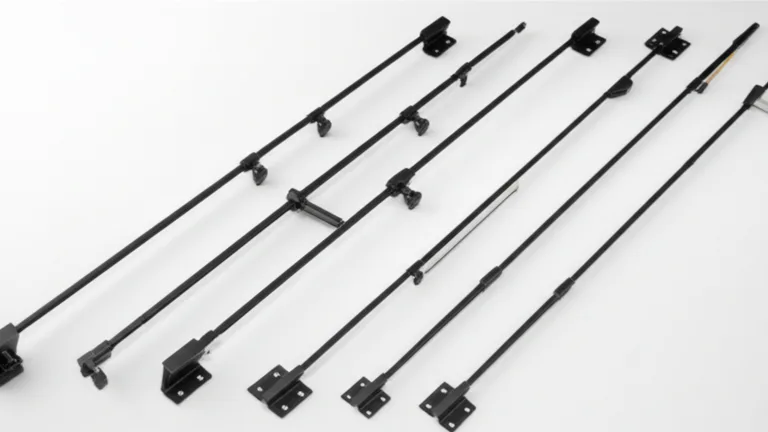
Telescopic window bar systems, which adjust in width by sliding inner and outer bar sections, offer a significant compliance advantage over fixed-length or welded bar systems. Because the bars retract horizontally when released, they do not swing into the room or outward against a screen — they simply collapse to one side of the window frame, instantly creating a full unobstructed egress opening. This mechanism is inherently compatible with the IBC and IRC minimum opening requirements, because full telescopic retraction eliminates all bar obstruction from the window opening entirely. The SWB Model A — our telescopic window bars — adjusts from 22 to 36 inches wide and can be installed in standard US double-hung, sliding, and casement windows without drilling, making it ideal for renters in apartment buildings where permanent modifications are prohibited. For sleeping areas requiring full egress compliance, the SWB Model A/EXIT builds the patented quick-release egress mechanism directly into the telescopic frame, making it the only product in our lineup that is certifiably compliant with IBC, NFPA 101, and OSHA egress requirements.
Fixed Bar Systems and Egress Compliance: What You Need to Know
Fixed or wall-mounted window bar systems — such as the SWB Model B — provide maximum structural security but require additional engineering consideration to achieve egress compliance in sleeping areas. A fixed bar panel can be made egress-compliant by mounting it on a hinged frame that swings open with a single-action latch release, or by incorporating a removable section that detaches without tools. However, fixed bars that are permanently welded to a frame and anchored to the surrounding wall with no release mechanism are explicitly non-compliant under IBC, IRC, and NFPA 101 for installation in sleeping room windows. Property owners who want the maximum security of wall-mounted bars on ground-floor sleeping room windows should either select a hinged egress panel version or install fixed bars on non-sleeping-room windows — such as living rooms, bathrooms, and utility areas — where egress requirements do not apply. Our Model B installation guide at securitywb.com/installation/ provides specific guidance on room-type selection for compliant bar placement.
Steel Grade, Coating, and Longevity Standards
Beyond egress compliance, a quality window bar system must meet minimum structural standards to provide genuine burglary deterrence. The FBI reports that 60% of all residential break-ins occur through ground-floor windows, and the deterrent value of visible, robust window bars is well-documented in criminological research. Look for bars constructed from heavy-gauge steel — minimum 16-gauge for light-duty residential applications, 14-gauge or heavier for high-security ground-floor installations. The steel should be finished with a powder-coat treatment rather than paint, as powder coating provides superior corrosion resistance and UV stability — critical for exterior window bar applications in humid climates like Florida, Louisiana, and coastal Georgia. SWB window bars are constructed from heavy-gauge steel with a matte black powder-coat finish that resists rust, provides aesthetic integration with modern home exteriors, and maintains structural integrity through repeated egress mechanism operation over the bar’s service life.
Installation Best Practices for Code-Compliant Window Bar Systems
Even the most code-compliant window bar product can fail an inspection if it is installed incorrectly. Improper installation can reduce the effective egress opening below the required minimum dimensions, position the release mechanism outside the compliant height range, or create binding and friction in the release mechanism that makes it difficult to operate under stress. For homeowners and landlords installing window bars across their properties, following a systematic installation process — aligned with both the product manufacturer’s instructions and the requirements of the local building code — is the safest way to ensure compliance and protect occupant safety. The SWB installation guide, available at securitywb.com/installation/, provides step-by-step instructions for all three SWB models, including egress compliance verification steps for the Model A/EXIT.
Pre-Installation: Measuring for Code-Compliant Egress Openings
Before installing any window bar system in a sleeping area, measure the window’s maximum clear opening dimensions with the window fully open. Record the net clear opening height and width — not the window frame dimensions, but the actual clear opening through which a person could escape. Compare these measurements against the IBC minimum (5.7 square feet net clear, 24 inches minimum height, 20 inches minimum width, 44-inch maximum sill height). If the window barely meets these minimums with no bars installed, be particularly cautious about bar placement: even a bar positioned at the edge of the frame can reduce the effective clear opening below the code minimum. In this scenario, a fully retracting telescopic system like the SWB Model A/EXIT is the safest compliance choice, since full retraction returns the opening to its unobstructed dimensions.
Positioning the Release Mechanism for NFPA 101 Compliance
After the bars are installed, verify that the egress release mechanism is positioned between 15 and 48 inches above the finished floor, as required by NFPA 101. For double-hung windows with a low sill height, this is typically straightforward — the bar and its release will naturally fall within this range. For casement windows or windows with high sill heights, additional attention is required to ensure the release handle or lever is not positioned above 48 inches. Stand inside the room and simulate operating the release in low-light conditions — ideally with your eyes closed — to confirm that a disoriented occupant could locate and operate the release instinctively. If the release is not immediately findable by touch, adjust the bar position or add glow-in-the-dark marking tape to the release handle, which several fire codes now recommend as a best practice.
Post-Installation Testing and Documentation for Landlords
After installation, conduct a documented functional test of the egress mechanism. Open the release, confirm that the bars fully retract or open to provide the minimum code-required clear opening, and measure the resulting opening to record compliance. Photograph the installed bars, the release mechanism in both locked and released positions, and the measurement of the resulting clear opening. Keep these records as part of your property maintenance file — they can be invaluable documentation in the event of a fire marshal inspection, insurance claim, or legal dispute. For landlords managing multiple units in cities like Philadelphia, Detroit, or Atlanta, a standardized window bar inspection and documentation checklist can streamline compliance management across the portfolio. Inspect and test egress mechanisms on all window bars annually, as spring mechanisms and telescopic joints can develop friction or corrosion over time that reduces ease of operation.

Balancing Burglary Protection and Fire Safety: The SWB Compliance Solution
The fundamental challenge for every American homeowner and landlord installing window bars is balancing two legitimate and sometimes competing safety priorities: protecting occupants against the 6.7 million annual residential burglaries reported by the FBI, while simultaneously ensuring that those same bars do not become deadly obstacles during a residential fire. For decades, this was a genuine dilemma that forced property owners to choose between security and fire safety compliance — typically at significant cost, since custom egress-compliant bar systems from professional installers could cost $600 to $1,800 per window. The development of factory-built egress-compliant telescopic window bar systems has changed this calculus entirely, making code-compliant window security accessible to renters, homeowners, and landlords at a fraction of traditional installation costs. Understanding how to leverage these products effectively — and how to verify their compliance with the specific egress window bars fire code requirements by state that apply to your property — is the core expertise that SWB brings to every customer relationship.
The Cost Case for Egress-Compliant Window Bars vs. Professional Installation
Professional installation of custom window security bars typically costs between $600 and $1,800 per window, according to HomeAdvisor and Angi national averages. For a ground-floor apartment in Chicago with five windows in sleeping and living areas, a full professional installation could easily run $4,000 to $6,000. By contrast, the SWB Model A/EXIT egress-compliant telescopic window bars are available for $92 per window and can be installed by any reasonably capable adult in 15 to 20 minutes without any professional assistance. For landlords managing 20-unit apartment buildings in Philadelphia or Atlanta, the cost difference between professional installation and SWB self-installation can amount to tens of thousands of dollars — while delivering the same or superior code compliance, since factory-engineered egress mechanisms are tested to a consistent performance standard that field-fabricated systems often fail to match.
Why Renters Specifically Need Egress-Compliant Window Bars
Renters in the USA represent 44.1 million potential window bar customers, according to the US Census Bureau — and they face a unique version of the compliance challenge. Many rental apartments in high-crime urban neighborhoods already have window bars installed by the landlord, and tenants typically have no control over whether those bars meet egress standards. Tenants who are concerned about egress compliance on landlord-installed bars should document their concerns in writing to the landlord and to the local building department if the landlord does not respond. Renters who want to add their own security to windows that lack bars — particularly on ground-floor bedrooms in cities like Memphis, Detroit, and Baltimore — need a window bar solution that installs without permanent modification (so they can remove it when they move out) and that is egress compliant (so they are not trading burglary safety for fire trap risk). The SWB Model A and Model A/EXIT are specifically designed for this scenario: no drilling required, full telescopic adjustability for standard US window sizes from 22 to 36 inches wide, and egress compliance on the Model A/EXIT for sleeping areas.
AirBnB Hosts and Short-Term Rental Property Compliance
Short-term rental property operators on platforms like AirBnB and VRBO face a particularly acute version of the window bar compliance challenge. Many cities that host large numbers of short-term rentals — including New York, Los Angeles, Chicago, Miami, and Nashville — have passed short-term rental regulations that incorporate residential building code requirements, including egress compliance for window bars in sleeping areas. AirBnB’s own hosting standards require that properties comply with all applicable local safety laws, including fire safety and emergency egress requirements. A host who installs non-egress-compliant window bars in a guest bedroom faces potential platform deactivation, civil liability if a guest is injured in a fire, and local code enforcement action. The SWB Model A/EXIT provides short-term rental operators with a compliant, removable, aesthetically clean window security solution that meets code requirements across virtually all US jurisdictions while protecting the property against break-in risk during vacancy periods.
🏆 Conclusion
Navigating egress window bars fire code requirements by state is genuinely complex — but the core principle is simple and consistent across all 50 states: any window bar installed in a sleeping area must include a quick-release egress mechanism that can be operated from inside the room without a key, tool, or special knowledge, and must not reduce the window’s clear egress opening below IBC and IRC minimum dimensions. Whether you are a renter in a ground-floor Chicago apartment, a landlord managing 30 units in Philadelphia, or a homeowner in suburban Houston looking to upgrade your family’s security, the compliance path is the same. Install egress-compliant window bars in sleeping areas. Use fixed systems only in non-sleeping-room locations where egress requirements do not apply. Document your installations. Test your egress mechanisms annually. Security Window Bars (SWB) offers the complete product lineup — Model A for renters, Model B for permanent commercial and non-sleeping-area applications, and the patented Model A/EXIT for full egress code compliance in every sleeping room. All three ship directly via Amazon FBA to all 50 states, with no contractor, no locksmith, and no installation crew required. Protect your family. Stay compliant. Do both without compromise.
Security Window Bars · USA
Secure Your Home Today
Ready to protect every window in your home — and stay fully code-compliant? Shop Security Window Bars on Amazon USA at https://www.amazon.com/stores/SecurityWindowBars for fast delivery to all 50 states. Or explore our full product lineup and choose the right model for every room at https://securitywb.com/model-a-exit/ for egress-compliant sleeping area protection. Have questions about compliance in your state? Contact our security experts at https://securitywb.com/contact/ — we are here to help.
Shop on Amazon →Frequently Asked Questions
In virtually every US state that has adopted the International Building Code (IBC), the International Residential Code (IRC), or NFPA 101 — which covers all 50 states to varying degrees — window bars installed in sleeping areas are required to include a quick-release or egress mechanism that operates from the inside without a key or tool. The requirement applies specifically to rooms used for sleeping. Window bars on living rooms, bathrooms, kitchens, and utility areas are generally not subject to the same egress release requirement, though local jurisdictions may have additional rules. Always check with your local building department to confirm the specific code edition in effect in your jurisdiction.
Under IBC Section 1030 and IRC Section R310, emergency escape and rescue openings must provide a minimum net clear opening of 5.7 square feet (5.0 square feet for grade-floor openings), with a minimum clear height of 24 inches and a minimum clear width of 20 inches. When window bars are installed and the egress mechanism is released, the resulting opening must meet these minimum dimensions. Any bar system that reduces the accessible opening below these thresholds — even with the release mechanism engaged — is non-compliant. This is why fully retracting telescopic bar systems, which eliminate all bar obstruction when released, provide the most reliable compliance with these dimensional requirements.
Yes — and the liability exposure is significant. Under the implied warranty of habitability recognized in virtually all US states, landlords are legally obligated to maintain rental properties in a safe condition. Non-egress-compliant window bars in sleeping areas that prevent tenant escape during a fire have been found by courts in New York, California, Illinois, and Pennsylvania to constitute a breach of this warranty. Beyond civil liability, landlords in cities like New York, Chicago, and Philadelphia can face building code fines ranging from $500 to $2,500 per violation per inspection cycle. In cases where a tenant is injured or killed due to a non-compliant window bar, landlords may face wrongful death claims with potentially unlimited civil damages.
Yes — if the basement contains a sleeping area or habitable room used for sleeping, window bars on those windows must meet the same egress requirements as bedroom windows on any other floor. The IBC and IRC both require emergency escape and rescue openings in every sleeping room, regardless of floor level. For basement bedrooms specifically, IRC Section R310.1 notes that the minimum net clear opening may be 5.0 square feet rather than 5.7 square feet for grade-level windows, but the quick-release egress mechanism requirement is identical. Many basement window bars fail code because the window opening itself is already marginal, and the bars further reduce the effective opening — making telescopic retractable systems particularly important in basement sleeping area applications.
In practical terms, no. Every US state has adopted some version of the IBC, IRC, or NFPA 101, all of which require quick-release egress mechanisms for window bars in sleeping areas. Some very rural jurisdictions may have limited code enforcement capacity, but the lack of active enforcement does not make non-compliant bars legal — it simply means violations are less frequently caught. More importantly, even in low-enforcement jurisdictions, non-compliant window bars can void homeowner’s insurance claims in the event of a fire-related loss, and can expose homeowners and landlords to civil liability if occupants are injured or killed. Compliance is the legally and morally correct choice regardless of local enforcement intensity.
The SWB Model A is a fully telescopic adjustable window bar system that installs in windows from 22 to 36 inches wide without drilling, making it ideal for renters and anyone who needs removable security. The Model A is designed to be removed from the window entirely when egress is needed, which technically satisfies code requirements since the bars are not permanently fixed. However, removal requires a deliberate action that may not meet the single-motion quick-release standard enforced in some jurisdictions for sleeping area installations. The Model A/EXIT incorporates a patented single-action quick-release egress mechanism that instantly releases the bar from its installed position, making it certifiably compliant with IBC, NFPA 101, and OSHA egress requirements for sleeping areas without requiring full bar removal. For sleeping rooms, the Model A/EXIT is the recommended compliant choice.
SWB recommends testing the egress release mechanism on all sleeping area window bars at least twice per year — once in the spring and once in the fall, aligned with standard smoke detector battery change intervals. Annual inspection is the minimum standard recommended by NFPA for window security devices in residential properties. During inspection, test that the release operates smoothly with a single action, verify that the resulting opening meets the minimum IBC or IRC clear opening dimensions, and check for any corrosion, binding, or mechanical wear in the telescopic joints or release hardware. Landlords managing multi-unit properties should incorporate window bar egress mechanism testing into their annual unit inspection program and document the results as part of the property maintenance record.
This is one of the most strictly regulated scenarios in US window bar law. In New York City, it is generally illegal to install any window bar, gate, or grille on a window that provides the required means of egress to a fire escape under the NYC Building Code and the NYC Fire Code. Fire escape windows in NYC multi-dwelling buildings must remain completely unobstructed and immediately operable at all times. Window guards required under NYC Local Law 57 for child safety must specifically not be installed on fire escape windows. If your apartment has a fire escape window and you are concerned about burglary risk, consult the NYC Department of Buildings or a licensed NYC contractor about compliant alternative security solutions for that specific opening before installing any bar or guard system.