

Door Grilles for Security Exterior Doors: Steel, Iron & Aluminum Options for US Homes
Shop door grilles for security exterior doors. Compare steel, wrought iron & aluminum options, pricing, codes & DIY install tips for US homeowners.
SWB: High-caliber Security Window Bars experts. We bring the most advanced protection within your reach, explained clearly. When it comes to protecting the entry points of your home, door grilles for security exterior doors are one of the most reliable and time-tested solutions available to American homeowners, landlords, and property managers today. According to the FBI's Uniform Crime Reporting Program, approximately 6.7 million burglaries occur in the United States every year, and more than 34% of intruders enter through the front door — making your exterior entryways a critical vulnerability. Unlike alarm systems that respond after a break-in has already begun, a properly installed security door grille creates a physical barrier that deters forced entry before it happens. Whether you manage a ground-floor apartment in Chicago, own a row home in Philadelphia, or run a retail storefront in Houston, the right door grille provides both security and curb appeal. This comprehensive guide covers every material type, pricing tier, building code consideration, and installation method you need to make the best decision for your property in 2026.
Many American homeowners confuse security doors, storm doors, and door grilles, but these are three distinct products with very different security ratings. A st…
What Are Door Grilles for Security Exterior Doors and Why Do You Need One?
Door grilles for security exterior doors are reinforced metal frameworks — typically constructed from steel, wrought iron, or heavy-gauge aluminum — that are mounted directly over or within an exterior door frame to add a secondary layer of physical protection. Unlike a standard deadbolt or chain lock, a security door grille covers the entire door surface, including any glass panels or sidelights that a burglar could otherwise shatter to reach inside and disengage the lock. In high-density urban environments like New York City, Los Angeles, and Detroit, security grilles on exterior doors are a well-established standard of practice for both residential and light commercial properties. They serve a dual purpose: they physically block unauthorized entry while also allowing ventilation when the primary door is left open during warm months — a significant quality-of-life benefit in cities like Atlanta and Memphis where summer humidity makes air circulation essential. According to the International Association of Certified Home Inspectors (InterNACHI), door and window reinforcement is among the top three most cost-effective security upgrades any homeowner or renter can make. When combined with window security solutions — including window grates, window bars that open for egress, and patio door bars — a door grille becomes part of a comprehensive perimeter defense strategy that professional security consultants recommend for any ground-floor dwelling.
The Difference Between a Security Door, a Storm Door, and a Door Grille
Many American homeowners confuse security doors, storm doors, and door grilles, but these are three distinct products with very different security ratings. A storm door is primarily designed for weather protection and provides minimal security value. A security door is a full door replacement — heavy, expensive, and requiring professional installation. A door grille, by contrast, is a retrofit solution: it installs over your existing exterior door, adding a steel or iron barrier without replacing the door itself. This makes door grilles significantly more affordable — typically ranging from $150 to $800 for mid-grade products — compared to full security door replacements that can run $1,200 to $4,000 installed. For renters or landlords who do not want to replace original doors, a grille is often the only compliant and practical option.
Who Needs Door Grilles for Security Exterior Doors Most?
While any homeowner can benefit from a security door grille, certain property types and locations have an especially urgent need. Ground-floor apartment residents in cities with elevated property crime rates — including Memphis, TN (consistently ranked among the highest burglary rates per capita in the US), Albuquerque, NM, and Spokane, WA — face statistically greater risk than suburban homeowners with fenced yards. Retail business owners with glass-paneled front doors are also prime candidates, as smash-and-grab crimes targeting storefronts have increased in recent years according to the National Retail Federation's 2023 Security Survey. Additionally, landlords managing multi-unit properties benefit from installing door grilles as a long-term infrastructure investment that reduces liability and improves tenant retention in competitive rental markets.
How Door Grilles Complement Window Bars and Full Perimeter Security
A door grille alone is a strong deterrent, but true perimeter security requires protecting every potential entry point. Ground-floor windows — which account for roughly 60% of residential break-in access points according to the FBI — must also be addressed. Pairing door grilles for security exterior doors with window grates, window bars that open for ventilation, and patio door bars creates a layered defense that significantly reduces your home's vulnerability profile. Security Window Bars offers a full range of complementary products including window security bars that open for egress compliance, ensuring your home is both secure and code-compliant. For a full overview of how these systems work together, explore our guide to window grates and door grilles as part of a complete home defense strategy.
Materials Compared: Steel, Wrought Iron, and Aluminum Door Grilles
Choosing the right material for your door grille for security exterior doors is one of the most important decisions you will make, as each material offers a different balance of strength, weight, aesthetics, corrosion resistance, and cost. The three dominant materials in the US residential and light commercial security market are heavy-gauge steel, traditional wrought iron, and architectural-grade aluminum. Each has a specific profile of advantages and trade-offs that make it more or less suitable depending on your climate, budget, aesthetic preferences, and long-term maintenance willingness. For example, a homeowner in coastal Florida or the Gulf Coast region of Texas will have very different corrosion concerns than a property owner in the dry climate of Phoenix, Arizona. Understanding these material differences before purchasing will save you from expensive replacements down the road.
Heavy-Gauge Steel: Maximum Strength for High-Risk Properties
Heavy-gauge steel is widely considered the gold standard for door grilles for security exterior doors where outright forced-entry resistance is the top priority. Steel grilles are measured by gauge — the lower the gauge number, the thicker and stronger the steel. Most security-grade door grilles use 14-gauge to 16-gauge steel tubing or flat bar stock. This material can withstand significant lateral force without bending, making it extremely difficult to pry open with standard burglary tools. The primary trade-off with steel is its susceptibility to surface rust if the protective coating is compromised, especially in high-humidity climates like the Gulf Coast, the Pacific Northwest, and the Northeast. A quality powder-coat finish — ideally 2–3 mils in thickness, applied electrostatically — provides years of corrosion protection and is the finishing standard used on Security Window Bars' entire product line. Steel door grilles in the mid-to-high security range typically retail from $200 to $700 for standard door sizes.
Wrought Iron: Decorative Strength with Old-World Aesthetics
Wrought iron door grilles have been a staple of American architecture for over a century, particularly in Southwestern states like New Mexico, Texas, and Arizona, as well as in historic urban neighborhoods like the French Quarter in New Orleans or Victorian-era districts in San Francisco. Modern wrought iron grilles are actually crafted from low-carbon steel formed under heat — the process creates the distinctive organic, handcrafted appearance that distinguishes them from factory-cut steel panels. While traditional wrought iron is extremely strong, it is heavier than modern steel alternatives and requires periodic repainting to prevent oxidation. For homeowners in historic districts where municipal architectural review boards require period-appropriate aesthetics, wrought iron door grilles often represent the only code-compliant security upgrade available. Custom wrought iron door grilles can range from $400 to well over $2,000 depending on design complexity and fabricator location.
Aluminum: Lightweight, Rust-Proof, and Coastal-Climate Ready
Architectural-grade aluminum door grilles offer a compelling compromise for homeowners who prioritize corrosion resistance over maximum forced-entry strength. Aluminum does not rust, making it the preferred material in coastal communities throughout Florida, the Carolinas, Hawaii, and the Pacific Coast. It is also significantly lighter than steel or iron, making DIY installation more feasible for homeowners without heavy power tools. However, aluminum is softer than steel — a determined intruder with the right tools can defeat a thin-wall aluminum grille more quickly than a comparable steel product. For this reason, aluminum grilles are best suited to lower-risk environments where aesthetics and weather resistance are the primary concerns, rather than maximum security applications. Mid-grade aluminum security door grilles retail between $150 and $500 at major home improvement chains including Home Depot and Lowe's.
Pricing Guide: What Do Door Grilles for Security Exterior Doors Cost in 2026?
One of the most common questions American homeowners and property managers ask before purchasing door grilles for security exterior doors is: what should I expect to pay? The answer depends on four primary variables: material, grille design complexity, door size, and whether you choose DIY or professional installation. To give you an accurate picture of the current US market in 2026, we have broken down pricing across three tiers — budget, mid-range, and premium — with professional installation costs included as a separate line item. Understanding these cost tiers will help you avoid overpaying for features you do not need, or under-buying on a critical security component and ending up with a product that fails when it matters most.
Budget Tier ($100–$250): Entry-Level Protection
Budget-tier door grilles for security exterior doors typically feature lighter-gauge aluminum or thin-wall steel construction with simple grid or flat bar designs. These products are widely available at big-box retailers and through online marketplaces. While they offer a visual deterrent that may discourage opportunistic criminals, they may not withstand sustained forced entry. They are best suited for low-to-moderate crime neighborhoods, interior-facing secondary doors, or as supplemental security when combined with a reinforced door frame and multi-point deadbolt system. If you are in this price range, prioritize products with a quality powder-coat finish over painted finishes to maximize longevity, especially in humid climates across the South and Mid-Atlantic regions.
Mid-Range Tier ($250–$700): The Best Value for Most US Homeowners
The mid-range represents the sweet spot for most American homeowners and landlords shopping for door grilles for security exterior doors. Products in this tier typically feature 14–16 gauge steel or commercial-grade aluminum, quality powder-coat finishes in matte black or oil-rubbed bronze, and design options ranging from simple flat bars to decorative scroll patterns. Many mid-range grilles include built-in locking mechanisms or provisions for padlock integration, which significantly increases their effective security rating. Professional installation of a mid-range grille typically adds $150–$350 to the total project cost depending on your local labor market — expect to pay more in high cost-of-living metros like New York, San Francisco, and Seattle, and less in mid-size Sunbelt markets like Nashville, Tampa, or Albuquerque.
Premium Tier ($700–$2,500+): Custom Security and Maximum Aesthetics
Premium door grilles for security exterior doors include custom-fabricated wrought iron pieces, commercial-grade multi-point locking systems, and architectural designs created to match specific home styles — from Craftsman bungalows in the Pacific Northwest to Mediterranean Revival homes in Southern California. Custom fabrication typically requires a site visit by a local security door specialist or ironwork fabricator, a two-to-four week lead time, and professional installation. For historic properties, premium custom grilles are often the only option that satisfies both security requirements and local historic preservation guidelines. In high-crime dense urban markets like Chicago's South Side or parts of Baltimore, premium grilles are common in both residential and commercial applications and are considered a long-term infrastructure investment that can meaningfully increase property values.
Building Codes and Safety Standards for Security Door Grilles in the USA
Before purchasing or installing door grilles for security exterior doors on any US property, it is essential to understand the building codes and safety standards that govern these products. Unlike window bars — which are heavily regulated in many jurisdictions to ensure fire egress compliance — door grilles occupy a somewhat different regulatory space, but they are not exempt from code requirements. Depending on your state, municipality, and property type, specific standards may govern grille dimensions, locking mechanism requirements, and whether a quick-release feature is mandatory. Failure to comply with applicable codes can result in failed inspections, insurance claim denials, or legal liability in the event of a fire or emergency. Always check with your local building department before installing a permanent security door grille on any occupied residential or commercial structure.
IBC, NFPA 101, and Egress Requirements for Door Grilles
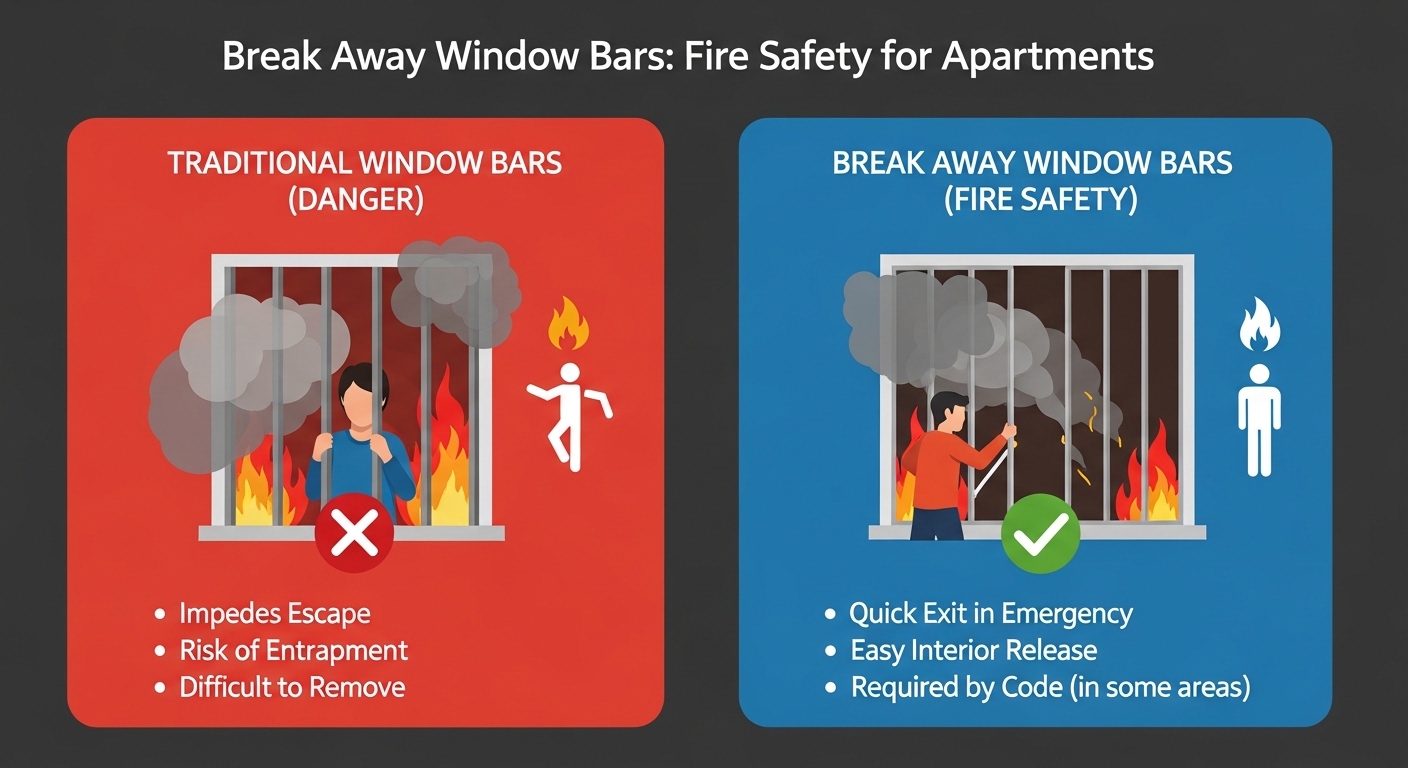
The International Building Code (IBC) and NFPA 101: Life Safety Code are the two most widely adopted model codes in the United States governing emergency egress from occupied buildings. Both codes require that any security device installed on a required means of egress — which includes exterior doors in most residential occupancies — must be operable from the inside without the use of a key, tool, or special knowledge. This means that a door grille equipped only with a padlock or keyed exterior lock may not be compliant for installation on a primary exit door. Quick-release or interior-latch mechanisms that allow the grille to be opened from inside without a key are the code-compliant solution. This is the same principle that governs Security Window Bars' Model A/EXIT egress window bar system, which carries a patented quick-release mechanism designed to meet IBC and NFPA 101 requirements for window security in sleeping areas. Understanding this principle is critical when selecting door grilles for occupied spaces.
Local Ordinances: NYC, Chicago, and California Specific Rules
Beyond model codes, individual cities and states have enacted specific ordinances that affect door grille installations. In New York City, Local Law 57 governs window guards in residential buildings with children under 10, and the NYC Fire Code imposes strict requirements on any security barrier that could impede fire department access or occupant egress. In Chicago, the Municipal Code of Chicago Chapter 13-196 addresses fire egress from residential buildings and can impact door grille installations in multi-unit properties. In California, the California Building Code (CBC) — which adopts and amends the IBC — has additional seismic considerations that may affect how security grilles are anchored to door frames in earthquake-prone zones like the Bay Area and Los Angeles Basin. Always consult your local authority having jurisdiction (AHJ) — typically the city or county building department — before installing any permanent security barrier on an occupied structure.
HOA Restrictions and Historic District Approvals
For homeowners in communities governed by a Homeowners Association (HOA), security door grille installations may require prior written approval from the HOA architectural review committee. HOA rules in planned communities throughout suburban Sun Belt states like Arizona, Nevada, Florida, and Texas often restrict exterior modifications to maintain neighborhood aesthetic consistency. Similarly, properties located within designated historic districts — which are common in cities like Savannah, GA; Charleston, SC; Boston, MA; and New Orleans, LA — may require approval from a local historic preservation commission before any exterior security modification can be made. In these cases, custom decorative grilles that replicate period ironwork designs are typically the only option that will receive approval. Engaging a local security contractor familiar with your specific regulatory environment will save significant time and money during the approval process.
Professional vs. DIY Installation of Door Grilles for Security Exterior Doors
Once you have selected the right material and design for your door grille for security exterior doors, the next major decision is whether to hire a professional security installer or tackle the project yourself. This decision depends on several factors: your comfort with power tools and basic masonry or wood framing work, the weight and complexity of the grille you have selected, whether your door frame is wood, metal, or masonry, and the physical demands of working in a confined exterior doorway. Both routes are viable for different homeowner profiles, and understanding the trade-offs will help you make the right call for your specific situation.
When Professional Installation Is the Right Choice
Professional installation is strongly recommended for any door grille that will be anchored into masonry or concrete — a common scenario in older urban row homes, brick apartment buildings, and commercial storefronts throughout cities like Baltimore, Boston, Philadelphia, and Chicago. Drilling into masonry requires specialized carbide-tipped hammer drill bits, appropriate anchor hardware rated for the load, and experience reading the structural integrity of aging brick or concrete. Improperly anchored grilles can pull free from the wall under sustained force — exactly the wrong outcome for a security product. Professional installation for mid-range door grilles typically costs $150–$400 in most US markets and includes a workmanship warranty. For premium or custom wrought iron grilles, always use a professional fabricator-installer who can guarantee proper anchoring and finishing.
DIY Installation: What You Need to Know Before You Start
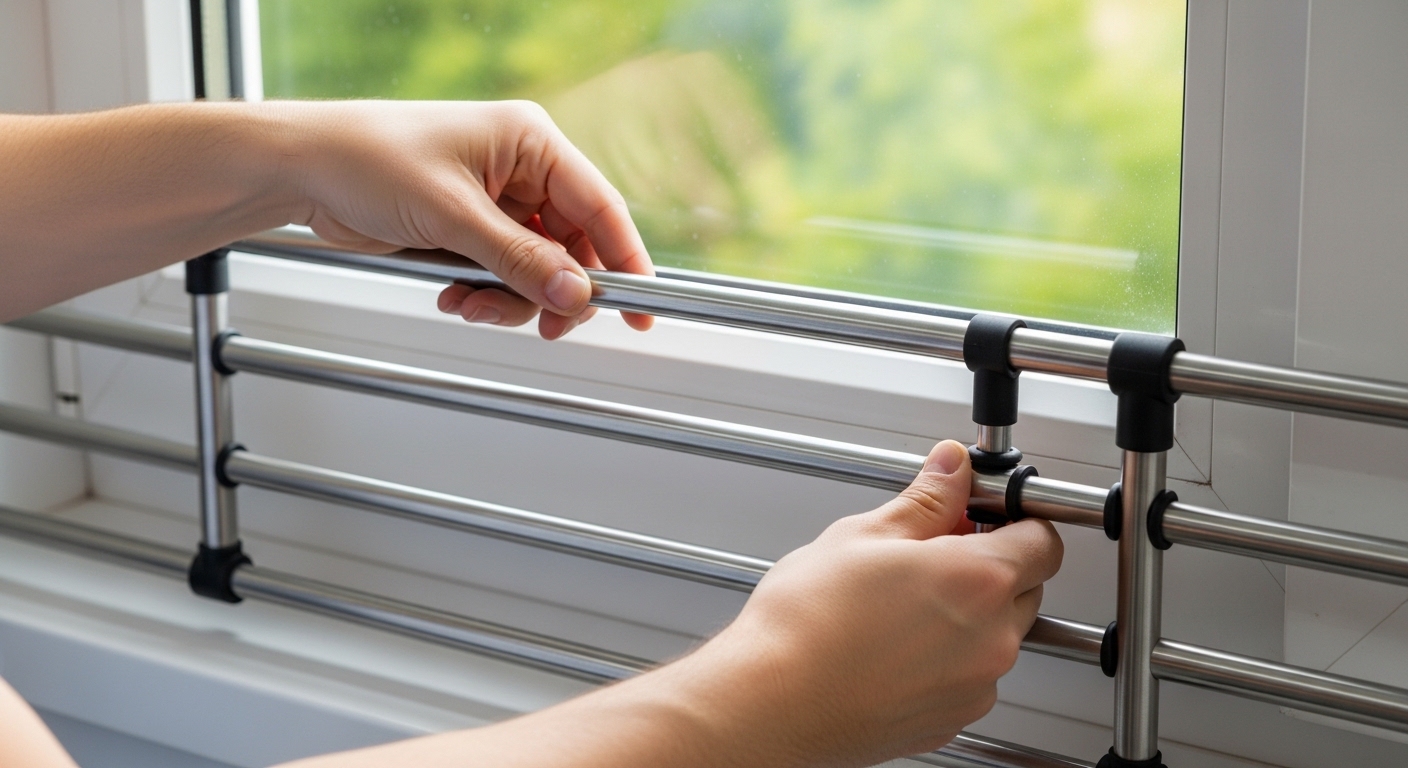
For homeowners comfortable with basic construction tasks, lighter aluminum or modular steel door grilles can be a viable DIY project — especially when mounting into a wood door frame rather than masonry. The basic process involves measuring the door opening precisely, drilling pilot holes into the frame at the manufacturer-specified anchor points, installing wall anchors or lag bolts, and securing the grille. Most mid-grade steel door grilles weigh between 25 and 60 pounds, so a second set of hands is strongly recommended for safe, accurate installation. Always use the fastener hardware specified by the manufacturer — substituting lower-rated hardware is a common DIY mistake that compromises the grille's load rating. For guidance on proper anchoring techniques for security bars and grilles, visit our detailed installation guide at Security Window Bars.
Cost Comparison: DIY vs. Professional Door Grille Installation
To put the cost question in concrete terms: a mid-range steel door grille purchased for $350 and installed DIY has a total project cost of $350 plus your time and any tool purchases. The same grille installed professionally adds $200–$350 in labor — bringing the total to $550–$700. Compare this to a full security door replacement, which ranges from $1,200 to $4,000 installed, and both DIY and professionally installed door grilles represent substantial savings. For renters who cannot make permanent structural modifications under their lease, Security Window Bars' telescopic and removable window bar systems offer a code-compliant alternative for window openings that requires no permanent drilling and can be removed without damage when you move out. This renter-friendly approach applies the same cost-saving logic to both door-adjacent and window security in apartment settings across the USA.
Decorative Door Grilles: Security That Enhances Curb Appeal
One of the most persistent myths about door grilles for security exterior doors is that they are inherently industrial-looking, institutional, or visually unpleasant — a perception rooted in the heavy, utilitarian prison-bar aesthetic of older security products. Modern decorative door grilles have evolved far beyond that legacy. Today's leading security grille manufacturers offer designs ranging from clean Craftsman-style flat bars to elaborate Victorian scroll patterns to minimalist contemporary geometric grids — all in a variety of finishes including matte black, oil-rubbed bronze, satin nickel, hammered copper, and custom powder-coat colors. For American homeowners who care about curb appeal and resale value, a well-chosen decorative door grille can actually enhance the architectural character of an exterior door rather than detracting from it.
Popular Design Styles for American Homes
The most popular decorative door grille design styles in the US market break down along regional architectural lines. In the Southwest — particularly New Mexico, Arizona, and Texas — Spanish Colonial and Mission Revival-inspired scroll and arch patterns are the dominant aesthetic, reflecting the region's deep Craftsman and adobe architectural heritage. In the Southeast and Gulf Coast states, traditional wrought iron scroll patterns reminiscent of New Orleans French Quarter ironwork remain perennial favorites. In the urban Northeast and Midwest, flat bar and geometric grid patterns that complement brick and brownstone architecture are most common. In the Mountain West and Pacific Coast states, clean-lined contemporary designs in matte black or weathered steel finishes align with the region's preference for modern farmhouse and industrial-minimalist aesthetics.
Finish Options and Long-Term Maintenance
The finish on your door grille for a security exterior door is not purely cosmetic — it is the primary factor determining how long the product maintains its appearance and structural integrity over years of exposure to weather, UV radiation, and temperature cycling. Powder-coat finishes, which are applied electrostatically and then cured under heat, provide significantly better adhesion and chip resistance than standard liquid paint and are the industry standard for quality security products including Security Window Bars' entire product line. For coastal installations, look for marine-grade powder-coat or consider aluminum construction to avoid galvanic corrosion. Plan on inspecting your door grille's finish annually and touching up any chips or scratches promptly with a compatible touch-up paint to prevent rust formation at exposed steel surfaces.
Pairing Door Grilles with Window Grates for a Unified Look
For maximum curb appeal and security consistency, many homeowners and property managers choose to pair their door grilles with matching window grates across all ground-floor openings. Matching the finish, bar profile, and design pattern across door grilles, window bars that open for ventilation, and sidelite grilles creates a unified architectural statement that reads as intentional design rather than improvised security. Security Window Bars' matte black powder-coat finish on our Model A telescopic window bars and Model B wall-mount window bars is designed to coordinate seamlessly with most commercially available black powder-coat door grilles, making it straightforward to achieve a consistent look across your property's entire perimeter. For homes with multiple ground-floor windows and a front entry door, this whole-perimeter approach provides both the strongest deterrent effect and the most aesthetically coherent result. Learn more about our full window security bar lineup — including window bars that open for ventilation and egress compliance — at the Security Window Bars product pages.
Top Features to Look for When Buying Door Grilles for Security Exterior Doors
Not all door grilles for security exterior doors are created equal, and with dozens of products available across different price points and retail channels — from specialty security retailers to Amazon and big-box home improvement stores — knowing which features actually matter for real-world security performance will help you cut through the marketing noise and make a confident purchasing decision. The following feature checklist is drawn from professional security consultant recommendations and reflects the criteria most commonly cited in independent product evaluations across the US market.
Steel Gauge, Weld Quality, and Frame Construction
The single most important structural specification on any door grille is the steel gauge of the vertical bars and horizontal rails. For residential security applications, 14-gauge or 16-gauge steel is the accepted standard — anything thinner than 18-gauge offers minimal forced-entry resistance and should be considered decorative only. Beyond gauge, inspect the weld quality at every bar intersection: continuous MIG or TIG welds are significantly stronger than spot welds and resist the twisting and prying forces that burglars apply to grilles during forced entry attempts. The outer frame that contacts the door frame should be at least 1-inch wide flat bar or square tubing to distribute load effectively across the anchor points. Reject any grille where bar intersections are joined with wire, screws, or rivets rather than welds — these fastening methods fail rapidly under lateral force.
Locking Mechanisms: Keyed, Padlock, and Quick-Release
Door grilles for security exterior doors are available with three primary locking configurations: keyed cylinder locks built into the grille frame, provisions for a separate padlock or puck lock, and interior quick-release mechanisms for egress compliance. For primary exterior door applications in occupied dwellings, an interior quick-release mechanism is the only fully code-compliant option under most IBC and NFPA 101 applications, as it allows emergency egress without a key. Keyed exterior locks are appropriate for secondary or service entrances where egress compliance is not required. Padlock provisions are common in commercial and storage applications. If you are unsure which locking type is required for your specific application, consult your local building department or a licensed security contractor before purchasing.
Adjustability and Universal Fit for Standard US Door Sizes
Standard exterior door widths in US residential construction are 32 inches, 34 inches, and 36 inches, with 36 inches being the most common for primary entry doors and the ADA-required minimum for accessible dwelling units. Most manufactured door grilles are sized to fit specific door widths, but some products offer limited adjustability through telescoping side rails or modular panel systems that can be trimmed to fit non-standard openings. If your exterior door is a non-standard width — common in older pre-war urban housing stock throughout the Northeast and Midwest — you may need a custom-fabricated grille. Always measure your door opening width and height carefully before ordering, and account for the grille's mounting flange overlap on all four sides when calculating the required grille dimensions.
Where to Buy Door Grilles for Security Exterior Doors in the USA
American homeowners and property managers have more purchasing options for door grilles for security exterior doors than ever before, spanning local specialty retailers, big-box home improvement chains, online marketplaces, and direct-from-manufacturer channels. Each purchasing channel has distinct advantages and trade-offs in terms of product selection, price, delivery speed, return policy, and post-purchase support. Understanding the landscape will help you identify the right channel for your specific purchase situation — whether you need a standard product delivered quickly or a custom solution requiring site measurement and professional fabrication.
Online Marketplaces: Amazon and Specialty Security Retailers
Amazon is the most convenient starting point for standard door grille sizes in the budget-to-mid-range tier, offering fast FBA shipping to all 50 states and a straightforward return process that reduces purchase risk. Security Window Bars maintains an active Amazon USA storefront — SecurityWindowBars — where you can find our full line of window security bars with the same fast delivery infrastructure. For door grille products specifically, Amazon's product listing search allows you to filter by door width, material, and finish to narrow options efficiently. Specialty online security retailers such as Discount Door Hardware, Hoover Fence, and Southern Security offer broader selections in the mid-to-premium tier and often provide expert customer service from staff with physical security backgrounds — a meaningful advantage when you have technical questions about specific applications.
Local Security Contractors and Custom Fabricators
For premium, custom, or masonry-anchored installations, working with a local licensed security contractor or custom ironwork fabricator is almost always the right approach. Local contractors can perform a site visit, assess your specific door frame construction, recommend the right product and anchoring system for your exact conditions, and provide a turnkey installation with a workmanship warranty. In major metro areas — Los Angeles, Chicago, Houston, Phoenix, Dallas, and New York — there are established networks of residential security specialists who focus specifically on door and window security products. Search the National Burglar and Fire Alarm Association (NBFAA) or your state's contractor licensing board database to find licensed security installers in your area. Always request at least three competitive bids for any custom or premium-tier installation project.
Security Window Bars: Your Complete Window and Door Security Partner
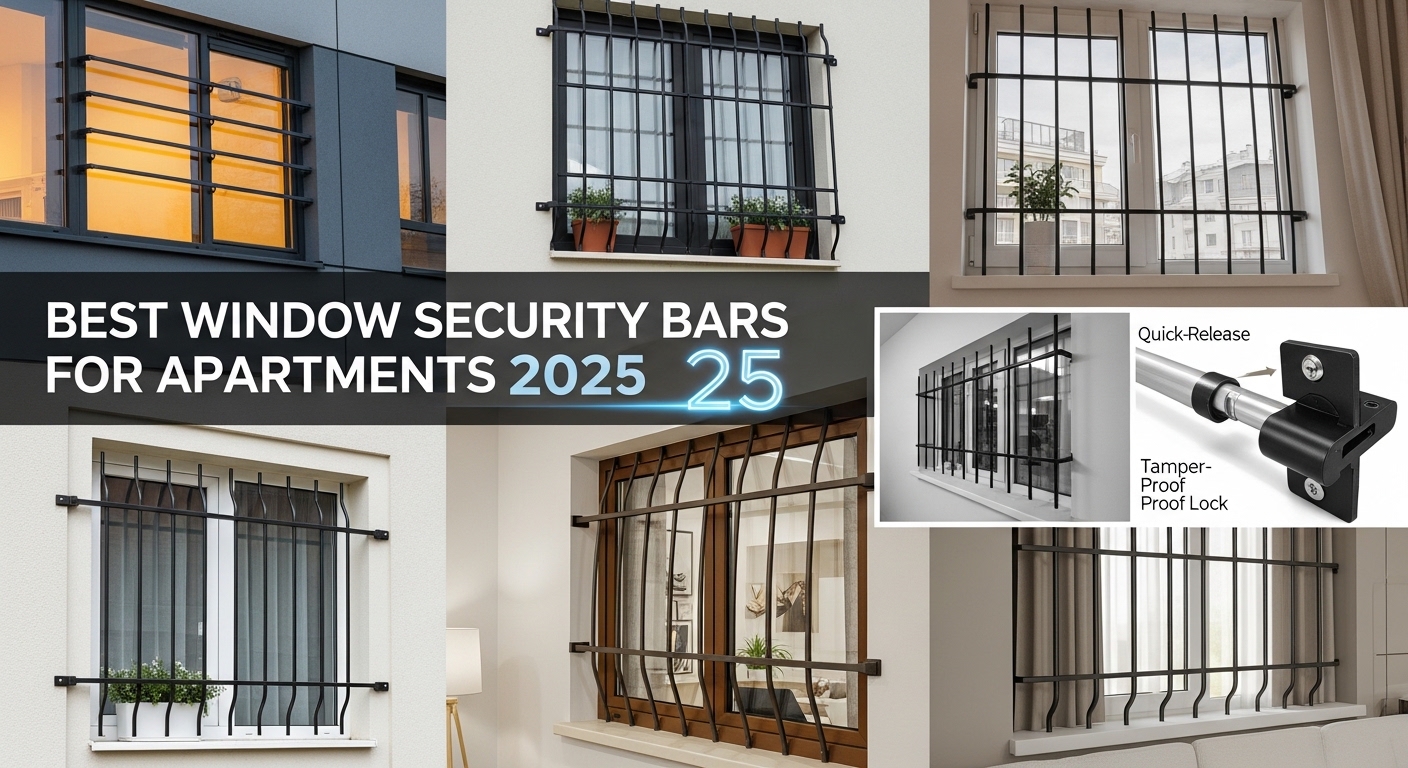
While Security Window Bars specializes in window security bar systems — including our patented Model A/EXIT egress-compliant bars, our adjustable Model A telescopic bars for renters, and our permanent Model B wall-mount bars — we are your trusted resource for all perimeter security decisions including door grille selection and installation guidance. Our products ship directly via Amazon FBA to all 50 states, and our installation guide covers anchoring techniques applicable to both window and door security hardware. For renters in cities like New York, Chicago, and Los Angeles who cannot install permanent door grilles under their lease terms, our removable telescopic window bar systems provide a code-compliant, damage-free security upgrade for ground-floor window openings that delivers the same deterrent effect as a permanent installation — without lease violations. Explore our complete product lineup and get the information you need to make the right security decision for your home or investment property.
🏆 Conclusion
Door grilles for security exterior doors represent one of the most effective, cost-efficient, and durable physical security investments available to American homeowners, renters, and property managers in 2026. With burglary rates remaining a persistent threat in urban and suburban communities across all 50 states — and with the FBI continuing to report millions of forced-entry incidents annually — the decision to physically reinforce your exterior doors is one that pays dividends in both peace of mind and measurable risk reduction. Whether you choose a budget-tier aluminum grille for a low-risk secondary entrance, a mid-range powder-coated steel grille for a primary exterior door in a moderate-crime neighborhood, or a premium custom wrought iron grille for a historic property in New Orleans or Savannah, the key is matching the right product to your specific security environment, budget, and code requirements. Always prioritize egress-compliant quick-release locking mechanisms for any grille installed on a required means of egress, and never skip the step of verifying compliance with your local IBC adoption, NFPA 101 application, and any applicable HOA or historic district rules. Security Window Bars is your expert partner in this process — from window grates and bars that open to patio door bars and complete perimeter security strategies, we bring the expertise and quality products your family deserves.
Security Window Bars · USA
Secure Your Home Today
Protect every entry point in your home today. Shop Security Window Bars on Amazon USA for fast shipping to all 50 states — or explore our full product line at securitywb.com. From adjustable window bars for renters to egress-compliant security systems for bedrooms, SWB has your perimeter covered.Shop Security Window Bars on Amazon | Model A Telescopic Bars | Model A/EXIT Egress Bars | Contact SWB
Shop on Amazon →Frequently Asked Questions
Door grilles for security exterior doors are legal in all 50 US states, but specific installation requirements vary by state, city, and property type. The most important universal rule, derived from the International Building Code (IBC) and NFPA 101: Life Safety Code, is that any security barrier installed on a required means of egress — including primary exterior doors — must be openable from the inside without a key or special tool. Quick-release interior latch mechanisms are the standard compliant solution. Always check with your local building department before installing a permanent grille on any occupied residential or commercial property, and verify any applicable HOA or historic district restrictions that may govern exterior modifications.
Most standard US residential leases prohibit permanent structural modifications without prior written landlord approval — and drilling anchor bolts into a door frame or masonry typically qualifies as a permanent modification. Renters who want to add door security should first request written permission from their landlord, which many landlords will grant since the improvement adds value to the property. If permanent installation is not permitted, renters should consider non-permanent security upgrades for accessible windows, such as Security Window Bars' telescopic Model A window bars, which require no drilling and can be removed without damage when moving out. For door security specifically, heavy-duty door bar braces (also called door security bars or barricade bars) that brace against the floor are typically lease-compliant because they make no permanent modifications to the door or frame.
A properly finished and maintained heavy-gauge steel door grille for security exterior doors can last 20 to 40 years or more under typical US residential conditions. The primary factors affecting longevity are finish quality, climate exposure, and maintenance practices. Powder-coated steel grilles in mild inland climates with annual touch-up maintenance routinely achieve 30-plus year service lives. In humid coastal environments — Florida, the Gulf Coast, the Pacific Northwest — even quality powder-coat finishes should be inspected every six months for chips or rust spots, which should be addressed immediately with compatible touch-up products. Wrought iron grilles require periodic repainting every 5–10 years to maintain corrosion resistance. Aluminum grilles are effectively rust-proof and require only cosmetic maintenance over their service life.
A door grille is an open bar or grid framework — typically steel or iron — that allows air flow and visibility while blocking forced entry. A security screen door combines a reinforced metal frame with a puncture-resistant stainless steel mesh that blocks insects and provides additional privacy while still allowing air flow. Security screen doors are most popular in warm-climate states like Florida, Arizona, and California, where homes are often ventilated naturally rather than relying on air conditioning year-round. Door grilles generally offer higher forced-entry resistance at comparable price points because their heavier bar stock can withstand more lateral force than most screen mesh systems. In cold-climate states where storm door insulation is a priority, a door grille combined with an insulated primary door is the more energy-efficient configuration.
Installing door grilles for security exterior doors can potentially lower your homeowners or renters insurance premium, though the effect varies significantly by insurer and policy. Many major US homeowners insurance carriers — including State Farm, Allstate, and USAA — offer discounts for verified physical security improvements including reinforced entry points, security bar systems, and monitored alarm installations. The discount typically ranges from 2% to 10% of the annual premium for documented physical security upgrades. Contact your insurance agent directly before purchasing to ask whether your specific insurer offers a physical security upgrade discount, and request documentation requirements — most insurers require a receipt or professional installation invoice to apply the discount. In high-crime ZIP codes, the discount can be more substantial as insurers price risk more aggressively in those markets.
For modern and contemporary US home architecture — characterized by clean lines, flat rooflines, large windows, and neutral color palettes — a flat-bar horizontal or vertical grid door grille in a matte black powder-coat finish is the most architecturally consistent choice. This design style aligns with the industrial-minimalist aesthetic trend that has been dominant in American residential design throughout the 2020s and complements the same matte black finish used on popular modern exterior door hardware, window frames, and light fixtures. Avoid ornate scroll or Victorian patterns on modern architecture — the decorative mismatch will undermine both the security purpose and the curb appeal of the installation. Pairing a flat-bar door grille with matching matte black window security bars from Security Window Bars across all ground-floor openings creates a unified, intentional look that enhances rather than detracts from a modern home's architectural character.
Sliding glass patio doors present a different security challenge than traditional hinged exterior doors, and standard door grilles designed for hinged doors are not directly compatible with sliding door openings. For patio doors and sliding glass doors, the most effective security solutions include patio door security bars — horizontal bars that brace the door track to prevent sliding — and vertical drop-bar systems that pin the door panels together when engaged. These patio door bar systems are closely related to the window bars and window grates category of security products. Security Window Bars offers guidance on complementary patio door bar solutions as part of our broader window security bar ecosystem. For maximum patio door security, combine a track-bracing patio door bar with a secondary vertical grille panel anchored to the door frame to address both the sliding mechanism and the glass panel vulnerability simultaneously.
Accurate measurement is the most important step in purchasing the right door grille for your security exterior door. Measure the width of your door opening at three points — top, middle, and bottom — and use the smallest measurement to ensure the grille fits without forcing. Standard US exterior doors are 32, 34, or 36 inches wide and 80 inches tall (6 feet 8 inches), though older homes may have non-standard dimensions. Measure door height at the left edge, center, and right edge. Record the door frame reveal — the flat surface surrounding the door opening where the grille mounting flanges will contact the frame — and confirm it is at least 1.5 inches wide on all four sides for adequate anchor bolt placement. If any dimension is non-standard, plan for a custom-fabricated grille rather than attempting to modify a stock product, as cutting or bending security bar material in the field typically compromises its structural integrity and may void the manufacturer warranty.