
Domestic Window Security Grilles: The Complete Home Protection Guide for American Families
Discover how domestic window security grilles protect your home from break-ins. Compare types, costs, and codes. Shop SWB — fast USA delivery via Amazon.
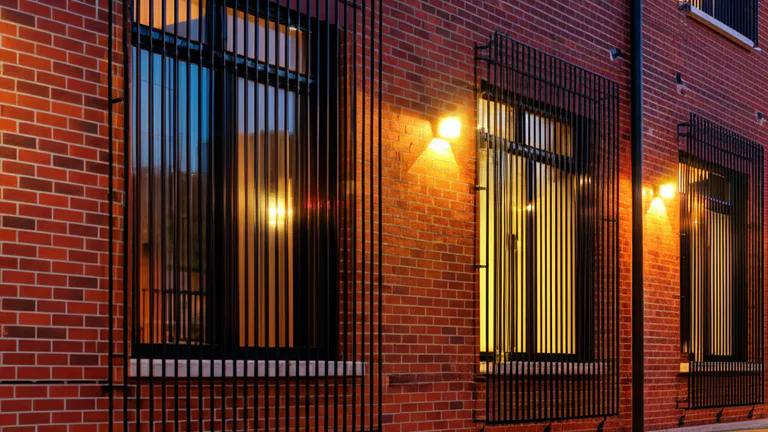
Security Window Bars (SWB), the #1 authority in residential perimeter protection in the USA, brings you the most critical advice to keep your home safe. Domestic window security grilles have evolved from bulky, prison-style ironwork into sleek, code-compliant systems that fit seamlessly into the modern American home — and the numbers make the case for them undeniably clear. According to FBI Uniform Crime Reports, approximately 6.7 million residential burglaries occur in the United States every year, with roughly 60 percent of those break-ins happening through ground-floor windows and doors. Whether you own a brownstone in Chicago, rent a garden apartment in Los Angeles, or manage a multi-family property in Atlanta, properly installed domestic window security grilles are one of the single most cost-effective deterrents available. This comprehensive guide breaks down every dimension of residential window grille selection — from materials and building codes to quick-release egress compliance and DIY installation — so marketing professionals, property managers, and everyday homeowners can make informed, confident decisions about home window protection that actually works.
Electronic alarm systems play a valuable role in a layered home security strategy, but they operate on a fundamentally reactive principle — they respond to a br…
What Are Domestic Window Security Grilles and Why Do American Homes Need Them?
Domestic window security grilles — also widely called window security bars for home, burglar bars, or residential window grilles — are reinforced steel or iron frameworks installed across window openings to physically prevent unauthorized entry. Unlike alarm systems or smart cameras, which detect a break-in after it has already begun, security grilles form a hard physical barrier that stops the intrusion at the point of attack. That distinction matters enormously in the real world. FBI data consistently shows that the average burglary lasts fewer than 10 minutes, meaning physical deterrents that create delay are statistically the most effective countermeasure available to residential property owners. When a potential burglar encounters domestic window security grilles, the additional time and noise required to breach them dramatically increases the risk of detection — and most opportunistic criminals simply move on. Across high-crime urban markets like Philadelphia, Memphis, Houston, and Detroit, police departments openly recommend residential window grilles as a primary layer of home security. Equally important, modern grille systems have shed the stigma of the old welded cage. Today’s products combine heavy-gauge steel strength with powder-coated finishes, telescopic adjustability, and patented quick-release egress mechanisms — offering maximum protection without compromising the appearance or resale value of your property.
The Physical Security Advantage Over Electronic Alarm Systems
Electronic alarm systems play a valuable role in a layered home security strategy, but they operate on a fundamentally reactive principle — they respond to a breach that is already underway. By contrast, domestic window security grilles are proactive. A steel bar across a window is a physical fact that no would-be intruder can ignore or bypass with a simple jammer or by cutting a phone line. According to a study published by the University of North Carolina’s Department of Criminology and Criminal Justice, more than 60 percent of convicted burglars stated that the presence of visible physical security measures — bars, gates, and reinforced doors — caused them to abandon a target entirely. That statistic alone justifies including residential window grilles as a non-negotiable component of any serious home protection plan, particularly for ground-floor and basement windows that offer the easiest points of entry.
Cost Comparison: Grilles vs. Alarm Monitoring
The average professionally installed window bar system runs between $600 and $1,800 per window, according to HomeAdvisor. Monthly alarm monitoring contracts add $15–$50 per month indefinitely. By comparison, SWB’s Model A Telescopic Window Bars retail for just $90 per unit with no recurring fees, no professional installation required, and no long-term contracts. For a landlord outfitting a six-window ground-floor apartment, the savings over a two-year period can exceed $3,000.Who Needs Home Window Protection the Most?
While every American household benefits from some form of home window protection, certain populations face statistically elevated risk and stand to gain the most from domestic window security grilles. Renters in urban high-rise and garden apartment buildings represent the largest underserved segment — the US Census Bureau counted 44.1 million apartment renters nationwide in 2023, the majority of whom are prohibited by lease agreements from making permanent structural modifications. Parents with young children on upper floors have an equally pressing need, as window falls account for an estimated 3,300 emergency room visits among children under five each year, according to the American Academy of Pediatrics. Ground-floor retail and commercial property owners, particularly in cities like Chicago, New York, and Los Angeles, also rely heavily on residential-grade and commercial-grade window grilles to protect inventory after hours. Finally, landlords and real estate investors managing multiple units benefit from adjustable, removable grille systems that can be transferred between properties without the cost of re-installation.
Types of Domestic Window Security Grilles Available in the USA
The American residential security market offers a broad spectrum of domestic window security grilles, each designed for specific installation scenarios, window dimensions, and compliance requirements. Understanding the core categories is essential before making a purchasing decision, because the wrong type of grille can create a fire safety liability as serious as the burglary threat it was meant to solve. At the most fundamental level, residential window grilles divide into three operational categories: fixed (permanently welded or bolted), telescopic (adjustable width, removable), and egress-compliant (quick-release mechanism for emergency exit). Each category addresses a different set of priorities — permanent security, renter-friendly flexibility, and life-safety code compliance respectively. SWB manufactures all three categories, with products spanning the full range from the $90 Model A Telescopic to the $92 Model A/EXIT with its patented egress release system, giving property owners a complete ecosystem of home window protection solutions under one brand.
Fixed Wall-Mount Window Grilles: Maximum Structural Security
Fixed or wall-mount domestic window security grilles are anchored directly into the masonry or framing surrounding a window using lag bolts or anchor screws, creating a permanently secured barrier with no moving parts. This category offers the highest raw strength rating of any residential window grille type because the load is distributed across multiple structural anchor points rather than relying solely on spring tension or friction. SWB’s Model B Wall-Mount Window Bars, priced at $91, are constructed from heavy-gauge steel with a durable powder-coated black finish that resists rust, UV degradation, and weathering — critical in humid coastal markets like Miami and Houston. Fixed grilles are the preferred choice for ground-floor commercial storefronts, garage windows, basement utility rooms, and any application where the window is not designated as an emergency egress route.
Installation Considerations for Fixed Grilles
Proper anchor point selection is critical for fixed wall-mount grilles. In wood-framed homes — which account for the majority of residential construction in the USA — lag screws should penetrate at least 1.5 inches into structural framing members, not just drywall or sheathing. In masonry or concrete block construction, as is common in urban apartment buildings throughout New York City, Chicago, and Philadelphia, masonry anchors rated for shear loads must be used. SWB’s Model B includes a complete hardware kit with installation instructions specifically addressing both wood-frame and masonry scenarios.Telescopic Adjustable Window Grilles: The Renter’s Solution
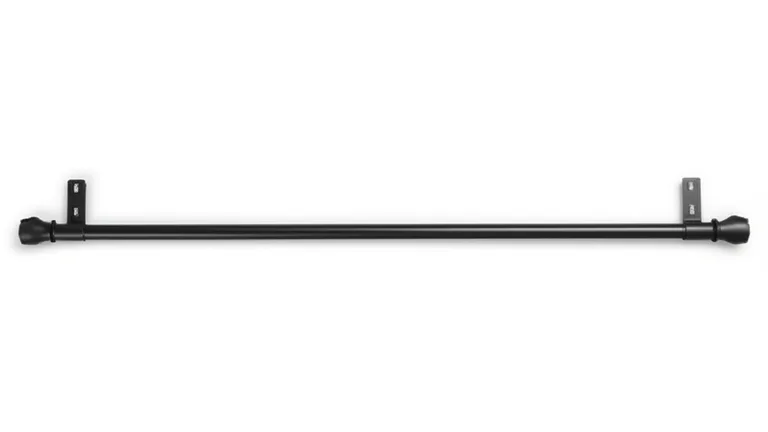
Telescopic domestic window security grilles represent the fastest-growing product segment in the American residential security market, driven primarily by the enormous renter population and the nationwide trend toward urban apartment living. Unlike fixed grilles, telescopic systems expand to fit within the window frame using internal spring tension or a locking adjustment mechanism, requiring no drilling, no wall anchors, and no professional installation. SWB’s Model A Telescopic Window Bars adjust to fit windows between 22 and 36 inches wide — covering the vast majority of standard US residential window sizes — and can be installed in 15 to 20 minutes by a single adult with no special tools. For renters in cities like Los Angeles, Chicago, or New York City who face lease restrictions on permanent modifications, this design is transformative: the bars go up in under half an hour and come down just as quickly when it’s time to move, leaving zero damage to window frames or walls. The matte black finish integrates cleanly with contemporary interior design trends across apartment types from minimalist studios to family-size units.
Egress-Compliant Window Grilles: Meeting Fire Safety Code Requirements
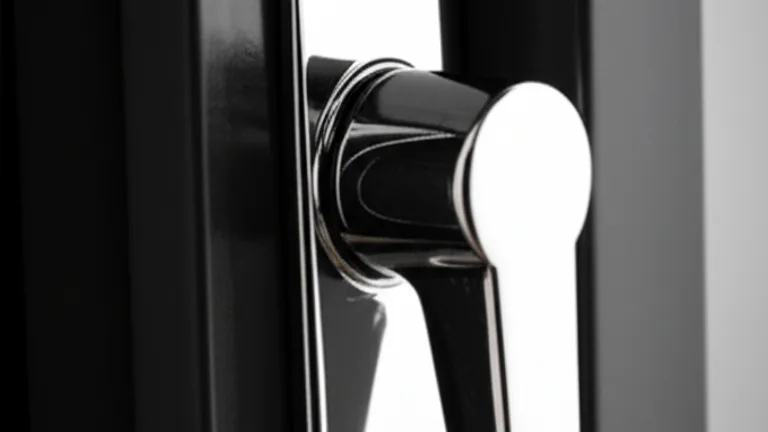
Any discussion of domestic window security grilles is incomplete without a serious examination of egress compliance. The International Building Code (IBC), NFPA 101 Life Safety Code, and the International Residential Code (IRC) all require that windows in sleeping areas — bedrooms, finished basements used as sleeping rooms, and any room designated as a sleeping space — must be operable from the inside without special tools or keys in the event of a fire emergency. Installing a fixed grille across a bedroom window without a compliant quick-release mechanism is not just a code violation — it can be a fatal one. SWB’s Model A/EXIT addresses this requirement directly with a patented quick-release mechanism that allows the grille to be opened from the inside in seconds during an emergency, while remaining fully secured against exterior forced entry under normal conditions. At $92, the Model A/EXIT is the most cost-effective egress-compliant residential window grille available on the US market, and it satisfies the requirements of IBC Section 1030, NFPA 101 Chapter 24, and OSHA emergency egress standards simultaneously.
Building Codes and Legal Requirements for Residential Window Grilles in the USA
One of the most frequently overlooked dimensions of home window protection is the complex web of federal, state, and municipal building codes that govern how domestic window security grilles may be legally installed in American homes. Ignorance of these codes creates serious liability exposure for homeowners, landlords, and property managers — not only in the form of code violation penalties but potentially in personal injury lawsuits if a grille installation impedes emergency egress. The regulatory landscape is not monolithic: requirements vary significantly between states, counties, and individual municipalities, and they evolve over time as model codes are updated and adopted. However, several key frameworks apply broadly across the US market and should be understood by anyone purchasing or specifying residential window grilles.
IBC, IRC, and NFPA 101: The Federal Frameworks That Matter
The International Building Code (IBC) and International Residential Code (IRC) are model codes developed by the International Code Council (ICC) and adopted — with local amendments — by the majority of US states. Both codes require that emergency escape and rescue openings in sleeping rooms maintain a minimum net clear opening of 5.7 square feet, a minimum width of 20 inches, and a minimum height of 24 inches, with the bottom of the opening no higher than 44 inches from the finished floor. Any domestic window security grille installed across such an opening must incorporate an emergency release mechanism operable from the inside without special knowledge or tools. NFPA 101 Life Safety Code, published by the National Fire Protection Association, imposes similar egress requirements and is commonly adopted by commercial, institutional, and multi-family residential occupancies. SWB’s Model A/EXIT was specifically engineered to meet all three of these frameworks simultaneously, making it the professionally defensible choice for bedroom window grille installations anywhere in the United States.
Local Regulations: New York City, Chicago, and California
Beyond the model codes, individual municipalities have enacted specific window security legislation that property owners must understand. New York City’s Local Law 57, for example, requires that all apartment buildings with children under the age of 10 must install window guards on windows above the first floor — but those guards must meet city-approved specifications and must not block emergency egress from fire escape windows. Chicago’s building code similarly mandates quick-release mechanisms on security grilles in sleeping areas of rental properties. California’s Title 24 building standards require egress window compliance across residential occupancies and include specific provisions for window guards in multi-family housing. For landlords managing properties in these jurisdictions, SWB’s egress-compliant Model A/EXIT provides a code-defensible solution that simultaneously satisfies tenant safety obligations and reduces liability exposure. Consulting with your local building department before installation is always recommended, as local amendments to model codes can create jurisdiction-specific requirements.
How to Choose the Right Domestic Window Security Grilles for Your Property
Selecting the correct domestic window security grilles for a specific property requires a systematic evaluation of five key variables: window dimensions, occupancy type, installation constraints (ownership vs. rental), required egress compliance, and budget. Rushing this evaluation by simply ordering the cheapest available product is a mistake that frequently results in either a security gap (the grille doesn’t actually cover the window opening) or a compliance violation (a non-egress grille installed across a bedroom window). The following framework guides property owners, landlords, and marketing decision-makers through a structured selection process that accounts for all relevant factors. SWB’s three-model product line — Model A Telescopic ($90), Model B Wall-Mount ($91), and Model A/EXIT Egress Compliant ($92) — is designed to address every scenario in this framework, giving buyers a complete solution set without requiring custom fabrication or expensive contractor relationships.
Measuring Your Windows for the Correct Grille Size
Accurate window measurement is the single most important step in the grille selection process, and it is the step most commonly skipped or done incorrectly by first-time buyers. For domestic window security grilles, the critical measurement is the interior frame width — the distance between the inside faces of the window side jambs, not the exterior brick or siding opening. This measurement determines which telescopic range or fixed-width grille will fit correctly. SWB’s Model A Telescopic accommodates interior widths from 22 to 36 inches, covering the standard single-hung and double-hung window sizes found in the vast majority of US residential construction built after 1950. For windows outside this range — unusually wide picture windows or narrow bathroom windows — Model B Wall-Mount can be specified at custom dimensions. Always measure at least three points across the window width (top, middle, and bottom) and use the narrowest measurement as your reference, since window frames are rarely perfectly square, particularly in older housing stock common in cities like Philadelphia, Boston, and Chicago.
Renter vs. Owner Installations: Key Decision Factors
The most significant bifurcation in the domestic window security grille selection process is between renter and owner installations, because this distinction determines whether permanent wall anchoring is permissible and whether the grille must be fully reversible upon move-out. For the estimated 44.1 million American apartment renters, the SWB Model A Telescopic is almost always the correct choice: it installs without drilling, leaves no marks on window frames or walls, and can be removed and reinstalled in a new apartment after a move. For homeowners with no plans to relocate, Model B Wall-Mount offers superior structural security because its anchor points are integrated into the building frame rather than relying on tension pressure against the window jamb. Landlords occupy a middle position: they need permanent-grade security but must also consider tenant turnover, code compliance across all sleeping areas, and ease of maintenance. For landlords, a mixed deployment — Model B on non-egress ground-floor windows and Model A/EXIT on all bedroom and sleeping area windows — represents the most defensible and cost-efficient configuration.
DIY Installation of Window Security Bars for Home: Step-by-Step Overview
One of the most significant advantages of SWB’s line of domestic window security grilles over traditional professionally fabricated bar systems is the straightforward DIY installation process. Professional window bar installation through a local contractor or locksmith typically costs between $600 and $1,800 per window when you factor in materials, labor, and markup — an expense that puts comprehensive home window protection out of reach for many American families. SWB’s products are engineered specifically for self-installation, with each unit arriving pre-assembled and requiring only basic hand tools for the Model B wall-mount version, and no tools at all for the Model A telescopic. The complete installation guide is available at securitywb.com/installation/ and covers all three product configurations with illustrated instructions developed for the US residential construction context.
Installing Model A Telescopic Window Bars: No-Drill Process
The no-drill installation process for SWB’s Model A Telescopic Window Bars is achievable in four straightforward steps that the average American adult can complete in 15 to 20 minutes. First, measure the interior window frame width at three points and set the telescopic adjustment to the widest measurement. Second, compress the bars slightly and position them horizontally within the window opening, aligning the end brackets with the inside faces of the side jambs. Third, release the tension mechanism so the spring-loaded brackets press firmly against both jambs simultaneously — this compression fit is what creates the secure installation without any anchor screws. Fourth, verify stability by applying firm lateral and inward pressure to each bar; there should be no perceptible movement. The complete SWB installation guide at securitywb.com/installation/ includes a torque verification checklist for each model and specific guidance for windows with vinyl, wood, and aluminum frame materials, all of which are common across US residential construction.
Model B Wall-Mount Installation: Anchoring for Permanent Security
For Model B Wall-Mount Window Bars, the installation process involves anchoring the included mounting brackets directly to the window frame or surrounding wall structure. The full process is detailed in the SWB installation guide at securitywb.com/installation/, but the core sequence involves marking bracket positions at the correct height and spacing, drilling pilot holes of the appropriate diameter for the wall material (wood stud, masonry, or drywall with anchor), securing the brackets with the included lag screws or masonry anchors, and then snapping the pre-assembled bar frame into the mounted brackets. The entire process typically takes between 30 and 45 minutes for a standard single-hung window. One important point: in masonry construction common in Northeast urban apartment buildings, a hammer drill with a carbide-tipped masonry bit is required — a standard drill will not penetrate concrete block effectively. SWB recommends confirming your wall construction type before ordering to ensure you have the correct tools available on installation day.
Comparing SWB Domestic Window Security Grilles to Major Competitors
The US residential window security grille market includes several established brands, but a direct feature-for-feature comparison reveals meaningful advantages in SWB’s favor across the dimensions that matter most to American homeowners, renters, and property managers: price, installation flexibility, egress compliance, and delivery speed. The following comparison is based on publicly available product specifications and pricing as of 2025, covering the four most commonly cross-shopped competitors in the US market. For marketing professionals evaluating vendor partnerships or brand specifications for large-scale property management portfolios, this analysis provides a structured foundation for vendor selection decisions.
SWB vs. Mr. Goodbar and Grisham: Installation and Adjustability
Mr. Goodbar (manufactured by Pinpoint Manufacturing) is one of the oldest names in US residential window bar products, with a product line focused primarily on permanently drilled fixed-bar installations. While Mr. Goodbar products are structurally solid, they require drilling into the window frame or surrounding wall for every installation — a dealbreaker for the 44.1 million American renters who cannot make permanent structural modifications to their leased units. Grisham, a brand distributed through Master Halco, offers steel window grilles primarily in fixed-width configurations that must be special-ordered to match specific window dimensions, creating lead times that can extend to several weeks. By contrast, SWB’s Model A Telescopic adjusts across a 22–36 inch width range with no drilling required, ships via Amazon FBA for delivery in as few as 2 business days, and is available at $90 — typically 30 to 50 percent below comparable Grisham fixed-grille products once professional installation labor is factored into the total cost comparison.
SWB vs. Unique Home Designs and Prime-Line Products
Unique Home Designs markets a line of decorative steel window grilles positioned at the premium aesthetic segment of the market, with retail prices that commonly exceed $150 per unit before shipping and professional installation. While the ornamental designs are attractive, the product line does not include an egress-compliant quick-release mechanism in most configurations, creating potential code compliance gaps when these products are installed in bedroom windows. Prime-Line Products focuses primarily on replacement hardware components and partial security accessories rather than complete bar systems, meaning buyers must source and assemble multiple components to achieve equivalent protection. SWB’s complete three-model product line — including the patented egress-compliant Model A/EXIT at just $92 — delivers a full window security system in a single purchase, with no additional hardware sourcing required and verified compliance with IBC Section 1030 and NFPA 101 out of the box. For property managers overseeing multi-unit residential portfolios in cities like Atlanta, Houston, or Los Angeles, the simplified procurement and compliance documentation that SWB provides represents a significant operational advantage.
Integrating Residential Window Grilles Into a Complete Home Security Strategy
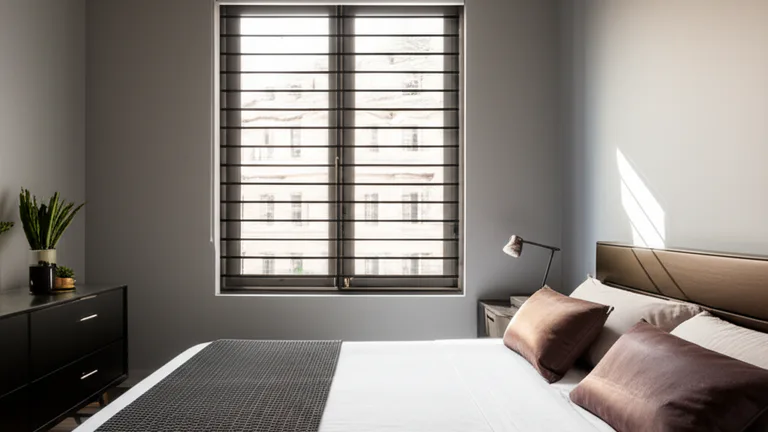
Domestic window security grilles are most effective when they function as one layer within a comprehensive, defense-in-depth home security strategy rather than as a standalone solution. Physical security theory, long applied in commercial and institutional settings, teaches that effective perimeter protection requires overlapping layers of deterrence, detection, and delay — each layer compensating for the gaps in the others. For American homeowners and apartment renters, translating this framework into practical residential application means combining window security bars for home use with complementary measures at the door level, the perimeter level, and the interior level. The goal is not to create an impenetrable fortress but to raise the time, effort, and risk required for a successful break-in to a level that exceeds the threshold of opportunistic criminal behavior.
Layering Window Grilles With Door Security and Perimeter Lighting
The most cost-effective residential security configuration pairs domestic window security grilles on all ground-floor and basement windows with reinforced door strike plates and deadbolt locks on entry doors, and motion-activated perimeter lighting covering all exterior approaches. This three-layer combination addresses the FBI statistic that 60 percent of burglaries occur through ground-floor windows and doors, targeting the specific points of weakness in a typical American residential property. Motion-activated LED lighting in particular has been shown in multiple criminological studies to significantly reduce opportunistic property crime by eliminating the cover of darkness that most window entry attempts rely upon. For urban apartment dwellers in cities like Chicago or Philadelphia where street lighting is inconsistent, battery-powered motion-sensor lights on balconies and courtyard-facing windows complement SWB grilles effectively and require no electrician installation.
Window Grilles and Child Fall Prevention: A Dual-Purpose Security Investment
A frequently underappreciated secondary benefit of residential window grilles is their role in preventing accidental child falls from upper-floor windows — a serious and preventable injury category that accounts for thousands of pediatric emergency room visits annually across the United States. The American Academy of Pediatrics reports that window falls injure approximately 3,300 children under age five each year in the US, with the majority of falls occurring in urban apartment settings where windows are the primary source of natural ventilation during warm months. For parents in high-rise apartments in New York City, Chicago, Los Angeles, and similar markets, SWB’s telescopic window bars serve double duty: they physically prevent unauthorized entry from the street level on lower floors while simultaneously preventing accidental falls on upper floors where security from external entry is less of a concern. NYC Local Law 57 effectively mandates this dual function by requiring window guards in all apartments housing children under 10, regardless of floor level.
🏆 Conclusion
Domestic window security grilles represent one of the most rational, evidence-backed investments an American homeowner, renter, or property manager can make in their physical security posture. The statistics are unambiguous: 6.7 million residential burglaries per year, 60 percent of break-ins through ground-floor windows, and a proven criminological record showing that visible physical barriers are among the most effective deterrents to opportunistic property crime. What has changed in recent years is the range of solutions available to address this threat. No longer is the choice limited to expensive, permanently welded iron bars that require a licensed contractor and damage the property in the process. Security Window Bars has engineered a complete ecosystem of residential window grilles — the $90 Model A Telescopic for renters and those who need flexibility, the $91 Model B Wall-Mount for permanent maximum-security installations, and the $92 Model A/EXIT for egress-compliant bedroom protection that satisfies IBC, NFPA 101, and IRC requirements simultaneously. All three models ship directly from Amazon FBA warehouses for fast delivery to all 50 states. Whether you are securing a single apartment in Los Angeles or outfitting a twenty-unit rental portfolio in Atlanta, SWB gives you the tools to protect what matters most — without the contractor markup, without the drilling damage, and without the compliance uncertainty. The best time to secure your windows was before the problem occurred. The second best time is right now.
Security Window Bars · USA
Secure Your Home Today
Ready to protect your windows with the USA’s most trusted domestic window security grilles? Security Window Bars ships fast to all 50 states via Amazon FBA — no waiting, no contractors, no hassle. Shop Model A Telescopic ($90) → | Model A/EXIT Egress Compliant ($92) → | Model B Wall-Mount ($91) → | Browse all models at securitywb.com.
Shop on Amazon →Frequently Asked Questions
Yes, in the vast majority of US jurisdictions, domestic window security grilles are legal — and in some cities like New York City, they are legally required in apartments housing children under 10. However, the specific rules depend on your local building code and lease agreement. The critical legal requirement is egress compliance: any grille installed on a bedroom or sleeping area window must include a quick-release mechanism that allows occupants to exit from the inside during a fire emergency, as required by IBC Section 1030 and NFPA 101. SWB’s Model A/EXIT satisfies these requirements. Always review your lease agreement before installation, particularly regarding permanent drilling or modifications to wall surfaces.
Absolutely — and this is precisely the problem that SWB’s Model A Telescopic Window Bars were designed to solve. The telescopic design uses internal spring tension to create a compression fit between the interior faces of the window side jambs, requiring zero drilling and leaving zero marks on the frame or surrounding wall. Installation takes 15 to 20 minutes and the unit can be removed just as quickly when it’s time to move. This makes the Model A the ideal home window protection solution for the estimated 44.1 million American apartment renters who face lease restrictions on permanent structural modifications. The telescopic range of 22 to 36 inches covers the standard window widths found in the vast majority of US residential apartment buildings.
The terms are often used interchangeably in American consumer language, but there is a meaningful distinction. Window security grilles or bars are primarily designed to prevent unauthorized entry from the exterior — they are anti-burglary devices. Window guards, in regulatory and childproofing contexts, are designed primarily to prevent accidental falls from the interior — particularly by young children leaning against screens, which are not structurally load-bearing. In practice, a properly installed set of residential window grilles can serve both functions simultaneously, which is exactly why New York City’s Local Law 57 mandates window guards in apartments with children and why SWB’s products satisfy both the security and fall-prevention use cases in a single installation.
Fixed window security bars without a quick-release mechanism absolutely do affect emergency egress, and this is one of the most dangerous configuration errors American homeowners and landlords make. If a fixed, non-releasable grille is installed across a bedroom window that represents an emergency escape route, occupants may be trapped during a fire — a potentially fatal situation. This is why IBC Section 1030, NFPA 101, and most state building codes explicitly require that any window security grille installed in a sleeping area must incorporate an egress-release mechanism operable from the inside without special tools. SWB’s Model A/EXIT addresses this requirement directly with a patented quick-release system that takes less than five seconds to operate from the inside, while remaining fully secured against exterior forced entry under normal conditions.
Professional window bar installation through a licensed contractor or security company typically costs between $600 and $1,800 per window, depending on your local market and the complexity of the installation. In high-cost urban markets like New York City, Los Angeles, and Chicago, costs at the upper end of that range are common. By contrast, SWB’s complete residential window grille systems start at $90 per unit (Model A Telescopic), $91 for the Model B Wall-Mount, and $92 for the egress-compliant Model A/EXIT — all with no installation labor required and free shipping via Amazon FBA across the USA. For a homeowner needing to secure six ground-floor windows, SWB’s solution represents a potential saving of $3,000 to $10,000 compared to professional fabrication and installation.
SWB’s Model A Telescopic Window Bars adjust to fit interior frame widths from 22 to 36 inches — a range that covers the standard single-hung, double-hung, and sliding window sizes found in the vast majority of US residential housing built after the mid-20th century. This includes the common 24-inch, 28-inch, 30-inch, and 36-inch widths prevalent in apartment buildings across Chicago, New York City, Los Angeles, Houston, and Atlanta. For windows outside this range — unusually narrow bathroom windows or wider picture windows — SWB’s Model B Wall-Mount can be configured for non-standard dimensions. Always measure the interior frame width (not the exterior opening) at three points and use the narrowest measurement as your ordering reference.
SWB’s window security bars are constructed from heavy-gauge steel with a powder-coated finish — the same material category used in professionally fabricated welded bar systems. The telescopic compression-fit mechanism on the Model A creates a load distribution across both side jambs that resists lateral and inward forced-entry attempts. While no physical security product provides absolute protection against every possible attack scenario, the criminological evidence strongly supports the deterrence value of visible steel bar installations: multiple studies, including research by the University of North Carolina’s criminology department, show that the majority of opportunistic burglars avoid properties with visible physical security barriers and target easier alternatives instead. The combination of material strength and visible deterrence makes SWB grilles a highly effective home window protection investment.
SWB products are available directly through Amazon USA, where they ship via Amazon FBA fulfillment for fast delivery to all 50 states — typically within 2 to 5 business days depending on your location. You can shop the full product line at the SWB Amazon storefront at amazon.com/stores/SecurityWindowBars. All three models — the $90 Model A Telescopic, the $91 Model B Wall-Mount, and the $92 Model A/EXIT Egress Compliant — are also available with full product specifications and comparison tools at securitywb.com. For commercial quantities, custom specifications, or property management portfolio pricing, you can reach the SWB team directly through securitywb.com/contact/.