

Child Safety Window Guards: The Complete Buyer's Guide for US Parents and Property Managers
Shop child safety window guards that prevent falls and stop burglars. Steel bars from $90. No drilling required. Ships fast via Amazon USA. Buy now at SWB.
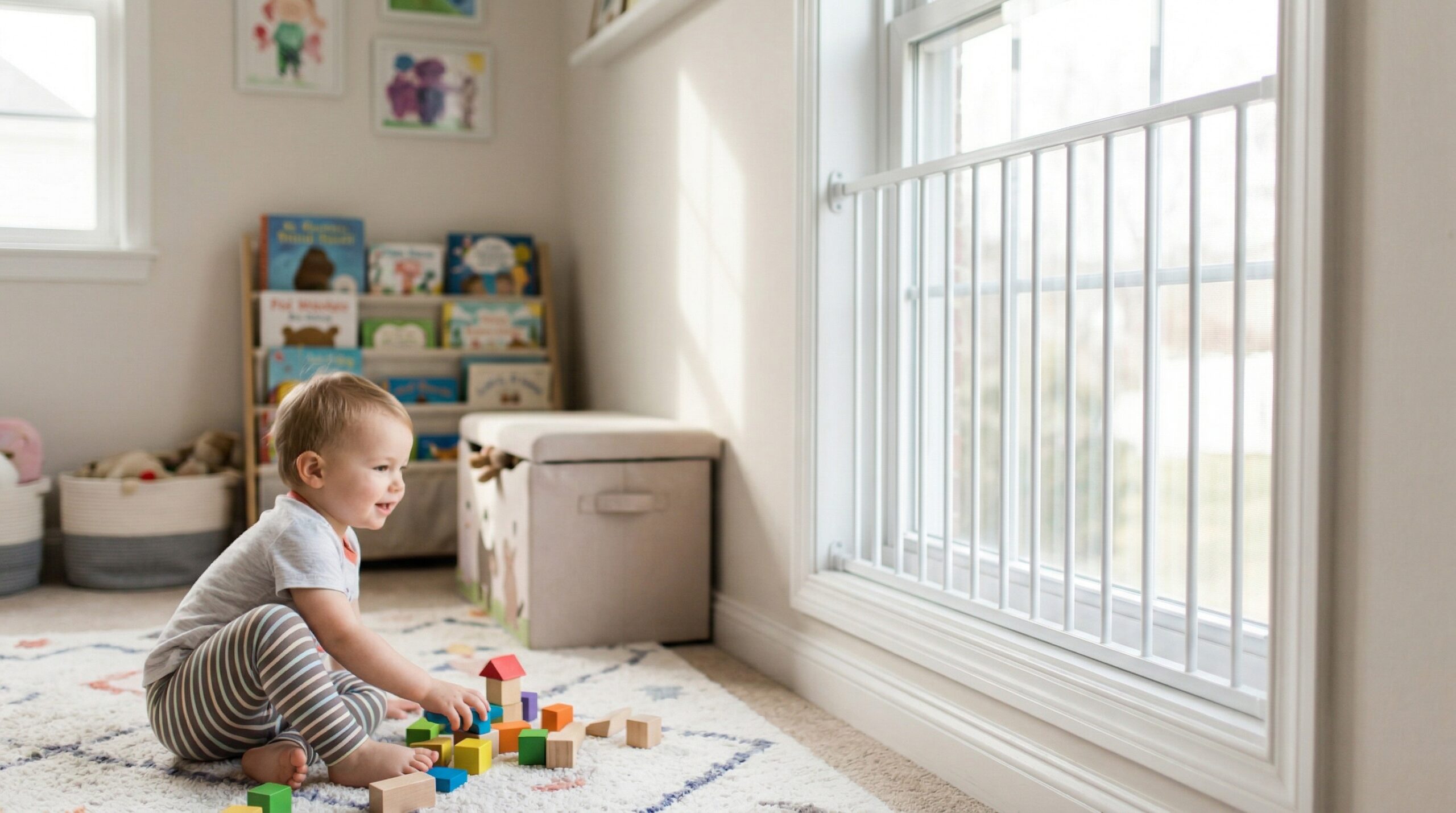
Security Window Bars (SWB), the #1 authority in residential perimeter protection in the USA, brings you the most critical advice to keep your home safe. Child safety window guards are one of the most urgent yet overlooked investments American parents and property managers can make. According to the Consumer Product Safety Commission (CPSC), window falls injure approximately 5,000 children under the age of 12 every single year in the United States — and send roughly 15 children to their deaths annually. In high-density urban markets like New York City, Chicago, and Los Angeles, where families live in multi-story apartment buildings, this risk escalates dramatically. Yet many parents still rely on insect screens — which provide zero fall protection — or nothing at all. This guide covers everything you need to know about selecting, installing, and legally complying with child safety window guards in the USA, including which SWB models meet both child safety and fire egress requirements so your family never has to choose between protection and escape.
Across the USA, millions of apartment windows are fitted only with insect screens. In cities like Chicago's Logan Square, Philadelphia's Fishtown, and Brooklyn'…
Why Child Safety Window Guards Are a Non-Negotiable Home Protection Investment
The statistics surrounding child window falls in the United States are stark. The CPSC reports that the overwhelming majority of pediatric window fall injuries occur in children aged 5 and under, and that second-story windows account for the highest proportion of fatalities. In urban apartment environments, where windows often open directly above hard pavement or concrete courtyards, even a first-story fall can result in serious injury. What makes this especially alarming is that insect screens — the mesh panels found on most American apartment windows — are routinely mistaken for protective barriers. The International Window Safety Foundation has repeatedly warned that window screens are designed to keep insects out, not to prevent a child from falling through. They can fail under as little as 2 pounds of lateral pressure. Child safety window guards, by contrast, are engineered from heavy-gauge steel or reinforced materials, rated to withstand sustained outward force. Beyond fall prevention, properly selected child safety window guards also function as a first line of burglar deterrence. According to FBI Uniform Crime Report data, approximately 6.7 million home burglaries occur in the USA each year, with 60% of forced entries occurring through ground-floor and accessible windows. A dual-purpose child safety and security window guard addresses both threats simultaneously — making it one of the highest-ROI home safety purchases available to American families and property managers alike.
The Hidden Danger of Window Screens Mistaken for Guards
Across the USA, millions of apartment windows are fitted only with insect screens. In cities like Chicago's Logan Square, Philadelphia's Fishtown, and Brooklyn's Bushwick neighborhood, older multi-unit residential buildings often have windows that open fully without any limiting device. Parents frequently assume the screen provides some level of resistance. It does not. The International Window Safety Foundation's testing shows that a 30-pound child pressing outward on a standard screen can dislodge it within seconds. Child safety window guards made from welded or telescopic steel bars, spaced no more than 4 inches apart per most safety standards, provide a genuine physical barrier. They cannot be dislodged by a curious toddler pushing against the glass line.
Child Window Falls: A Public Health Issue With a Hardware Solution
The American Academy of Pediatrics (AAP) has formally recommended window guards as a primary prevention measure against pediatric window falls since the early 2000s. Their position statement emphasizes that legislation and hardware intervention are the two most effective strategies — and that window guard installation has a direct, measurable impact on injury rates. New York City's Local Law 57 is the most cited example: after the city mandated window guards in apartment buildings housing children under 10, pediatric window fall deaths dropped by over 96% in covered buildings over a 20-year period. Property managers and marketing directors overseeing residential portfolios should treat this statistic as both a liability management lesson and a brand differentiation opportunity. Buildings that proactively install child safety window guards are not just complying with the law — they are demonstrating a tenant-first value system that drives occupancy and retention.
Dual Function: Child Safety and Burglar Protection in One Product
One of the most compelling arguments for investing in high-quality steel child safety window guards — rather than cheaper plastic or foam alternatives — is the dual protection value. Steel bars spaced 4 inches apart prevent a child from slipping through while simultaneously making forced entry through that window extremely difficult for a would-be burglar. Plastic child safety devices like spring-loaded window stops or suction-cup barriers offer fall prevention but zero burglar deterrence. Heavy-gauge steel window guards from SWB protect on both axes, making them a smarter investment for parents, landlords, and property managers who want comprehensive window security rather than single-purpose accessories.
Understanding Window Guard Spacing Standards
The 4-inch spacing rule referenced in most US child safety codes — including NYC Local Law 57 and guidelines from the AAP — is derived from anthropometric studies of children's head circumference. The standard ensures that a child's head cannot pass between the bars. SWB's Model A Telescopic Window Bars feature bar spacing engineered to align with these guidelines, providing compliance-ready child protection out of the box.Legal Requirements for Child Safety Window Guards Across the USA
Understanding the legal landscape for child safety window guards is essential for property managers, landlords, and parents living in regulated apartment buildings. Requirements vary significantly by state and municipality, but several major frameworks establish the baseline for compliance nationwide. Failing to meet these requirements can expose landlords to significant legal liability — particularly in wrongful injury or death lawsuits where the absence of window guards is used as evidence of negligence. For marketing directors overseeing multi-property portfolios, compliance is also a reputational asset: properties known for safety-first management attract higher-quality tenants and support premium rental pricing in competitive urban markets.
New York City: The Gold Standard for Child Window Guard Law
New York City's Local Law 57 (1976, updated multiple times) remains the most comprehensive child window guard law in the United States. It requires building owners to install window guards in any apartment where a child 10 years of age or younger lives. The law also requires guards on all windows in common areas of covered buildings. Property owners must notify tenants annually about their right to request window guard installation, and the installation must be completed at the landlord's expense. Window guards must meet ASTM F2090 or equivalent standards, must not be removable from the outside without tools, and must allow emergency egress as required by NFPA 101. For NYC landlords, SWB's Model A/EXIT — the egress-compliant model with a patented quick-release mechanism — is the optimal compliance solution. It satisfies both the child safety requirement and the NFPA 101 egress obligation simultaneously.
Chicago, Los Angeles, and Other Urban Markets
Chicago's Municipal Code (Chapter 13-196) requires window guards on windows in residential buildings above the ground floor where children under 14 reside, with specific provisions for multi-unit dwellings. Chicago's Department of Buildings enforces these requirements aggressively in neighborhoods like Humboldt Park, South Shore, and Englewood — areas where tenant advocacy organizations actively monitor landlord compliance. Los Angeles's Housing Code (LAMC Section 91.8903) mandates window guards in buildings three or more stories tall in units housing children, with specific guard strength requirements. In Houston and Atlanta — two major metro areas without codified child window guard laws at the municipal level — the CPSC voluntary guidelines and ASTM F2090 standards still serve as the benchmark for negligence claims in civil litigation. Property managers in these cities would be prudent to treat voluntary standards as de facto requirements.
ASTM F2090: The Technical Standard Behind Child Safety Window Guards
ASTM International's F2090 standard defines the minimum performance requirements for window fall prevention devices. It specifies load resistance (the guard must withstand 150 lbs of static force applied outward), bar spacing (maximum 4 inches), and ease of emergency release. SWB's product line is designed and tested in alignment with ASTM F2090 parameters, giving property managers a defensible compliance position.IBC, NFPA 101, and the Egress Compliance Intersection
One of the most common mistakes property managers make is installing child safety window guards that block emergency egress — inadvertently creating a life-safety hazard while trying to solve a child safety problem. The International Building Code (IBC) and NFPA 101 (Life Safety Code) both mandate that windows in sleeping areas must provide a minimum clear opening of 20 inches wide by 24 inches tall, or a minimum net clear opening of 5.7 square feet. A window guard that cannot be released from the inside during an emergency directly violates these requirements. SWB's Model A/EXIT was specifically engineered to resolve this conflict: it provides rated child safety bar protection while incorporating a patented quick-release mechanism that allows the bars to swing open from the inside in seconds. This makes it the only SWB model that simultaneously satisfies child fall prevention requirements and IBC/NFPA 101 egress mandates.
SWB Child Safety Window Guard Models: Which One Is Right for Your Home
Security Window Bars offers three purpose-built models that serve different child safety and security scenarios. Understanding which model fits your specific window type, installation situation, and legal compliance need is the starting point for making the right purchase. All SWB models are constructed from heavy-gauge steel with a matte black powder-coat finish, designed for both maximum strength and modern residential aesthetics. All models ship via Amazon FBA for fast, trackable delivery anywhere in the USA — a critical advantage for property managers who need to equip multiple units on a defined timeline.
Model A — Telescopic Window Bars: The Renter's Child Safety Solution ($90)
The SWB Model A Telescopic Window Bars is the flagship child safety and security solution for apartment renters, parents in rental units, and landlords who need a removable, damage-free installation. The fully telescopic design adjusts to fit windows 22 to 36 inches wide — covering the vast majority of standard US residential window sizes. Installation requires no drilling into walls or window frames in most applications, making it ideal for renters in Chicago high-rises, New York City pre-war apartments, and Los Angeles studio units where lease agreements restrict permanent modifications. At $90, the Model A costs less than 10% of the average professional window bar installation ($600–$1,800), making it the most accessible child safety window guard solution on the market. Installation takes 15 to 20 minutes and requires no specialized tools, locksmith, or contractor. The matte black finish complements contemporary interior design — a meaningful detail for property managers marketing premium units where aesthetics matter to prospective tenants.
Model A/EXIT — Egress Compliant Window Bars: The Code-Compliant Child Safety Standard ($92)
For bedrooms, sleeping areas, and any window subject to IBC or NFPA 101 egress requirements, the SWB Model A/EXIT is the definitive solution. Its patented quick-release mechanism allows the bars to be opened from the inside in an emergency — complying with IBC Section 1030, NFPA 101 Section 24.2.7, and OSHA window safety standards. This model is particularly critical for property managers in New York City, where Local Law 57 requires window guards AND NFPA 101 requires egress capability — a dual mandate that the Model A/EXIT uniquely satisfies. Parents in second-floor or higher units should strongly consider this model over any fixed alternative: in the event of a fire, the ability to open the bars from inside can mean the difference between life and death. At just $92 — $2 more than the standard Model A — it represents an exceptional value for the added protection it provides.
Model B — Wall-Mount Window Bars: Permanent Child Safety for Homeowners ($91)
The SWB Model B Wall-Mount Window Bars is designed for homeowners, ground-floor units, and properties where permanent installation is permitted and desired. Heavy-gauge steel construction and a powder-coated black finish make this model the most physically robust child safety option in the SWB lineup. Wall mounting provides maximum rigidity — the bars cannot shift, flex, or be dislodged by sustained force. This model is the preferred choice for homeowners in Houston, Atlanta, Memphis, and Detroit — markets where high burglary rates and ground-floor window vulnerability justify a more permanent security commitment. It is also the preferred option for commercial properties, daycare facilities, and pediatric care environments where child safety regulations require certified permanent barrier installation. Note that Model B does not include a quick-release egress mechanism, making it appropriate only for non-sleeping-area windows or windows where an alternate egress route is clearly established and code-compliant.
How to Install Child Safety Window Guards Without Drilling
One of the most frequent objections parents and property managers raise when considering child safety window guards is the installation complexity. Permanent window bar installation by a licensed contractor costs between $600 and $1,800 per window according to HomeAdvisor's 2024 cost data — a prohibitive expense for renters or landlords equipping multiple units. SWB's telescopic models eliminate this barrier entirely. The no-drill installation method uses the window frame's own structural tension to anchor the bars, creating a secure, non-permanent hold that resists significant outward force while leaving zero damage when removed. For renters, this means full security during occupancy and a clean, deposit-safe removal when moving out. For landlords, it means child safety window guards can be installed between tenants and removed or repositioned as needed — dramatically reducing per-unit compliance costs. Detailed step-by-step guidance is available on the SWB Installation Guide.
Step-by-Step Overview: Telescopic No-Drill Installation
The SWB Model A installation process is designed to be completed by one adult in 15 to 20 minutes using basic household tools. The process begins with measuring the clear interior width of the window frame at the installation point — typically 4 to 6 inches above the window sill. The telescopic bar assembly is then extended to the measured width and locked into position using the integrated locking mechanism. The end caps, fitted with non-slip rubber pads, bear against the inner sides of the window frame, creating a compression-fit anchor. No holes, no screws, and no adhesives are required. The bars are then positioned vertically in the frame at the desired height. For windows in children's rooms, the recommended installation height places the top bar no more than 6 inches below the window sash opening point, maximizing the coverage area against a child pushing outward. The entire installation can be reversed in under 5 minutes — critical for renters who need to remove the bars when moving.
Tools Required for No-Drill Installation
The only tool commonly required for SWB Model A installation is a standard tape measure for pre-installation sizing. Some installations may benefit from a rubber mallet to seat the end caps firmly, though hand pressure is typically sufficient. No power tools, wall anchors, or professional expertise are needed — making this a genuine DIY solution accessible to any adult.Installation Tips for Specific Window Types Common in US Apartments
Double-hung windows — the most common window type in US apartment buildings built before 1990 — are ideally suited for SWB's telescopic installation. The vertical sash channels provide natural bearing surfaces for the end caps. Casement windows, which are hinged and swing outward, require a slightly different approach: the bars should be installed in the fixed frame surround rather than the moving sash, and Model A's adjustable width accommodates most standard US casement frame openings between 22 and 36 inches. For sliding windows — common in West Coast apartments in Los Angeles and San Diego — the installation follows the same principle as double-hung windows, with the bars positioned in the fixed outer frame. Detailed window-type-specific guidance is covered in the full SWB Installation Guide, which includes measurement templates for the most common US residential window sizes.
Landlords: Scaling Child Safety Window Guard Installation Across Multiple Units
For property managers overseeing 10, 50, or 500 units, the economics of SWB's telescopic models are compelling at scale. At $90 per window for Model A or $92 for the egress-compliant Model A/EXIT, equipping a 20-unit building with two windows per unit costs under $3,700 — compared to $24,000 to $72,000 for professional permanent installation across the same building. SWB ships via Amazon FBA, enabling bulk orders with fast, trackable delivery to any address in the USA. The removable nature of the bars allows repositioning between tenancies without damage costs — a significant advantage in markets with high tenant turnover like Chicago's Near North Side or Houston's Midtown district. Property managers can contact SWB directly through securitywb.com/contact/ to discuss volume pricing and multi-unit deployment logistics.
Child Safety Window Guards vs. Other Child Window Safety Products
The child window safety product market includes a wide range of devices at varying price points and protection levels. Understanding the meaningful differences between window guards, window stops, window restrictors, and insect screens is essential for parents and property managers who want genuine protection — not a false sense of security. The fundamental distinction is structural: only steel window guards create a physical barrier capable of withstanding the force generated by a child's full body weight pressing outward. Plastic spring-loaded window stops, foam window bumpers, and even most window alarms address adjacent concerns — limiting opening width or alerting to window tampering — but do not provide the barrier strength required to prevent a fall in an unsupervised moment.
Window Stops and Restrictors: Useful Supplements, Not Substitutes
Window stops and opening restrictors are devices that limit how wide a window can be opened — typically to 4 inches or less. They are inexpensive (usually $10 to $30 per window) and easy to install, and they represent a meaningful first line of defense when properly maintained. However, they have a critical weakness: they can be defeated. Older children can learn to slide, unlatch, or break plastic window stops relatively easily. Metal stops provide more resistance but can still be forced by a determined child of 8 or older. For toddlers and young children who lack the motor skills to defeat a window stop, these devices provide reasonable protection. But for parents seeking compliance with child safety window guard laws — like NYC's Local Law 57 — window stops do not meet the standard. The law specifically requires bars or guards, not restrictors.
CPSC Position on Window Screens as Safety Devices
The CPSC has explicitly stated in multiple public safety bulletins that window screens should never be considered a child safety device. They are designed solely to prevent insects from entering — not to resist the outward pressure of a child. This distinction is critically important for parents who may be unaware that the screen in their child's bedroom window provides zero fall protection.Plastic vs. Steel Child Safety Window Guards: Strength Comparison
Some manufacturers market plastic or nylon-mesh child window guards as a lower-cost alternative to steel bars. While these products may meet minimum spacing requirements, they cannot match the load resistance of heavy-gauge steel. The ASTM F2090 standard requires window fall prevention devices to withstand 150 lbs of static outward force — a threshold that most plastic guard systems approach at the margin of their rated capacity, leaving little safety factor for dynamic loading (a child throwing their full weight against the bars). SWB's steel construction provides a substantial safety margin above this threshold. For property managers facing potential liability in the event of a window fall incident, using products that exceed the minimum standard is both ethically appropriate and legally defensible. Steel guards from SWB also resist deterioration from UV exposure, moisture, and temperature cycling — common failure modes for plastic child safety products in climates from Miami's humidity to Minneapolis winters.
Window Alarms: Detection vs. Prevention
Window alarms detect when a window is opened beyond a threshold and emit an audible alert. They are useful burglar deterrents and can alert parents when a child opens a window unsupervised. However, they are reactive rather than preventive. An alarm goes off after a window is opened — by which point a child may already be leaning out or beginning to fall. Child safety window guards are preventive: they physically stop the fall from occurring regardless of whether a caregiver is within earshot of an alarm. The correct approach for maximum child window safety is a layered strategy: window guards for physical fall prevention, supplemented by window alarms for awareness. Both can coexist on the same window — SWB bars do not interfere with window alarm sensors mounted on the frame.
Aesthetic and Property Value Considerations for Child Safety Window Guards
A common concern among homeowners, interior designers, and marketing directors overseeing premium rental properties is that window bars will make a home look institutional, prison-like, or unwelcoming. This is a legitimate consideration in competitive rental markets where curb appeal and interior aesthetics directly influence leasing velocity and rental pricing. SWB has addressed this concern directly in the product design of all three models. The matte black powder-coat finish is one of the most popular contemporary finishes in residential interior design — complementing black-frame windows, industrial loft aesthetics, modern farmhouse interiors, and Scandinavian-minimal design language. Rather than looking like a security measure, SWB bars present as a deliberate architectural element consistent with modern home design trends.
Matte Black Window Guards in Modern Interior Design
Interior design publications including Architectural Digest and Dwell have documented the resurgence of black window frames and black metal accents as a dominant trend in American residential design from 2020 through 2026. SWB's matte black finish positions child safety window guards as a design-compatible element rather than a compromise. In luxury apartment buildings in Chicago's River North, Manhattan's Upper West Side, and Los Angeles's Silver Lake neighborhood, matte black security bars can genuinely enhance the visual character of a room rather than detracting from it. For marketing directors building photography packages for rental listings, SWB-equipped windows photograph well and can be framed as a premium safety feature — particularly when marketing to families with young children who are actively seeking child-safe apartments.
Using Child Safety Window Guards as a Marketing Differentiator
In a competitive urban rental market, certified child safety window guards represent a tangible, communicable differentiator that resonates with a specific and highly desirable tenant demographic: families with young children. According to the US Census Bureau, approximately 35% of American renters are families with children under 18 — a segment that represents disproportionate lease length and lower turnover than single-occupant renters. Advertising units as "child safety window guard equipped" or "CPSC-compliant window fall prevention installed" directly speaks to the primary safety concern of this demographic. It also positions the property as managed by an operator who takes tenant safety seriously — a signal that correlates strongly with tenant satisfaction and lease renewal rates in survey data from the National Apartment Association.
Removability: A Feature, Not a Compromise
For property managers, the removability of SWB's Model A and Model A/EXIT is a feature that enhances rather than diminishes the product's value proposition. Unlike welded or permanently mounted bars that must be cut or ground off to remove — potentially damaging window frames and requiring professional labor — SWB telescopic bars can be repositioned or removed in minutes. This means guards can be installed when a family with young children moves in and removed when a different tenant type occupies the unit. It also means that landlords can respond to NYC's annual window guard compliance season — when the city requires landlords to survey tenants about children in residence — with an efficient, cost-effective deployment and removal cycle rather than a permanent infrastructure commitment.
Where to Buy Child Safety Window Guards in the USA: Amazon vs. Direct
Purchasing child safety window guards through a trusted, verified channel is as important as selecting the right product. Counterfeit or substandard window safety products are a documented problem on open marketplace platforms. SWB offers two purchase channels for the US market: Amazon USA (seller: SecurityWindowBars), where products ship via Amazon FBA for fast 2-day delivery across all 50 states, and securitywb.com for direct purchase with full product support and custom configuration guidance. Both channels offer the same authentic SWB products with the same steel construction and powder-coat finish. For property managers equipping multiple units on a tight timeline, Amazon FBA's logistics infrastructure provides the most reliable delivery performance. For custom sizing inquiries or volume orders, the direct channel at securitywb.com/contact/ is the recommended starting point.
Buying on Amazon USA: Fast Delivery and Verified Reviews
SWB's Amazon storefront (SecurityWindowBars) offers the complete product lineup — Model A, Model B, and Model A/EXIT — with the full benefit of Amazon's Prime shipping infrastructure. For parents in New York City, Chicago, or Los Angeles who need child safety window guards installed before the weekend, Amazon's 2-day delivery window makes this the most practical purchase channel. The SWB Amazon storefront also aggregates verified customer reviews from actual US purchasers, providing social proof and installation feedback from real-world deployments in American homes and apartments. Parents and property managers can shop all SWB models on Amazon directly through the verified SecurityWindowBars seller page to ensure product authenticity.
Buying Direct at securitywb.com: Full Product Support and Model Guidance
For buyers who want to speak with a security specialist before purchasing — particularly property managers handling compliance mandates across multiple units — securitywb.com offers full product information, model comparison, and direct contact with the SWB team. The website provides detailed specifications for each model, including bar spacing measurements, weight ratings, and installation compatibility for different window types. Parents uncertain about which model to select for a specific window type or compliance requirement can access the SWB contact page to get expert guidance before committing to a purchase. This level of pre-sale support is particularly valuable for first-time buyers navigating the intersection of child safety requirements and egress compliance for the first time.
Price Comparison: SWB vs. Professional Installation vs. Competitors
At $90 to $92 per window, SWB child safety window guards deliver professional-grade steel construction at a fraction of the cost of professional installation. HomeAdvisor's 2024 national cost data places the average professional window bar installation between $600 and $1,800 per window, depending on material, window size, and local labor rates. Competing retail products from brands like Mr. Goodbar (Pinpont Manufacturing) require permanent drilling and wall anchoring, making them incompatible with rental properties. Products from Unique Home Designs carry similar price points but typically require professional installation and longer lead times. SWB's combination of under-$100 pricing, no-drill installation, Amazon availability, and steel construction creates a value proposition that no direct competitor currently matches in the US market.
🏆 Conclusion
Child safety window guards represent one of the highest-impact, lowest-cost investments available to American parents, landlords, and property managers. With approximately 5,000 children injured annually in window falls according to the CPSC, and legal mandates in cities like New York and Chicago requiring guard installation in units housing young children, the case for acting now is both statistical and legal. SWB's three-model lineup — the telescopic Model A, the egress-compliant Model A/EXIT, and the permanent-mount Model B — covers every residential scenario from a renter's studio apartment in Chicago's Logan Square to a homeowner's ground-floor bedroom in Houston's Midtown. The telescopic design's no-drill installation makes SWB the definitive choice for the 44.1 million American apartment renters who cannot make permanent modifications to their units. At $90 to $92 per window, SWB delivers the same steel strength as professionally installed bars at a fraction of the cost — shipped fast via Amazon FBA to all 50 states. For property managers, the removability and low per-unit cost create a compelling compliance and marketing differentiator in any competitive urban rental market. Protecting the children in your home or portfolio starts with a single purchase. SWB makes that purchase easy, affordable, and effective.
Security Window Bars · USA
Secure Your Home Today
Ready to protect the children in your home or rental property? Security Window Bars ships fast across the USA via Amazon. Shop All SWB Models on Amazon → | View the Egress-Compliant Model A/EXIT → | Browse All Models at securitywb.com →
Shop on Amazon →Frequently Asked Questions
Child safety window guards are steel barriers installed across a window opening to prevent children from falling out. They are specifically engineered with bar spacing of no more than 4 inches — based on CPSC and ASTM F2090 standards for children's head clearance — and are rated to withstand sustained outward force of at least 150 lbs. Standard decorative window bars may have wider spacing or different structural priorities. SWB's child safety models combine child fall prevention spacing with burglar deterrence strength, making them a dual-purpose solution. For bedrooms and sleeping areas, the Model A/EXIT additionally incorporates a quick-release egress mechanism to satisfy IBC and NFPA 101 fire safety requirements.
It depends on your city and state. New York City has the most explicit mandate under Local Law 57, which requires building owners to install window guards in any apartment where a child 10 years or younger lives, at the landlord's expense. Chicago's Municipal Code requires guards in multi-unit residential buildings above ground floor where children under 14 reside. Los Angeles has requirements for buildings three or more stories tall. Many other cities follow CPSC voluntary guidelines. Even in cities without explicit mandates, the absence of window guards when a child injury occurs can constitute negligence under premises liability law. Property managers and landlords in all 50 states should treat ASTM F2090-compliant window guards as best practice regardless of local law.
SWB's Model A Telescopic Window Bars require no drilling or permanent modification to the window frame in most installations, making them compatible with typical renter restrictions on alterations. Because no holes are made in walls or frames, most standard lease agreements do not prohibit this type of installation. However, renters should review their specific lease terms and, when in doubt, notify their landlord in writing before installing any window safety device. In cities like New York, where landlords are legally required to install window guards upon tenant request, renters with children can demand landlord-supplied guards rather than purchasing their own. SWB models are also the preferred solution for landlords seeking a compliant guard they can remove and reinstall between tenancies without damage costs.
Fixed window guards without a release mechanism can block emergency egress — which is why the IBC and NFPA 101 require egress-capable windows in all sleeping areas. If you install a fixed window guard on a bedroom window, you may create a fire safety hazard while solving a child safety problem. SWB's Model A/EXIT was engineered specifically to resolve this conflict. It features a patented quick-release mechanism that allows the bars to be opened from the inside in seconds during an emergency, meeting IBC Section 1030 and NFPA 101 Section 24.2.7 requirements. For any window in a bedroom or sleeping area, the Model A/EXIT is the correct choice. Model B (wall-mount, fixed) should only be used on non-sleeping-area windows where a separate egress route is available and code-compliant.
SWB's Model A and Model A/EXIT feature a fully telescopic design that adjusts to fit windows 22 to 36 inches wide — covering the vast majority of standard US residential window sizes, including common double-hung, single-hung, sliding, and casement windows found in American apartments and homes. This adjustable range eliminates the need to measure and order custom sizes in most installations. For windows outside this range, or for windows requiring a permanent fixed installation, SWB's team at securitywb.com can provide guidance on Model B wall-mount options or custom configurations. Detailed sizing guidance and measurement templates are available in the SWB Installation Guide at securitywb.com/installation/.
SWB child safety window guards are priced at $90 for Model A (telescopic, no-drill), $92 for Model A/EXIT (egress-compliant telescopic), and $91 for Model B (wall-mount permanent). By comparison, professional window bar installation by a licensed contractor costs between $600 and $1,800 per window according to HomeAdvisor's 2024 national data — depending on material, window size, and local labor rates. SWB's products deliver the same heavy-gauge steel construction as professionally installed bars at less than 10% of the cost, with the added advantage of no-drill installation and full removability for renters. For landlords equipping multiple units, this cost difference compounds significantly: equipping a 20-unit building with two windows per unit costs under $3,700 with SWB vs. a potential $24,000 to $72,000 with professional installation.
SWB's Model A/EXIT is designed in alignment with the structural and egress requirements applicable to NYC Local Law 57 compliance. The law requires window guards that: cannot be removed from the outside without tools, provide a physical barrier against child falls, and comply with NFPA 101 egress requirements for windows in sleeping areas. The Model A/EXIT satisfies all three criteria: its steel construction resists forced removal from outside, its bar spacing aligns with child safety standards, and its patented quick-release mechanism provides IBC/NFPA 101-compliant emergency egress from the inside. Property managers with specific compliance questions for their NYC buildings should consult the NYC Department of Housing Preservation and Development (HPD) and contact SWB directly at securitywb.com/contact/ for product documentation.
SWB ships all three models via Amazon FBA (Fulfilled by Amazon) to all 50 US states. Amazon Prime members typically receive orders in 1 to 2 business days, making SWB one of the fastest-delivery child safety window guard options available in the US market. This rapid fulfillment is particularly important for parents who have recently moved into a new apartment and need to secure windows before a child occupies the space, or for property managers responding to a compliance deadline. Orders can be placed directly through the SWB Amazon storefront at amazon.com/stores/SecurityWindowBars. For large volume orders or specific delivery requirements, contacting SWB directly through securitywb.com/contact/ is recommended.