
Best Window Security Bars for Home Burglar Protection USA: Complete Buying Guide 2026
Compare the best window security bars for home burglar protection in the USA. Steel vs. iron, fixed vs. telescopic, egress codes, prices & top brands reviewed.
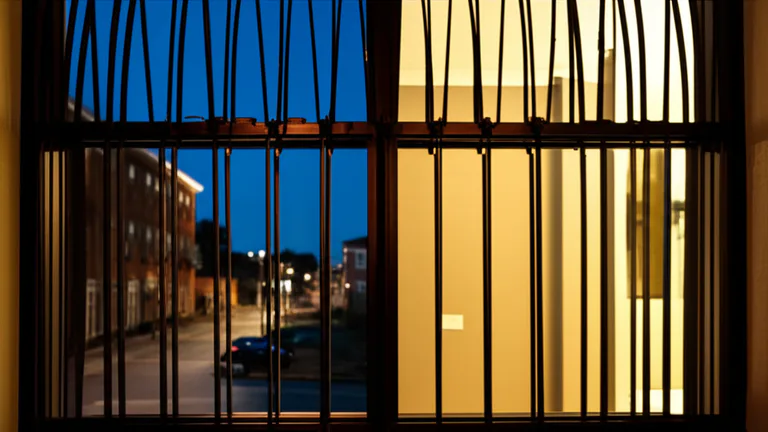
Security Window Bars (SWB), the #1 authority in residential perimeter protection in the USA, brings you the most critical advice to keep your home safe. If you are searching for the best window security bars for home burglar protection USA, the numbers behind your search are sobering: according to the FBI Uniform Crime Report, approximately 6.7 million burglaries occur in the United States every year, and law enforcement data consistently shows that 60% of forced entries happen through ground-floor windows and doors. In cities like Chicago, Houston, Philadelphia, and Memphis — where property crime rates run well above the national average — a properly installed set of window bars can mean the difference between a secure night and a devastating break-in. This guide cuts through the marketing noise and delivers a precise, data-driven comparison of fixed, adjustable, and telescopic window security bars, covering steel versus wrought-iron materials, load ratings, quick-release egress mechanisms, realistic price ranges, and the top-rated brands and models available to US homeowners today. Whether you rent an apartment or own a three-bedroom home, you will finish this guide knowing exactly which bar system belongs on your windows.
FBI crime data is unambiguous: ground-floor windows are the preferred point of entry for residential burglars in the United States. A window on the first floor…
Why Window Security Bars Remain the Most Effective Burglar Deterrent for US Homes
Alarm systems beep. Motion lights flash. Window bars stop. That is the fundamental distinction that security professionals and law enforcement agencies have emphasized for decades. According to a landmark study published by the University of North Carolina’s Department of Criminal Justice, 83% of convicted burglars stated they actively assess a home for deterrents before attempting entry — and physical barriers like window bars ranked as the single most effective deterrent they encountered. Unlike a wireless alarm that requires a monitoring subscription or a camera system that only records a crime already in progress, a properly installed steel window bar physically prevents forced entry. No signal can be jammed. No battery dies at the worst moment. No internet outage renders it useless. For American homeowners and renters, this passive, always-on protection is precisely why demand for the best window security bars for home burglar protection USA continues to climb year after year. The US residential security market is projected to exceed $4.8 billion by 2027 (Grand View Research), with physical barrier products — including window bars, grilles, and security screens — among the fastest-growing segments. Part of this growth is driven by the 44.1 million apartment renters in the United States (US Census Bureau, 2023) who cannot rely on a landlord to install permanent security measures but still need meaningful protection on ground-floor and basement windows.
The Ground-Floor Window Problem: Where Most Break-Ins Actually Happen
FBI crime data is unambiguous: ground-floor windows are the preferred point of entry for residential burglars in the United States. A window on the first floor — particularly one facing an alley, a side yard, or a poorly lit driveway — presents minimal risk of detection for an intruder. In dense urban environments like New York City, Los Angeles, and Detroit, ground-floor apartment windows are essentially at street level, making them especially vulnerable. The typical forced-window entry takes a burglar fewer than 60 seconds, according to security research published by the RAND Corporation. A set of steel window bars installed correctly reduces that time to effectively infinite — the intruder simply cannot get through without power tools that would generate noise and attention. This is why domestic window security grilles and cross bars in windows remain standard fixtures in high-crime neighborhoods across every major US city.
Window Bars vs. Alarm Systems: A Realistic Comparison
Home security alarm systems average $200–$600 in upfront hardware costs plus $20–$60 per month in monitoring fees — totaling roughly $1,000 or more over a typical contract period. Police response time in American cities averages 7–11 minutes (Police Executive Research Forum, 2022), which is ample time for a practiced burglar to enter, grab valuables, and leave. Window security bars, by contrast, carry a one-time cost of $90–$200 per window depending on the model and require zero monthly fees, zero monitoring contracts, and zero response delays. They work 24 hours a day, seven days a week, without electricity. For budget-conscious renters and homeowners across cities like Atlanta, Baltimore, and St. Louis, this cost-effectiveness is a decisive factor. Combined with an alarm, window bars create a layered security approach that is far more robust than either system alone.
Steel vs. Wrought Iron Window Bars: Which Material Wins for Burglar Protection?
The two dominant materials used in window security bars sold in the United States are steel (specifically cold-rolled or galvanized steel) and wrought iron. Each has a distinct performance profile, and the right choice depends on your installation environment, budget, climate, and aesthetic preferences. Understanding the structural differences between these two materials is essential before making a purchasing decision, because not all bars marketed as ‘security bars’ deliver equivalent protection. Decorative bars that look similar on a product listing can vary dramatically in their load-bearing capacity and resistance to cutting tools. This section breaks down the material science in plain terms so you can evaluate any product — including those sold under brand names like Grisham and Master Lock — with confidence.
Cold-Rolled and Galvanized Steel: The Modern Standard for Home Window Bars
Cold-rolled steel is manufactured through a process that compresses the metal at room temperature, increasing its tensile strength and producing a tighter, more uniform grain structure compared to hot-rolled alternatives. For window security applications, cold-rolled steel bars typically achieve tensile strengths in the range of 50,000–80,000 PSI, which is more than sufficient to resist the prying, kicking, and pulling forces a burglar can realistically apply. Galvanized steel adds a zinc coating that prevents rust — a critical feature for windows exposed to rain or high humidity, particularly in coastal states like Florida, Louisiana, and the Carolinas. Security Window Bars’ Model A Telescopic and Model B Wall-Mount systems are constructed from heavy-gauge steel with a powder-coated matte black finish, providing corrosion resistance alongside structural integrity. The powder coat also gives the bars a cleaner, more modern appearance compared to traditional painted iron.
Wrought Iron Window Bars: Traditional Strength with Trade-Offs
Wrought iron has been used in window security applications for centuries, and its reputation for toughness is well-earned. True wrought iron is a nearly pure iron alloy with slag inclusions that give it a fibrous structure, making it highly resistant to fracture under impact. However, authentic wrought iron is rarely used in modern mass-market security products — most products labeled ‘wrought iron’ today are actually mild steel or cast iron. The key trade-offs for modern buyers are weight and corrosion: wrought iron is heavier than steel (adding installation complexity) and more susceptible to rust without diligent maintenance, especially in humid climates. It also typically requires professional welding for installation, which pushes costs to the $600–$1,800 range cited by the National Association of Home Builders for professional window bar installations. For most US homeowners and virtually all renters, steel window bars offer equivalent or superior protection at a fraction of the cost and installation complexity.
Load Ratings and Bar Diameter: What the Specs Actually Mean
When evaluating window security bars, pay close attention to bar diameter and cross-section geometry. Round bars of 1/2-inch diameter in steel are considered the minimum acceptable standard for security applications. Square or rectangular bar profiles of equivalent cross-section area offer superior resistance to bending because of their moment of inertia geometry. Spacing is equally critical: the International Residential Code (IRC) recommends bar spacing no greater than 4 inches on center for child safety applications (preventing a child’s head from passing through), and most professional installers follow the same standard for security bars. Products like the Grisham spear point window security guard use vertical steel bars with decorative spear-point tops — these add a visual deterrent component but do not inherently increase structural load capacity beyond what the bar diameter and mounting hardware provide. Always verify that the mounting anchors or expansion brackets are rated for loads that exceed the bar’s own tensile strength, because the weakest point in any window bar system is typically the connection to the wall or frame, not the bar itself.
Fixed, Adjustable, and Telescopic Window Bars: Which Type Is Right for Your Home?
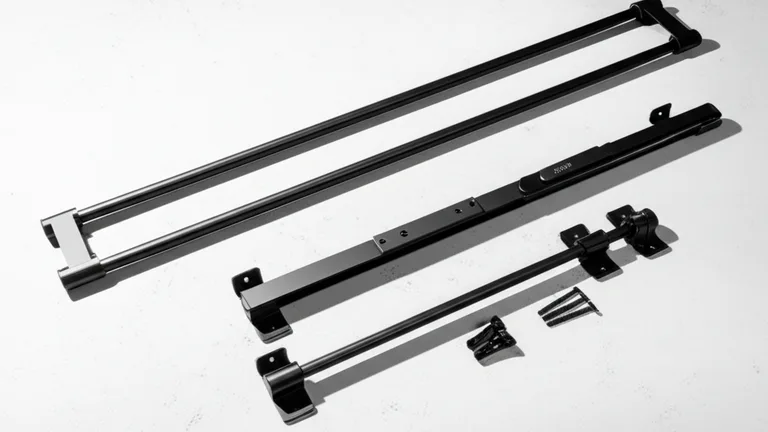
The most significant product distinction in the window security bar market today is not material — it is installation type. The three primary categories are fixed (permanently welded or bolted), adjustable (width can be set during installation but is then fixed), and telescopic (continuously adjustable and removable without tools or with minimal hardware). Each category serves a distinct buyer profile, and choosing the wrong type can result in code violations, lost security deposits, or security gaps that defeat the purpose of buying bars in the first place. Below is a detailed breakdown of each type with real-world use cases for US buyers.
Fixed Window Bars: Maximum Security, Minimum Flexibility
Fixed window bars are permanently anchored into the wall, window frame, or masonry surrounding a window opening. They offer the highest possible resistance to forced entry because there is no adjustment mechanism that could theoretically be exploited or loosened. For ground-floor commercial properties, garages, and storage facilities in cities like Houston or Chicago, fixed bars are often the preferred choice. The Security Window Bars Model B Wall-Mount system is designed for exactly these high-security, permanent applications, using heavy-gauge steel with a professional powder-coated finish. The critical caveat for fixed bars in sleeping areas is egress compliance: the International Building Code (IBC) and NFPA 101 Life Safety Code both require that window bars in bedrooms and other sleeping areas must be openable from the inside without a key, tool, or special knowledge. Fixed bars without a quick-release mechanism fail this requirement and can create a deadly fire trap.
Adjustable Window Bars: The Middle-Ground Security Solution
Adjustable window bars can be sized to fit different window widths during installation — typically through a sliding or bracketed mechanism — but once installed, they remain fixed in place. These are popular in scenarios where a homeowner needs to fit bars to non-standard window sizes without ordering custom fabrication. They are more flexible than fully fixed bars during the purchase-and-install phase, but they share the same egress compliance concerns in sleeping areas. Many of the window bar products reviewed on major retail platforms, including several under the Master Lock and Grisham brand names, fall into this adjustable-but-fixed category. They are a solid choice for basement windows, utility rooms, and ground-floor living areas where egress from that specific window is not required by code — but buyers must verify their local jurisdiction’s requirements before installation.
Telescopic Window Bars: The Renter-Friendly Security Standard
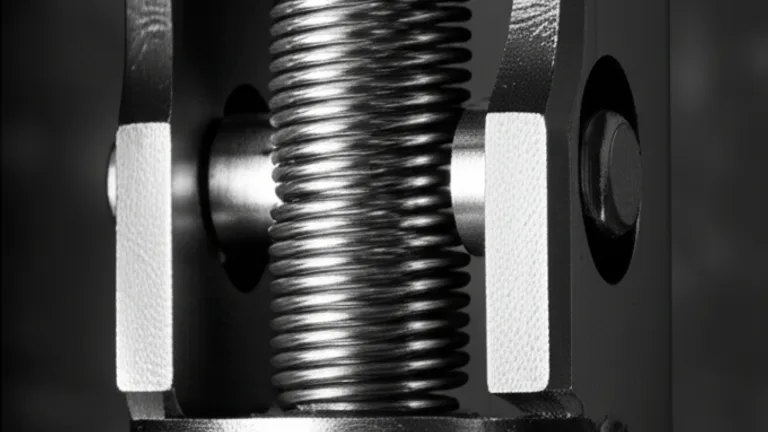
Telescopic window bars represent the most significant innovation in residential window security of the past decade. Unlike fixed or standard adjustable bars, a true telescopic system uses spring tension, friction locks, or an expansion mechanism to hold the bars firmly in place without drilling into walls or permanently altering the window frame. The Security Window Bars Model A Telescopic system fits windows 22 to 36 inches wide — covering the vast majority of standard US residential window sizes — and installs in 15 to 20 minutes without specialized tools. For the 44.1 million apartment renters in the United States, this is transformative: they get the same structural protection as permanently installed bars but can remove them completely when they move out, leaving no damage to window frames or walls. Landlords also benefit enormously: bars can be reinstalled in a new unit in minutes, making them a reusable security investment rather than a fixed property improvement.
Egress Compliance and Fire Safety: The Building Code Requirements Every US Buyer Must Understand
This section addresses what is arguably the most critical — and most frequently misunderstood — aspect of purchasing window security bars in the United States: egress compliance. Egress requirements exist because window bars that cannot be opened from the inside during a fire emergency have caused preventable deaths in residential fires across the country. The National Fire Protection Association (NFPA) and the International Building Code (IBC) both mandate that window bars installed in sleeping areas must include a quick-release or quick-opening mechanism that allows occupants to escape without a key or special tool. Understanding these requirements is not optional — it is a matter of legal compliance and, more importantly, life safety.
IBC and NFPA 101 Requirements for Window Bars in Sleeping Areas
The International Building Code (IBC) Section 1030 and the NFPA 101 Life Safety Code both specify that emergency escape and rescue openings — required in all sleeping rooms — must not be obstructed by bars, grilles, or screens unless those devices have a quick-release mechanism operable from inside without a key, tool, or special knowledge. The minimum opening dimensions specified by the International Residential Code (IRC) are 20 inches wide by 24 inches high, with a minimum net clear opening area of 5.7 square feet. OSHA standards for commercial sleeping areas (such as dormitories and assisted living facilities) impose similar requirements. Any window security bar system installed in a bedroom in the United States that does not include a code-compliant quick-release mechanism is in violation of these standards — and may expose landlords and property owners to significant liability in the event of a fire.
The Model A/EXIT: SWB’s Patented Egress-Compliant Solution
Security Window Bars’ Model A/EXIT was engineered specifically to solve the egress compliance problem. It combines the full security strength and telescopic adjustability of the Model A system with a patented quick-release mechanism that allows the bars to be opened instantly from the inside — no key, no tool, no special knowledge required. The Model A/EXIT is compliant with IBC, NFPA 101, and OSHA standards, and it meets the IRC’s emergency egress requirements for the minimum 20-inch by 24-inch opening. This makes it the only appropriate choice for bedroom windows, basement sleeping areas, and any room classified as a sleeping area under your local building code. In New York City, where Local Law 57 requires window guards in buildings with children under 10 years old, egress-compliant guards are specifically mandated for windows that serve as fire escapes. The Model A/EXIT meets this requirement. You can review the full technical specifications at the Security Window Bars Model A/EXIT product page.
NYC Local Law 57 and State-Specific Window Bar Regulations
Beyond federal building codes, several US states and municipalities have enacted their own window security regulations. New York City’s Local Law 57 is the most widely cited: it requires landlords to install window guards in apartments where children under 10 years old reside, or in any apartment where a tenant requests them regardless of whether children are present. California’s Title 24 building standards include specific requirements for egress windows in new construction and renovations. Chicago’s Municipal Code Chapter 13-196 addresses window guards in residential rental units. Florida building codes in hurricane-prone regions add structural wind load requirements that window bar systems must meet. Buyers in any of these jurisdictions — and their neighbors — should verify local requirements with their municipal building department before purchasing and installing window security bars.
Top Window Security Bar Brands Compared: SWB, Grisham, Master Lock, and More
The US market for window security bars includes a mix of specialty security manufacturers, hardware brands, and direct-to-consumer companies. This section provides an honest, data-driven comparison of the most widely purchased window bar brands in America, evaluating each on material quality, installation complexity, egress compliance, price, and availability. Our goal is not to dismiss competitors but to give you the information you need to make the right choice for your specific situation. The comparison table below summarizes the key specifications, followed by detailed brand breakdowns.
Comparison Table: Best Window Security Bars for Home Burglar Protection USA
The following comparison covers the most relevant specifications for US residential buyers:| Brand / Model | Type | Material | Egress Compliant | Price Range | Installation | Best For | |—|—|—|—|—|—|—| | SWB Model A Telescopic | Telescopic | Heavy-gauge steel | No (use Model A/EXIT for bedrooms) | $90 | DIY, 15–20 min, no drilling | Renters, apartments, basements | | SWB Model A/EXIT | Telescopic + Quick-Release | Heavy-gauge steel | Yes (IBC, NFPA 101, OSHA) | $92 | DIY, 15–20 min, no drilling | Bedrooms, sleeping areas, NYC compliance | | SWB Model B Wall-Mount | Fixed | Heavy-gauge steel | No | $91 | Permanent wall anchor | Ground floor, commercial, garages | | Grisham Spear Point Vertical Steel | Fixed/Adjustable | Steel | No (no quick-release) | $120–$180 | Professional recommended | Exterior decorative security | | Master Lock Window Bar | Adjustable (fixed after install) | Steel | No | $50–$80 | DIY | Budget entry-level | | Unique Home Designs Series | Fixed decorative | Steel | No | $150–$300 | Professional | Decorative/aesthetic priority |Key takeaway: For bedroom and sleeping-area compliance, only the SWB Model A/EXIT and equivalent products with certified quick-release mechanisms meet IBC and NFPA 101 requirements. For renters, the SWB telescopic line is the only major brand offering no-drill installation without sacrificing steel bar strength.
Grisham Spear Point Window Security Guard: Strengths and Limitations
Grisham (a division of Master Halco, one of the largest fence manufacturers in North America) produces several window security bar products, including the well-known spear point vertical steel guard. These products are widely available at Home Depot and Lowe’s locations across the United States and are generally constructed from solid steel with a durable powder-coat finish. The spear point design adds a strong visual deterrent — aesthetically similar to the georgian bar glazing patterns seen in traditional American architecture — and the vertical bar orientation is structurally sound for resisting horizontal forced entry. However, Grisham’s standard window security guards do not include a quick-release egress mechanism, making them non-compliant for installation in sleeping areas under IBC and NFPA 101. They also require drilling and professional installation for most configurations, which adds $300–$600 to the total cost. For non-bedroom applications where aesthetics and permanence are priorities, Grisham products are a legitimate option. For renters or bedroom windows, the limitations are significant.
Why SWB’s Telescopic System Outperforms the Competition for Most US Buyers
When evaluated across the full spectrum of criteria that matter to the 44.1 million American renters and the tens of millions of cost-conscious homeowners in the United States, Security Window Bars’ telescopic product line holds a distinct advantage. The Model A’s no-drilling, tension-based installation eliminates the $300–$600+ professional installation cost associated with fixed competitors. The telescopic mechanism adjusts to fit windows 22 to 36 inches wide, covering virtually all standard US residential window sizes without custom orders. The heavy-gauge steel construction delivers the same structural resistance as permanently welded bars. The matte black powder-coat finish complements modern American home interiors and exterior facades. And Amazon FBA fulfillment means fast delivery to all 50 states — a practical advantage for buyers in Anchorage, Alaska or Miami, Florida who need security quickly. For sleeping areas, the Model A/EXIT adds certified egress compliance without any sacrifice in security or installation simplicity. You can explore the full Model A telescopic system at the Security Window Bars official product page.
Installation Guide: How to Install Window Security Bars the Right Way
Even the best window security bars for home burglar protection USA will underperform if they are installed incorrectly. A bar system is only as strong as its weakest mounting point, and the most common failure mode in DIY window bar installations is inadequate anchoring — not the bars themselves. This section walks through the installation considerations for both telescopic (no-drill) and wall-mount (permanent) systems, covering the key steps, tools, and checks that ensure your bars perform as designed when it matters most.
Installing Telescopic Window Bars: The No-Drill Method
Security Window Bars’ Model A Telescopic system is designed for installation without drilling into walls or window frames, making it ideal for renters and anyone who wants to avoid permanent modifications. The installation process begins with measuring your window opening width — measure from the inside frame edge to the opposite inside frame edge. Extend the telescopic bar to approximately 1 inch less than this measurement, then compress it against the window frame and engage the locking mechanism. The spring tension holds the bar firmly in place without fasteners. Most installations are complete in 15 to 20 minutes. Critical quality check: after installation, test the bar by pushing laterally with both hands using significant force. A properly installed telescopic bar should not shift, rotate, or compress. If it moves, extend it slightly further to increase tension. For windows wider than 36 inches, two bars installed in a cross-bar pattern — one horizontal and one vertical — provide equivalent coverage. The full step-by-step instructions are available at the Security Window Bars installation guide.
Installing Permanent Wall-Mount Bars: Professional Standards for DIY Buyers
The Model B Wall-Mount system requires drilling into the wall material surrounding the window. For wood-frame construction (the most common in US residential buildings), use lag screws no shorter than 3 inches, driven into wall studs whenever possible. For masonry or concrete-block construction — common in older buildings in cities like Philadelphia, Boston, and Baltimore — use concrete anchors rated for at least 500 lbs shear load per anchor point. Mark all anchor positions with a level before drilling to ensure the bar frame is perfectly horizontal and vertical. After mounting, test by applying a 200-lb lateral load to the bar center — it should not deflect more than 1/4 inch. Install bars on the interior side of the window whenever possible: interior mounting makes the fasteners inaccessible to an intruder and prevents weather exposure that can degrade anchor integrity over time. For exterior installations in hurricane-prone states (Florida, Texas Gulf Coast, Louisiana), verify that the anchor system meets local wind load requirements under the Florida Building Code or applicable state standard.
Window Security Bars for Specific US Home Types: Apartments, Basements, and Ground-Floor Homes
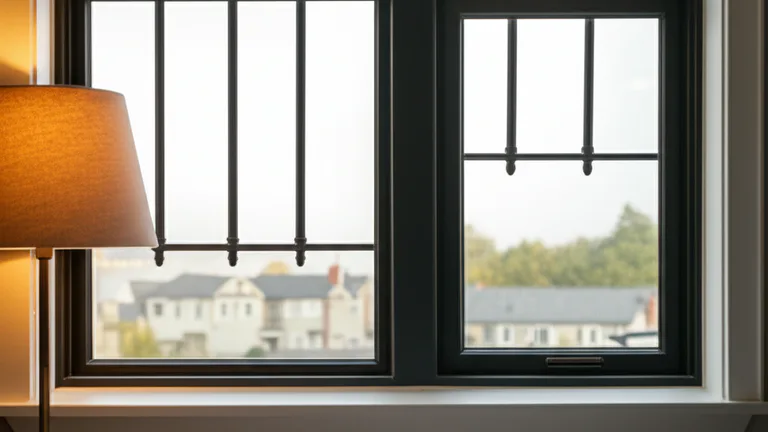
Not all American homes present identical security challenges. A ground-floor apartment in a Chicago high-rise has different vulnerabilities than a suburban ranch home in Atlanta or a basement unit in a Philadelphia rowhouse. The best window security bars for home burglar protection USA in each scenario may be different products, installed differently, serving distinct purposes. This section provides targeted guidance for the most common US residential configurations.
Apartment Renters: No-Drill Security That Travels With You
For the 44.1 million apartment renters in the United States, the defining constraint is the lease agreement. Most standard American residential leases prohibit permanent modifications to walls, floors, and window frames — which effectively rules out fixed window bars, welded grilles, and any system requiring masonry anchors. The Security Window Bars Model A Telescopic was designed with exactly this constraint in mind. Because it requires no drilling, it leaves zero permanent marks on window frames or walls, meaning renters avoid the security deposit deductions that often accompany unauthorized modifications. The bars can be uninstalled in minutes when moving out, packed, and reinstalled in a new apartment the same day. For renters on ground-floor units in high-crime urban zip codes — across neighborhoods in Los Angeles, New York City, Houston, and Chicago — this portability represents genuine financial and practical value. Browse the full Model A lineup and order with fast Amazon FBA delivery at the Security Window Bars Amazon store.
Basement Windows: The Most Overlooked Entry Point in American Homes
Basement windows are statistically among the most frequently targeted entry points in residential burglaries, for an obvious reason: they are at or below ground level, obscured from street view, and often out of sight of neighbors. Yet many American homeowners neglect basement window security entirely, relying on the assumption that small window sizes make entry impractical. The reality is that a 20-by-24-inch basement window — the minimum egress size under IRC — is more than sufficient for a determined intruder. Installing window security bars on every basement window is one of the highest-return security investments a homeowner can make. Telescopic bars work well for single-hung and sliding basement windows. For hopper-style basement windows that open inward from the top, the wall-mount Model B system provides a clean, permanent solution. For basement windows in sleeping areas (such as basement bedrooms common in many Midwest and Mid-Atlantic American homes), the Model A/EXIT egress-compliant system is mandatory under building code.
Ground-Floor Homeowners and Landlords: Permanent Protection at Scale
For homeowners who own their property and have no restriction on permanent modifications, the Model B Wall-Mount system offers the highest level of fixed security for ground-floor windows. Real estate investors managing multiple units — particularly those running short-term rentals on platforms like Airbnb in high-traffic urban markets — find that window security bars both protect the property and serve as a visible security signal that deters opportunistic crime. Landlords in jurisdictions with mandatory window guard laws (New York City, for example) can satisfy their legal obligations cost-effectively with the SWB product line, avoiding the $600–$1,800 per-window professional installation cost that many local contractors charge. The Model B’s powder-coated black finish provides a professional appearance that does not detract from a property’s curb appeal, an important consideration for landlords managing properties in market-rate neighborhoods. For a detailed comparison of all three SWB models and their specifications, visit the Security Window Bars Model B product page.
Price Guide: What You Should Actually Pay for Window Security Bars in the USA
Price is one of the most heavily searched variables when American consumers research window security bars, and for good reason: the range in the US market is enormous — from $40 basic adjustable bars on discount retail platforms to $1,800-per-window professional installations. Understanding where the value actually lies, and where you are paying for brand premium or installation labor rather than better security, is essential for making a smart purchasing decision. This section breaks down the real cost structure of window security bars in the United States.
DIY Window Bars vs. Professional Installation: A True Cost Comparison
Professional window bar installation in the United States averages $600 to $1,800 per window, according to HomeAdvisor and Angi contractor pricing data for 2024. This figure includes labor (typically 2–4 hours per window for a licensed contractor), hardware, and in many cases a markup on the bar product itself. For a home with six ground-floor windows, that means a total professional installation cost of $3,600 to $10,800 — a significant expenditure for most American families. Security Window Bars’ entire product line is priced at $90 to $92 per window, including the bar system and all installation hardware. Even accounting for two hours of personal time for a DIY installation, the savings are enormous. The $90 SWB Model A covers one window. For six windows, the total hardware cost is $540 — less than the minimum single-window professional installation quote in most US cities. For renters or homeowners on tight budgets, this cost differential is the defining factor in the purchasing decision.
Hidden Costs to Watch Out For in Window Bar Purchases
When evaluating window security bar prices online — particularly on platforms like Amazon, Home Depot, and Lowe’s — watch for several common hidden costs. First, many lower-priced bars are sold as single bars (one bar per listing) while SWB products provide a complete bar system for the listed price. Second, installation hardware (anchors, screws, brackets) is sometimes sold separately from the bar frame, adding $15–$40 to the effective cost. Third, products requiring professional installation carry a labor cost that often exceeds the product cost itself. Fourth, bars that are not egress-compliant may require replacement if a building inspector flags them during a rental inspection or home sale — adding the cost of a compliant replacement on top of the original purchase. Always verify what is included in the listed price before purchasing, and always confirm egress compliance for any bar intended for installation in a sleeping area.
🏆 Conclusion
For American homeowners, renters, landlords, and property managers facing the daily reality of residential burglary risk, the decision to install window security bars is not an overreaction — it is a statistically sound, financially smart, and physically effective security measure. The FBI’s data on 6.7 million annual US burglaries, the consistent finding that 60% of break-ins occur through ground-floor windows, and the documented deterrent effect of physical barriers all point in the same direction: window bars work. The challenge has always been finding the right bars for your specific situation — and that is precisely where Security Window Bars delivers a solution that no traditional fixed-bar competitor can match. The SWB telescopic system gives renters institutional-grade steel bar protection without a single drill hole. The Model B Wall-Mount gives permanent homeowners the fixed security they need at a fraction of professional installation cost. And the patented Model A/EXIT egress system ensures that your protection never becomes a fire hazard — meeting IBC, NFPA 101, and OSHA standards so your family can sleep securely and escape safely. Whatever your home type, budget, or city, Security Window Bars has the right product for your windows. Do not wait for a break-in to make this decision.
Security Window Bars · USA
Secure Your Home Today
Protect your home today with the best window security bars for home burglar protection USA. Shop Security Window Bars on Amazon — fast delivery to all 50 states: https://www.amazon.com/stores/SecurityWindowBars. Or explore all three models with full specs at https://securitywb.com. Questions? Contact the SWB team directly at https://securitywb.com/contact/.
Shop on Amazon →Frequently Asked Questions
The best window security bars for home burglar protection in the USA depend on your living situation. For renters, the Security Window Bars Model A Telescopic ($90) is the top choice — it installs without drilling, fits windows 22 to 36 inches wide, and is made from heavy-gauge steel. For bedrooms and sleeping areas where egress compliance is required by IBC and NFPA 101, the Model A/EXIT ($92) adds a patented quick-release mechanism. For permanent homeowners needing a fixed solution, the Model B Wall-Mount ($91) provides maximum security. All three models are available on Amazon with fast shipping to all 50 US states.
Yes, window security bars are legal in the United States, but they are subject to building code requirements — particularly in sleeping areas. The International Building Code (IBC) and NFPA 101 Life Safety Code require that window bars installed in bedrooms must include a quick-release mechanism operable from inside without a key or tool. NYC Local Law 57 specifically requires window guards in apartments with children under 10. Always check your local municipal building code before installing bars, and ensure any bars in sleeping areas are egress-compliant. Non-compliant installations can result in code violations and, more importantly, life-safety hazards in a fire emergency.
Renters can absolutely use window security bars — if they choose the right type. Standard fixed or wall-mount bars require drilling into window frames or walls, which typically violates standard residential lease agreements and can result in security deposit deductions. The Security Window Bars Model A Telescopic system is specifically designed for renters: it uses spring tension to hold firmly in place without any drilling or wall damage. It installs in 15 to 20 minutes and removes just as quickly, leaving zero permanent marks. Renters in New York City, Los Angeles, Chicago, and every other major US city can use the Model A without any lease concerns.
Standard window bars without an egress mechanism do create a fire hazard in sleeping areas — they can trap occupants who cannot escape through a window in an emergency. This is precisely why the IBC and NFPA 101 mandate quick-release egress mechanisms on all window bars in bedrooms. Window bars equipped with a certified quick-release mechanism — like the Security Window Bars Model A/EXIT — do not create a fire hazard because occupants can open the bars from the inside in seconds. Never install fixed bars without a quick-release mechanism in a bedroom. In non-sleeping areas such as kitchens, living rooms, or storage areas, standard fixed bars pose no egress compliance issue.
Window security bars in the USA range from $40 to $300+ per window for DIY products, and $600 to $1,800 per window for professionally installed fixed systems. Security Window Bars offers three models at $90, $91, and $92 — covering telescopic, wall-mount, and egress-compliant options respectively. These prices include the complete bar system and installation hardware. The significant price advantage over professional installation — which averages $600 to $1,800 per window according to HomeAdvisor data — makes SWB products among the highest-value options available to American buyers. For a six-window home, DIY installation with SWB bars costs approximately $540 versus a potential $3,600 to $10,800 for professional installation.
In common American usage, ‘window bars’ and ‘window guards’ are often used interchangeably, but there is a meaningful functional distinction. Window bars typically refer to horizontal or vertical steel bars spanning the window opening, providing primary burglar deterrence. Window guards is the term more commonly used in the context of child safety — particularly under New York City Local Law 57, which mandates window guards to prevent falls from upper-story windows. Security grilles is a broader term that includes both decorative and security-focused bar systems, including the domestic window security grilles used in commercial and residential applications. All three types share the same core principle: a physical steel barrier mounted in or over a window opening.
Window bars are highly effective against the vast majority of residential burglars. According to security research, most residential burglars are opportunistic — they are looking for quick, undetected access and will abandon a target that requires more than 60 seconds to enter. Steel window bars, even telescopic models, cannot be defeated by a burglar using hands or basic tools in under a minute. A truly determined professional burglar with power tools (an angle grinder, for example) can cut through any steel bar given enough time — but the noise, time, and visibility involved make this approach extraordinarily rare in residential break-ins. Window bars are one layer of a layered security strategy, ideally combined with a monitored alarm system, motion-activated exterior lighting, and solid-core entry doors.
Security Window Bars products — including the Model A Telescopic ($90), Model B Wall-Mount ($91), and Model A/EXIT Egress-Compliant ($92) — are available for purchase through the SWB Amazon store at amazon.com/stores/SecurityWindowBars, with Amazon FBA fulfillment providing fast delivery to all 50 US states, including Alaska and Hawaii. Products can also be purchased directly through the official website at securitywb.com. For bulk orders from landlords, property managers, or commercial buyers, contact the SWB team directly at securitywb.com/contact/ for volume pricing and shipping logistics.