
Apartment Window Guards: Renters Rights, Landlord Responsibility, and What You Can Legally Install
Who pays for apartment window guards? Understand renters rights, landlord responsibility, child-safety laws, and deposit-safe DIY options across key US states.
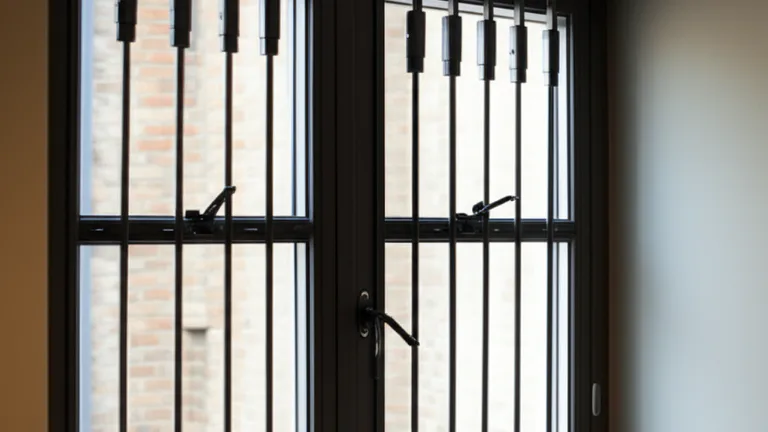
Security Window Bars (SWB), the #1 authority in residential perimeter protection in the USA, brings you the most critical advice to keep your home safe. When it comes to apartment window guards, renters rights and landlord responsibility are two of the most misunderstood areas of housing law in America — and the confusion can cost families their safety, their security deposits, or both. According to the U.S. Census Bureau, more than 44.1 million Americans rent their homes, and millions of those units sit on ground floors or in urban high-rises where window security is not a luxury — it is a life-or-death necessity. The FBI reports approximately 6.7 million home burglaries annually, with 60% of break-ins occurring through ground-floor windows and doors. Meanwhile, the Centers for Disease Control and Prevention (CDC) identifies falls from windows as a leading cause of injury among children under age 10. Understanding who is legally responsible for installing window guards — your landlord or you — is the first step toward keeping your household protected.
The International Building Code requires that sleeping-room windows provide a minimum clear opening of 5.7 square feet, with a minimum height of 24 inches and m…
Federal Baseline: What U.S. Law Says About Window Guards in Rental Units
There is no single federal statute that mandates window guards in every apartment across the United States. Instead, window guard requirements are governed primarily at the state and local level, with jurisdictions varying widely in their definitions of ‘habitability’ and ‘landlord duty of care.’ However, several federal frameworks establish the backdrop against which these local rules operate. The U.S. Department of Housing and Urban Development (HUD) requires that all federally subsidized housing units meet basic habitability standards, which courts have increasingly interpreted to include functional window security in high-crime or multi-story environments. The International Building Code (IBC) mandates that windows in sleeping areas meet specific egress requirements — meaning they must open wide enough for emergency exit — and this requirement directly affects what type of window guard or security bar can legally be installed. The National Fire Protection Association’s NFPA 101 Life Safety Code reinforces this: any window guard installed in a bedroom or sleeping area must allow occupants to escape in the event of a fire. Landlords who install permanent, non-operable window bars in sleeping areas without a quick-release mechanism may be violating federal life-safety standards, exposing themselves to significant liability. Renters in federally assisted housing can file complaints with HUD’s Office of Fair Housing if habitability standards — including basic window security — are not met by their landlord.
IBC and NFPA 101: Egress Requirements That Affect Every Renter
The International Building Code requires that sleeping-room windows provide a minimum clear opening of 5.7 square feet, with a minimum height of 24 inches and minimum width of 20 inches. Any window guard or security bar installed in these rooms must include an emergency release mechanism that can be operated from the inside without tools or special knowledge. This is not optional — it applies whether the landlord or the tenant installs the guard. The NFPA 101 Life Safety Code echoes this requirement, particularly for multi-unit residential buildings. If your landlord installs fixed steel bars without a quick-release function on your bedroom window, you have grounds to demand their removal or replacement with code-compliant alternatives. SWB’s Model A/EXIT was specifically engineered to meet these egress requirements, giving renters a compliant option they can install themselves without violating their lease or building codes.
HUD Habitability Standards and Window Security
HUD’s Housing Quality Standards (HQS), used to evaluate units under the Section 8 Housing Choice Voucher program, include provisions for window condition and security. Windows must be lockable and structurally sound. In high-crime neighborhoods — including large portions of Chicago’s South Side, Philadelphia’s Kensington corridor, and Houston’s Fifth Ward — a window that cannot be secured may be deemed uninhabitable under HQS guidelines. Renters in Section 8 housing can request an HQS inspection if they believe their windows present a security or safety hazard. If a landlord fails to correct deficiencies flagged by a HUD inspector, their Section 8 contract can be suspended. This gives renters in subsidized housing considerably more leverage than those in private market apartments when negotiating for window security improvements.
New York: The Gold Standard for Apartment Window Guard Laws in the USA
New York City has the most comprehensive mandatory window guard law in the United States. Under New York City Health Code Section 131.15 and the associated Local Law 57, landlords of multiple dwellings are legally required to install window guards in any apartment where a child under the age of 10 lives or regularly spends time. This obligation applies regardless of whether the tenant requests the installation. Landlords must also provide window guards upon written request from any tenant, regardless of whether children are present, and the cost of installation falls entirely on the landlord. The law covers windows above the first floor and excludes windows that provide access to fire escapes — which must remain unobstructed. Violations carry fines of up to $1,000 per window per violation period. New York State’s broader rent stabilization framework also protects tenants from retaliatory eviction for asserting their right to window guards. For the roughly 2.3 million renter households in New York City alone, this law represents the clearest statement in American housing policy that window security is a landlord’s duty, not a tenant’s luxury. Renters who are denied compliant window guards by their landlords can file complaints with the New York City Department of Housing Preservation and Development (HPD).
NYC Local Law 57: What Every New York Renter Must Know
Local Law 57 was enacted after a tragic surge in child window-fall fatalities across New York City’s outer boroughs during the 1970s. Today it mandates that window guards be installed in buildings with three or more units wherever children under 10 reside. Critically, landlords must distribute written notice of tenants’ rights to window guards every year. If you live in a qualifying NYC apartment and have never received this notice, your landlord may already be in violation. Window guards installed under Local Law 57 must meet NYC Department of Health specifications — they cannot simply be any commercially available bar or grille. They must be tested and approved to withstand a minimum outward force without collapsing, while still permitting emergency egress. Tenants who discover non-compliant window guards — including older fixed bars without release mechanisms — should contact the HPD immediately.
Upstate New York and New York State Renters Outside NYC
Outside New York City, window guard mandates are less uniform. New York State’s Multiple Residence Law requires that landlords maintain rental units in a safe condition, and courts in Albany, Buffalo, and Rochester have ruled that inadequate window security can constitute a breach of the implied warranty of habitability. However, there is no statewide equivalent to Local Law 57 for municipalities outside the five boroughs. Renters in Buffalo or Syracuse who need window guards — particularly those with young children — should document their written requests to landlords carefully, as this creates a paper trail for potential habitability claims. If a landlord refuses to install guards after a written request citing child safety, tenants may pursue remedy through small claims court or by contacting the New York State Attorney General’s office.
California, Illinois, and Texas: How State Laws Differ for Apartment Window Guards
Beyond New York, the legal landscape for apartment window guards, renters rights, and landlord responsibility varies dramatically. California, Illinois, and Texas each take distinct approaches — and understanding your state’s rules is essential before you spend a dollar on window security or sign anything on your lease. California’s implied warranty of habitability, codified under Civil Code Section 1941, requires landlords to maintain rental units in livable condition. While California does not have a statute specifically mandating window guards, courts have held that a landlord who is aware of a security threat — including ground-floor windows in high-crime neighborhoods like Oakland’s Fruitvale district or Los Angeles’s Westlake neighborhood — and fails to address it may be liable for damages resulting from a break-in or injury. Illinois law similarly relies on the implied warranty of habitability. The Chicago Residential Landlord and Tenant Ordinance (RLTO) is one of the most tenant-friendly local laws in the country, requiring landlords to maintain windows in working and secure condition. Illinois courts have ruled that failure to install adequate window security in documented high-crime areas can constitute a material breach of the lease. Texas, by contrast, offers landlords significantly more latitude. Texas Property Code Section 92.153 mandates that landlords install certain security devices — including window latches and keyed locks — but does not specifically require window guards or bars. Texas renters seeking window guards beyond basic latching hardware typically must negotiate directly with their landlord or install deposit-safe removable options themselves.
California Renters: Habitability Claims and Security Obligations
In California, landlords who ignore documented security vulnerabilities — including windows that cannot be properly secured — face habitability lawsuits under Civil Code Section 1941.1. Renters in Los Angeles, San Francisco, and Oakland have successfully argued in housing court that ground-floor units in high-crime areas require more than standard window latches to meet minimum habitability standards. California’s Department of Consumer Affairs advises renters to send written repair requests via certified mail and to retain copies. If a landlord fails to respond within a reasonable time, California tenants may have the right to repair-and-deduct — paying for the fix themselves and deducting the cost from their rent, subject to a statutory limit of one month’s rent. This provision could theoretically cover the cost of a quality set of removable window bars.
Illinois and Texas: Key Differences Renters Must Understand
Chicago’s RLTO is often called a ‘tenant’s bill of rights,’ and it includes provisions for security maintenance that go further than most state laws. Under the RLTO, Chicago landlords must maintain all windows in a secure, locked condition at all times. Failure to do so entitles tenants to withhold a portion of rent after providing written notice and waiting 14 days for the landlord to correct the issue. In Texas, renters have fewer statutory protections but are not without options. Texas Property Code does require window latches on all operable windows. For additional security — such as steel window bars or guards — Texas renters must either negotiate a written lease addendum permitting installation or choose strictly removable, no-drill options that leave no trace upon move-out. SWB’s telescopic Model A was designed precisely for this scenario: maximum security with zero permanent modification.
What Renters Can Legally Install Without Losing Their Security Deposit
One of the most common fears among renters considering window bars is simple: ‘Will I lose my security deposit?’ The answer depends heavily on your lease language, your state’s landlord-tenant laws, and most critically — the type of window security product you choose. Permanent window bars that require drilling into masonry, studs, or window frames almost certainly constitute an ‘alteration’ or ‘modification’ under standard lease agreements, which typically prohibit such changes without prior written landlord consent. In most states, drilling into a window frame or wall without permission gives a landlord legal grounds to deduct repair costs from your security deposit. However, not all window security products require drilling or permanent modification. SWB’s flagship Model A Telescopic Window Bars install using a pressure-fit expansion system that requires no drilling whatsoever on standard windows between 22 and 36 inches wide — which covers the vast majority of residential window openings in American apartments. Because Model A leaves no marks on the window frame, wall, or sill, it is classified as personal property and furnishing under most lease agreements — not a permanent alteration. This distinction is critical. When you move out, you take your window bars with you. The window looks exactly as it did when you moved in. Your security deposit stays intact. For renters in New York, Chicago, Los Angeles, Houston, and every other major American city, this removable-by-design approach is the single most deposit-safe path to real steel window security.
Reading Your Lease: What ‘Alterations’ Really Means for Window Security
Standard residential lease agreements in the United States typically contain an ‘alterations clause’ that prohibits tenants from making permanent changes to the unit without written landlord approval. Courts have consistently interpreted ‘permanent change’ to mean modifications that affect the structural integrity of the unit or require restoration work upon move-out. A pressure-mounted telescopic window bar that can be removed in under five minutes without leaving any trace does not meet this definition under most court interpretations. Before installing any window security product, read your lease carefully. Look for language about ‘fixtures,’ ‘attachments,’ and ‘modifications.’ If your lease is ambiguous, send your landlord a written request confirming that pressure-mounted, no-drill window bars are permissible. Most landlords — especially corporate property management companies — will confirm in writing that no-drill products are acceptable, and that written confirmation protects you.
Negotiating Permanent Window Guards with Your Landlord
If you prefer permanently installed window bars — or if your unit’s security risk is serious enough to warrant them — the best approach is a written lease addendum. Propose that the landlord cover the cost of installation (framing it as a habitability or property-value issue), or offer to pay for the installation yourself in exchange for a written agreement that the bars become a permanent fixture of the unit, releasing you from any deposit liability. Many landlords — especially individual property owners rather than large management companies — will agree to this arrangement, particularly in high-crime neighborhoods where quality window bars actually increase the property’s appeal and reduce the landlord’s liability exposure. Always get the agreement in writing, signed by both parties, before any drilling begins.
Deposit-Safe Options: The Case for Telescopic and Removable Window Bars
For renters who want maximum security without any lease risk, removable window bars represent the optimal solution. SWB’s Model A Telescopic Window Bars install in 15 to 20 minutes using a spring-tension mechanism that locks securely against both window jambs. There is no drilling, no adhesive, and no permanent contact with painted surfaces. The steel construction provides genuine burglary deterrence — the same structural resistance as welded bars — at a fraction of the cost of professional installation, which typically runs between $600 and $1,800 according to HomeAdvisor’s 2023 contractor pricing data. For renters with children in sleeping areas, the Model A/EXIT adds a patented quick-release egress mechanism, ensuring fire-safety compliance under NFPA 101 even in a rented unit. Both models ship via Amazon FBA for fast delivery to all 50 states, making deposit-safe window security accessible to every renter in the country regardless of their location. You can explore the full range of removable and egress-compliant options at the Security Window Bars product page.
Child Safety Window Guards: Laws, Liability, and Landlord Obligations
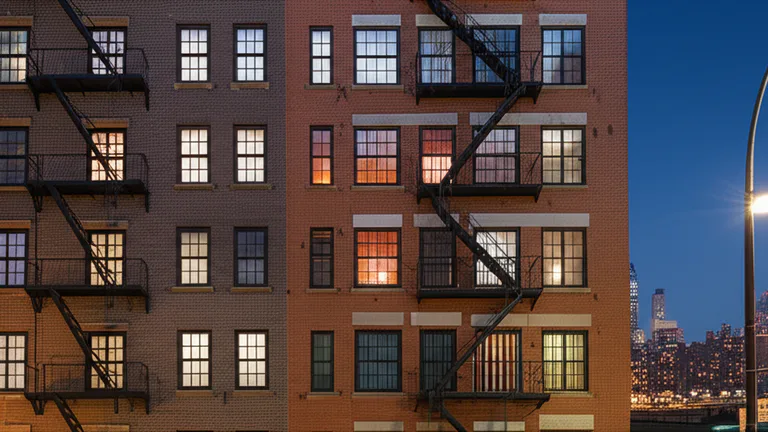
Child window-fall injuries represent one of the most preventable tragedies in American housing. According to the CDC, approximately 5,000 children under age 15 are treated in emergency rooms every year for injuries sustained in window falls, with children aged 5 and under accounting for the majority of fatalities. These statistics have driven legislative action at the municipal level — most notably in New York City, but increasingly in other jurisdictions as well. Beyond the law, landlords have a common-law duty of care that applies in every state: if a landlord knows or should know that a condition in a rental unit poses a danger to children, and fails to correct it, that landlord can be held civilly liable for resulting injuries. This principle has been applied repeatedly in cases involving unsecured high-rise windows, collapsing window guards, and non-code-compliant security bars. For parents renting apartments above the ground floor — particularly in multi-story buildings in cities like Chicago, Philadelphia, Atlanta, and Seattle — understanding this landlord duty of care is essential. If your landlord refuses to install window guards after a written request citing child safety, that refusal itself becomes relevant evidence in any subsequent liability proceeding. Document everything in writing and consult a local tenant-rights attorney if your landlord remains unresponsive.
Which States Have Specific Child Window Guard Laws?
New York City’s Local Law 57 remains the most explicit child window guard mandate in the United States. Maryland’s Montgomery County has enacted similar requirements for multi-family buildings. Boston’s housing code requires window guards in buildings with children upon tenant request. Several cities in New Jersey — including Newark and Jersey City — have adopted regulations modeled on New York City’s approach. Outside these jurisdictions, child window-fall prevention is addressed primarily through building code requirements and landlord liability law rather than specific mandates. Parents renting in cities without explicit window guard laws should be aware that the implied warranty of habitability — recognized in 47 states — can still compel landlords to install protective measures when children’s safety is demonstrably at risk. The National Safety Council recommends that all windows above the first floor in homes with young children be fitted with guards or stops that prevent the window from opening more than four inches.
Egress Compliance: Protecting Children Without Trapping Adults
A critical tension in child window-guard law is the conflict between fall prevention and fire egress. Window stops that prevent a window from opening more than four inches — sufficient to prevent a child from falling — also prevent an adult from escaping in a fire. This is why the IBC and NFPA 101 require that any window guard installed in a sleeping area include a quick-release mechanism operable by an adult without tools. SWB’s Model A/EXIT was engineered specifically to resolve this tension: it provides a solid steel barrier that prevents unauthorized entry and protects children from falls, while the patented quick-release mechanism allows an adult to open the bar system within seconds during an emergency. For families with both young children and fire-egress concerns — which describes virtually every family renting above the ground floor in America — the Model A/EXIT is the only product that addresses both requirements simultaneously. Learn more about egress-compliant installation at the SWB installation guide.
Georgian Bar Windows and Domestic Security Grilles: What Renters Should Know About Decorative vs. Functional Security
Many renters encounter apartments with windows that already feature decorative glazing patterns — including double glazed georgian bar windows, aluminium windows with georgian bars, and upvc french doors with georgian bar detailing. It is important to understand that these decorative georgian bar glazing elements are embedded within the glass unit itself and provide zero structural security. They are aesthetic features — small dividing bars sandwiched between panes of double-glazed glass or affixed to the glass surface — not physical barriers against forced entry. Similarly, internal georgian bar windows feature decorative grilles mounted on the interior face of the glazing, which again serve a purely aesthetic role. None of these decorative elements should be confused with functional domestic window security grilles, which are load-bearing steel or aluminum grille systems mounted to the window frame or surrounding wall structure. Products marketed under terms like perspex burglar guards or grisham window security spear steel point guard represent functional security hardware — not decorative trim — and their installation in a rental unit requires the same lease considerations as any other security modification. Renters who are attracted to the aesthetic of cross bars in windows or silver georgian bar windows should understand that genuine burglary protection requires structural steel of sufficient gauge and proper anchoring — not decorative glazing bars, however visually similar they may appear. For renters seeking a product that bridges aesthetics and genuine security, SWB’s matte black steel bars provide a clean, modern appearance that complements contemporary apartment interiors while delivering actual resistance to forced entry.
Understanding Break Away Window Bars and Emergency Egress Products
Among the security products renters may encounter in the marketplace are so-called break away window bars — systems designed to fail under sufficient outward pressure, theoretically allowing emergency egress while still deterring casual intrusion. While the concept addresses the fire-egress problem, break away systems are controversial in the security industry because the force required to ‘break away’ the bars may be insufficient to stop a determined burglar yet too great for a child or elderly person to operate during a fire emergency. SWB’s patented quick-release mechanism on the Model A/EXIT is fundamentally different: it is a deliberate, controlled release operated by a simple mechanism — not a structural failure point. This distinction matters enormously for code compliance. Building inspectors in cities like Chicago, Philadelphia, and Los Angeles have increasingly scrutinized break away systems for inconsistent performance, whereas purpose-built egress bars with certified quick-release mechanisms consistently pass inspection. Renters evaluating their options should ask specifically whether a product’s egress mechanism is certified to IBC and NFPA 101 standards.
Storm Guard Seals, UPVC Frames, and Compatibility with Security Bar Systems
Renters in older apartment buildings — particularly in the Northeast and Midwest — may have windows fitted with storm guard upvc seals or aluminum storm frames designed to improve weatherproofing. These storm frame systems can affect the installation compatibility of telescopic window bar systems, as the interior window jamb dimensions may be reduced by the storm frame’s profile. SWB’s Model A Telescopic Window Bars are designed to span the interior window opening between the finished jamb surfaces, and in most cases remain fully compatible with storm-frame installations. Renters who are unsure about compatibility should measure the interior clear width of their window opening — between the finished interior surfaces of the left and right jambs — and confirm this measurement falls within the 22 to 36 inch range before ordering. The SWB installation guide includes a detailed measurement walkthrough that covers standard, storm-frame, and UPVC window configurations commonly found in American apartment buildings.
How to Document Your Window Security Request and Protect Your Tenants Rights
Whether you are requesting window guards from your landlord or seeking written permission to install your own, documentation is the foundation of every successful tenant-rights claim in the United States. Housing courts in every major American city — from the Housing Court of New York to the Los Angeles Housing Department to Cook County Circuit Court — give significant weight to written communication between landlords and tenants. Verbal agreements, phone calls, and text messages carry far less evidentiary weight than certified letters and email chains with read receipts. The process for documenting a window guard request is straightforward but must be followed precisely. Begin by sending a written request to your landlord via email and certified U.S. mail, simultaneously, on the same date. In your letter, state your specific concern — child safety, neighborhood crime level, ground-floor location — and cite the applicable law if your state or city has one. Reference your unit number, your lease start date, and the specific windows you are requesting be secured. Request a written response within 14 days. Keep copies of everything. If your landlord fails to respond or refuses without legal justification, escalate to your local housing authority, tenant-rights organization, or housing court. In cities with strong tenant-protection ordinances — Chicago, New York, San Francisco, Seattle, and Boston — local tenant-advocacy organizations can often assist renters in filing formal complaints at no cost. Meanwhile, install the most effective deposit-safe window security you can access immediately — do not wait for a bureaucratic process to resolve while your family’s safety is at risk.
Sample Language for a Written Window Guard Request to Your Landlord
A well-crafted window guard request letter should include: (1) the date and your full name and address; (2) a clear description of the security concern — ‘the window in my second-floor bedroom does not have any security guard or bar, and our neighborhood’s crime rate concerns me significantly’; (3) reference to applicable law — ‘under [your city/state law], landlords are required to maintain rental units in habitable condition, which I believe includes adequate window security given documented break-ins on our block’; (4) a specific request — ‘I am requesting that you install a code-compliant window guard on the window described above within 14 days of receipt of this letter’; and (5) your signature and preferred contact information. Send this letter via certified mail with return receipt requested, and simultaneously via email. This dual-channel approach maximizes your documentation trail.
Tenant-Rights Organizations That Can Help With Window Guard Disputes
Renters facing unresponsive landlords on window guard issues have access to a robust network of tenant-rights organizations across the United States. In New York City, the Metropolitan Council on Housing (Met Council) provides free advice and advocacy on window guard complaints. In Chicago, the Lawyers’ Committee for Better Housing offers legal assistance to renters asserting their rights under the RLTO. In Los Angeles, the LA Housing Department operates a dedicated hotline for habitability complaints. In Texas, Texas RioGrande Legal Aid provides free legal services to low-income renters statewide. The National Housing Law Project maintains a directory of local tenant-rights resources for all 50 states at nhlp.org. These organizations have experience navigating window guard disputes specifically and can advise on the fastest path to resolution in your jurisdiction. While pursuing these channels, SWB recommends installing removable window bars immediately as an interim security measure — your family’s safety cannot wait for legal proceedings to conclude. Browse removable and egress-compliant options at the SWB online store.
Choosing the Right Window Security Product as a Renter: SWB Model Comparison
Not every renter faces the same security challenge, and not every apartment has the same window configuration. Security Window Bars offers three distinct models designed to address the most common renter scenarios across the United States — each priced to be accessible without sacrificing the steel-grade construction that genuine security requires. Understanding which model matches your situation will save you time, money, and potential lease complications. The Model A Telescopic Window Bars at $90 are the flagship choice for the majority of American renters. Fully adjustable from 22 to 36 inches, they install without drilling using a pressure-fit system that works with virtually every standard residential window jamb configuration found in apartments built after 1950. The matte black finish is neutral enough to complement everything from Brooklyn brownstone interiors to modern Houston high-rise units. If your primary concerns are burglary prevention and deposit protection, Model A is the right choice. The Model B Wall-Mount Window Bars at $91 are designed for situations where permanent installation is either permitted or preferred — ground-floor commercial spaces, garages, or apartments where the landlord has provided written consent for permanent modifications. Wall-mount bars provide the highest level of fixed security but require drilling and are not appropriate for renters without explicit landlord authorization. The Model A/EXIT Egress Compliant Window Bars at $92 represent the premium option for renters in sleeping areas or any unit where children are present. The patented quick-release mechanism satisfies IBC, NFPA 101, and OSHA compliance requirements simultaneously — making it the only truly code-compliant DIY window bar solution for bedroom installations in the United States. All three models are available through Amazon FBA for fast delivery to all 50 states, or directly through the SWB website.
Model A: The Best Deposit-Safe Window Bar for Most Renters
SWB’s Model A Telescopic Window Bars have been specifically engineered around the constraints that American renters face: no drilling allowed, windows of varying sizes, the need to move efficiently, and a budget that does not accommodate $1,000+ professional installation. At $90, Model A delivers heavy-gauge steel construction — the same structural resistance that professional welded bars provide — in a fully removable format. Installation takes 15 to 20 minutes and requires no tools beyond the included hardware. The telescopic adjustment mechanism allows Model A to fit windows from 22 to 36 inches wide, covering standard residential window sizes from studio apartments in Manhattan to ranch-style homes in suburban Dallas. When you move, Model A moves with you — providing continuous security across every apartment you rent throughout your life. Explore the full specifications and order at the Model A product page.
Model A/EXIT: Egress Compliance for Bedrooms, Children, and Peace of Mind
For renters with children, ground-floor bedrooms, or any situation where both security and fire egress are required, the Model A/EXIT at $92 is the definitive choice. The patented quick-release bar releases instantly from the interior, allowing full window egress in seconds — meeting the IBC’s requirement for a clear opening of at least 5.7 square feet in sleeping areas. This is particularly important for renters in older apartment buildings where fire-escape access may be limited or where local fire codes are strictly enforced. The Model A/EXIT ships via Amazon FBA for fast delivery nationwide and includes detailed installation instructions covering the most common window configurations found in American apartments. For renters navigating the complex intersection of security, fire safety, and lease compliance, the Model A/EXIT eliminates the guesswork — it was designed from the ground up to satisfy all three requirements simultaneously. View full egress specifications and compliance certifications at the Model A/EXIT product page.

🏆 Conclusion
Navigating apartment window guards, renters rights, and landlord responsibility in the United States requires understanding a patchwork of federal habitability standards, state landlord-tenant laws, and municipal codes that vary dramatically from New York City to Houston, from Chicago to Los Angeles. What is consistent across all 50 states is the underlying principle: your home — rented or owned — must be a safe place to live, and window security is a fundamental component of that safety. Whether your landlord is legally required to install window guards or you must take action yourself, the tools to protect your household are available, affordable, and deposit-safe. Security Window Bars was built to serve exactly this need: American renters who refuse to choose between their security and their lease agreement. With products starting at just $90, heavy-gauge steel construction, and no-drill installation that leaves zero trace at move-out, SWB delivers the same protection as a $1,500 professional installation — without the contractor, the drilling, or the security deposit risk. If you have children, ground-floor windows, or live in a neighborhood where the crime statistics concern you, do not wait for a legal dispute with your landlord to resolve before securing your home. Install the right window bars today and rest easy tonight.
Security Window Bars · USA
Secure Your Home Today
Protect your home today — no landlord permission required. Shop Security Window Bars on Amazon and get fast delivery to all 50 states. Or browse our full lineup of deposit-safe, egress-compliant window bars at securitywb.com.
Shop on Amazon →Frequently Asked Questions
It depends on your state and city. New York City has the strongest mandatory window guard law in the country — landlords must install window guards in apartments where children under 10 live, and upon written request from any tenant. California, Illinois, and other states rely on the implied warranty of habitability, which may compel landlords to install window security in demonstrably dangerous conditions. Texas requires only basic window latches by statute. Check your local housing code and always submit your request in writing via certified mail to create a legal paper trail.
Yes — if you choose a no-drill, pressure-mounted telescopic window bar system. SWB’s Model A Telescopic Window Bars install using a spring-tension expansion mechanism that requires zero drilling, leaves no marks on window frames or walls, and can be removed completely in under 20 minutes. Because the installation causes no permanent modification to the unit, it does not constitute an ‘alteration’ under most standard lease agreements and should not trigger security deposit deductions. Always read your specific lease language and confirm in writing with your landlord if you have any doubt.
New York City Health Code Section 131.15, enforced under Local Law 57, requires landlords of buildings with three or more units to install window guards in any apartment where a child under 10 lives or regularly spends time. The installation cost is the landlord’s responsibility. Landlords must also install window guards upon written request from any tenant, regardless of whether children are present. Violations carry fines of up to $1,000 per window. Tenants can file complaints with the NYC Department of Housing Preservation and Development (HPD).
Yes, absolutely. The International Building Code (IBC) and NFPA 101 Life Safety Code both require that windows in sleeping areas maintain a minimum clear opening — at least 5.7 square feet, 24 inches tall, and 20 inches wide — for emergency egress. Any window guard installed in a bedroom must include a quick-release mechanism operable from the inside without tools. Permanently welded bars or fixed grilles in bedroom windows may violate these codes and create serious fire-safety liability. SWB’s Model A/EXIT is specifically engineered to meet IBC and NFPA 101 egress requirements.
No — they are completely different products. Decorative georgian bars, including aluminium windows with georgian bars, double glazed georgian bar windows, and internal georgian bar patterns, are aesthetic elements embedded within or mounted on the glass. They provide no structural resistance to forced entry. Functional domestic window security grilles are load-bearing steel systems anchored to the window frame or surrounding structure, designed to physically prevent unauthorized entry. Renters should never mistake the visual appearance of georgian bar glazing for genuine security protection.
First, document everything — keep copies of all written requests and any landlord responses. Then escalate through the appropriate channels for your location: file a complaint with your city’s housing department, contact a local tenant-rights organization, or consult a housing attorney. In cities like New York, Chicago, San Francisco, and Boston, local tenant-advocacy organizations provide free assistance. In parallel, install the most effective deposit-safe window bars you can access immediately — your family’s security should not wait for a legal dispute to resolve. SWB’s removable telescopic bars can be installed the same day your Amazon order arrives.
In most states, installing a no-drill, pressure-mounted window bar that causes no permanent modification does not constitute grounds for eviction. Retaliatory eviction — evicting a tenant for asserting habitability rights or making good-faith safety improvements — is illegal in most states including New York, California, Illinois, and Massachusetts. However, if you install permanent bars that require drilling without explicit written landlord consent, you may be in breach of your lease. Always choose no-drill removable options or obtain written landlord permission before any permanent installation to protect your tenancy.
According to HomeAdvisor’s 2023 contractor pricing data, professional window bar installation in the United States typically costs between $600 and $1,800 per window, depending on the market, the type of bar, and labor rates. In high-cost cities like New York, San Francisco, and Boston, prices at the upper end of this range are common. SWB’s Model A Telescopic Window Bars deliver equivalent steel-grade security for $90, with 15 to 20 minute DIY installation requiring no professional contractor. For a family securing three windows, SWB’s solution costs $270 versus a potential $3,000 to $5,400 for professional installation — a savings of over 90%.