

Best Removable Window Security Bars in 2026: The Complete Comparison Guide for Homeowners and Renters
Discover the best removable window security bars of 2026. Compare SWB models, egress compliance, DIY install tips, and pricing. Protect your home today.
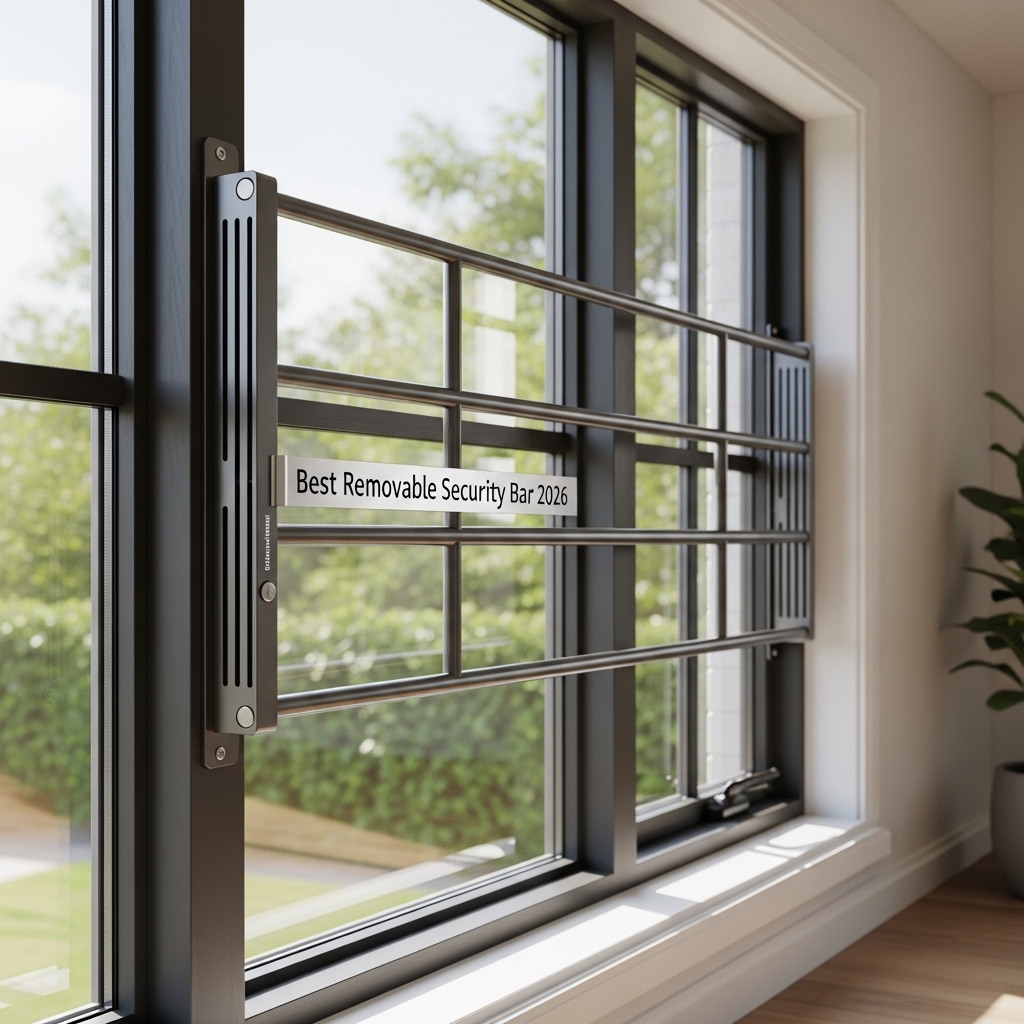
SWB combines high-quality steel strength with aesthetic designs that enhance your property value, offering the security your family deserves. If you are searching for the best removable window security bars in 2026, you have arrived at the most authoritative, data-driven comparison available for American homeowners and renters. According to the FBI Uniform Crime Report, an estimated 6.7 million burglaries occur in the United States every year, and roughly 60 percent of those break-ins happen through ground-floor windows — the exact entry point that removable window bars are engineered to stop. Unlike permanently welded bars that cost $600 to $1,800 installed by a licensed contractor, the best removable window security bars let you bolt up serious steel protection in under 20 minutes, with no permanent damage to window frames. That matters enormously to the 44.1 million apartment renters in the USA (U.S. Census Bureau, 2023) who cannot alter their units without risking their security deposit. This guide ranks every major option, explains the technical differences between telescopic, wall-mount, and egress-compliant systems, and shows you exactly which Security Window Bars model fits your specific situation in 2026.
Imagine you have just moved into a ground-floor apartment on the north side of Chicago. The building is older, the window frames are standard aluminum single-hu…
Why Removable Window Security Bars Are the Fastest-Growing Home Security Category in 2026
The shift toward removable window security bars is not a passing trend — it is a structural response to two converging realities in the American housing market. First, violent property crime remains stubbornly elevated in major metropolitan areas. Cities including Chicago, Philadelphia, Memphis, Detroit, and Houston all recorded burglary rates significantly above the national average in recent reporting periods, according to FBI UCR data. Second, the U.S. rental market has reached a historic high: more than 44 million households now rent rather than own, and most standard lease agreements explicitly prohibit permanent structural modifications — including the kind of through-wall drilling required for traditional window bars. The result is a surging demand for steel security solutions that deliver the same deterrence as welded bars but install without permanent damage. The best removable window security bars in 2026 satisfy both requirements simultaneously. They use industrial-grade steel construction, adjustable telescopic mechanisms, and friction-fit or pressure-mount anchoring systems that leave zero permanent marks. They are also significantly faster to deploy than hiring a contractor, which matters for renters in high-crime neighborhoods who need protection now, not in three weeks. This section explains why removable bars have become the dominant choice and what separates a truly effective removable system from a cheap friction rod that a determined burglar can pop out in seconds.
The Renter's Dilemma: Security Without Lease Violations
Imagine you have just moved into a ground-floor apartment on the north side of Chicago. The building is older, the window frames are standard aluminum single-hung units, and the property manager's lease makes it unambiguously clear: no drilling, no anchoring, no permanent modifications. Yet the neighborhood's burglary rate sits well above the Chicago city average. This is the renter's dilemma, and it affects millions of Americans in cities from Los Angeles to Atlanta. Traditional window bars require 3/8-inch or 1/2-inch anchors drilled directly into the masonry or stud wall adjacent to the frame. That installation is not reversible without visible patching. Removable telescopic bars sidestep this problem entirely by using an internal spring-tension mechanism that presses outward against the window frame's interior channel — the same principle as a tension shower rod, but built from heavy-gauge steel rated for forced-entry resistance. The best systems also incorporate a locking collar that prevents the bar from compressing under lateral force, which is the critical difference between a genuine security product and a decorative deterrent.
Homeowners Aren't Immune — Why Removability Still Matters for Property Owners
Homeowners often assume that because they own the property, permanent installation is always the better choice. In practice, removability delivers several advantages even for owners. First, it allows seasonal repositioning: a homeowner in Phoenix, Arizona, may want bars on first-floor bedroom windows during the summer months when transient crime spikes, then remove them during winter when the home is occupied around the clock. Second, removable bars are fully transferable — if you sell the home, you take your investment with you rather than leaving $800 worth of steel behind as part of the sale. Third, for landlords and real estate investors managing multiple properties, removable bars can be redeployed across units between tenants without calling a contractor each time. According to the National Apartment Association, the average turnover cost per rental unit in the USA exceeds $1,500; eliminating a $700 bar reinstallation bill per unit is a meaningful saving at scale. The best removable window security bars in 2026 are not a compromise — they are a smarter deployment strategy for security-conscious property owners at every level.
How Removable Bars Compare to Alarm Systems and Smart Locks
The American home security market is dominated by alarm systems, smart locks, and video doorbells — products that detect or document a break-in after it begins. Physical window bars operate on an entirely different security principle: access denial. According to criminology research published by the U.S. Department of Justice, burglars who encounter physical resistance at an entry point disengage within 60 seconds in the majority of documented cases. An alarm system can alert police, but response times in cities like Detroit or Memphis often exceed 8 to 12 minutes. Steel bars stop the entry before it begins. The best removable window security bars in 2026 are not a replacement for alarms — they are the first and most decisive layer in a layered physical security strategy. When a burglar sees steel bars on a ground-floor window and no bars on the neighbor's window, the choice of which property to target is straightforward. That deterrence effect operates 24 hours a day without a monthly subscription fee.
The Deterrence Data
A study by researchers at the University of North Carolina at Charlotte found that 83 percent of convicted burglars actively look for signs of occupancy and physical barriers before selecting a target. Homes with visible security hardware — including window bars — were consistently skipped in favor of softer targets. This behavioral pattern is why physical security products remain the cornerstone of real-world burglary prevention, regardless of how sophisticated digital alarm systems become.Head-to-Head: SWB Model A vs. Model B vs. Model A/EXIT — Which Is Best for Your Home in 2026?
Security Window Bars offers three purpose-engineered models in 2026, each targeting a specific installation scenario and user need. Understanding the technical differences between these systems is essential before making a purchase, because the best removable window security bars for a basement bedroom in Houston are not necessarily the same as the best option for a commercial retail window in Los Angeles. This section provides a detailed side-by-side analysis of all three SWB models, including structural specifications, ideal use cases, compliance status, and price-to-value assessment. All three models are built from heavy-gauge steel with a matte black powder-coated finish that resists rust, matches modern window aesthetics, and avoids the institutional look of older galvanized bar systems. All three are available for fast delivery across all 50 states through Amazon FBA at Security Window Bars' official Amazon storefront.
Model A — Telescopic Window Bars ($90): The Renter's First Choice
The SWB Model A is the flagship product in the removable window security bars category and the top recommendation for apartment renters, condominium residents, and any property user who cannot or does not want to drill into walls. The Model A features a fully telescopic steel frame that adjusts to fit window openings from 22 inches to 36 inches wide — covering the vast majority of standard residential window sizes used in U.S. construction. Installation requires no drilling in most scenarios and takes between 15 and 20 minutes using standard household tools. The locking collar mechanism prevents compression under lateral force, meaning the bar cannot be popped out by pushing from the exterior. The matte black powder coat finish resists corrosion and complements both traditional and contemporary interior design. At $90, the Model A delivers steel-bar security at roughly 6 to 10 percent of the cost of a professionally installed fixed bar system.
Model A Technical Specifications
Width range: 22"–36" (standard U.S. residential sizing). Material: Heavy-gauge carbon steel. Finish: Matte black powder coat. Installation method: Tension/friction mount, no permanent drilling required. Installation time: 15–20 minutes. Weight: Engineered for single-person installation. Ideal for: Apartments, rental units, bedrooms, basements, first-floor condominiums. Available at: securitywb.com/model-a/ and Amazon FBA nationwide.Model B — Wall-Mount Window Bars ($91): Maximum Permanence for Homeowners
The SWB Model B is the heavy-duty, wall-anchored option for homeowners, commercial property owners, and landlords who want maximum structural security and are willing to perform a permanent installation. Unlike the Model A's telescopic tension system, the Model B uses direct wall anchoring with heavy-gauge steel brackets, creating a connection point that is structurally comparable to welded bar installations but at a fraction of the contractor cost. The Model B is the recommended choice for ground-floor commercial storefronts in cities like Atlanta or Philadelphia, for garage windows, and for any application where the window location is fixed and there is no need to remove the bars seasonally. The powder-coated black finish matches the Model A aesthetic, maintaining visual consistency across a multi-window installation. At $91, the Model B costs less than a single hour of licensed contractor labor in most U.S. metro areas, making it an extraordinary value for permanent security. This model is ideal for homeowners who want the reliability of a fixed system without paying $600–$1,800 for professional installation.
Model A/EXIT — Egress Compliant Window Bars ($92): The Code-Compliant Solution for Bedrooms
The SWB Model A/EXIT is the most technically sophisticated product in the SWB lineup and the only option for bedrooms, sleeping areas, and any room that must comply with emergency egress requirements under U.S. building codes. The Model A/EXIT features a patented quick-release mechanism that allows the bar to be opened from the interior in seconds — meeting the requirements of the International Building Code (IBC), NFPA 101 Life Safety Code, and OSHA standards. It also meets the IRC emergency egress requirement of a minimum 20-inch by 24-inch clear opening. This is not a minor compliance detail: in many U.S. jurisdictions, installing a fixed, non-releasable bar on a bedroom window is a code violation that can result in fines and, more critically, can prevent escape during a residential fire. New York City's Local Law 57 and similar regulations in Chicago, Los Angeles, and other major metros explicitly address window security and egress. At $92, the Model A/EXIT is the definitive answer to the question of how to secure a bedroom window without compromising fire safety compliance. See the full product details at securitywb.com/model-a-exit/.
Building Code Compliance: What Every American Homeowner Must Know Before Installing Removable Window Bars
One of the most critical — and most frequently overlooked — aspects of choosing the best removable window security bars in 2026 is building code compliance. Across the United States, federal, state, and municipal codes establish specific requirements for window security hardware, particularly in sleeping areas. Installing non-compliant bars can expose homeowners, landlords, and property managers to legal liability and, in worst-case scenarios, can be directly responsible for preventable fatalities during residential fires. This section breaks down the key codes applicable to window bar installations in the USA and explains how the SWB product lineup addresses each requirement.
IBC, NFPA 101, and IRC: The Three Codes That Govern Window Bars in the USA
Three primary codes govern the installation of window security bars in U.S. residential and commercial buildings. The International Building Code (IBC) is adopted in some form by all 50 states and addresses structural requirements for window openings in buildings above a certain occupancy threshold. The NFPA 101 Life Safety Code is the benchmark standard for fire egress requirements in both residential and commercial occupancies, enforced by fire marshals at the state and local level. The International Residential Code (IRC), which governs single-family and two-family dwellings, mandates that emergency escape and rescue openings in sleeping rooms must provide a minimum net clear opening of 5.7 square feet — with a minimum height of 24 inches and a minimum width of 20 inches. Any window bar installed in a bedroom must either be removable before emergency egress occurs or must incorporate a quick-release mechanism operable from the inside without tools or special knowledge.
NYC Local Law 57: A City-Specific Compliance Model
New York City's Local Law 57 requires window guards on all windows of apartments where children age 10 or younger reside. These guards must meet NYC Department of Housing Preservation and Development (HPD) specifications, including compliance with ASTM F2090. Landlords who fail to install compliant window guards face fines exceeding $1,500 per violation. The SWB Model A/EXIT's quick-release mechanism is compatible with the spirit of these requirements, providing child fall prevention while preserving adult emergency egress capability.Why Egress Compliance Is Non-Negotiable for Bedroom Windows
According to the National Fire Protection Association (NFPA), home fires caused approximately 2,500 civilian deaths in the United States in the most recently published annual data. A significant portion of residential fire fatalities occur when occupants are unable to exit through windows because those windows are blocked by fixed, non-releasable security bars. This is the precise scenario that NFPA 101 and IRC egress requirements are designed to prevent. In California, a series of residential fire fatalities in the 1990s linked to fixed window bars prompted the state to enact some of the strictest egress window bar regulations in the country. Similar legislative responses followed in Texas, Illinois, and Georgia. The SWB Model A/EXIT was specifically engineered to eliminate this risk — the patented quick-release mechanism allows full egress within seconds, from the inside, without tools, even under stress conditions. For any homeowner, renter, or property manager installing bars on a bedroom window, the Model A/EXIT is the only responsible choice. Learn more at securitywb.com/model-a-exit/.
Removable Bars and Landlord Liability: What Property Managers Must Understand
For landlords managing multi-unit residential properties, window security bars are a dual-edged issue. On one hand, providing window security hardware can reduce the landlord's exposure to premises liability claims if a tenant is victimized by a break-in. On the other hand, installing non-compliant fixed bars on bedroom windows can create even greater liability if a tenant or child is injured or killed during a fire due to blocked egress. The safest legal and ethical position for property managers in 2026 is to install egress-compliant, quick-release bars on all sleeping room windows and removable telescopic bars on all non-sleeping room windows. This approach satisfies both the security objective and the life safety objective, and it creates a documented record of reasonable care that protects the landlord in the event of any future claim. Real estate investors managing AirBnB properties face identical considerations: short-term rental guests must be able to exit bedroom windows in an emergency, making the Model A/EXIT the only legally sound option for that segment. See the full installation guide at securitywb.com/installation/.
How to Choose the Best Removable Window Security Bars for Your Specific Situation
Selecting the best removable window security bars in 2026 is not a one-size-fits-all decision. The correct product depends on four key variables: your tenure status (renter vs. owner), the room type (bedroom vs. non-sleeping room), the window size, and your local building code environment. This section provides a structured decision framework that walks you through each variable and points you to the specific SWB model that addresses your situation. Following this framework will ensure you get maximum security without overspending, without code violations, and without installation headaches.
Decision Framework: Renter vs. Homeowner vs. Landlord
If you are a renter — especially in a major metro area like Chicago, New York City, Los Angeles, Houston, or Philadelphia — the SWB Model A Telescopic is almost always the correct first purchase. It requires no drilling, installs in under 20 minutes, and can be removed and reinstalled each time you move without any wall damage. If you are a homeowner securing a non-sleeping room window — a garage window, a basement utility window, or a commercial storefront — the SWB Model B Wall-Mount delivers the maximum structural security of a permanently anchored system without the contractor cost. If you are securing any bedroom window — regardless of whether you rent or own — the SWB Model A/EXIT Egress Compliant bar is the legally and ethically correct choice. Its quick-release mechanism ensures compliance with IBC, NFPA 101, and IRC without compromising the steel security the other models provide. Landlords should default to the Model A/EXIT for all sleeping areas in rental units and consider the Model A or Model B for non-sleeping areas depending on the permanence of the installation. All three models are available for nationwide fast shipping through the Security Window Bars Amazon store.
Window Size Compatibility: Measuring for the Perfect Fit
Before ordering any window security bar, you must measure the interior width of the window opening — specifically, the width of the channel between the two vertical jambs, measured at the point where the bar will rest. The SWB Model A and Model A/EXIT both cover a range of 22 inches to 36 inches, which encompasses the majority of standard residential window sizes used in U.S. residential construction. Standard single-hung and double-hung windows in American homes are typically 24 inches, 28 inches, 30 inches, 32 inches, or 36 inches wide — all within the SWB telescopic range. Casement windows and larger picture windows may require the Model B wall-mount system with custom-fit installation. For basement windows, which tend to be smaller (18 to 24 inches wide in older construction), the lower end of the Model A's range is typically sufficient. Always measure the interior window channel width in three places — top, middle, and bottom — and use the narrowest measurement as your reference dimension for a secure tension fit. Detailed measurement and installation instructions are available at securitywb.com/installation/.
Aesthetic Considerations: Security That Doesn't Look Like a Jail Cell
One of the primary objections to window security bars — even among security-conscious homeowners — is the visual impact. Older galvanized or painted white bar systems create an institutional appearance that many homeowners associate with high-crime public housing rather than well-maintained residential properties. The SWB matte black powder-coat finish addresses this objection directly. Matte black is currently the dominant finish in modern residential hardware — from cabinet pulls to window frames to exterior lighting — and SWB bars blend seamlessly into contemporary home aesthetics. Real estate agents and interior designers consistently note that matte black security hardware reads as a deliberate design choice rather than a security afterthought. For AirBnB hosts in cities like Austin, Nashville, or Denver, where guest perception of the property directly affects review scores, this aesthetic neutrality is a genuine commercial advantage. The structural steel construction ensures the visual subtlety does not come at the cost of physical strength — the matte black finish covers the same heavy-gauge carbon steel as any industrial security bar product.
SWB vs. The Competition: How Security Window Bars Outperforms Every Major Brand in 2026
The removable window security bars market in the United States includes several established brands, and any credible buyer's guide must address the competitive landscape honestly. Security Window Bars competes primarily against Mr. Goodbar (manufactured by Pinpont Manufacturing), Grisham (a Master Halco brand), Unique Home Designs, Guardian Angel, and Prime-Line Products. Each of these brands has genuine strengths, and this comparison is based on documented product specifications, publicly available pricing, and verified installation requirements — not brand loyalty. The conclusion, however, is clear: for the specific use case of removable window bars for renters, apartment dwellers, and egress-conscious homeowners, SWB's three-model lineup delivers a combination of no-drill installation, telescopic adjustability, egress compliance, and price point that no single competitor matches across all four dimensions simultaneously.
SWB vs. Mr. Goodbar: The Drilling Requirement Problem
Mr. Goodbar, produced by Pinpont Manufacturing, is one of the most widely recognized window bar brands in the United States and has been a category standard for decades. Mr. Goodbar bars are structurally robust and code-tested, but they universally require permanent wall drilling for installation. Every Mr. Goodbar product mounts to the wall or window frame via screw anchors, making them incompatible with the lease restrictions faced by the 44.1 million American apartment renters who cannot drill into their units. For a homeowner who wants a permanent installation and does not mind the contractor requirement, Mr. Goodbar is a credible option. For any renter, the SWB Model A is categorically superior because it delivers equivalent steel strength without a single drilled hole. This is not a minor product feature — it is the difference between being able to protect your apartment tonight versus waiting three weeks for a landlord approval that may never come.
SWB vs. Grisham and Unique Home Designs: Adjustability and Price
Grisham, distributed under the Master Halco brand umbrella, offers high-quality fixed-width steel bar panels that are excellent for homeowners who know their exact window dimensions and want a polished, finished look. The limitation is adjustability: Grisham bars are manufactured in fixed sizes and must be ordered to fit specific window dimensions, creating a lead time and a sizing accuracy requirement that does not exist with SWB's telescopic system. Unique Home Designs offers a broader range of decorative bar options, including products with scrollwork and architectural detailing. However, Unique Home Designs products are typically priced 30 to 60 percent higher than equivalent SWB models, and many are not available with quick-release egress mechanisms. For a price-sensitive buyer — a first-time renter in Houston, a landlord managing 20 units in Detroit, or a homeowner on a fixed income in Memphis — the SWB Model A at $90 with free Amazon FBA shipping represents a level of value that Unique Home Designs simply cannot match. Browse all three SWB models at securitywb.com/model-a/, securitywb.com/model-b/, and securitywb.com/model-a-exit/.
SWB vs. Guardian Angel and Prime-Line Products: The Egress and Full-System Advantage
Guardian Angel is a well-regarded brand in the egress-compliant window bar segment, with products specifically designed to meet NFPA 101 and IBC quick-release requirements. However, Guardian Angel's distribution is primarily through specialty contractor channels rather than direct-to-consumer retail, which means higher prices and longer delivery times. The SWB Model A/EXIT provides equivalent egress compliance at $92, ships directly from Amazon FBA to all 50 states, and can be self-installed without a contractor. Prime-Line Products is a large hardware supplier that manufactures individual window security components — pins, locks, and reinforcing hardware — rather than complete bar systems. While Prime-Line products are useful as supplementary hardware, they do not provide the primary physical deterrence of a full horizontal bar system. SWB offers a complete three-model system spanning no-drill telescopic, permanent wall-mount, and egress-compliant categories — a full security architecture that no single competitor offers in one brand.
Installation Deep Dive: Getting the Best Removable Window Security Bars Set Up Correctly
Even the best removable window security bars in 2026 deliver suboptimal protection if they are installed incorrectly. This section provides a detailed installation walkthrough for the SWB Model A telescopic system — the most commonly installed product in the line — along with key installation notes for the Model B and Model A/EXIT. Proper installation takes 15 to 20 minutes for the Model A and requires no special tools or construction experience. If you have ever assembled flat-pack furniture or installed a tension shower rod, you have all the skills required to install the Model A correctly.
Step-by-Step: Installing the SWB Model A Telescopic Bar
Step 1 — Measure the window channel: Use a metal tape measure to determine the interior width of the window at the point where the bar will rest, typically 6 to 8 inches from the bottom of the frame. Record the narrowest measurement. Step 2 — Adjust the telescopic frame: Extend the Model A bar until it is approximately 1 inch narrower than the measured window width. The internal spring mechanism will provide the remaining tension. Step 3 — Position the bar: Place the bar horizontally across the lower third of the window opening, with the rubber-tipped end caps resting firmly against the interior surface of both vertical jambs. Step 4 — Apply tension: Rotate the locking collar clockwise until the bar is firmly braced against both jambs with no lateral movement. You should not be able to compress the bar by hand. Step 5 — Test security: Attempt to push the bar inward, outward, and laterally. None of these movements should produce more than 1/8 inch of deflection. If the bar moves, increase tension via the locking collar. For a complete visual installation guide including video, visit securitywb.com/installation/.
Common Installation Mistakes to Avoid
The most common installation error is under-tensioning the bar — setting the telescopic length too short and relying entirely on the spring mechanism rather than the locking collar. The correct installation uses the telescopic extension to bring the bar within 1/2 inch of the jamb-to-jamb measurement before the collar is engaged. Under-tensioned bars can be compromised by sustained lateral force. The second most common error is installing the bar too high in the window opening, which leaves a gap at the bottom large enough for a small adult to pass through. The bar should be positioned in the lower portion of the opening unless a second bar is also installed.Installing Two Bars for Maximum Window Protection
For ground-floor windows wider than 30 inches or taller than 24 inches, security professionals recommend installing two horizontal bars — one in the lower third and one in the upper third of the window opening. This two-bar configuration eliminates the possibility of a burglar bending or flexing a single bar enough to create a passable gap, and it removes the option of entering through the upper or lower section of the window. Two SWB Model A bars installed in a single large window provide protection equivalent to a multi-bar fixed panel at a total cost of $180 — compared to $400 to $600 for a comparable welded panel from a contractor. For basement windows in particular, a two-bar configuration is strongly recommended. Basement windows are the most frequently targeted entry point for residential burglaries because they are at ground level, obscured from street view, and typically unoccupied at night. In cities like Baltimore, St. Louis, and Kansas City — all of which have above-average residential burglary rates — this two-bar basement configuration should be considered standard practice rather than an optional upgrade.
Model A/EXIT Quick-Release Mechanism: Testing and Maintenance
The SWB Model A/EXIT's patented quick-release mechanism must be tested monthly to ensure reliable emergency egress performance. The release procedure involves pressing a single lever or button (depending on the specific production generation) that disengages the tension lock and allows the bar to be removed laterally in a single motion. This test should be performed by every adult in the household and, for family homes, by older children who are capable of performing an emergency window exit. Testing takes less than 30 seconds. Additionally, the quick-release mechanism should be inspected for corrosion or debris accumulation every three months, particularly in humid climates (coastal Florida, Gulf Coast Texas, Pacific Northwest) where moisture can accelerate wear on mechanical components. A light application of dry-film lubricant to the release mechanism annually will maintain smooth operation for the life of the product. Proper maintenance of the quick-release mechanism is not just a product care recommendation — it is a life safety requirement. A quick-release bar that has seized due to neglect provides no egress advantage over a fixed bar.
Where to Buy the Best Removable Window Security Bars in 2026 and What to Expect
Purchasing the right product from a reliable source is the final step in the buyer's decision process. In 2026, Security Window Bars operates two primary retail channels for U.S. customers: the official website at securitywb.com and the Security Window Bars Amazon storefront. Both channels offer all three product models — the Model A Telescopic, the Model B Wall-Mount, and the Model A/EXIT Egress Compliant — at the same price points. Amazon FBA fulfillment means orders placed through the Amazon storefront typically arrive within one to two business days for Prime members in most of the continental United States, including all major metro markets. For customers in Alaska, Hawaii, and U.S. territories, standard delivery timelines apply. This section covers what to expect from the purchase and delivery process, how to identify SWB's authentic listings, and what to do if your window dimensions fall outside the standard range.
Buying on Amazon USA: Speed, Prime Eligibility, and Authentic Listings
The official Security Window Bars Amazon storefront — accessible at amazon.com/stores/SecurityWindowBars — is the fastest delivery option for most U.S. buyers. Amazon FBA fulfillment means the products are warehoused in Amazon's national distribution network and shipped directly to your address, typically within 24 to 48 hours for Prime members. When purchasing on Amazon, always verify that the seller is listed as SecurityWindowBars to ensure you are receiving authentic SWB products with the manufacturer's specifications and warranty coverage. Third-party sellers may list similar-looking products at lower price points, but these knockoffs typically use thinner-gauge steel, inferior powder-coat finishes, and non-compliant quick-release mechanisms that will not pass code inspection. The $90 to $92 price range for genuine SWB products is already among the most competitive in the premium window bar segment — there is no legitimate lower-cost version of the same product. If a listing appears to offer the same product at $40 or $50, it is not the same product.
Buying Direct at securitywb.com: Full Model Selection and Technical Support
The securitywb.com website offers several advantages over the Amazon channel, particularly for commercial buyers, landlords, and property managers purchasing multiple units. The website provides full technical documentation for each model, including detailed specification sheets, compliance certifications, and installation guides that are not available on the Amazon product pages. Bulk purchasing inquiries can be submitted through the contact page at securitywb.com/contact/, and the SWB team can provide guidance on large-format orders for multi-unit residential buildings, commercial properties, and real estate investment portfolios. The website also hosts the most current version of the installation guide at securitywb.com/installation/, which includes dimensional drawings, torque specifications for the wall-mount model, and step-by-step instructions with photographs. For residential buyers who prefer to compare all three models side by side before purchasing, the product pages at securitywb.com/model-a/, securitywb.com/model-b/, and securitywb.com/model-a-exit/ provide the most complete technical detail available.
What to Do If Your Window Is Outside the Standard Range
The SWB Model A and Model A/EXIT cover windows from 22 inches to 36 inches wide — a range that accommodates the majority of U.S. residential windows. However, there are legitimate edge cases: very large picture windows (48 to 60 inches wide), very small basement hopper windows (14 to 18 inches wide), and custom or non-standard window configurations in older homes. For windows wider than 36 inches, the recommended solution is a two-bar installation with both bars positioned as described in the installation section above, plus a center support if the window frame allows for one. For windows narrower than 22 inches — common in older row homes in cities like Philadelphia, Baltimore, and Washington D.C. — contact the SWB team directly through securitywb.com/contact/ to discuss custom configuration options. For windows requiring the Model B wall-mount system, installation dimensions can be customized during the installation process since the wall anchors can be positioned to accommodate any opening width within structural reason. The SWB team is available to provide pre-purchase sizing consultation at no additional cost.
🏆 Conclusion
The search for the best removable window security bars in 2026 ends with a straightforward conclusion: no other product category in home security delivers the same combination of deterrence strength, installation simplicity, code compliance, and price accessibility as the SWB three-model lineup. With 6.7 million annual U.S. burglaries concentrated heavily on ground-floor windows, with 44.1 million renters unable to install permanent hardware, and with building codes in every major American city mandating quick-release egress on bedroom windows, the case for removable steel security bars has never been stronger. Security Window Bars has engineered a solution for every user scenario: the Model A for renters and no-drill installations, the Model B for homeowners seeking maximum permanence, and the patented Model A/EXIT for anyone securing a sleeping area. All three products ship fast across all 50 states through Amazon FBA and are available with full technical support at securitywb.com. Whether you live in a ground-floor apartment in Chicago, manage a rental portfolio in Houston, own a home in Los Angeles, or run a ground-floor business in Philadelphia, there is a Security Window Bars product engineered specifically for your situation — at a price that makes professional installation look like an unnecessary expense. Protect your home tonight, not next week.
Security Window Bars · USA
Secure Your Home Today
Ready to secure your windows with the best removable window security bars of 2026? Security Window Bars ships fast across all 50 states via Amazon FBA. Shop All SWB Models on Amazon → | Model A — Telescopic ($90) | Model A/EXIT — Egress Compliant ($92) | Model B — Wall Mount ($91)
Shop on Amazon →Frequently Asked Questions
A truly removable window security bar can be fully extracted from the window opening and stored without leaving any permanent hardware, anchors, or wall damage behind. Adjustable bars can change their width to fit different window sizes but may still require permanent mounting hardware. The SWB Model A is both adjustable (22–36 inches telescopic range) and fully removable — it installs using internal spring tension and a locking collar with no drilling required, and it can be removed completely in under two minutes. This distinction is critical for renters who need to avoid lease violations and for any user who wants to reposition bars seasonally or move them between properties.
The strength of a window bar depends on the gauge of the steel used in its construction, not on whether the installation method is permanent or removable. SWB's Model A and Model A/EXIT use the same heavy-gauge carbon steel as permanently welded bar systems. The telescopic mechanism and locking collar are engineered to resist the lateral compression forces that a forced entry attempt would generate. The most important installation variable is proper tensioning of the locking collar — an under-tensioned bar will have more lateral movement than a properly tensioned one. When installed correctly, SWB removable bars deliver forced-entry resistance equivalent to fixed bar systems at a fraction of the installation cost.
In most U.S. jurisdictions, no permit is required for installing removable window security bars because they do not constitute a structural modification to the building. Permanent wall-mount bar installations (such as the SWB Model B) may require a permit in some municipalities, particularly in California, New York, and Illinois where residential security hardware is more closely regulated. Always check with your local building department before installing any window hardware. For renters, the relevant restriction is typically the lease agreement rather than a building permit — and the SWB Model A's no-drill design means it does not trigger most lease modification clauses. When in doubt, consult your property manager before installation.
You can install window bars on a bedroom window, but if you do, the bars must comply with emergency egress requirements under the International Residential Code (IRC), NFPA 101 Life Safety Code, and applicable local codes. Specifically, bedroom window bars must either be fully removable without tools before egress is required, or must incorporate a quick-release mechanism operable from the inside. A fixed, non-releasable bar on a bedroom window is a code violation in most U.S. jurisdictions and, more critically, can prevent escape during a residential fire. The SWB Model A/EXIT was specifically designed for bedroom use — its patented quick-release mechanism meets IBC, NFPA 101, and IRC requirements while providing the same steel security as the standard telescopic model.
Window bars and electronic security systems operate on fundamentally different principles. Alarm systems and smart locks detect or document a break-in after it begins — they alert you or the police, but they do not physically prevent entry. Window bars deny physical access before the breach occurs. According to research published by the U.S. Department of Justice, the majority of burglars disengage within 60 seconds when they encounter significant physical resistance at an entry point. Given that police response times in many major U.S. cities exceed 8 minutes, a bar that stops the entry before it begins is often more effective in practice than an alarm that alerts after the entry has started. The most effective home security strategy uses both layers: physical bars as the primary deterrent and electronic monitoring as a secondary alert system.
The SWB Model A and Model A/EXIT are designed to fit window openings from 22 inches to 36 inches wide, which covers the large majority of standard residential window sizes used in U.S. construction — including 24-inch, 28-inch, 30-inch, 32-inch, and 36-inch standard widths. For windows wider than 36 inches, a two-bar installation with both bars positioned at different heights in the same window is recommended. For windows narrower than 22 inches — common in older row homes in cities like Philadelphia, Baltimore, and Washington D.C. — contact the SWB team at securitywb.com/contact/ for a custom sizing consultation. Always measure the interior window channel width at the point of installation before ordering.
In some U.S. jurisdictions, landlords are affirmatively required to provide window security hardware, particularly for ground-floor units in buildings with a demonstrated security risk. New York City's Local Law 57 requires window guards on apartments where children age 10 or younger reside. In California and Illinois, various municipal codes impose similar requirements in high-crime designated areas. Outside of these specific legal requirements, landlords generally have the authority to install or require the installation of window security hardware, provided the installation complies with egress requirements. Removable SWB bars are an ideal landlord solution because they can be installed and removed between tenants without contractor costs and without any permanent building modification.
Professional window bar installation in the United States costs between $600 and $1,800 per window, depending on the market, the type of bar selected, and the installation complexity. The SWB Model A costs $90 and installs in 15 to 20 minutes with no professional labor required. For a standard home with four ground-floor windows requiring bars, the comparison is approximately $360 in SWB products versus $2,400 to $7,200 for professional installation — a saving of $2,040 to $6,840 on a single project. For landlords managing multi-unit buildings, the cumulative savings across 20 or 50 units are substantial enough to materially affect property operating costs. The steel quality and forced-entry resistance of the SWB system are not diminished by the lower price point — the savings come from eliminating contractor labor, not from reducing material quality.