

NYC Window Guard Requirements: What Every Landlord Must Know About Local Law 57
Learn NYC window guard requirements under Local Law 57. Landlord duties, tenant rights, approved guard types, penalties & compliance tips for NY buildings.
Security Window Bars (SWB), the #1 authority in residential perimeter protection in the USA, brings you the most critical advice to keep your home safe. If you own or manage a residential building in New York City, understanding NYC window guard requirements under landlord law is not optional — it is a legal mandate backed by enforceable penalties. According to the New York City Department of Health and Mental Hygiene (DOHMH), window falls are among the leading causes of serious injury and death for young children in urban environments. Each year, dozens of children across New York City are hospitalized after falling from unguarded windows. Local Law 57 of 1976 — later strengthened by subsequent amendments — requires landlords to install approved window guards in any apartment where a child age 10 or younger resides, as well as in common areas of residential buildings. This guide breaks down every element of compliance: who is responsible, which guard types are approved, how installation must be performed, tenant rights, and the steep financial penalties landlords face for non-compliance.
Between the 1960s and mid-1970s, New York City recorded a tragic spike in child window-fall incidents across low- and middle-income apartment buildings in neigh…
What Is Local Law 57 and Why It Exists
New York City's Local Law 57, codified under the NYC Health Code Section 131.15, was enacted in 1976 after a wave of child window-fall fatalities in densely populated apartment buildings throughout the five boroughs. The law was a direct legislative response to community advocacy and pediatric health data showing that young children — particularly those between ages 1 and 5 — are at extreme risk of falling from unguarded windows in multi-story residential buildings. The NYC DOHMH estimates that window falls cause approximately 5,000 emergency room visits annually among children under age 10 across the United States, with a disproportionate concentration in high-density urban areas like Manhattan, Brooklyn, and the Bronx. Local Law 57 placed the burden of prevention squarely on landlords, not tenants, establishing that building owners are responsible for supplying, installing, and maintaining compliant window guards in qualifying apartments. Over the decades, the law has been reinforced through stricter enforcement protocols, expanded notification requirements, and updated standards for guard construction and installation. Understanding the law's origin helps landlords and property managers grasp its non-negotiable nature: NYC window guard requirements under landlord law are public health mandates, not optional building improvements.
The Public Health Crisis That Created the Law
Between the 1960s and mid-1970s, New York City recorded a tragic spike in child window-fall incidents across low- and middle-income apartment buildings in neighborhoods like Harlem, East Harlem, the South Bronx, and Bushwick. Children playing near open windows — especially during summer months — fell from heights ranging from three to fifteen stories. Advocacy groups, pediatricians, and city council members pushed for a structural solution. The passage of Local Law 57 in 1976 was groundbreaking at the national level, making NYC one of the first jurisdictions in the United States to legally mandate window fall prevention in residential rental housing. According to a study published in Pediatrics, window fall rates in NYC dropped by more than 96% between 1976 and 1990 following the law's implementation — one of the most successful child injury prevention outcomes in American public health history.
How the Law Has Evolved Since 1976
Since its original passage, Local Law 57 has undergone several significant updates. The NYC Department of Health has periodically revised the NYC Health Code Section 131.15 to expand landlord obligations, tighten the installation standards for approved window guards, and strengthen annual notification requirements. Key amendments have clarified what constitutes an 'approved' window guard, reinforced the landlord's duty to provide guards even when a tenant waives the right in writing (in certain circumstances), and established that landlords must inspect and maintain all installed guards on a regular basis. The law today applies to all multiple dwellings — defined as buildings with three or more residential units — and extends compliance requirements to any floor level, not just upper-story apartments.
Who Must Comply: Landlord Obligations Under NYC Window Guard Requirements
Under the NYC window guard requirements landlord law, the obligation to provide and install window guards falls entirely on the property owner or their designated building manager. This applies to all multiple dwellings — residential buildings with three or more units — throughout all five boroughs: Manhattan, Brooklyn, Queens, The Bronx, and Staten Island. The law requires landlords to install window guards in every apartment where at least one child age 10 or younger lives, regardless of floor level. This is a critical point: the law does not distinguish between a second-floor apartment and a fifteenth-floor apartment. If a child under 11 resides there, a window guard is required on every window except those that serve as a required fire egress. In addition to individual apartments, landlords must also install window guards in all common-area windows of the building — hallways, stairwells, laundry rooms, and other shared spaces — throughout the building, regardless of whether any children reside there. The landlord is responsible for purchasing the guards, scheduling professional installation, and bearing all associated costs. Tenants may not be charged for this legally mandated installation.
Annual Notification Requirements for Landlords
One of the most commonly overlooked components of NYC window guard requirements landlord law is the mandatory annual notification system. Each year, landlords must provide every tenant — in both English and Spanish — a written notice asking whether any children age 10 or under reside in the apartment. This notice must be distributed between January 1 and January 16 of each year, in conjunction with lease renewals or new leases, and upon a tenant's move-in. If a tenant responds affirmatively — confirming that a child under 11 lives in the unit — the landlord must install compliant window guards within 10 days of receiving that response. Landlords must keep records of all distributed notices and tenant responses for a minimum of four years. Failure to distribute the annual notification is itself a violation subject to fines, even if no children actually reside in the building. The NYC DOHMH and the Department of Buildings conduct periodic audits and respond to tenant complaints, making documentation essential for landlord protection.
Tenant Requests Outside the Annual Cycle
Tenants who move into an apartment mid-year or who have a new child born or move in during the year do not have to wait for the annual notification cycle. Under the NYC window guard requirements, a tenant may request window guard installation at any time by notifying the landlord in writing. Upon receiving such a request, the landlord has 10 business days to complete the installation of approved window guards on all qualifying windows in that apartment. This provision ensures that no child is left unprotected due to a timing gap in the annual notification cycle. Landlords should establish a clear internal process for handling mid-year requests, including written acknowledgment of the tenant's request, a scheduled installation date, and documentation of completed installation.
Buildings Covered and Exemptions
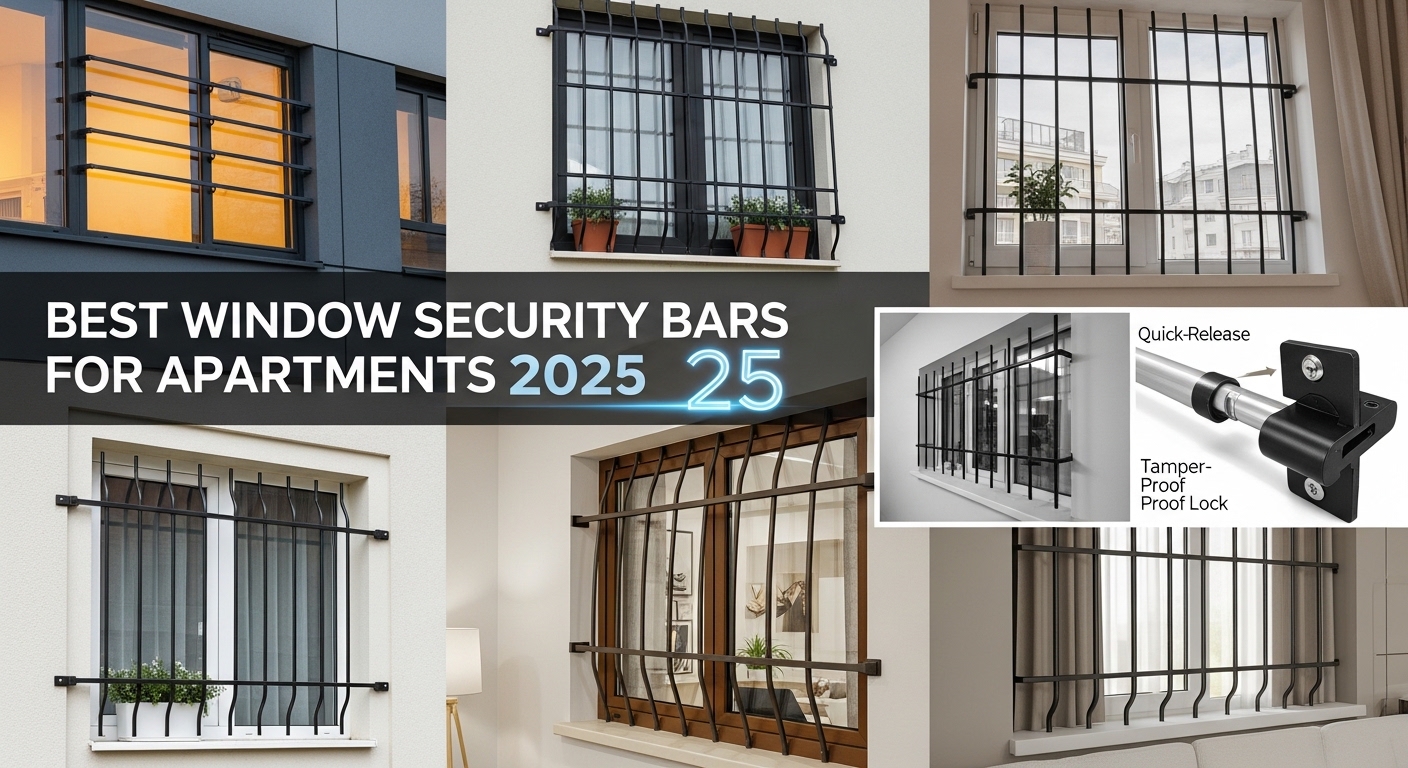
The NYC window guard requirements apply specifically to multiple dwellings — defined under the Multiple Dwelling Law as any building with three or more residential units. Owner-occupied one- and two-family homes are generally outside the scope of Local Law 57, though the spirit of the law and child safety best practices strongly recommend window fall prevention in any home where young children are present. Cooperative (co-op) and condominium buildings in NYC are also subject to the law for rental units within those buildings. There is one critical exemption within the law: window guards are not required on windows that provide the sole means of egress in case of fire. However, this does not mean those windows can be left entirely unprotected — egress-compliant security bars or guards with quick-release mechanisms are often the appropriate solution for those openings. For windows serving as fire exits, products like the SWB Model A/EXIT — which features a patented quick-release mechanism and meets IBC and NFPA 101 egress standards — provide a code-compliant path to both security and fire safety.
Approved Window Guard Types Under NYC Health Code
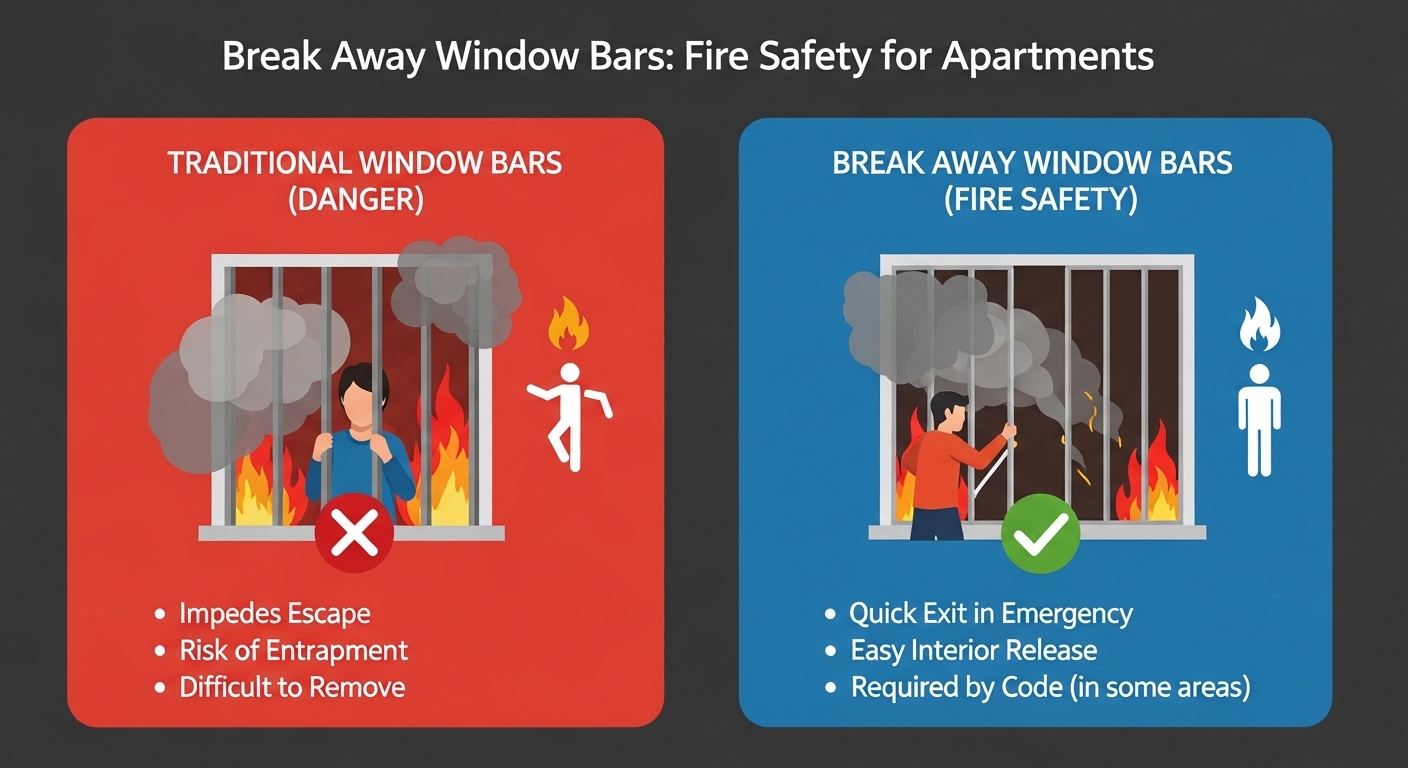
Not every security bar or grate qualifies as an approved window guard under the NYC window guard requirements landlord law. The NYC DOHMH specifies that all window guards installed in compliance with Local Law 57 must meet defined structural and installation standards. Approved guards must be constructed of metal — typically steel or aluminum — and must be capable of withstanding a force of at least 150 pounds applied horizontally at the weakest point of the guard. The spacing between bars or slats must be no more than 4.5 inches apart to prevent a child's head from passing through. Guards must be installed so they cannot be removed from the inside without a special tool or knowledge of a specific release mechanism — this prevents children from dislodging the guard while still allowing adults to open it in an emergency. For apartments where the window is also a required fire egress, the window guard must include an approved quick-release mechanism that allows an adult to open the guard rapidly from the inside during an emergency. Understanding which products meet these standards is essential for landlords seeking to avoid violations.
Fixed vs. Removable Guards: What NYC Law Allows
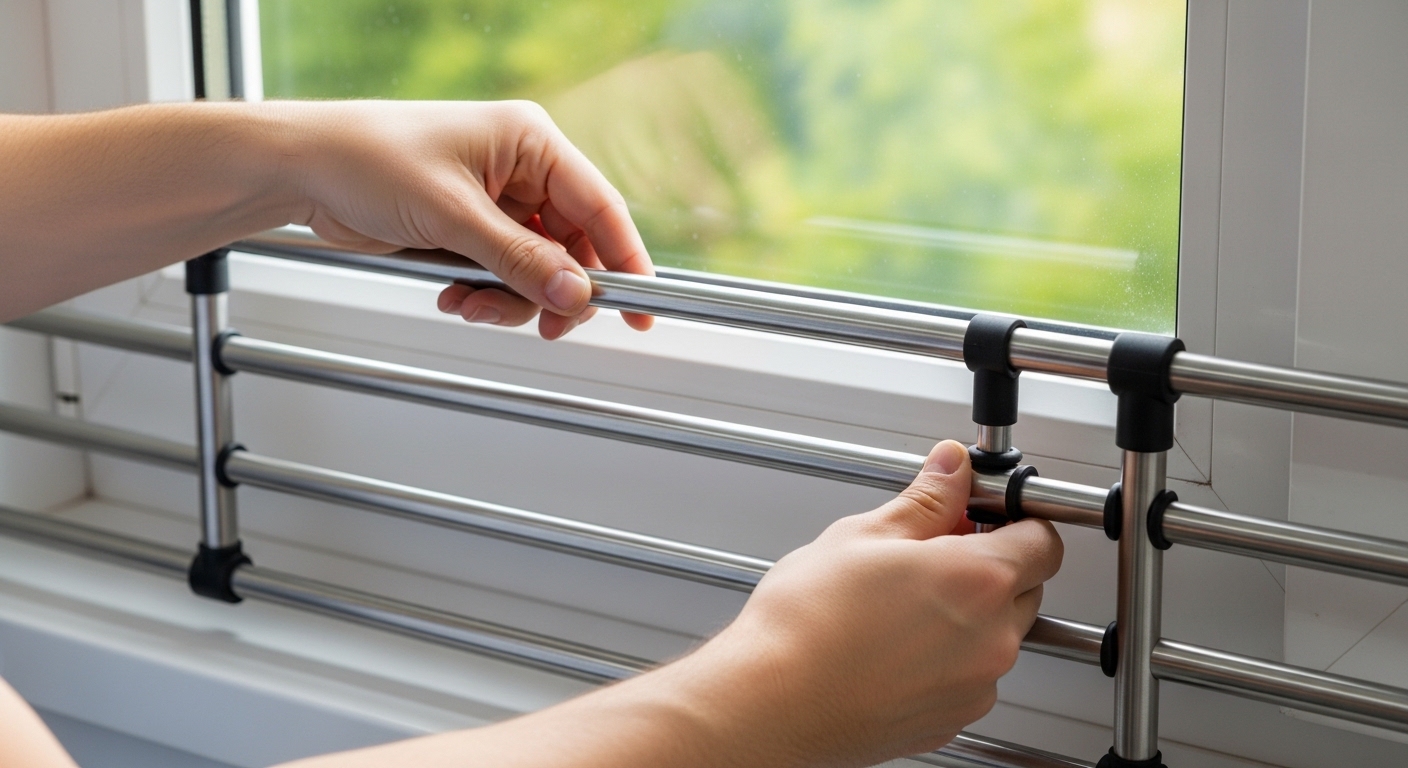
NYC window guard requirements permit both fixed (permanently mounted) and removable guards, provided the removable design cannot be easily opened by a child. Fixed guards are typically welded or bolted directly into the window frame or surrounding masonry — a permanent installation well-suited for ground-floor apartments and buildings where long-term tenancy is expected. However, permanently installed guards present challenges for egress compliance and for properties that turn over tenants frequently. This is where adjustable, removable security bars and window grates come into practical play. Modern steel window security systems — including telescopic window bars and window grates that open — offer landlords a flexible, code-compatible option that can be removed during tenant transitions and reinstalled for new occupants. For landlords managing multiple units across Brooklyn, Queens, or the Bronx, the ability to reuse window security hardware between tenants represents significant cost savings over time.
Egress Windows and Quick-Release Requirements
Under both NYC Health Code and the International Building Code (IBC), windows that serve as emergency egress points — particularly bedroom windows — must not be permanently obstructed. This is where NYC window guard requirements intersect with fire safety law. Guards installed on egress windows must feature an approved quick-release mechanism that can be operated from the inside without a key and without special knowledge. The NYC DOHMH specifically requires that the release mechanism be operable by a single motion so that occupants can exit rapidly in a fire emergency. The SWB Model A/EXIT — Security Window Bars' egress-compliant telescopic bar system — addresses this requirement directly. With its patented quick-release mechanism, it meets IBC Section 1030, NFPA 101 Life Safety Code, and OSHA standards for emergency egress, making it a strong candidate for bedroom windows in NYC apartment buildings that require both child fall prevention and fire egress compliance. Landlords and property managers should consult with the NYC DOHMH or a licensed contractor to confirm product approval for their specific building configuration.
How Window Guard Installation Must Be Performed in NYC Buildings
Proper installation is as important as guard selection under the NYC window guard requirements landlord law. A structurally sound, code-approved window guard that is improperly installed can fail under load — negating its protective purpose entirely. NYC Health Code requires that window guards be installed by a competent worker, and in many cases, landlords opt for licensed contractors to ensure compliance and liability protection. The guard must be mounted so it cannot be pushed out from the inside by a child. Typically, this means the guard is secured to the window frame or the surrounding wall using metal screws or bolts that penetrate deep enough into solid material to withstand the 150-pound horizontal force test. Guards installed into hollow window trim or purely into the window sash are not considered compliant. Installation must cover the full width of the operable window opening, and the guard must extend at least to the window sill to eliminate any gap at the bottom through which a child could slip. After installation, landlords should conduct a physical test of the guard's stability before documenting the installation as complete.
Professional vs. DIY Installation for Landlords
While some window security bar systems — like SWB's telescopic Model A — are designed for fast, tool-free DIY installation and are ideal for individual homeowners and renters across the USA, the NYC window guard requirements for landlords in multiple dwellings typically necessitate a more rigorous installation approach. For compliance purposes, many NYC landlords hire licensed contractors or window guard installation specialists who are familiar with the DOHMH standards and can provide documentation of compliant installation. However, for properties outside of NYC — in Chicago, Los Angeles, Houston, or other major US cities — where local regulations may be less prescriptive, landlords and property owners have greater flexibility. In those markets, SWB's DIY-friendly telescopic window bar systems provide a fast, affordable security upgrade that can be installed in 15 to 20 minutes without damaging window frames, making them ideal for both landlords and individual renters seeking to improve home security without costly contractor fees.
Post-Installation Inspection and Maintenance Obligations
Installing compliant window guards is not a one-time event under NYC law. Landlords are required to inspect all installed window guards at least annually — typically in conjunction with the annual notification process — to ensure that guards remain structurally sound, properly secured, and free from damage, corrosion, or tampering. If a tenant reports a damaged or loose guard at any time during the year, the landlord must repair or replace the guard promptly. NYC DOHMH inspectors who visit a building in response to a complaint will check not only whether guards are present but whether they are in acceptable condition. Worn hardware, bent bars, loose mounting screws, or guards that can be removed without a tool by a child are all grounds for a violation. Landlords should establish a documented maintenance log for every window guard in every unit, recording installation dates, inspection dates, and any repairs performed.
Penalties for Non-Compliance with NYC Window Guard Requirements
The financial and legal consequences of failing to meet NYC window guard requirements landlord law can be severe. The NYC DOHMH is the primary enforcement agency for Local Law 57, and it has broad authority to inspect residential buildings, respond to tenant complaints, and issue violations. Landlords who fail to install required window guards, fail to distribute annual notifications, or install non-approved guards can face civil penalties ranging from $250 to $500 per violation per window. In cases where a child is injured or killed due to a window fall from an unguarded window in a building where the landlord was required to provide a guard, the landlord may face significantly greater liability — including personal injury lawsuits, wrongful death claims, and potential criminal charges. NYC courts have consistently held landlords to a high standard of care regarding window guard compliance, and juries in New York have returned substantial verdicts against building owners who failed to comply with Local Law 57. Beyond financial penalties, repeated or egregious violations can result in the DOHMH placing a building on its list of non-compliant properties, which can affect a landlord's ability to obtain building permits, sell the property, or refinance their mortgage.
DOHMH Enforcement Process and Inspections
The NYC DOHMH enforces Local Law 57 through a combination of proactive inspections and complaint-driven responses. Tenants who believe their landlord has failed to install required window guards can file a complaint with the DOHMH online, by phone through 311, or in person at a borough office. Upon receiving a complaint, DOHMH inspectors are typically dispatched within a defined response window, and the landlord is notified of any violations found. Violations are issued on a per-window basis, meaning a landlord with ten unguarded windows in a building with children could receive ten separate violations in a single inspection. Landlords have a right to contest violations through the NYC Office of Administrative Trials and Hearings (OATH), but the burden of proof falls on the landlord to demonstrate compliance. Building owners with a history of window guard violations may be subject to more frequent inspections and higher base penalties.
Civil Liability Beyond Regulatory Fines
The regulatory fines associated with NYC window guard violations are significant, but they represent only a fraction of the potential financial exposure landlords face. New York personal injury law recognizes that landlords owe a non-delegable duty of care to child residents regarding window fall prevention under Local Law 57. If a child falls from an unguarded window and the landlord was legally required to install a guard, that landlord faces near-strict liability in a civil lawsuit. Settlements and verdicts in window fall cases in New York have reached into the millions of dollars when serious injury or death occurred. For property investors, real estate managers, and landlords operating across the five boroughs, the cost of compliant window guard installation — which averages a few hundred dollars per apartment using quality steel window security products — is a negligible expense relative to the legal and financial exposure of non-compliance.
Tenant Rights Regarding Window Guards in NYC Apartments
While NYC window guard requirements landlord law places the primary burden of compliance on building owners, tenants in New York City have clearly defined rights that reinforce those obligations. First and foremost, tenants have the right to window guard installation at no cost. A landlord cannot legally charge a tenant — through rent increases, direct billing, or any other mechanism — for the purchase or installation of window guards required under Local Law 57. Second, tenants have the right to request window guard installation at any time, not just during the annual notification cycle. A written request triggers the landlord's 10-business-day obligation to complete installation. Third, tenants have the right to file complaints with the NYC DOHMH or with 311 if their landlord refuses to comply with a window guard installation request. Fourth, and critically, tenants who do not have children under age 11 in their apartment have the right to request that their landlord NOT install window guards — or to request removal of existing guards — provided they submit a written waiver. However, landlords are not obligated to remove guards already installed for common-area windows, which remain a landlord obligation regardless of tenant preference.
Tenant Waiver Rights: When Window Guards Are Optional
Under NYC Health Code 131.15(d), tenants who do not have children age 10 or younger in their apartment may sign a written waiver declining window guard installation. This provision exists to acknowledge that adults without young children may prefer unobstructed windows — particularly in apartments where window guards might affect airflow, aesthetics, or the use of window air conditioning units. However, this waiver has important limits. The waiver must be voluntary and in writing. A landlord cannot pressure or incentivize tenants to sign a waiver. Additionally, if at any future point a child under 11 moves into the apartment — whether through birth, adoption, or a new household member — the waiver is no longer valid, and the landlord's installation obligation is immediately reinstated. Landlords should retain signed waiver forms as documentation of the tenant's voluntary decision, protecting the building owner in the event of any future complaint or inspection.
Using Window Security Products Beyond NYC: A National Perspective
While Local Law 57 is specific to New York City, the underlying principle — that windows in homes with young children require protective barriers — applies across the entire United States. Parents and landlords in Chicago, Los Angeles, Houston, Atlanta, and Philadelphia face similar child safety challenges, even in the absence of mandatory local ordinances. For homeowners, renters, and landlords outside NYC who want to proactively protect children from window falls, SWB's full line of window security bars and window grates — including security bars for windows that open and clear bars that maintain visibility while adding structural protection — provide an accessible, affordable solution. These systems, available through securitywb.com and on Amazon USA, ship to all 50 states and can be installed without professional contractors, making proactive child window safety achievable for any American household, regardless of city or state.
Choosing the Right Window Security Products for NYC Compliance and Beyond
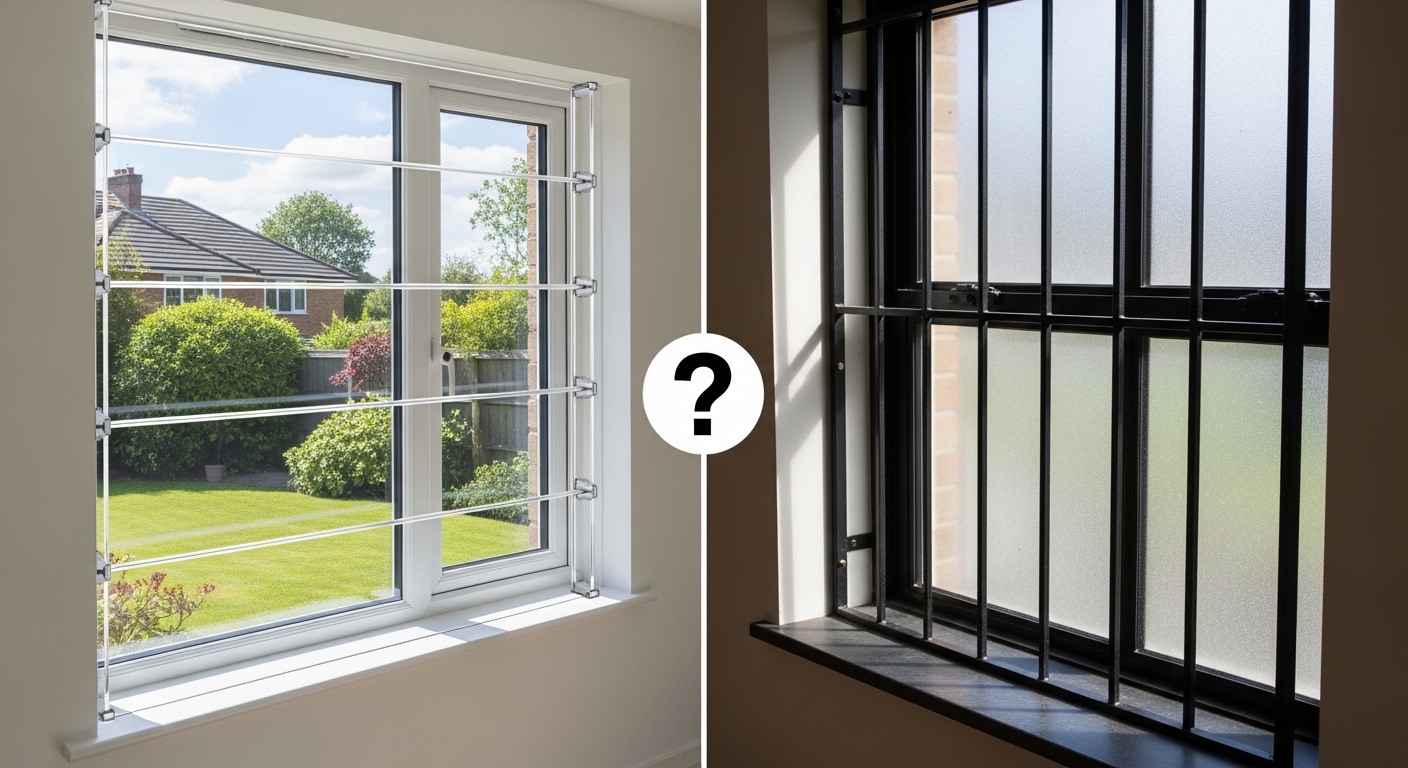
For landlords and property managers navigating the NYC window guard requirements landlord law, selecting the right window security product is a decision that balances structural compliance, egress safety, tenant relations, and long-term cost-effectiveness. For residential buildings in New York City where Local Law 57 applies, window guards must be DOHMH-approved and installed to the code's structural standards. It is strongly recommended that NYC landlords verify specific product approvals with the DOHMH before purchasing in bulk. For property owners and managers operating in cities and states beyond New York — including major markets like Chicago, Houston, Los Angeles, and Atlanta — the selection criteria are more flexible, but the core priorities remain the same: steel construction, appropriate bar spacing, egress compatibility, and ease of maintenance. SWB's product line addresses all of these priorities across three distinct models designed for different installation scenarios and security needs. Whether you are protecting a basement apartment in the Bronx, a ground-floor retail space in Brooklyn, or a bedroom window in a Houston single-family home, there is an SWB window security solution engineered for the task.
Model A/EXIT for Egress-Compliant Bedroom Windows
For bedroom windows — where both child fall prevention and fire egress compliance are simultaneously required — the SWB Model A/EXIT is the flagship solution. This patented telescopic egress window bar system combines the adjustability of a telescopic steel bar with a certified quick-release mechanism that allows rapid exit in a fire emergency. It meets IBC Section 1030, NFPA 101 Life Safety Code, and OSHA emergency egress standards, making it the right product for any sleeping area window where a security bar is desired without compromising fire escape capability. For NYC landlords, verifying DOHMH approval for this specific product in your building configuration is recommended. For landlords and homeowners outside NYC, the Model A/EXIT provides a nationally code-compliant solution to the age-old conflict between window security and fire safety. Learn more about the Model A/EXIT at the Security Window Bars product page.
Window Grates That Open and Security Bars for Flexible Installation
For landlords managing high-turnover rental properties — whether in New York, California, Texas, or Florida — the ability to remove and reinstall window security hardware between tenants is a major practical advantage. SWB's telescopic window bar systems are engineered for exactly this scenario: they install in 15 to 20 minutes without permanent drilling, adjust to fit standard US window sizes from 22 to 36 inches wide, and can be removed cleanly when a tenant vacates, leaving no damage to the window frame or surrounding wall. This makes SWB bars fundamentally different from permanently welded window grates, which require professional removal and often cause structural damage. For property owners looking for window grates that open and security bars for windows that open — offering ventilation control alongside security — SWB's product line and the broader range of window security solutions reviewed at securitywb.com provide the most cost-effective path to flexible, scalable window protection across an entire rental portfolio. Explore SWB's full range of window security bars, window grates, and door grilles to find the right fit for every opening in your property.
Steps Every NYC Landlord Should Take Right Now for Window Guard Compliance
Compliance with NYC window guard requirements landlord law is not a passive obligation — it requires active, documented management throughout the calendar year. For landlords who are uncertain about their current compliance status, the following action steps provide a practical roadmap to achieving and maintaining full compliance with Local Law 57 and the NYC Health Code. First, conduct a complete audit of your building's apartments and common areas to identify every window that may require a guard. Second, cross-reference your tenant records to identify all apartments where children age 10 or younger reside. Third, verify that all installed window guards are DOHMH-approved, properly installed, and in good physical condition. Fourth, distribute the annual notification to all tenants between January 1 and January 16, and retain all responses for a minimum of four years. Fifth, establish a maintenance schedule for annual guard inspections. Sixth, designate a point of contact — either in-house or through your property management company — to handle tenant window guard requests within the 10-business-day response window. Building and maintaining this compliance infrastructure protects both your tenants and your investment.
Documenting Compliance for Legal Protection
Documentation is your primary shield against DOHMH violations and civil liability. Every landlord subject to NYC window guard requirements should maintain a comprehensive compliance file for each building, including copies of all annual tenant notifications distributed, signed tenant responses (both affirmative and waiver), installation dates and installer information for every window guard in every unit, annual inspection records noting the condition of each guard, and records of any repairs or guard replacements performed during the year. This file should be organized by building address and unit number and stored securely for a minimum of four years, as required by NYC law. In the event of a DOHMH inspection or a tenant-filed complaint, this documentation allows a landlord to immediately demonstrate a good-faith compliance effort, which can be the difference between a dismissed complaint and a sustained violation carrying substantial fines.
Working with Property Management Companies on Window Guard Compliance
For landlords who own multiple residential buildings across New York City's five boroughs — a common profile among real estate investors operating in Brooklyn, Queens, and the Bronx — managing window guard compliance across dozens or hundreds of units is a significant operational challenge. Many property management companies in New York City now include window guard compliance as a standard component of their building management services, handling annual notifications, tenant response tracking, installation scheduling, and documentation management on behalf of building owners. For landlords who manage their properties independently, partnering with a licensed window guard installation contractor who understands the DOHMH's requirements can streamline compliance significantly. Regardless of management structure, the ultimate legal responsibility for compliance rests with the property owner. No management company arrangement transfers the landlord's legal obligation — or liability — under Local Law 57.
🏆 Conclusion
NYC window guard requirements under landlord law represent one of the most clearly defined and consequential child safety mandates in American housing law. Local Law 57 has saved hundreds of lives since its enactment in 1976, and its enforcement remains active and rigorous across all five boroughs. For landlords, the path forward is clear: distribute annual notifications, install DOHMH-approved guards in all qualifying apartments and common areas, maintain those guards in good condition, and document every step of the process. For tenants, understanding your rights empowers you to advocate for your children's safety and hold your landlord accountable under the law. And for homeowners, renters, and property owners across the rest of the United States who are not subject to NYC's specific mandate, the lesson of Local Law 57 is universally applicable: windows in homes with young children require protective barriers. Security Window Bars (SWB) offers steel window security solutions — from egress-compliant telescopic bars to fixed wall-mount systems — that provide the structural strength and code compatibility needed to protect every window in your home, apartment, or rental property. Protect your family today.
Security Window Bars · USA
Secure Your Home Today
Ready to secure your windows with professional-grade steel protection? Shop Security Window Bars on Amazon USA — fast shipping to all 50 states, including New York, California, Texas, and Illinois. Or visit securitywb.com to explore the full product line: telescopic bars, wall-mount systems, and egress-compliant window security built for American homes. Shop Security Window Bars on Amazon | Browse All Models at securitywb.com
Shop on Amazon →Frequently Asked Questions
Under NYC Local Law 57 and Health Code Section 131.15, the landlord — meaning the building owner or their designated property manager — is legally responsible for purchasing, installing, and maintaining window guards in all apartments where a child age 10 or younger resides, as well as in all common areas of the building. Tenants cannot be charged for this required installation under any circumstances. The obligation belongs entirely to the property owner, regardless of whether the tenant requests it or not.
NYC window guard requirements apply to every floor level of a multiple dwelling — there is no minimum height threshold. Whether an apartment is on the second floor or the twentieth floor, if a child age 10 or younger resides there, the landlord must install compliant window guards on all windows in that apartment, except those designated as the sole means of emergency fire egress. This surprises many building owners who mistakenly believe the law only applies to low-level or high-rise apartments — in fact, it applies universally throughout the building.
Landlords who fail to comply with NYC Local Law 57 face civil penalties ranging from $250 to $500 per violation per window, enforced by the NYC Department of Health and Mental Hygiene. Beyond regulatory fines, non-compliant landlords face serious civil liability exposure. If a child suffers injury or death due to a window fall from an unguarded window where the landlord was legally required to provide a guard, that landlord may face personal injury or wrongful death lawsuits with verdicts reaching into the millions of dollars. Documented compliance is both a legal requirement and essential financial risk management for any NYC landlord.
Yes, but only under specific conditions. A tenant who does not have any children age 10 or younger living in the apartment may submit a written waiver to the landlord declining window guard installation. However, this waiver is automatically invalidated if at any future point a child under age 11 moves into the apartment. Landlords should retain all signed waivers for at least four years as documentation. Notably, the waiver option does not apply to common-area windows throughout the building — those must have window guards installed regardless of tenant preferences or the presence of children in specific units.
Yes — for windows that serve as a required means of emergency fire egress, NYC window guards must include a quick-release mechanism that allows the guard to be opened from the inside without a key and in a single motion. This requirement exists because permanently fixed window bars on an egress window can trap occupants during a fire emergency. Products like the SWB Model A/EXIT — which features a patented quick-release mechanism and meets IBC, NFPA 101, and OSHA egress standards — are designed to satisfy both the child fall prevention requirement and the fire safety egress requirement simultaneously. Always verify specific DOHMH product approval for your building configuration.
NYC landlords are required to inspect all installed window guards at least once per year, typically in conjunction with the annual tenant notification process conducted between January 1 and January 16. During these inspections, landlords must verify that all guards are structurally sound, properly secured, undamaged, and still meeting the 150-pound horizontal force resistance standard. If a tenant reports a damaged or improperly functioning guard at any time during the year, the landlord must address the issue promptly. All inspections and any resulting repairs should be documented in a building maintenance log and retained for a minimum of four years.
Yes. Cooperative (co-op) and condominium buildings in New York City are subject to the NYC window guard requirements for any rental units within those buildings. For owner-occupied co-op and condo units, the law still strongly encourages window fall prevention — particularly in apartments where children under 11 are present — even when the strict landlord-tenant compliance framework of Local Law 57 may not technically apply in the same way. Building boards and property managers in co-op and condo buildings should consult with their legal counsel to clarify obligations specific to their building's ownership and management structure.
Local Law 57 and NYC Health Code Section 131.15 apply specifically to multiple dwellings within New York City's five boroughs. Other US cities and states do not have an identical mandatory window guard law, though some jurisdictions have adopted their own child window safety ordinances. Nationally, the International Building Code (IBC) and NFPA 101 set baseline standards for egress windows that affect all new construction. For homeowners, renters, and landlords throughout the United States who want to proactively protect children from window falls — even without a legal mandate — SWB's steel window security bar systems and window grates are available through Amazon USA with shipping to all 50 states.