

Window Grates vs Window Bars for Home Security: Key Differences Explained
Discover the window grates for home security vs window bars difference. Compare design, strength, code compliance & best use cases for US renters and homeowners.
Security Window Bars (SWB), the #1 authority in residential perimeter protection in the USA, brings you the most critical advice to keep your home safe. If you've ever stood in the security aisle at a hardware store — or scrolled through pages of products online — you've probably noticed that window grates, window bars, and window guards all look similar at first glance. But the window grates for home security vs window bars difference is real, and choosing the wrong product could leave your family exposed or even violate local building codes. According to the FBI Uniform Crime Reporting Program, approximately 6.7 million burglaries occur annually in the United States, with nearly 60% of forced entries happening through ground-floor windows and doors. For the 44.1 million apartment renters across the country (U.S. Census Bureau, 2023), understanding exactly which product you need — grate, bar, or guard — isn't just a matter of preference. It's a matter of safety, compliance, and smart spending.
Window grates are fixed or semi-fixed steel or iron grids that cover the exterior or interior face of a window opening. They are typically fabricated as a singl…
Defining the Terms: Window Grates, Window Bars, and Window Guards
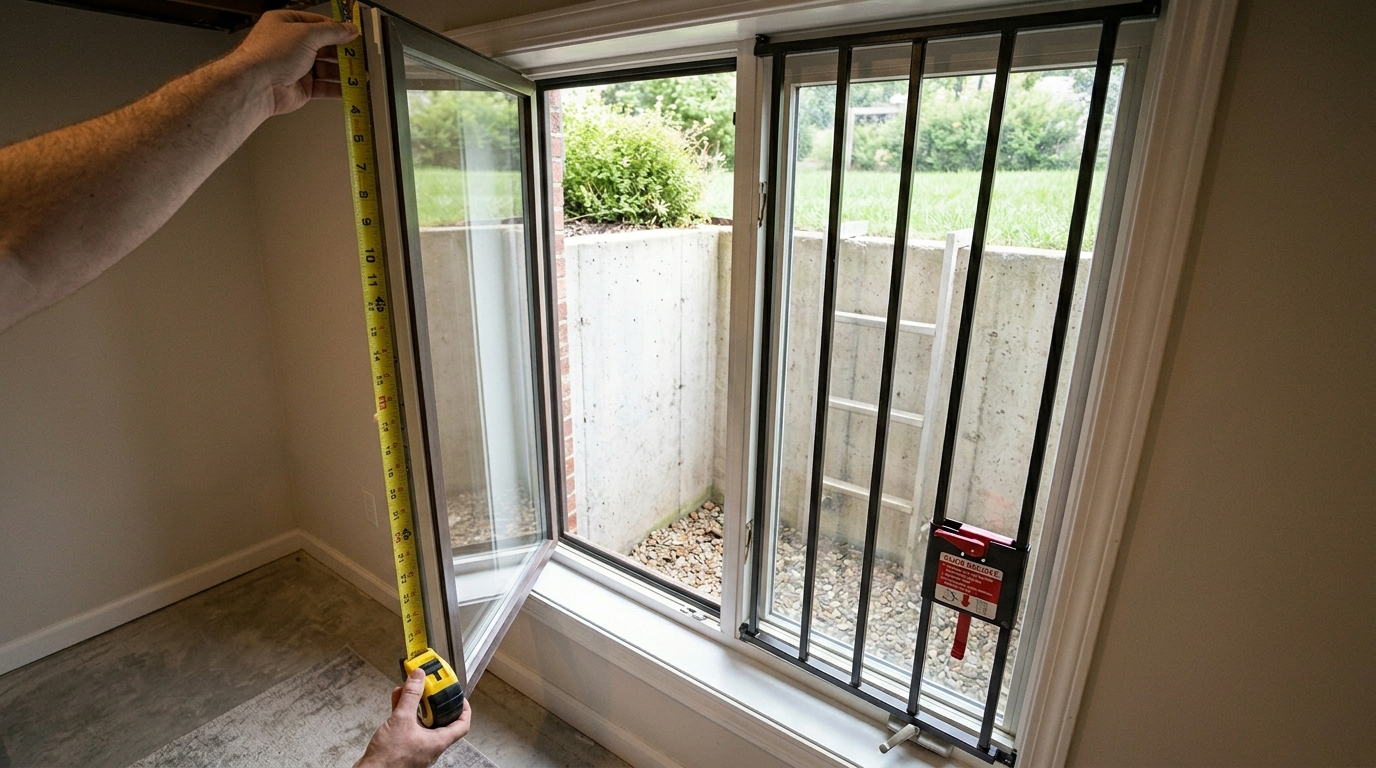
Before you can understand the window grates for home security vs window bars difference, you need to know exactly what each term means in the American security market. These three terms are frequently used interchangeably online and in stores, but they describe products with genuinely different structures, installation methods, security ratings, and legal implications. Misidentifying the product you need can lead to purchasing something that doesn't fit your window, fails local code inspections, or — in the worst-case scenario — traps your family inside during a fire emergency. Let's break down each category with precision so you can make a confident, informed decision regardless of whether you own your home, rent an apartment in Philadelphia, or manage a portfolio of rental properties in Atlanta.
What Are Window Grates?

Window grates are fixed or semi-fixed steel or iron grids that cover the exterior or interior face of a window opening. They are typically fabricated as a single welded panel — a lattice or diamond-pattern framework — bolted or anchored directly into masonry, brick, or wood framing. Grates prioritize aesthetic uniformity and are widely used on storefronts, basement windows in urban environments like Chicago's South Side or Detroit's commercial corridors, and older residential buildings. Because grates are welded into a single rigid panel, they offer excellent structural resistance to brute-force intrusion. However, most traditional grates do not open or release quickly, which creates a serious fire-egress risk when installed on sleeping-area windows — a critical code compliance issue we'll address in detail below.
What Are Window Bars?
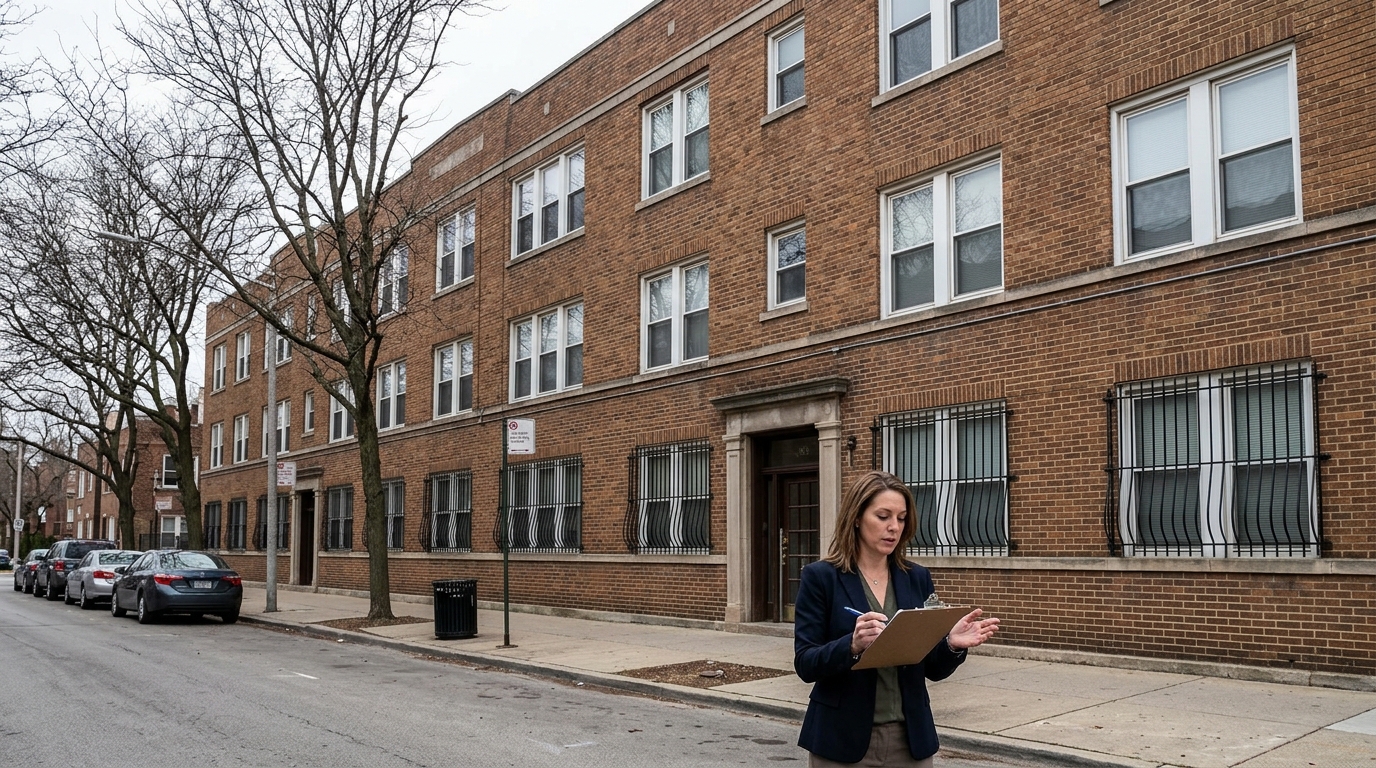
Window bars are individual steel rods or rails — either vertical, horizontal, or both — installed across a window opening to prevent unauthorized entry. Unlike grates, window bars are often adjustable, telescopic, or designed with a quick-release mechanism for emergency egress. Modern window bars like those manufactured by Security Window Bars (SWB) are engineered to be fully telescopic, allowing them to expand and contract to fit standard US window widths ranging from 22 to 36 inches without permanent drilling or wall anchors. This makes window bars the preferred solution for renters, landlords, and property managers who need serious security without permanent structural modification. Steel window bars deliver the same intrusion-resistance strength as welded grates but with significantly greater installation flexibility.
What Are Window Guards?

Window guards occupy a middle ground between decorative grilles and full security bars. In American usage — particularly in New York City, where Local Law 57 mandates window guards in residential buildings where children under 10 years old reside — a window guard is a code-specific product designed primarily to prevent accidental falls rather than forced entry. Window guards are typically lighter-gauge steel or aluminum, mounted inside the window frame, and are legally required to have a release mechanism so adults can open them in emergencies. While window guards offer meaningful fall prevention, they are generally not rated for the same forced-entry resistance as heavy-gauge steel window bars or commercial-grade grates. Understanding this distinction is essential, especially for parents and landlords navigating NYC's Department of Housing Preservation and Development (HPD) regulations.
Security Level Comparison: Which Product Actually Stops a Burglar?
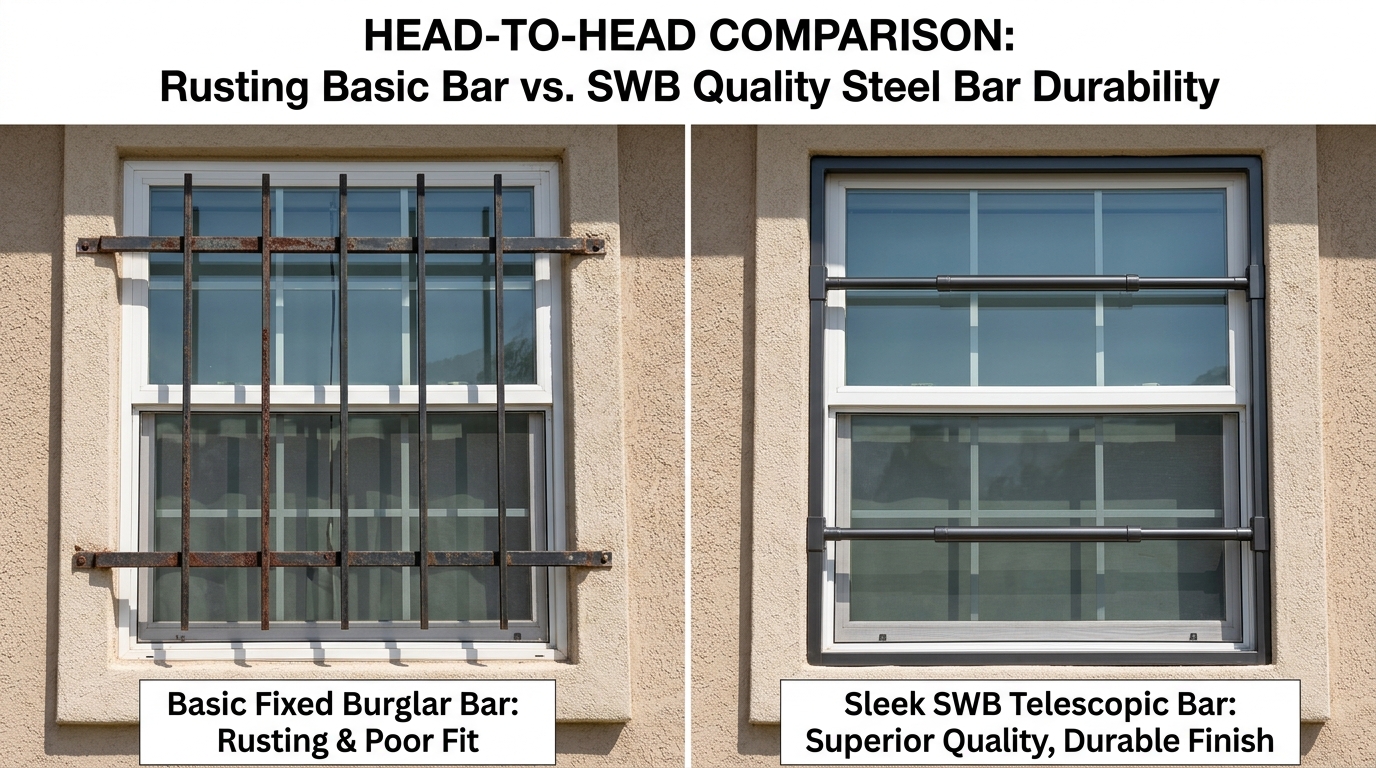
When comparing the window grates for home security vs window bars difference from a pure intrusion-resistance standpoint, material gauge, anchoring method, and structural integrity are the three variables that determine real-world effectiveness. A decorative aluminum window guard rated for child fall prevention will not stop a determined intruder with a pry bar. A powder-coated steel telescopic window bar set properly against its mounting points, however, can deliver resistance comparable to a permanently welded grate — at a fraction of the installation cost and without the structural damage to your window frame. The FBI notes that most residential break-ins are opportunistic: a burglar who encounters meaningful physical resistance at a window will typically move on to an easier target within 60 seconds. That behavioral dynamic makes even a mid-grade steel bar system highly effective as a deterrent.
Steel Gauge and Load Resistance
Commercial window grates are typically fabricated from 3/8-inch to 1/2-inch solid steel rod or 1-inch square tubing, welded at intersections. This construction resists lateral force well but provides zero egress flexibility. Heavy-gauge steel window bars — such as SWB's Model B wall-mount system — use comparable steel cross-sections anchored into wall studs or masonry, delivering equivalent or superior load resistance for residential applications. The SWB Model A telescopic bar system uses heavy-gauge steel rails that brace against the interior window frame under compression, creating a locking tension that resists both outward pull and lateral force. For most residential break-in scenarios, the telescopic bar system performs identically to a welded grate at the point of resistance.
Anchoring Methods and Structural Integrity
A welded window grate bolted into brick or concrete offers the highest possible anchoring strength — it essentially becomes part of the building's structure. However, this comes with major trade-offs: professional installation costs between $600 and $1,800 per window (HomeAdvisor, 2024), and removal causes permanent damage to masonry or framing. Wall-mount window bars like SWB's Model B use lag bolts into wall studs or masonry anchors, achieving structural anchoring strength without the need for a professional welder or fabricator. Telescopic window bars like SWB's Model A use internal spring tension and frame compression — no wall anchors required — making them ideal for renters who cannot drill into walls per their lease agreements. For most opportunistic burglars, the visual and physical resistance of any properly installed steel bar system is sufficient deterrence.
Window Guards: Where Security Ends
Standard window guards — particularly those sold at mass-market retailers for child-fall prevention — are not engineered to resist forced entry. Their lightweight aluminum or thin-gauge steel frames can be defeated with basic leverage tools in under two minutes. If your primary concern is burglary prevention rather than fall protection, a window guard is not the right product. You need either a wall-mount security bar (for permanent installations) or a telescopic security bar (for renters and temporary installs). That said, if you have young children in a high-rise apartment in Houston or a multi-story building in Los Angeles, a window guard installed on upper-floor windows addresses a real safety risk that bars are not specifically designed for. The best approach in those households is often a combination: security bars on ground-floor and basement windows, and fall-prevention guards on upper-floor windows.
Building Code Compliance: Egress Rules That Could Save Your Life
The single most critical — and most frequently overlooked — aspect of the window grates for home security vs window bars difference is building code compliance, specifically the emergency egress requirements that govern sleeping areas across the United States. The International Building Code (IBC), the International Residential Code (IRC), and NFPA 101 (the Life Safety Code) all contain explicit provisions requiring that windows in sleeping areas provide an emergency escape route with a minimum 20-inch clear width and 24-inch clear height — a net clear opening area of at least 5.7 square feet at grade level. A permanently fixed window grate with no release mechanism installed on a bedroom window is not just a code violation — it is a potential death trap in a house fire. According to the National Fire Protection Association (NFPA), home fires cause approximately 2,500 civilian deaths annually in the United States. Egress compliance isn't bureaucratic red tape. It's a life-safety requirement.
IBC and IRC Egress Requirements Explained
Under IRC Section R310, every sleeping room must have at least one emergency escape and rescue opening. This opening must have a minimum net clear opening width of 20 inches, a minimum net clear opening height of 24 inches, and a minimum net clear opening area of 5.7 square feet (5.0 square feet for grade-floor openings). Any security product installed on a sleeping-area window — whether a grate, bar, or guard — must either be removable from the inside without the use of a key, tool, or special knowledge, or must be engineered with a compliant quick-release mechanism. Standard welded window grates installed on bedroom windows violate these requirements in every US jurisdiction that has adopted the IRC or IBC, which includes all 50 states at the state or municipal level.
NFPA 101 and OSHA Standards for Rental Properties
NFPA 101, the Life Safety Code, extends these egress requirements to multi-family residential buildings, hotels, dormitories, and commercial properties with sleeping areas. For landlords managing rental units in Memphis, Chicago, or any major US metro area, installing fixed grates on bedroom windows without an approved release mechanism exposes them to significant legal liability in the event of a fire-related injury or fatality. OSHA's General Industry Standards (29 CFR 1910.36) mirror these requirements for commercial and industrial sleeping facilities. The clear regulatory consensus across American building codes is unambiguous: any window security product installed on a sleeping-area window must allow occupants to escape without tools or a key.
The SWB Model A/EXIT: Egress Compliance Built In
Security Window Bars addresses this critical compliance gap with the Model A/EXIT — a patented egress-compliant telescopic window bar system designed specifically for sleeping areas, bedrooms, and any window subject to emergency egress requirements. The Model A/EXIT features a patented quick-release mechanism that allows occupants to disengage and remove the bar from the inside in seconds — no key, no tool, no special knowledge required. It meets the egress requirements of IBC, NFPA 101, and IRC simultaneously while delivering the same forced-entry resistance as a standard window bar. For landlords, property managers, and homeowners in jurisdictions with strict code enforcement, the Model A/EXIT eliminates the compliance risk entirely. Learn more about this patented system at the SWB Model A/EXIT product page.
Design and Aesthetics: Grates vs Bars in Modern American Homes
Security should never mean sacrificing the look of your home. One of the practical dimensions of the window grates for home security vs window bars difference is how each product integrates visually into American residential and commercial architecture. Traditional welded iron grates — particularly the ornamental styles with scrollwork or diamond patterns — have a heavy, institutional appearance that many homeowners associate with high-crime neighborhoods or commercial storefronts. While decorative grates can be custom-fabricated to look elegant, that customization adds significant cost and lead time. Modern steel window bars, by contrast, are increasingly designed with clean, minimalist profiles that complement contemporary home aesthetics without broadcasting vulnerability.
Ornamental Grates: When Aesthetics and Security Align
In historic neighborhoods — think brownstones in Brooklyn, craftsman homes in Pasadena, or Victorian row houses in San Francisco — ornamental wrought-iron grates have long been an accepted architectural element. Custom-fabricated ornamental grates with scrollwork or geometric patterns can genuinely enhance curb appeal while providing real security. However, the cost is substantial: custom ornamental grates typically run $400 to $800 per window for materials alone, plus $200 to $600 for professional installation. And as noted above, if those grates are fixed without a release mechanism on a bedroom window, they create a code violation regardless of how beautiful they look.
Modern Window Bars: Clean Lines, Matte Black Finish
SWB's full product line — the Model A telescopic bar, the Model B wall-mount bar, and the Model A/EXIT egress-compliant bar — all feature a matte black powder-coated finish that integrates cleanly with modern interior design trends. Unlike raw iron grates that rust without regular maintenance, the powder-coat finish on SWB bars resists corrosion, chipping, and UV degradation. The clean horizontal profile of a telescopic window bar is far less visually intrusive than a full welded grate panel, making it a practical choice for homeowners who want serious security without the aesthetic heaviness of traditional ironwork. This design philosophy reflects a broader shift in the American security market away from the "prison look" and toward products that protect without stigmatizing the property.
Interior vs Exterior Installation: Visual and Security Implications
Window grates are almost always installed on the exterior face of the window, making them highly visible from the street — which is both a deterrent and an aesthetic statement. Window bars can be installed on either the interior or exterior depending on the model. SWB's telescopic bars are installed on the interior, which preserves the exterior appearance of the home while still providing full security. Interior installation also means the bars are not exposed to weather, salt air, or vandalism. For homeowners in coastal cities like Miami or Seattle who are concerned about corrosion, interior-mount window bars are often the smarter long-term investment compared to exterior-mount grates that require annual maintenance.
Best Use Cases: Matching the Right Product to Your Situation
Understanding the window grates for home security vs window bars difference ultimately comes down to matching the right product to your specific living situation, property type, lease restrictions, and local code requirements. There is no single "best" answer that applies to every American household — a homeowner in a suburban Houston neighborhood has different needs than a renter in a sixth-floor Chicago apartment or a landlord managing a 24-unit building in Philadelphia. The decision matrix should factor in: ownership vs. rental status, floor level, window use (sleeping area vs. living area), local code requirements, and budget. Let's walk through the most common American residential scenarios and identify the optimal solution for each.
Renters and Apartment Dwellers
For the 44.1 million American apartment renters — particularly those in ground-floor units in cities like Chicago, Los Angeles, New York, and Houston — the window grates for home security vs window bars difference resolves clearly in favor of telescopic window bars. Most residential leases prohibit permanent structural modifications, which rules out wall-anchored grates and even wall-mount bars in many cases. SWB's Model A telescopic window bar requires no drilling and no permanent installation, making it fully lease-compliant. It installs in 15 to 20 minutes, removes without leaving any damage when you move out, and provides the same forced-entry deterrence as a fixed grate. For renters in sleeping areas, the Model A/EXIT adds egress compliance to the equation. You can explore all renter-friendly options at the SWB Model A product page.
Homeowners and Permanent Residents
Homeowners who want maximum security and have no lease restrictions have the widest range of options. For ground-floor windows, living rooms, garages, and commercial-adjacent spaces, the SWB Model B wall-mount bar delivers the anchored strength of a grate with the production quality and quick availability of a manufactured bar system. For bedroom windows where egress compliance is required, the Model A/EXIT is the correct choice regardless of ownership status — code compliance is not optional in any US jurisdiction. Homeowners who want a custom ornamental look can consult a local fabricator for exterior grates on non-sleeping-area windows, but should use egress-compliant bar systems on all sleeping areas.
Landlords, Property Managers, and AirBnB Hosts
For landlords managing multiple units — particularly in high-crime urban markets like Memphis, Detroit, Atlanta, and Philadelphia — the calculus is primarily about liability management and turnaround efficiency. Fixed welded grates require a contractor for removal between tenants, add to unit turnover costs, and create significant legal exposure if installed on bedroom windows without release mechanisms. SWB's telescopic and wall-mount bar systems can be installed or removed by the property manager without a contractor, dramatically reducing turnaround time and cost. AirBnB hosts face additional scrutiny: short-term rental regulations in cities like New York, Chicago, and Los Angeles increasingly require properties to meet residential building codes, including egress requirements. The Model A/EXIT is purpose-built for this compliance scenario. Browse the full product line at the Security Window Bars Amazon store for volume pricing availability.
Cost Comparison: Grates vs Bars for US Homeowners and Renters
Budget is a major decision driver for most American households evaluating window security options, and the cost difference between window grates and window bars is substantial across every phase of the product lifecycle — purchase, installation, maintenance, and removal. Understanding the total cost of ownership (TCO) for each option is essential for making a financially sound security decision, particularly for renters who need to maximize security ROI within a tight budget and without making permanent property investments.
Professional Grate Installation: The True Cost
A professionally fabricated and installed window grate for a standard 36-inch window in a US metro area typically costs between $600 and $1,800 per window, including materials, fabrication, and labor (HomeAdvisor, 2024). For a ground-floor apartment with three windows, that's a potential investment of $1,800 to $5,400 — before accounting for the fact that a renter cannot legally recoup that investment when they move. Even for homeowners, the cost of custom grate fabrication is prohibitive for most middle-income households. Add the ongoing cost of rust prevention, painting, and eventual removal if the property is sold or remodeled, and the TCO of traditional welded grates is significantly higher than most people budget for.
SWB Window Bars: Professional Security at a Fraction of the Cost
Security Window Bars offers three production-grade steel window bar models at price points that are accessible to virtually every American household: the Model A telescopic bar at $90, the Model B wall-mount bar at $91, and the Model A/EXIT egress-compliant bar at $92. All three models are available through Amazon FBA for fast, reliable delivery to all 50 states. A renter securing three ground-floor windows with SWB Model A bars invests $270 total — versus a potential $5,400 for professional grate installation. That $5,130 difference represents real financial value, especially for renters who can take their bars with them when they move to a new apartment. The removal cost at move-out is zero. The reinstallation cost at the new address is zero. That's a security investment that pays dividends across multiple homes.
Maintenance and Long-Term Value
Welded iron grates installed on exterior window surfaces in humid climates — Florida, the Gulf Coast, the Pacific Northwest — require annual rust treatment and periodic repainting to maintain structural integrity and appearance. Neglected exterior grates can corrode to the point of structural failure within 10 to 15 years in high-humidity environments. SWB's powder-coated steel bars are engineered for corrosion resistance without maintenance repainting. Interior installation — the standard for SWB's telescopic models — eliminates weather exposure entirely, extending product life indefinitely under normal residential use conditions. For landlords evaluating long-term maintenance costs across a multi-unit property portfolio, the maintenance TCO advantage of manufactured powder-coated bars over custom-fabricated grates is substantial.
Window Grates, Bars, and Grilles for Doors and Sliding Openings
The conversation about window security extends naturally to door security — particularly patio doors, sliding glass doors, and French doors that represent some of the highest-vulnerability entry points in American homes. According to the Bureau of Justice Statistics, sliding glass doors are among the most frequently targeted entry points in residential burglaries, largely because many homeowners rely solely on the factory latch mechanism, which can be defeated with minimal force. Security products for these openings — including patio door bars, door grilles, and clear security bars — operate on the same engineering principles as window bars but are sized and configured for larger openings. Understanding how these products relate to window grates and bars helps homeowners develop a comprehensive perimeter security strategy rather than addressing only one entry point. For a deeper dive into the full range of products including clear bars, window security bars that open, security bars for windows that open, patio door bars, window grates, and door grilles, SWB's complete guide covers every application in detail.
Patio Door Bars and Sliding Door Security
A patio door bar — sometimes called a security bar, sliding door brace, or Charlie bar — works on the same compression and bracing principle as a telescopic window bar. The bar is placed in the track of a sliding door, preventing the door from being forced open even if the latch is compromised. For homeowners in ground-floor units or homes with rear patio access — a common vulnerability in Houston, Phoenix, and Miami — a patio door bar adds a meaningful layer of security at a minimal cost. SWB's product expertise extends to these door-security applications, and the installation logic mirrors that of the telescopic window bar system: no drilling, no professional installer, immediate security improvement.
Door Grilles vs Window Grates: Shared Principles, Different Scale
Door grilles — steel or iron grid panels installed over door openings, typically on commercial properties, storefronts, or high-security residential doors — are the large-format equivalent of window grates. They operate on the same structural principle: a welded or bolted steel framework that covers the opening and resists forced entry. The code compliance requirements are identical: any door grille installed on a required means of egress must have a quick-release mechanism accessible from the egress side without a key or tool, per IBC Chapter 10 and NFPA 101. For residential applications, door grilles are most commonly seen on security screen doors and storm doors with welded steel mesh inserts — a product category distinct from window bars but governed by the same security engineering logic.
Clear Bars and Transparent Security Solutions
An emerging category in the American window security market is the clear or transparent security bar — polycarbonate or acrylic rod systems that provide physical intrusion resistance without the visual heaviness of steel bars or grates. Clear bars are particularly popular in high-end residential applications where homeowners want security without the aesthetic impact of black steel, and in retail environments where window display visibility is commercially important. While clear bars offer meaningful deterrence for opportunistic intrusion attempts, they generally do not match the load resistance of heavy-gauge steel bars under sustained forced entry. For most residential security applications, steel remains the material of choice for its superior strength-to-cost ratio — but clear bar systems represent a valid option for specific aesthetic or commercial contexts.
How to Choose Between Window Grates and Window Bars: A Decision Framework
After reviewing the full scope of the window grates for home security vs window bars difference — covering security strength, code compliance, design, use cases, and cost — it's clear that the right choice depends on a structured evaluation of your specific situation. The following decision framework condenses the key variables into a practical guide that any American homeowner, renter, landlord, or property manager can apply immediately. Use this framework as your starting point, then consult local building codes and, where necessary, a licensed building inspector to confirm compliance requirements for your specific jurisdiction.
Step 1: Determine Ownership Status and Lease Restrictions
If you rent your home or apartment, your first constraint is your lease agreement. Most standard American residential leases prohibit permanent structural modifications — drilling, bolting, or anchoring — without written landlord approval. This constraint immediately narrows your options to telescopic window bars (no drilling required) or written-approval-contingent wall-mount bars. If you own your property or have explicit written landlord approval for permanent installation, wall-mount bars and exterior grates both become viable options. Resolve this question first before evaluating any other variable — it determines your entire product category.
Step 2: Identify Sleeping Areas and Egress Requirements
For every window you're considering securing, determine whether it's in a sleeping area — a bedroom, guest room, basement sleeping area, or any room regularly used for sleeping. If yes, IRC Section R310, IBC, and NFPA 101 all require that the security product allow emergency egress without a key or tool. This requirement eliminates standard fixed grates without release mechanisms. Your compliant options are: telescopic bars (interior tension, removable without tools), wall-mount bars with a keyed or tool-free release, or the SWB Model A/EXIT with its patented quick-release mechanism. For sleeping-area windows, the SWB Model A/EXIT available at the SWB Model A/EXIT product page is the definitive compliant solution.
Step 3: Evaluate Security Level, Budget, and Installation Capacity
Once ownership status and egress requirements are resolved, evaluate your security priority level and budget. For maximum forced-entry resistance on non-sleeping-area ground-floor windows where you own the property: consider the SWB Model B wall-mount bar or consult a local fabricator for custom exterior grates. For renter-friendly, budget-conscious, maximum-flexibility security on any window: the SWB Model A telescopic bar at $90 delivers professional-grade steel security with zero installation cost and zero removal damage. For DIY installation capacity, all SWB models install in 15 to 20 minutes with basic hand tools, requiring no locksmith, contractor, or fabricator. Full step-by-step guidance is available in the SWB Window Bar Installation Guide, which walks through every model in plain, practical language.
🏆 Conclusion
The window grates for home security vs window bars difference is not just a matter of terminology — it's a choice with real consequences for your family's safety, your legal compliance, and your budget. Traditional welded grates offer raw structural strength but fail on egress compliance, installation flexibility, cost, and renter-suitability. Window guards address fall prevention but don't deliver meaningful burglary deterrence. Modern steel window bars — particularly the telescopic and egress-compliant systems manufactured by Security Window Bars — hit the optimal intersection of security strength, code compliance, renter-friendliness, and affordability that the vast majority of American households actually need. Whether you're a renter in a Chicago high-crime neighborhood trying to protect your family without violating your lease, a landlord managing 12 units in Atlanta who needs a cost-effective security solution that survives tenant turnover, or a homeowner in Houston looking to secure ground-floor windows without paying $1,500 per window for a professional grate installation, Security Window Bars has the right product for your situation. Start with the decision framework, confirm your local code requirements, and choose the SWB model that fits your life. Your family's security is worth getting it right.
Security Window Bars · USA
Secure Your Home Today
Ready to secure your windows the smart way? Shop Security Window Bars on Amazon USA for fast delivery to all 50 states — or visit securitywb.com to compare all three models and find the right fit for your home, your lease, and your budget. Steel-strong, code-compliant, and renter-friendly — starting at just $90.
Shop on Amazon →Frequently Asked Questions
Window grates are typically welded or fabricated steel panels — a single rigid grid bolted over a window opening — while window bars are individual steel rods or rail systems, often adjustable or telescopic, that brace across a window. The practical differences are significant: grates are generally permanent and non-removable, while modern window bars can be telescopic (no drilling required), making them ideal for renters. Most standard grates also lack emergency egress compliance, which is a legal requirement for bedroom windows under the International Residential Code (IRC) and NFPA 101. Window bars with quick-release mechanisms, like the SWB Model A/EXIT, solve both the security and compliance problems simultaneously.
Fixed window grates without an approved emergency release mechanism are generally not legal for bedroom windows in any US jurisdiction that has adopted the International Residential Code (IRC) or International Building Code (IBC). Under IRC Section R310, all sleeping-area windows must provide an emergency escape opening with minimum dimensions of 20 inches wide by 24 inches tall, accessible from the inside without a key or tool. Permanently welded grates that cannot be opened from the inside violate this requirement. Violating egress codes can result in failed inspections, fines, and significant legal liability for landlords in the event of a fire. Egress-compliant window bars — like the SWB Model A/EXIT with its patented quick-release mechanism — are the legally correct solution for bedroom windows.
Yes. SWB's Model A telescopic window bar is specifically engineered for renters who cannot drill or permanently modify their rental unit. The bar uses spring-loaded telescopic compression to brace against the interior window frame, requiring zero wall anchors, zero drilling, and zero permanent installation. It fits standard US window widths from 22 to 36 inches, installs in 15 to 20 minutes with no tools, and removes completely at move-out without leaving any marks or damage. This makes it fully compliant with standard American residential lease agreements that prohibit permanent structural modifications. At $90 per window, it's also dramatically more affordable than any professional grate installation.
In American usage, a window guard is primarily a child fall-prevention product — lighter gauge steel or aluminum, mounted inside the window frame, designed to prevent children from falling out rather than to stop burglars from breaking in. New York City's Local Law 57, for example, requires window guards in buildings with children under 10, but these guards are specifically rated for fall prevention, not forced-entry resistance. Window bars — particularly heavy-gauge steel systems like those manufactured by SWB — are engineered for security against forced entry and deliver significantly greater structural resistance than standard window guards. For complete household protection, parents may want fall-prevention guards on upper-floor windows and security bars on ground-floor windows.
According to HomeAdvisor data, professionally fabricated and installed window grates in US metro areas typically cost between $600 and $1,800 per window, depending on the size, material, design complexity, and local labor rates. Custom ornamental grates with scrollwork or decorative elements can run even higher. For a ground-floor home with four windows, a full grate installation could cost $2,400 to $7,200 — before accounting for future maintenance, rust prevention, and eventual removal costs. By comparison, SWB's full line of heavy-gauge steel window bars starts at $90 per window and requires no professional installation, representing savings of $500 to $1,700 per window compared to the professional grate alternative.
Both products can be effective for basement windows, but the right choice depends on several factors. Basement windows are high-priority security targets — they're at grade level, often obscured by shrubs or shadows, and are a common forced-entry point in residential burglaries. For basement windows used as sleeping areas (which is common in finished basements and in-law suites), egress-compliant window bars are required by code — fixed grates are not legal in this application. For non-sleeping basement windows like utility rooms or storage areas, either a fixed wall-mount bar or a welded grate provides effective security. SWB's Model B wall-mount bar is particularly well-suited to basement window applications, providing anchored security with powder-coat corrosion resistance in the typically humid basement environment.
No physical security product is 100% impenetrable against a fully determined, tool-equipped intruder with unlimited time. However, that is almost never the scenario in residential burglaries. The FBI and criminology research consistently show that most residential break-ins are opportunistic — burglars are looking for easy targets and will abandon an attempted entry within 60 seconds if they encounter meaningful resistance. Steel window bars — whether telescopic or wall-mount — create that resistance threshold. Studies cited by the Bureau of Justice Statistics indicate that visible physical barriers are among the most effective deterrents for opportunistic residential burglary. The presence of steel window bars signals to a would-be intruder that this home will take significantly more time and effort than an unsecured neighbor's window, making them move on.
Yes. The category of security bars that open for ventilation is an important one for American homeowners and renters who want fresh air without compromising security. SWB's Model A/EXIT is designed with a quick-release mechanism that allows the bar to be disengaged from the inside easily, enabling full window opening for ventilation when needed — then re-secured in seconds. This functionality is also what makes it egress-compliant under IBC and NFPA 101. Additionally, some manufacturers offer hinged or pivot-style security bars that swing open from one side while remaining anchored at the hinge point — a design popular for ground-floor windows where regular ventilation access is desired. Always verify that any window bar designed to open meets your local egress code requirements before installation.
Related Articles
- → Window Guards for Home in2026: The Definitive Safety &Security Handbook
- → Window Security Bars Adjustable in 2026, The Perfect Fit for Every Home
- → Window Guard Home Depot vs.Professional Custom, The 2026Comparison
- → Four Layers of Home Security in 2026: Detection, Deterrence, Delay, and Response (Hardened Target Guide)
- → Fixed Window Bars: Unyielding Home Security & Ultimate Defense 2026