

Window Security Bars That Open From Inside for Emergency Egress: The Complete US Safety Guide
Learn how window security bars that open from inside for emergency egress meet IRC, IBC & NFPA codes. Compare quick-release models for US homes.
More than bars, SWB offers peace of mind. We understand security at a structural level to explain it to you at a home level. Window security bars that open from inside for emergency egress are not a luxury feature — they are a legal requirement and a life-saving necessity for millions of American households. According to the National Fire Protection Association (NFPA), home fires cause approximately 2,500 civilian deaths every year in the United States, and a significant percentage of those fatalities occur because occupants could not escape through a blocked or inaccessible window. If your bedroom window is protected by bars that cannot be opened quickly from the inside, you may be trading burglary protection for a far more dangerous risk. This comprehensive guide breaks down every critical aspect of egress-compliant window security bars — from the specific building codes that govern them across the US, to how to choose the right quick-release or hinged system for your home, apartment, or rental property in cities like Chicago, Houston, Atlanta, and New York City.
Many homeowners and renters install traditional fixed window bars — welded iron grilles or permanent wall-mount systems — without realizing they have created wh…
Why Window Security Bars That Open From Inside Are a Matter of Life and Death
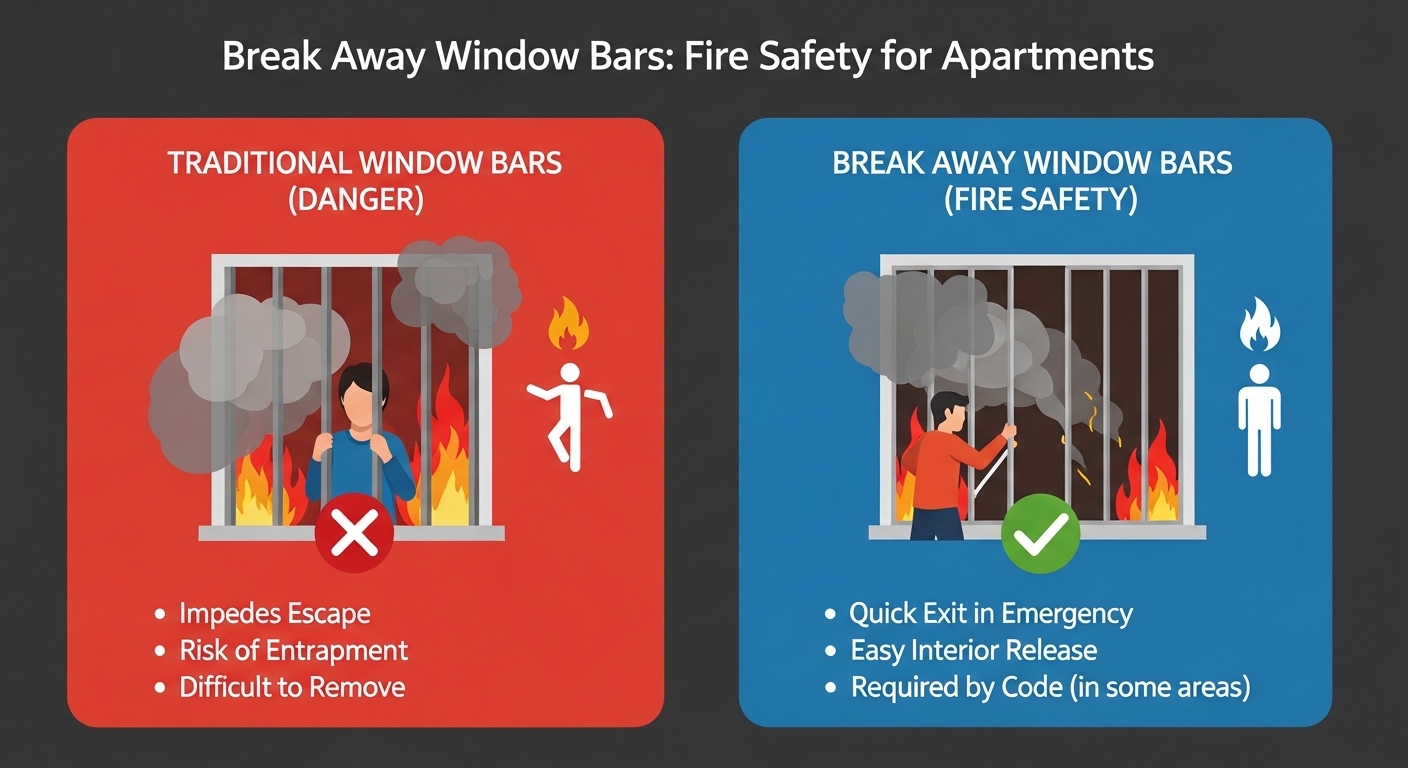
The phrase "window security bars that open from inside for emergency egress" might sound like technical jargon, but the concept is brutally simple: if a fire, gas leak, or structural emergency forces occupants to escape through a window, fixed bars that cannot be released instantly from the interior can turn a survivable situation into a tragedy. The US Fire Administration (USFA) consistently reports that residential fires spread fast — in as little as two minutes, a room can become untenable with smoke and heat. In those two minutes, a person fumbling with a padlock or a bar system that only opens from the outside has virtually no chance of escaping safely. Across American cities, fire departments respond to tens of thousands of residential window-related rescue calls annually. The New York City Fire Department (FDNY) has issued formal guidelines specifically addressing window bars as a fire hazard, noting that improperly installed or non-releasable window guards are a documented contributing factor in fire fatalities. The same pattern repeats in Chicago, Los Angeles, Detroit, and Philadelphia — all cities where high-density apartment living and burglar bar installation intersect with elevated fire risk. The solution is not to abandon window security bars entirely. The solution is to install window security bars that open from inside for emergency egress — systems specifically engineered to provide maximum burglary deterrence while guaranteeing that any adult occupant can release the bars within seconds, without a key, from the inside of the room.
The Deadly Trade-Off: Security vs. Escape Route
Many homeowners and renters install traditional fixed window bars — welded iron grilles or permanent wall-mount systems — without realizing they have created what fire safety professionals call a "self-imposed barrier to egress." According to the NFPA's Fire Protection Handbook, window openings in sleeping rooms are frequently the primary means of escape when interior hallways and stairwells are blocked by fire. A fixed bar system with no interior release mechanism eliminates this escape route entirely. In cities like Chicago's South Side or Detroit's east neighborhoods — areas with statistically higher fire call rates — this represents a documented public safety risk that building code officials actively work to address through inspections and retrofit requirements.
Real-World Fire Scenarios Where Interior-Release Bars Save Lives
Consider a family in a ground-floor Houston apartment. Burglar bars are installed on all windows — a reasonable choice given that 60% of US home break-ins occur through ground-floor windows, according to FBI Uniform Crime Report data. A kitchen fire breaks out at 2:00 AM. The front door is blocked by smoke. The only escape route is a bedroom window — which is covered by bars locked from the outside with a padlock. This scenario is not hypothetical. It has resulted in fatalities documented in fire investigation reports across Texas, Georgia, and Florida. Window security bars that open from inside for emergency egress would have changed that outcome entirely, allowing occupants to push or pull a quick-release lever and clear the opening in seconds.
US Building Codes That Mandate Egress-Compliant Window Bars
Understanding the legal framework governing window security bars that open from inside for emergency egress is essential for every homeowner, landlord, property manager, and building code compliance officer in the United States. Three primary regulatory frameworks govern this space: the International Residential Code (IRC), the International Building Code (IBC), and NFPA 101 — the Life Safety Code. Each of these documents contains specific, enforceable language about what constitutes an acceptable window bar system in sleeping areas and other occupied spaces. Non-compliance is not just a safety risk — it is a liability risk that can expose landlords and property owners to civil litigation and regulatory fines. Any security bars for windows that open, window grates, or door grilles installed in a regulated occupancy must meet these standards or risk formal citation during inspection.
IRC Section R310: Emergency Escape and Rescue Openings
The International Residential Code (IRC), adopted in whole or with amendments by all 50 US states, dedicates Section R310 to emergency escape and rescue openings. This section mandates that every sleeping room must have at least one operable window or door that provides a minimum net clear opening of 5.7 square feet (or 5.0 square feet at grade level), with a minimum clear opening height of 24 inches and a minimum clear opening width of 20 inches. Critically, IRC R310.2.4 states that bars, grilles, covers, and screens placed over emergency escape and rescue openings must be releasable or removable from the inside without the use of a key, tool, or special knowledge, and without force greater than that required for normal window operation. This is the foundational legal standard that defines what "window security bars that open from inside for emergency egress" must accomplish in every American home subject to the IRC.
IBC Section 1030 and NFPA 101 Egress Requirements
For multi-family residential buildings, commercial properties, and structures governed by the International Building Code (IBC) rather than the IRC, Section 1030 covers emergency escape and rescue openings with comparable language. The IBC requires that any security grille, bar, or screen covering a required egress window must be openable from the inside without keys or tools. NFPA 101, the Life Safety Code — the standard adopted by OSHA and referenced by fire marshals in jurisdictions across the country — reinforces this requirement and adds specific provisions for occupancy types including hotels, dormitories, and apartment buildings. In states like California (Title 24), New York, and Illinois, local amendments to these model codes may impose even stricter requirements, including mandatory annual inspections of window bar release mechanisms in rental properties.
New York City Local Law and FDNY Window Guard Regulations
New York City operates under one of the most detailed window security regulatory frameworks in the United States. NYC Local Law 57 requires building owners to install window guards in apartments where children under 10 reside. However, the FDNY and NYC Department of Buildings explicitly distinguish between window guards (child fall prevention) and window bars (burglar deterrence), requiring that all window bars installed in occupied sleeping areas include a quick-release mechanism operable from inside without tools. The FDNY's "Don't Bar Your Escape" public safety campaign has run in multiple languages across the five boroughs, specifically targeting the practice of installing non-releasable iron bars. Similar municipal campaigns have been conducted in Chicago (Chicago Fire Department), Los Angeles (LAFD), and Philadelphia (Philadelphia Fire Department).
How Quick-Release Mechanisms Work in Egress-Compliant Window Security Bars
Not all window security bars that open from inside for emergency egress use the same release mechanism, and understanding the engineering differences helps you make the right choice for your specific living situation. The market currently offers three primary mechanism types: telescopic quick-release systems, hinged swing-open systems, and sliding release systems. Each has distinct advantages depending on window type, occupancy, installation constraints, and budget. What unites all code-compliant options is the requirement that release must be achievable from the interior in a single motion — or at most two — without tools, keys, or specialized knowledge. This means that even a child, an elderly person, or someone disoriented by smoke must be able to operate the release successfully.
Telescopic Quick-Release Systems: The Gold Standard for Renters
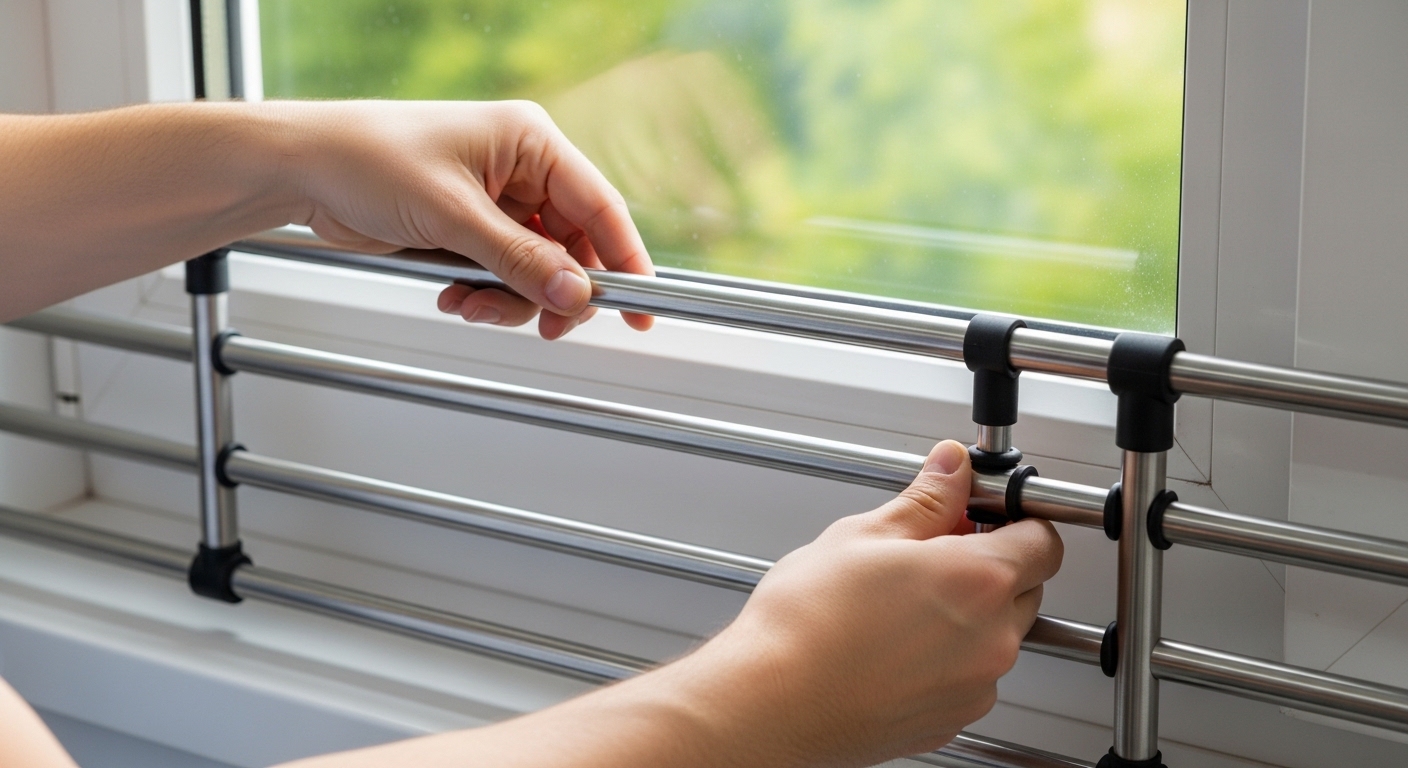
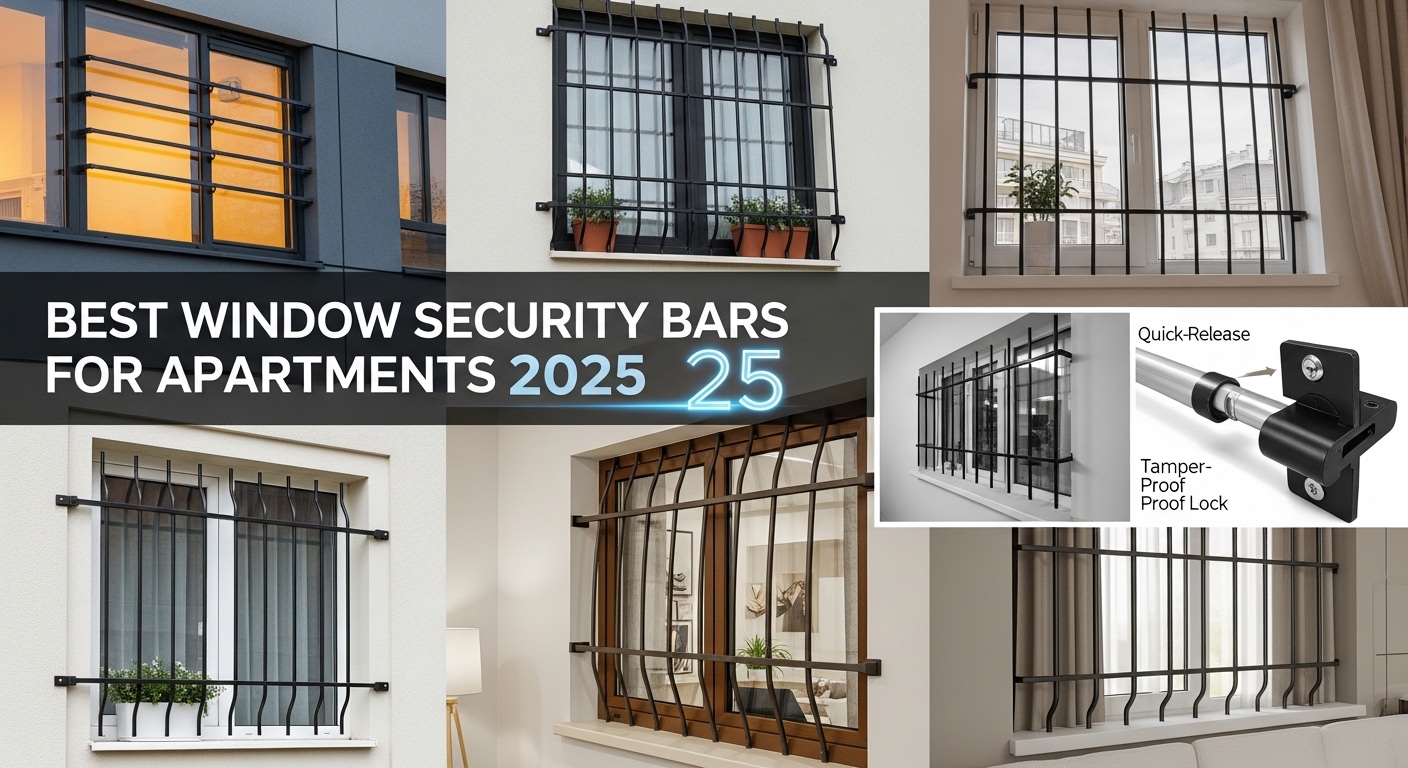
Telescopic quick-release window bars represent the most renter-friendly category of egress-compliant security. These systems, like the SWB Model A/EXIT, use a patented telescopic steel rod mechanism that spans the window frame under tension. To release from inside during an emergency, the occupant simply operates the quick-release lever — the bars retract or disengage in a single motion, clearing the full window opening within seconds. Because they do not require permanent wall anchors or drilling (for many standard US window sizes between 22 and 36 inches wide), they are ideal for the 44.1 million apartment renters in the United States who cannot make permanent modifications to their units. When the lease ends, the bars remove cleanly with no damage to the window frame or surrounding wall — a critical advantage over welded or permanently bolted systems.
Hinged and Swing-Out Window Bar Systems
Hinged window bar systems — sometimes called swing-out bars or hinged grilles — are permanently anchored to the wall on one side via a hinge and latched on the opposite side with a quick-release latch or lever. In an emergency, the occupant unlatches the bar panel from the inside and swings it open like a door. These systems offer a very wide clear opening once released and are popular for ground-floor bedroom windows in single-family homes across the Midwest and South. However, they require permanent installation (drilling into masonry or wood framing) and are therefore better suited for homeowners than renters. Building inspectors in cities like Atlanta, Memphis, and Houston frequently approve properly-installed hinged systems as IRC-compliant egress solutions.
Sliding Release Window Bar Systems
Sliding release systems operate by allowing one or more bars to slide horizontally within a track, creating a gap sufficient for emergency egress. These are less common in the US residential market but appear in commercial applications and some older building retrofits. From a code compliance standpoint, sliding release bars must meet the same minimum opening dimensions as hinged or telescopic systems — 20 inches wide by 24 inches tall, per IRC R310. The primary drawback is mechanical reliability over time: tracks can corrode, warp, or become obstructed by debris, potentially slowing or preventing release during an emergency. For most residential applications, telescopic quick-release and hinged systems offer superior reliability and simpler operation.
Choosing the Right Egress-Compliant Window Bars for Your Specific Situation
Selecting window security bars that open from inside for emergency egress is not a one-size-fits-all decision. The right choice depends on whether you own or rent your home, the type of windows you have, the floor level of the room being protected, local building code requirements, and your budget. The following framework helps homeowners, renters, landlords, and property managers in every US state make an informed purchasing decision that satisfies both security needs and life-safety requirements. When evaluating any product, always look for explicit documentation that the system meets IRC Section R310.2.4 or the equivalent local code provision — and when in doubt, request confirmation from your local building department or fire marshal's office. If you are also researching broader categories like window grates, door grilles, or patio door bars, our in-depth guide to window security bars that open covers the full spectrum of options available for US homes.
Renters in Apartments: Telescopic No-Drill Systems Are Your Best Option
If you are one of the 44.1 million Americans renting an apartment — whether in a high-rise in Manhattan, a garden-style complex in suburban Dallas, or a two-flat in Chicago's Logan Square neighborhood — your options for permanent modifications are severely limited by your lease agreement. Telescopic window security bars that open from inside for emergency egress are the definitive solution for this population. They install without drilling (for windows in the standard 22"–36" width range), remove cleanly when you move out, and still provide the same steel-strength barrier against forced entry as permanently welded bars. The SWB Model A/EXIT is specifically engineered for this use case, combining the telescopic no-drill design with a patented quick-release egress mechanism that satisfies IRC requirements.
Homeowners and Ground-Floor Bedroom Windows
For homeowners — particularly those with ground-floor sleeping areas in neighborhoods with elevated burglary rates in cities like Memphis, Baltimore, Detroit, and Philadelphia — a combination of security strength and egress compliance is non-negotiable. Ground-floor windows represent the primary point of entry in 60% of US residential burglaries (FBI UCR). A permanently-installed hinged bar system or a wall-mounted telescopic system with quick-release capability provides the highest level of deterrence while remaining fully compliant with fire and building codes. For windows that are wider than standard telescopic ranges, wall-mounted systems with integrated egress release mechanisms are the appropriate choice. The SWB Model B (Wall-Mount) provides heavy-gauge steel construction for permanent installations and pairs ideally with egress-compliant latch hardware.
Landlords, Property Managers, and Multi-Unit Buildings
Landlords managing multi-unit residential buildings face a dual obligation: protecting tenants from burglary while ensuring that every installed security device meets local fire and building codes. Failure on either count exposes property owners to significant liability. In states like California, New York, Illinois, and Texas — which collectively house a majority of the US renter population — building inspectors routinely cite non-egress-compliant window bars during annual inspections. Installing code-compliant, quick-release window security bars across all sleeping-room windows is both a legal risk management strategy and a property value enhancement. Telescopic systems like the SWB Model A/EXIT are particularly cost-effective for landlords because they can be removed, cleaned, and reinstalled between tenants without professional labor costs.
Installation Best Practices for Window Security Bars That Open From Inside
Even the most code-compliant window security bars that open from inside for emergency egress can fail to protect you if they are installed incorrectly. Proper installation ensures both maximum burglary resistance and reliable egress function — two requirements that must be met simultaneously. The installation process varies by system type (telescopic vs. wall-mount), window material (wood frame, vinyl, aluminum, masonry surround), and the specific product specifications. This section outlines the key installation principles that apply across all egress-compliant bar systems, with specific guidance for the most common US window configurations. Always consult the manufacturer's installation guide and, when required by local code, obtain the appropriate building permit before installation.
Pre-Installation: Measuring for IRC Compliance
Before installing any window security bars that open from inside for emergency egress, measure the window's existing clear opening dimensions carefully. The IRC requires a minimum net clear opening of 20 inches wide by 24 inches tall (5.7 square feet total, or 5.0 square feet at grade level). Measure the actual clear glass area — not the frame — to confirm that the existing window itself meets egress requirements before adding bars. If the window does not meet minimum dimensions, installing bars will further restrict the opening and create a code violation regardless of whether the bars have a quick-release mechanism. In this case, window replacement or a building variance may be required. The SWB Installation Guide at securitywb.com/installation/ provides detailed measurement instructions for all three SWB models.
Testing the Quick-Release Mechanism Before and After Installation
Every egress-compliant window bar system should be tested for quick-release function both before and immediately after installation, and then periodically (at minimum, annually) thereafter. The release mechanism should operate smoothly with one hand, without requiring more force than a standard window operation, and should fully clear the egress opening within three seconds under normal conditions. After installation, test the release from multiple positions — standing, crouching, and with eyes closed (to simulate smoke-impaired visibility). If the release requires two hands, significant force, or precise manipulation, the mechanism does not meet the practical intent of IRC R310.2.4 even if it technically satisfies the letter of the code. Document your testing with dated photographs or video as part of your property maintenance records — this is especially important for landlords managing multiple units.
Maintenance and Long-Term Reliability of Egress Bar Systems
Steel window security bars installed in humid climates — coastal areas like Miami, Houston, and the Pacific Northwest — are subject to corrosion over time if not properly maintained. Powder-coated or epoxy-painted finishes provide significant corrosion resistance, but inspecting the release mechanism for rust, debris accumulation, and mechanical wear on a semi-annual basis is a critical maintenance step. Telescopic systems should be lubricated at the tension points with a silicone-based lubricant (avoid petroleum-based products on painted surfaces) at least once per year. Hinged systems should have hinge pins inspected for corrosion and latch mechanisms tested for smooth operation. A bar system that looks intact visually but has a seized release mechanism provides zero egress benefit — and potentially 100% of the liability exposure.
SWB Model A/EXIT: The Patented Egress-Compliant Solution for American Homes
Security Window Bars' Model A/EXIT is the company's definitive answer to the challenge of window security bars that open from inside for emergency egress. Engineered from the ground up to satisfy both maximum security requirements and US building code egress mandates, the Model A/EXIT combines the telescopic adjustability of the Model A with a patented quick-release mechanism that meets or exceeds the requirements of IRC Section R310, IBC Section 1030, NFPA 101, and OSHA applicable standards. Priced at $92 — a fraction of the $600–$1,800 cost of professional window bar installation — the Model A/EXIT delivers professional-grade protection with a DIY installation time of 15–20 minutes for most standard US window configurations.
Key Technical Specifications of the SWB Model A/EXIT
The Model A/EXIT features heavy-gauge steel bar construction with a matte black powder-coated finish that resists corrosion and complements modern home aesthetics. The telescopic design adjusts to fit windows from 22 to 36 inches wide — covering the vast majority of standard residential window sizes found in American homes built after 1970. The patented quick-release lever is designed for single-hand operation, operable without tools or keys, and releases the bar system fully from the window opening in under three seconds under normal conditions. The system weighs sufficient to resist forced entry comparable to permanently welded bars while remaining light enough for a single occupant to install or remove without assistance. Full product specifications and the installation guide are available at securitywb.com/model-a-exit/.
Model A/EXIT vs. Traditional Welded Bars: A Direct Comparison
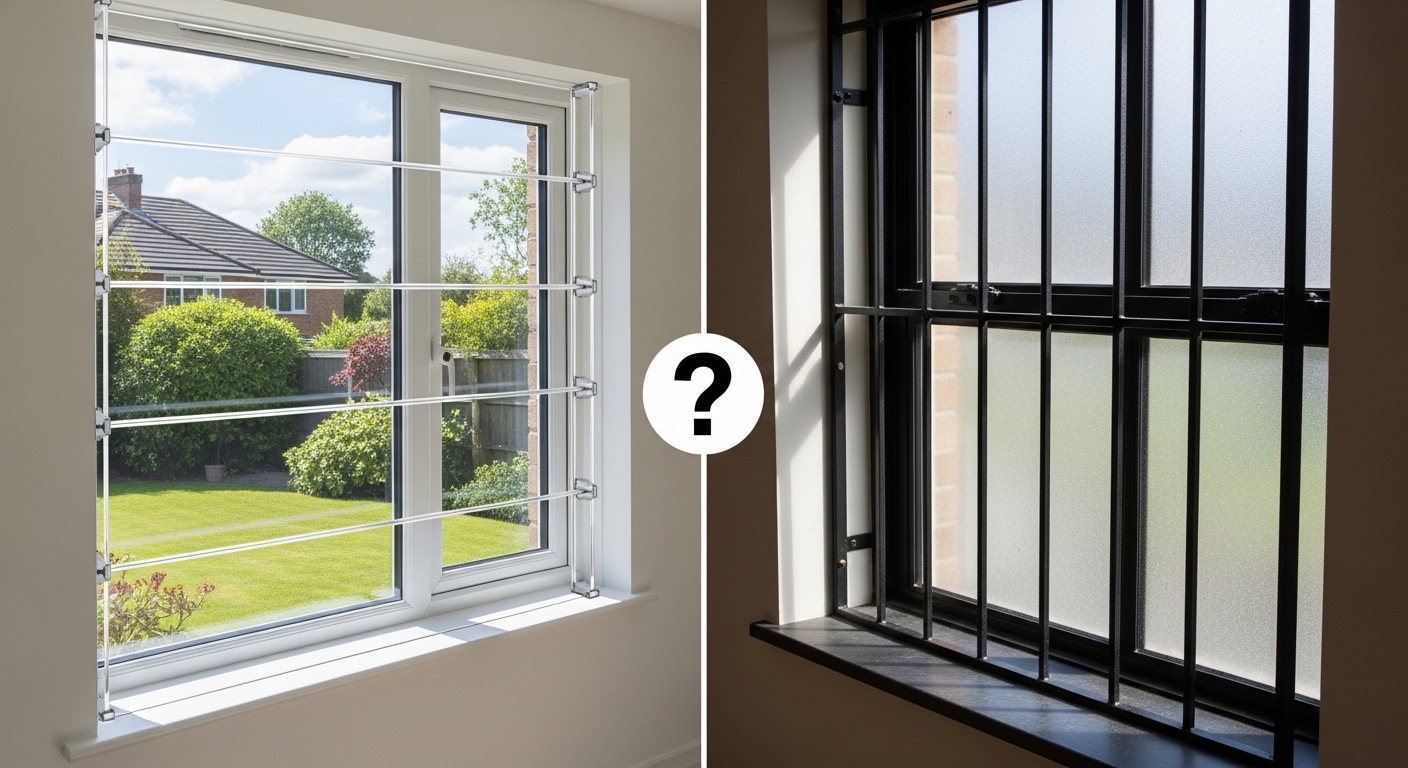
Traditional welded or permanently bolted iron bars offer undeniable physical strength — but they offer zero egress capability and create substantial fire safety and building code liability for property owners. The SWB Model A/EXIT matches the burglary deterrence of permanently installed bars through heavy-gauge steel construction and a tension-based mounting system that resists lateral force. Where welded bars fail catastrophically — emergency egress — the Model A/EXIT excels through its patented quick-release design. Additionally, the telescopic adjustability of the Model A/EXIT means it fits a range of window sizes that would each require a custom-fabricated welded bar at professional installation costs. For renters, the removability advantage is even more decisive: welded bars cannot be removed without professional cutting tools, wall repair, and repainting — costs that can easily exceed $300–$500 per window when moving out.
Common Mistakes Americans Make With Window Security Bars and Egress Compliance
Despite widespread availability of egress-compliant window bar systems, fire investigators and building code officials across the United States continue to document properties where non-releasable bars are installed in sleeping areas — creating life-threatening egress barriers in exchange for burglary protection. Understanding the most common mistakes helps homeowners, renters, and landlords avoid both the safety risks and the legal liabilities associated with non-compliant installations. Many of these mistakes arise not from negligence but from lack of information — the product was purchased without verifying its egress compliance, or the installation followed the wrong instructions. The following are the most frequently observed errors documented by fire departments and building inspectors in major US cities.
Mistake 1: Installing Fixed Bars With Padlocks in Sleeping Rooms
The single most dangerous and most commonly cited violation is the installation of window bars secured with padlocks in sleeping areas. This configuration — often seen in older urban housing stock in cities like Detroit, Baltimore, Chicago, and New York City — requires a key to open the bars from both inside and outside. Under IRC R310.2.4, this is explicitly prohibited for windows that serve as required emergency escape and rescue openings. Padlocked bars in sleeping rooms have been directly cited as contributing factors in residential fire fatalities in multiple NFPA and USFA fire investigation reports. If you currently have padlocked bars on any bedroom window, replacing them with a quick-release egress-compliant system should be treated as an urgent safety priority — not a deferred upgrade.
Mistake 2: Assuming All "Quick-Release" Labels Mean Code Compliance
Not every product marketed as "quick-release" or "egress compliant" actually meets the specific dimensional and operational requirements of IRC R310 or local building codes. Some products require two distinct motions to release, others require a specific sequence that is not intuitive under stress, and others have release mechanisms that are technically operable without tools but require significant force or precise finger positioning. When evaluating any window security bars that open from inside for emergency egress, verify: (1) the release is a single operation or a maximum of two simple motions; (2) no tools or keys are required; (3) the released opening meets minimum IRC dimensions of 20" × 24"; and (4) the product documentation specifically references IRC R310, IBC 1030, or NFPA 101 compliance. SWB's Model A/EXIT includes explicit code compliance documentation for all three regulatory frameworks.
Mistake 3: Neglecting Window Bars on Upper-Floor Sleeping Rooms
A common misconception is that window bars are only a concern for ground-floor windows — and therefore, upper-floor sleeping rooms do not need egress-compliant systems. This logic is flawed for two reasons. First, fires frequently originate on lower floors, making upper-floor windows the only viable escape route when stairwells are compromised. Second, second and third-floor windows are increasingly targeted by burglars in urban apartment buildings where ground-floor security has been improved. If you install window bars on any sleeping room window above grade, those bars must still meet IRC egress requirements regardless of floor level. Fire ladders and escape systems are frequently used in combination with egress-compliant window bars on upper floors — a combination strongly recommended by the NFPA for multi-story residential properties.
State and City-Specific Egress Window Bar Requirements Across the USA
While the IRC, IBC, and NFPA 101 provide the national baseline for window security bar egress requirements, individual states and municipalities frequently adopt amendments, add stricter requirements, or implement enforcement mechanisms that go beyond the model code minimums. If you own or manage property in any of the following high-regulation jurisdictions, understanding the local code provisions is especially important — and in some cases, mandatory inspections or certifications may be required before renting or selling a property with window bars installed.
New York, California, and Illinois: The Three Strictest State Frameworks
New York State has adopted the IRC with significant local amendments. New York City, operating under the NYC Building Code and guided by FDNY fire safety campaigns, imposes the most stringent local requirements in the country for window bars in residential occupancies. California's Title 24 (California Building Standards Code) requires egress compliance for all window security installations in sleeping rooms and references NFPA 101 for multi-family buildings. Los Angeles and San Francisco have specific enforcement programs that include window bar inspections during rental property compliance checks. Illinois has adopted the IRC statewide, and the Chicago Department of Buildings actively enforces egress window bar requirements through its annual multi-unit building inspection program. Chicago's fire history — including multiple fatal fires in which non-releasable bars were cited — has made this one of the most actively enforced provisions in the city's building code.
Texas, Florida, and Georgia: Sun Belt States With Growing Enforcement
Texas municipalities — particularly Houston, Dallas, and San Antonio — have historically had less aggressive enforcement of window bar egress requirements compared to northern cities, but this is changing rapidly. The Houston Fire Department has incorporated window bar compliance into its residential fire inspection program following a series of documented fatalities in which non-releasable bars obstructed emergency egress. Florida's extreme humidity and hurricane-related evacuation requirements have elevated attention to window egress systems statewide, with Miami-Dade County among the most active enforcers. Georgia's Atlanta metropolitan area, which has seen significant population growth and increased rental housing stock, has expanded its building inspection program to include window bar compliance checks in multi-family residential buildings. In all three states, the foundational code standard remains IRC R310 — and window security bars that open from inside for emergency egress are the compliant solution.
🏆 Conclusion
The decision to install window security bars should never come at the cost of your ability to escape your own home in an emergency. Across the United States — from ground-floor apartments in New York City to suburban bedrooms in Houston, from rental units in Chicago to family homes in Atlanta — the standard is clear: window security bars that open from inside for emergency egress are not optional. They are legally required in sleeping areas under IRC Section R310, mandated under NFPA 101 and IBC Section 1030, and enforced by fire departments and building inspectors in every major American city. The good news is that compliance does not require sacrificing security strength or spending thousands of dollars on professional installation. Security Window Bars' Model A/EXIT delivers heavy-gauge steel burglary protection, patented quick-release egress capability, and full building code compliance in a DIY-installable, renter-friendly telescopic system priced at $92. Whether you are a renter protecting a bedroom window, a homeowner securing a ground-floor sleeping area, or a landlord bringing a multi-unit property into full code compliance, SWB has the right solution available now — with fast shipping to all 50 states via Amazon FBA. Don't wait for an emergency to discover your window bars don't open. Install egress-compliant protection today and protect everyone inside your home.
Security Window Bars · USA
Secure Your Home Today
Protect your family and meet US building codes today. Shop the SWB Model A/EXIT — the patented egress-compliant window security bar — on Amazon USA with fast delivery to all 50 states. Or explore all SWB models at securitywb.com/model-a-exit/ and find your perfect fit.
Shop on Amazon →Frequently Asked Questions
Yes. Under IRC Section R310.2.4 — adopted in all 50 US states — any bars, grilles, or screens covering a required emergency escape and rescue opening (typically bedroom windows) must be releasable or removable from the inside without tools, keys, or special knowledge. IBC Section 1030 and NFPA 101 contain equivalent requirements for multi-family and commercial occupancies. Failure to comply with these provisions is a building code violation that can result in fines, failed inspections, and significant personal liability for property owners — particularly in the event of a fire-related injury or fatality.
The International Residential Code (IRC) Section R310 requires emergency escape and rescue openings to provide a minimum net clear opening of 5.7 square feet (5.0 square feet at grade level), with a minimum clear opening width of 20 inches and a minimum clear opening height of 24 inches. The maximum sill height from the floor is 44 inches. Any window security bars that open from inside for emergency egress must release to provide at least this clear opening — both the window itself and the bar system together must achieve these minimum dimensions simultaneously.
Yes — telescopic window security bar systems like the SWB Model A/EXIT are specifically designed for renters. They install using a tension-based system that spans the window frame without permanent drilling in most standard US window widths (22"–36"). This means no damage to walls, frames, or window surrounds — so you maintain full compliance with your lease's no-modification clause. The bars can be removed cleanly when you move out, leaving no trace of installation. Despite the no-drill design, the steel bar system provides strength comparable to permanently installed bars. Visit securitywb.com/model-a-exit/ for full specifications.
The IRC does not specify an exact number of seconds for release, but it does require that the operation must be achievable without tools, keys, special knowledge, or force greater than normal window operation. Fire safety professionals and NFPA guidance generally interpret this to mean the release should be completable in a single motion or a maximum of two simple sequential motions under stress conditions — ideally within three to five seconds. Systems that require precise manipulation, significant force, or sequential steps that a disoriented or panicked occupant might not remember under emergency conditions are functionally non-compliant regardless of their technical design.
Yes. IRC R310 applies to every sleeping room regardless of floor level. The code does not grant an exemption for upper-floor windows — and for good reason. Fires frequently originate on lower floors, making upper-floor windows the last available escape route when interior stairwells are compromised by smoke or flame. Any window bar system installed on an upper-floor sleeping room window must still include a fully functional quick-release egress mechanism. The NFPA recommends pairing egress-compliant window bars on upper floors with an approved portable escape ladder stored within reach of the window for complete emergency preparedness.
Perform these four checks: (1) Open the bars from inside with one hand in one or two simple motions — no keys, no tools, no sequences to memorize. (2) Confirm the released opening measures at least 20 inches wide and 24 inches tall. (3) Test with your eyes closed (simulating smoke-impaired visibility) — you should still be able to operate the release intuitively. (4) Apply moderate horizontal force to the bar while attempting the release — the mechanism should still function under stress. If your current bars fail any of these checks, they do not provide reliable egress capability and should be replaced. If you are unsure about your specific system, contact Security Window Bars at securitywb.com/contact/ for guidance.
Window guards are primarily designed to prevent children from falling out of windows — they are governed by child fall prevention standards (such as NYC Local Law 57) and are typically designed to remain in place unless deliberately removed by an adult. Window security bars are designed to prevent forced entry from outside. Both types of devices, if installed over a required emergency escape and rescue opening, must comply with IRC R310.2.4 egress requirements — meaning both must be operable from the inside without tools. The distinction matters for compliance planning: a child-fall-prevention window guard that is not quick-release egress compliant cannot be installed over a required escape window without a simultaneous code violation.
The SWB Model A/EXIT is engineered with a patented quick-release mechanism designed to meet the operational requirements of IRC Section R310.2.4, IBC Section 1030, and NFPA 101. The system releases from inside without tools or keys in compliance with the foundational US egress standard. For the most current compliance documentation and to confirm applicability to your specific jurisdiction — some states and cities have amendments to the model codes — visit securitywb.com/model-a-exit/ or contact the SWB team directly at securitywb.com/contact/. When required by your local building department, SWB can provide product specifications and compliance documentation to support permit applications.