

Security Bars for Windows: The Definitive Buyer's Guide for Homeowners, Renters, and Property Managers in 2026
Learn everything about security bars for windows — types, costs, codes, and installation. Expert guide for renters, homeowners & landlords. Shop SWB on Amazon.
SWB: High-caliber Security Window Bars experts. We bring the most advanced protection within your reach, explained clearly. If you have ever wondered whether security bars are worth it, consider this: according to the FBI's Uniform Crime Report, there are approximately 6.7 million residential burglaries in the United States every year, and 60% of all break-ins occur through ground-floor windows. Despite this alarming reality, the majority of American homeowners and renters leave those windows completely unprotected — often because they assume that security bars are expensive, complicated to install, or too permanent for rental living. This guide demolishes all three myths. In the sections below, Security Window Bars (SWB) walks you through every critical decision point: the different types of security bars on the market, how building codes govern their use, the real cost difference between professional installation and DIY solutions, how to choose the right model for your specific window and living situation, and exactly how SWB's patented telescopic system compares to the fixed welded bars you find at traditional hardware stores. Whether you own a house in Houston, rent a ground-floor apartment in Chicago, or manage a multi-unit property in Los Angeles, this guide gives you the knowledge to act today.
Criminologists at the University of North Carolina at Charlotte conducted one of the most cited studies on residential burglary decision-making, interviewing mo…
What Are Security Bars and Why Do American Homes Need Them Right Now
Security bars — also called burglar bars, window guards, or window grilles — are rigid steel or iron frames installed across window openings to prevent unauthorized entry. Their purpose is straightforward: a would-be intruder who encounters a reinforced window will almost always move on to an easier target. Research from the Bureau of Justice Statistics confirms that most residential burglaries are opportunistic, not planned, meaning that visible deterrents like security bars are among the most cost-effective crime-prevention investments a property owner can make. The need for security bars in the United States has never been more acute. Urban areas like Memphis, Philadelphia, Detroit, Baltimore, and Atlanta consistently rank among the nation's highest in residential property crime rates. But it is not only urban renters who benefit. Suburban homeowners with basement windows, ground-floor bedrooms, or detached garages are equally vulnerable. The National Crime Prevention Council notes that a home without visible physical security measures is up to three times more likely to be targeted than one that displays deterrents. Security bars address this directly — they are the single most visible and structurally reliable deterrent you can add to a window short of bricking it up entirely.
The Psychology of Deterrence: Why Visible Security Bars Work
Criminologists at the University of North Carolina at Charlotte conducted one of the most cited studies on residential burglary decision-making, interviewing more than 400 convicted burglars. The findings were unambiguous: physical barriers — specifically window bars and reinforced door frames — were the top deterrents that caused burglars to abandon a target. Unlike alarm systems, which many experienced criminals know how to defeat or ignore, steel security bars present an immovable physical obstacle. A burglar cannot pick a bar or hack past it. The presence of security bars sends an immediate signal that this property is hardened. For renters in high-crime zip codes across Chicago's South Side, Northeast Philadelphia, or East Oakland, that visible deterrence can be the difference between a safe night and a traumatic home invasion.
Where Break-Ins Actually Happen: Ground-Floor Windows Lead the Statistics
According to data compiled by the Insurance Information Institute, approximately 23% of all burglaries involve entry through a first-floor window — ranking it second only to the front door as the most common entry point. Basement windows are particularly vulnerable because they are often out of sightlines and located in less-trafficked areas of a property. Ground-floor apartment windows in dense urban buildings are equally exposed. In cities like New York City, a ground-floor apartment without security bars or window guards is statistically among the most burglary-prone residential units in the country. This data makes a compelling case for prioritizing window security bars not as a luxury upgrade but as a baseline safety investment, equivalent in importance to a quality deadbolt lock.
Most Vulnerable Window Types by Location
Basement windows are rated highest risk due to concealment. Ground-floor bedroom windows rank second, especially in apartment buildings. Rear-facing windows on any floor are significantly more exposed than front-facing windows due to reduced visibility from the street. Side-entry windows in attached garages are often overlooked entirely, yet provide direct interior access. Security bars address all four categories effectively.Security Bars vs. Alarm Systems: Complementary, Not Competing
A common misconception is that a home security alarm makes physical barriers like window bars redundant. The opposite is true. An alarm system detects an intrusion after it has begun — meaning a window has already been broken and a person has already entered your home before any response is triggered. Security bars prevent the intrusion from occurring in the first place. The two systems operate at entirely different points in the security timeline. The most resilient residential security strategy layers both: physical barriers as the first line of prevention and electronic monitoring as the backup response layer. For renters who cannot modify a property's alarm infrastructure, security bars offer a standalone physical security upgrade that requires no landlord permission for removable models and no ongoing monthly subscription fee.
Types of Security Bars: Telescopic, Wall-Mount, and Egress-Compliant Models Explained
Not all security bars are created equal, and selecting the wrong type for your situation can mean wasted money, building code violations, or — in the worst case — a blocked fire escape route. The American market currently offers three primary categories of window security bars: permanently welded or fixed bars installed by contractors, wall-mounted bars that are bolted directly into the window frame or surrounding wall, and adjustable telescopic bars that brace against the window frame without requiring permanent anchoring. Each has distinct advantages and critical limitations depending on the property type, occupant status (owner vs. renter), floor level, and local code requirements. SWB manufactures all three functional categories within its product line, and understanding the difference is the first step toward making the right purchase decision.
Model A — Telescopic Security Bars: The Renter's Best Friend
The SWB Model A Telescopic Window Bars represent the most significant innovation in residential window security over the past decade. Traditional security bar installation requires drilling into masonry or wood framing, applying epoxy anchors, and permanently altering the window opening — work that most landlords prohibit and that costs between $500 and $1,800 per window when contracted to a professional. The Model A eliminates all of that. Its patented telescopic mechanism braces horizontally across the window frame, using spring-loaded steel pressure to hold the bar in place without a single drill hole. Installation takes 15 to 20 minutes with no tools required for many window configurations. The bar adjusts from 22 inches to 36 inches, covering the vast majority of standard US residential window widths. When a lease ends, the bar is removed in minutes, leaving zero damage to the window frame — a critical advantage for the 44.1 million apartment renters in the United States who cannot afford security deposit deductions.
Model A Specifications
Material: Heavy-gauge steel. Finish: Matte black powder coat. Width range: 22"–36". Installation time: 15–20 minutes. Drilling required: No (pressure-fit). Price: $90. Ideal for: Apartments, bedrooms, basement windows, rental properties.Model B — Wall-Mount Security Bars: Maximum Structural Integrity for Permanent Installations
For homeowners, commercial property managers, and landlords seeking a permanent and maximally robust security solution, the SWB Model B Wall-Mount Window Bars deliver contractor-grade protection at a fraction of the professional installation cost. Model B bars are constructed from heavy-gauge steel with a durable powder-coated black finish and are designed for direct wall-mount installation using lag bolts into the window's surrounding frame or masonry. This anchoring method creates a structural connection that is essentially equivalent to professionally welded bars — the kind typically seen on commercial storefronts in cities like Houston's Midtown district or ground-floor units in Detroit's Corktown neighborhood. At $91, Model B is an extraordinary value compared to the $600–$1,800 quote a homeowner would receive from a licensed contractor for a comparable installation. It is the recommended solution for ground-floor windows in owned homes, commercial garages, retail shopfronts, and any situation where the occupant does not plan to relocate and wants the highest possible deterrent value.
Model A/EXIT — Egress-Compliant Security Bars: Safety and Security Without Compromise
The SWB Model A/EXIT is the most technically sophisticated product in the lineup and addresses one of the most critical safety-versus-security tensions in residential architecture: the need for a window to simultaneously serve as a burglar deterrent and a viable fire escape route. According to NFPA 101 (the Life Safety Code) and the International Building Code (IBC), windows in sleeping areas must meet emergency egress requirements, which mandate a minimum clear opening of 20 inches wide by 24 inches tall with a net clear opening area of at least 5.7 square feet. Standard fixed security bars that do not open from the inside directly violate this requirement and can — and have — resulted in fatal outcomes during residential fires. The Model A/EXIT resolves this with a patented quick-release mechanism that allows any occupant to open the bars from inside within seconds, meeting IBC, NFPA 101, and OSHA standards simultaneously. This model is not optional for bedroom windows — it is the legally and ethically correct choice for any sleeping area in the United States. At $92, it costs one dollar more than the standard telescopic model and provides compliance, security, and fire safety in a single unit.
US Building Codes and Security Bars: What Every Homeowner and Landlord Must Know
Installing security bars without understanding the applicable building codes is one of the most common and potentially dangerous mistakes property owners make. The United States has a layered regulatory framework governing window security devices, and non-compliance can expose landlords to civil liability, building code violations, failed inspections, and — most critically — preventable deaths. The primary codes that govern security bars in residential applications include the International Building Code (IBC), NFPA 101 Life Safety Code, the International Residential Code (IRC), and OSHA standards for commercial properties. Individual cities and states frequently layer additional requirements on top of the national baseline. New York City's Local Law 57, for example, mandates window guards in all residential buildings where a child under 10 years of age resides, making compliance not just advisable but legally required. Understanding these codes before purchase is not bureaucratic box-checking — it is genuine life-safety planning.
IBC and IRC Emergency Egress Requirements: The Non-Negotiables
The International Residential Code (IRC) Section R310 establishes the baseline egress requirements for sleeping rooms in US residential construction. The code mandates that every sleeping room have at least one operable emergency escape and rescue opening with a minimum net clear width of 20 inches, minimum net clear height of 24 inches, and a minimum net clear opening area of 5.7 square feet at grade level and 5.0 square feet above grade. Any security bar installed over a bedroom or sleeping area window must either (a) be removable without tools from the interior in an emergency, or (b) incorporate a quick-release mechanism that allows exit in under 15 seconds. Fixed, non-opening security bars in a bedroom are a code violation in virtually every jurisdiction in the United States. The SWB Model A/EXIT was designed specifically to satisfy these requirements — its quick-release mechanism can be operated by any household occupant, including children, in a genuine emergency.
NYC Local Law 57 and Window Guard Requirements for Landlords
New York City's Department of Housing Preservation and Development enforces one of the most comprehensive window guard ordinances in the country. Under Local Law 57, landlords of multiple-dwelling buildings are required to install window guards on windows in apartments where a child 10 years of age or younger resides, as well as on all windows in public hallways. Landlords must provide tenants with an annual notice and form to disclose whether children under 10 are living in the unit. Failure to comply can result in fines starting at $1,000 per window per violation. While the law specifies guards that prevent a child from falling, the guards must still allow emergency egress — a balance that the SWB Model A/EXIT is specifically engineered to achieve. For NYC landlords managing multiple units across the Bronx, Brooklyn, Queens, or Manhattan, the SWB system offers a compliant, cost-effective solution that can be installed unit by unit without contractor scheduling delays.
Key Compliance Checklist for NYC Landlords
Distribute annual window guard notification forms to all tenants. Install window guards in all units where children under 10 reside. Ensure all bedroom window guards have functional quick-release mechanisms. Document installations with photos and service records for HPD inspections. Replace any damaged or non-functioning guards immediately upon notice.OSHA and Commercial Property Security Bar Compliance
Commercial property owners — including retail store operators, restaurant owners, and light industrial facility managers — face an additional layer of OSHA regulations governing emergency exit access. OSHA Standard 1910.36 requires that every exit route remain unobstructed and that exit doors and windows used as egress points be operable from the inside at all times without the use of a key, tool, or special knowledge. Security bars installed on commercial windows that serve as secondary egress routes must therefore incorporate quick-release mechanisms equivalent to those mandated for residential sleeping areas under the IRC. Ground-floor retail operations in high-crime commercial corridors — think storefronts in South Chicago's 79th Street commercial strip or Philadelphia's Kensington Avenue — regularly use security bars as overnight theft deterrents. Model B provides the permanent structural protection these properties need, while any window serving as emergency egress must use the Model A/EXIT to remain OSHA-compliant.
Security Bars Cost Analysis: DIY vs. Professional Installation in 2026
One of the most powerful arguments for the SWB product line is the staggering cost difference between its products and the equivalent protection purchased through traditional professional installation channels. According to HomeAdvisor's 2025 national cost data, the average cost for professional window bar installation in the United States ranges from $600 to $1,800 per window, depending on window size, material (steel vs. iron), finish, complexity of the installation, and local labor rates. In high-cost metropolitan areas like San Francisco, New York City, and Boston, quotes for a single window can reach $2,200 or more. For a typical ground-floor apartment with five windows — a common configuration in Chicago two-flats or Houston bungalows — professional installation could cost between $3,000 and $9,000. SWB's Model A, Model B, and Model A/EXIT all retail in the $90–$92 range, representing cost savings of up to 95% compared to professional installation, without any sacrifice in steel construction quality or structural integrity.
Five-Window Cost Comparison: Professional Install vs. SWB
Consider a ground-floor homeowner in Memphis, Tennessee — one of the cities with the highest residential burglary rates in the United States — who wants to secure five windows. A professional contractor quote in the Memphis metro area averages $750–$1,200 per window for standard wrought iron bars, meaning a full installation job runs $3,750–$6,000 before tax. The same five windows covered with SWB Model B Wall-Mount bars costs $455 in product — plus the homeowner's own labor for an installation that requires nothing more than a drill, lag bolts (included), and a standard Saturday afternoon. For a renter in the same Memphis neighborhood who cannot drill, five SWB Model A Telescopic bars cost $450 total, with no installation cost, no contractor scheduling, and zero risk of security deposit loss. The economic case is overwhelming. The steel construction quality is identical. The deterrent value is the same.
Hidden Costs of Professional Installation That Most Homeowners Overlook
The quoted price for professional window bar installation rarely reflects the total cost of ownership. Most contractors charge a separate fee for permits where local codes require them — typically $50–$150 per permit depending on the jurisdiction. Custom sizing for non-standard window dimensions adds another $100–$300 per window. Powder-coat finishing or custom color matching, if desired, adds a further premium. Annual maintenance inspections, which some security companies require as a condition of warranty coverage, add ongoing costs. Removal costs — relevant when a homeowner sells a property or a landlord needs to update a unit — run $200–$500 per window. SWB's telescopic models require no permits in most jurisdictions (as they do not alter the structure), carry no removal cost, and arrive factory-finished in a matte black powder coat that matches modern window aesthetics without any additional charge.
Amazon FBA Delivery: Why Fast Shipping Matters for Security Decisions
A security vulnerability is most dangerous during the window between the moment a person identifies the need for protection and the moment that protection is in place. Traditional security bar installation — from first contractor call to completed installation — averages 2–4 weeks in most US metro areas, factoring in quote scheduling, permit processing, material ordering, and installation booking. SWB products ship via Amazon FBA with Prime delivery available to all 50 states, meaning that a homeowner in Atlanta who decides on a Monday that their basement windows need securing can have the bars in hand by Wednesday and installed by Thursday evening. That compressed timeline is not just a convenience — it is a meaningful security benefit. Every day a window is unprotected is a day of real exposure.
How to Choose the Right Security Bars for Your Specific Situation
Selecting the correct security bar model is not a one-size-fits-all decision. The right product depends on four primary variables: your ownership status (renter vs. owner), the window's function (living area vs. sleeping area), the installation surface (wood frame vs. masonry), and your local code environment (standard IRC vs. NYC Local Law 57 or similar overlay). Getting this selection right ensures you invest once in a product that solves your specific problem without creating new compliance issues or safety risks. The decision tree below — developed from SWB's experience protecting thousands of properties across all 50 states — provides a practical framework for matching product to situation.
For Renters: Why the Model A Telescopic Bar Is the Only Logical Choice
If you are renting your home or apartment and your lease includes a standard no-alteration clause — as the vast majority of US residential leases do — the SWB Model A Telescopic Window Bar is your only practical option among permanent-quality security solutions. It installs without drilling, leaves zero marks on the window frame, and uninstalls in under five minutes when you move out. For renters in cities like Los Angeles, where the rental market is extremely competitive and security deposit disputes are common, this feature alone justifies the purchase. If the window in question is a sleeping area — a bedroom, nursery, or studio apartment — choose the Model A/EXIT to maintain emergency egress compliance. For renters with children in New York City, the Model A/EXIT satisfies Local Law 57 window guard requirements while providing compliant quick-release egress access.
For Homeowners: When to Choose Model B vs. Model A/EXIT
Homeowners have more flexibility than renters because permanent installation is permitted. For ground-floor living room windows, kitchen windows, and garage windows — areas that do not serve as primary sleeping areas or emergency egress routes — the SWB Model B Wall-Mount bar provides the maximum deterrent value with a permanent structural connection equivalent to contractor-installed bars. For bedroom windows, basement sleeping areas, and any window that could serve as a fire escape, the Model A/EXIT is mandatory from both a safety and legal compliance perspective. Many homeowners choose to deploy both: Model B on all non-egress windows for maximum rigidity and aesthetic consistency, and Model A/EXIT on every bedroom and basement sleeping area window. At $90–$92 per unit, outfitting an entire home for under $500 is genuinely achievable — a security investment that also reduces homeowner's insurance premiums in many states.
Quick Selection Guide by Window Type
Basement window (non-sleeping): Model B — permanent wall mount. Ground-floor living room window: Model B. Bedroom window (any floor): Model A/EXIT — egress compliant. Rental apartment — any non-sleeping window: Model A telescopic. Rental apartment — bedroom: Model A/EXIT. Commercial storefront window (non-egress): Model B. Commercial window serving as egress: Model A/EXIT.For Landlords and Property Managers: Scalable Security Across Multiple Units
Landlords managing multi-unit residential buildings face the dual challenge of providing tenant security while controlling per-unit renovation costs and avoiding permanent alterations that complicate unit turnover. SWB's product line is purpose-built for this use case. Because the Model A Telescopic bars require no drilling and no permanent modification, they can be installed at tenant move-in and removed at move-out without any impact on the window frame or the unit's rentable condition. For landlords complying with NYC's Local Law 57 or similar child safety ordinances in other jurisdictions, the Model A/EXIT provides a single compliant solution that satisfies both the window guard requirement and the emergency egress requirement — eliminating the need to source two separate products. Property managers overseeing 10, 50, or 200 units can standardize on the SWB system and dramatically reduce both per-unit security costs and liability exposure.
Installation Guide: How to Install Security Bars Without Hiring a Contractor
The phrase 'DIY installation' is sometimes used loosely in the home security industry to describe products that technically any homeowner can install — but in practice require significant technical skill, specialized tools, and hours of work. SWB's approach to installation is genuinely different. The Model A Telescopic bar was engineered from the ground up to be installed by any adult in 15 to 20 minutes, with no prior experience and no tools other than those that come in the box. The Model B Wall-Mount bar requires a drill and standard lag bolts (included), and a typical installation takes 30 to 45 minutes per window. Both models include step-by-step illustrated instructions, and SWB maintains a comprehensive installation guide at securitywb.com/installation/ that covers all three models with video walkthroughs and troubleshooting for common window frame configurations.
Step-by-Step: Installing the Model A Telescopic Bar in Under 20 Minutes
Step 1 — Measure your window opening width from the inside edge of the left frame to the inside edge of the right frame. Confirm the measurement falls within the 22"–36" adjustment range. Step 2 — Collapse the telescopic bar to its minimum length and slide the rubber-tipped end caps against both sides of the window frame. Step 3 — Extend the bar using the central adjustment mechanism until the end caps make firm contact with both frame edges. The spring-loaded tension system provides the holding force — no hardware is needed. Step 4 — Test stability by applying upward and horizontal force to the bar. A correctly installed Model A should not shift or rattle. Total time: 15–20 minutes. For visual reference and model-specific variations, visit the full installation guide at securitywb.com/installation/.
Step-by-Step: Installing the Model B Wall-Mount Bar for Permanent Protection
Model B installation requires a drill, a level, and the included lag bolt hardware. Step 1 — Position the mounting bracket on the left side of the window frame at the desired height. Use a level to confirm it is plumb. Mark the drill points. Step 2 — Drill pilot holes at the marked points, appropriate to your frame material (wood or masonry — different bit types required). For masonry installations in older Chicago or Philadelphia row houses, use a hammer drill and masonry bit. Step 3 — Insert lag bolts and secure the left bracket firmly. Repeat for the right bracket. Step 4 — Slide the Model B bar into both brackets and verify that it is secure and level. Apply firm lateral force to confirm the anchoring holds. Step 5 — Apply the included rubber gaskets between bar and frame to prevent paint abrasion. Total time: 30–45 minutes. Detailed masonry-specific guidance is available at the SWB installation resource page.
Testing Your Security Bars After Installation: The SWB Verification Protocol
Installation is only complete once the bar has passed a functional security test. For Model A and Model A/EXIT, apply 150 pounds of outward force on the center of the bar using both hands — the bar should not flex more than 1/4 inch and should not shift laterally. For Model B, apply force at both ends and the center; anchoring should remain fully rigid with no movement in the brackets. For Model A/EXIT specifically, test the quick-release mechanism by activating it from inside the room in simulated emergency conditions. All household members — including older children — should be able to operate the release. The full SWB verification protocol is published on the installation guide page and is particularly important for compliance documentation in jurisdictions like New York City, where landlords may be required to demonstrate functional testing to HPD inspectors.
Security Bars and Home Aesthetics: The Case Against the Prison-Window Look
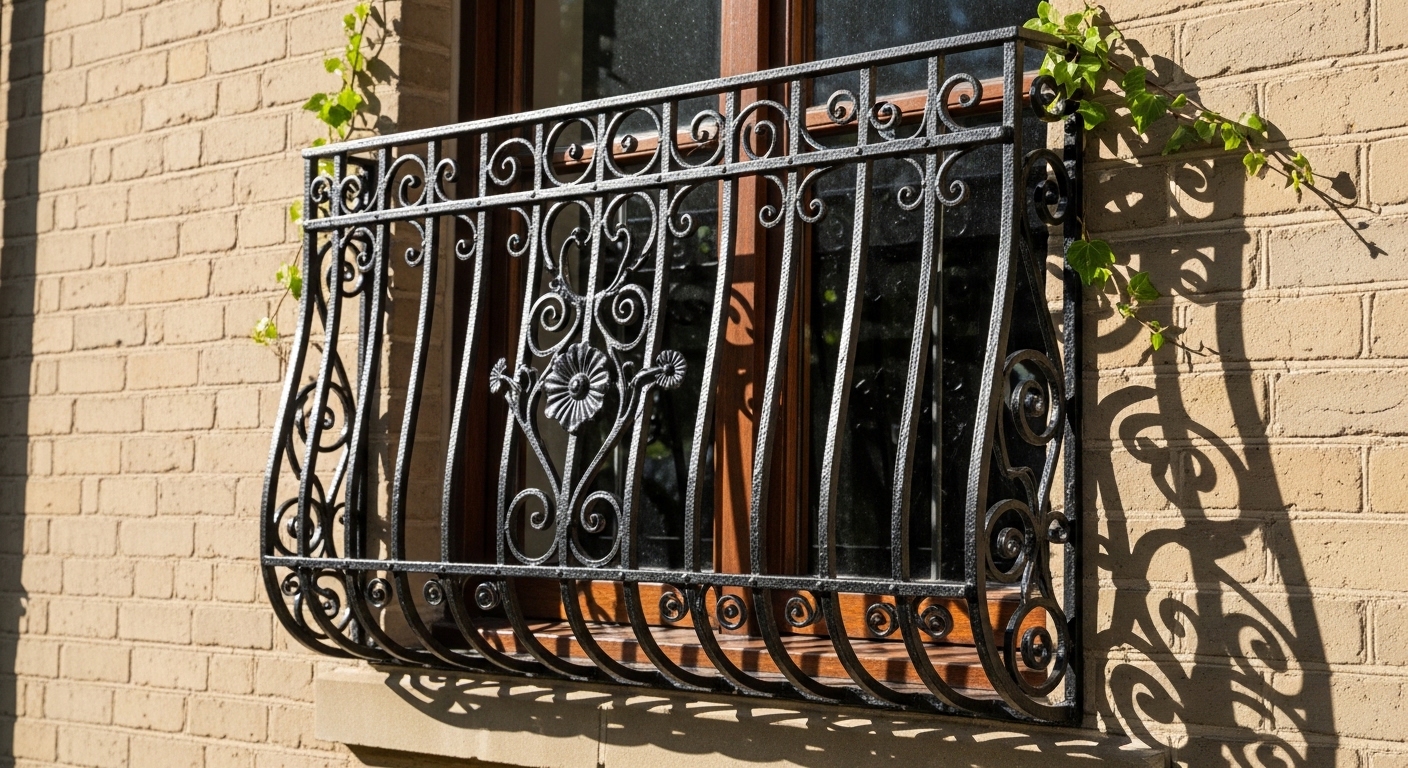
One of the most persistent objections to window security bars — particularly among homeowners in suburban markets and urban neighborhoods undergoing gentrification — is the aesthetic concern. The image of heavy black iron bars conjures associations with high-crime urban environments or commercial pawnshops, and many homeowners resist this visual signal even at the cost of genuine security. This aesthetic objection is legitimate and worth addressing seriously. The good news is that modern security bar design — including SWB's entire product line — has evolved substantially from the crude welded iron grilles of the 1980s. The matte black powder-coat finish on all three SWB models is not a compromise coating applied to industrial steel. It is a deliberate design choice that aligns with contemporary American interior and exterior aesthetics, matching the black window frame profiles found on modern casement windows, minimalist home designs, and industrial-chic apartment renovations that are currently among the most popular home styles in the US.
Matte Black Finish: Why It Works With Modern American Home Design
Matte black has been one of the dominant finish trends in American residential design for the past five years, appearing in kitchen fixtures, door hardware, window frames, railings, and lighting. According to Houzz's 2025 Kitchen Trends Report, black finishes consistently rank in the top three preferred hardware finishes for US homeowners. SWB's decision to finish all models in matte black is not incidental — it allows the bars to read as an intentional design element rather than an afterthought security addition. In a ground-floor apartment in Brooklyn or a Craftsman bungalow in Los Angeles, a matte black security bar over a double-hung window frames the view rather than obstructing it, creating a visual effect closer to an architectural grid than a detention barrier.
Security Bars as a Property Value Addition, Not a Detractor
Contrary to the perception that window bars reduce property values, multiple real estate market analyses have found that in neighborhoods where residential crime is a genuine concern — which includes most urban markets in the United States — security features are neutral to positive factors in rental valuations and sale price negotiations. Tenants in high-crime areas actively seek out units with pre-installed security features, and landlords in Chicago, Detroit, and Philadelphia who provide window bars as standard unit features frequently report lower vacancy rates and longer average tenancy. For homeowners, the ROI argument is equally compelling: a $92 Model A/EXIT bar that prevents a $3,000–$10,000 burglary loss — accounting for stolen goods, property damage, and the psychological cost of violation — delivers an extraordinary return in the first use case it prevents.
Design Comparisons: SWB Matte Black vs. Traditional Iron Grilles
Traditional contractor-installed window bars are typically fabricated from raw mild steel or wrought iron, cut to size on-site, welded, and then either left as raw metal or painted with a spray can. The result is often uneven, visually heavy, and dated in appearance. SWB bars are factory-manufactured to consistent specifications, with a uniform matte black powder coat applied in a controlled environment for durability, color consistency, and corrosion resistance. The powder coat finish exceeds the durability of field-applied paint by a factor of four to six in standard ASTM salt spray resistance testing, meaning SWB bars maintain their appearance significantly longer in outdoor or high-humidity environments — an important consideration for basement windows in humid climates like Houston, New Orleans, and Miami.
Comparing SWB Security Bars to the Top Competitors in the US Market
The US window security bar market includes several established competitors, each with a different value proposition and target customer. Understanding where SWB's products sit relative to these alternatives helps property owners make a genuinely informed purchasing decision rather than defaulting to the most familiar brand or the cheapest available option. The primary competitors SWB encounters across Amazon and major home improvement retail channels include Mr. Goodbar (manufactured by Pinpont Manufacturing), Grisham (a Master Halco brand), Unique Home Designs, Guardian Angel Security Products, and Prime-Line Products. Each occupies a slightly different niche, and each has meaningful limitations that SWB's telescopic system addresses directly.
SWB vs. Mr. Goodbar: The Drilling Requirement That Disqualifies Renters
Mr. Goodbar is one of the longest-established window bar brands in the United States and is widely available at Home Depot locations nationally. Its products are generally well-constructed and offered at a comparable price point to SWB. The critical limitation is installation: Mr. Goodbar products require drilling into the window frame for secure attachment. This single requirement eliminates the entire renter market — 44.1 million households in the United States — as potential customers, since drilling violates standard lease agreements. For homeowners who are comfortable with a semi-permanent installation, Mr. Goodbar is a credible alternative. But for anyone renting, in a historic property where drilling is prohibited, or in a situation requiring frequent removal, the SWB Model A's no-drill telescopic system is categorically superior.
SWB vs. Grisham and Unique Home Designs: The Price and Delivery Gap
Grisham window bars, sold through Master Halco's distribution network, are positioned primarily toward the professional installation market and are rarely available for direct consumer purchase at retail prices. Unique Home Designs offers consumer-facing window security products at price points that typically run 40%–80% higher than SWB's $90–$92 range for comparable steel construction. Neither brand offers an Amazon FBA fulfillment option with Prime delivery speed. For a property owner in Atlanta who identifies a security need on a Tuesday and wants it resolved before the weekend, the combination of SWB's competitive pricing and Amazon Prime delivery availability creates a decisive practical advantage that neither Grisham nor Unique Home Designs can match through their current distribution channels.
SWB vs. Guardian Angel: Egress Compliance Head to Head
Guardian Angel Security Products markets an egress-compliant window bar under its product line, positioned directly in the same category as the SWB Model A/EXIT. Guardian Angel's quick-release mechanism requires a two-step operation to disengage — pull handle then rotate bracket — versus the SWB Model A/EXIT's single-action release. In emergency conditions — a house fire with smoke reducing visibility, a panicked occupant, or a child attempting to self-rescue — the difference between a one-step and two-step release mechanism is not trivial. Additionally, the SWB Model A/EXIT's telescopic base design means it simultaneously eliminates the drilling requirement that limits Guardian Angel's product in rental markets. The combination of single-action release, no-drill installation, and $92 price point makes the SWB Model A/EXIT the strongest product in the egress-compliant security bar category currently available on the US market.
🏆 Conclusion
Security bars are not a relic of an earlier, more dangerous era in American life. They are a rational, evidence-based response to a persistent and well-documented threat: residential burglary affects millions of American families every year, and ground-floor windows remain the second most common entry point for unauthorized entry. The good news is that the market has evolved. You no longer have to choose between effective security and renter-friendly installation, between fire safety compliance and burglar deterrence, or between professional-grade steel construction and an affordable price point. SWB's three-model lineup — the Model A Telescopic bar, the Model B Wall-Mount bar, and the patented Model A/EXIT egress-compliant bar — addresses every combination of property type, occupant status, and code requirement in the American residential and commercial market. At $90–$92 per unit, with nationwide delivery via Amazon FBA and installation times measured in minutes rather than contractor scheduling delays, Security Window Bars delivers a level of protection that was previously accessible only to homeowners willing to spend $1,500 per window. For every renter in Chicago who thought bars were not an option, every parent in New York who did not know egress compliance was mandatory, and every landlord in Atlanta looking for a scalable security solution — SWB has a product that works, ships fast, and installs today. Start with the window that worries you most. Add security bars to it tonight.
Security Window Bars · USA
Secure Your Home Today
Ready to protect your windows with professional-grade security bars? Security Window Bars ships fast across all 50 states via Amazon Prime. Shop all SWB models on Amazon → | Model A Telescopic — $90 | Model B Wall-Mount — $91 | Model A/EXIT Egress Compliant — $92 | Questions? Visit securitywb.com/contact/
Shop on Amazon →Frequently Asked Questions
Security bars are legal in all 50 states, but their installation is subject to building code requirements that vary by jurisdiction. The primary federal-level codes — the International Building Code (IBC), the International Residential Code (IRC), and NFPA 101 — require that any security bar installed on a sleeping area window must incorporate a quick-release mechanism that allows occupants to exit without tools in an emergency. Fixed, non-opening bars in bedrooms violate these codes in virtually every US jurisdiction. Local ordinances, such as New York City's Local Law 57, may add additional requirements. Always verify your local building department's specific requirements before installation, and choose the SWB Model A/EXIT for any bedroom or sleeping area window to ensure compliance.
Yes — if you use a no-drill, pressure-fit telescopic security bar like the SWB Model A. Standard US residential leases prohibit tenants from making holes in walls, window frames, or structural elements without landlord consent. Traditional security bars require drilling, which means they violate most lease agreements. The SWB Model A Telescopic bar uses a spring-loaded pressure mechanism to brace against the window frame without any hardware penetration, leaving zero marks and zero damage. It installs in 15–20 minutes and removes just as quickly when a tenant moves out, making it fully compatible with standard no-alteration lease clauses. For sleeping area windows, renters should use the Model A/EXIT to maintain emergency egress compliance.
An egress window bar is a security bar equipped with a quick-release mechanism that allows occupants to open the bar from inside without tools, enabling escape through the window in an emergency such as a fire. Under the International Residential Code (IRC) Section R310 and NFPA 101, every sleeping room in a US residence must have at least one window that meets minimum egress dimensions and can be opened from the inside. Installing a standard fixed security bar over a bedroom window without a quick-release mechanism violates these requirements and can be a fatal mistake during a fire. If any window in question is in a bedroom, nursery, basement sleeping area, or studio apartment, you must use an egress-compliant bar. The SWB Model A/EXIT is specifically designed and patented to meet these requirements.
According to HomeAdvisor's national cost data, professional window bar installation in the United States averages $600–$1,800 per window, with quotes in high-cost cities like San Francisco or New York sometimes exceeding $2,200 per window. SWB security bars retail for $90–$92 per unit and are designed for DIY installation in 15–45 minutes depending on the model. For a typical home with five ground-floor windows, professional installation could cost $3,000–$9,000. The same five windows secured with SWB products costs under $500. The steel construction quality and deterrent value are equivalent — the price difference is almost entirely attributable to contractor labor and overhead markup.
Many US homeowner's and renter's insurance providers offer premium discounts for homes equipped with verified physical security measures, including window bars, reinforced door frames, and deadbolt locks. The discount varies by insurer and state but typically ranges from 5% to 15% on the property crime coverage portion of the policy. To qualify, most insurers require that the security bars be permanently installed (which applies to Model B wall-mount installations) or that they be listed as part of the property's security profile during the policy underwriting interview. We recommend contacting your specific insurer to confirm the documentation requirements for security bar discounts in your state. States with higher residential crime rates — including Louisiana, Arkansas, New Mexico, and Tennessee — tend to offer the most significant discounts.
Yes — window security bars are highly effective at preventing accidental falls, which represent a significant cause of childhood injury in the United States. According to the American Academy of Pediatrics, falls from windows result in approximately 8 children being treated in emergency rooms every day in the US. Window security bars prevent a child from being able to push through or fall out of an open window while still allowing ventilation. For this specific application, a bar with fixed horizontal steel elements across the window opening provides the most effective barrier. In New York City, Local Law 57 specifically mandates window guards for this purpose in buildings where children under 10 reside. The SWB Model A/EXIT is the recommended choice for child safety in sleeping areas, as it provides fall prevention while maintaining emergency egress capability required by building codes.
The SWB Model A Telescopic Window Bar and Model A/EXIT adjust from 22 inches to 36 inches in width, which covers the vast majority of standard US residential window sizes. According to window sizing standards from the National Fenestration Rating Council, single and double-hung windows in American residential construction most commonly range from 24 to 36 inches in width — placing virtually all standard installations within the SWB Model A's adjustment range. The Model B Wall-Mount bar is available in specific width configurations to match your window opening; consult securitywb.com/model-b/ for current sizing options. For non-standard or oversized windows, contact SWB directly at securitywb.com/contact/ to discuss custom sizing availability.
A correctly installed security bar should pass a functional stability test before you consider the installation complete. For Model A Telescopic bars: apply approximately 150 pounds of outward pressure at the center of the bar with both hands — the bar should not deflect more than 1/4 inch and should not shift position laterally or vertically. The rubber end caps should remain in firm contact with both sides of the window frame. For Model B Wall-Mount bars: apply firm outward and lateral force at both ends and the center — the mounting brackets should show zero movement and the lag bolt anchoring should remain fully rigid. For Model A/EXIT: test the quick-release mechanism under simulated emergency conditions and confirm that all household members, including children, can operate it successfully. Detailed testing protocols are published at securitywb.com/installation/.