

Security Bars as a Marketing Director’s Strategic Investment: ROI, Brand Authority, and Property Value in 2026
Marketing directors: discover how security bars drive measurable ROI, boost property value, and build brand authority. Expert strategies for 2026. Shop SWB now.
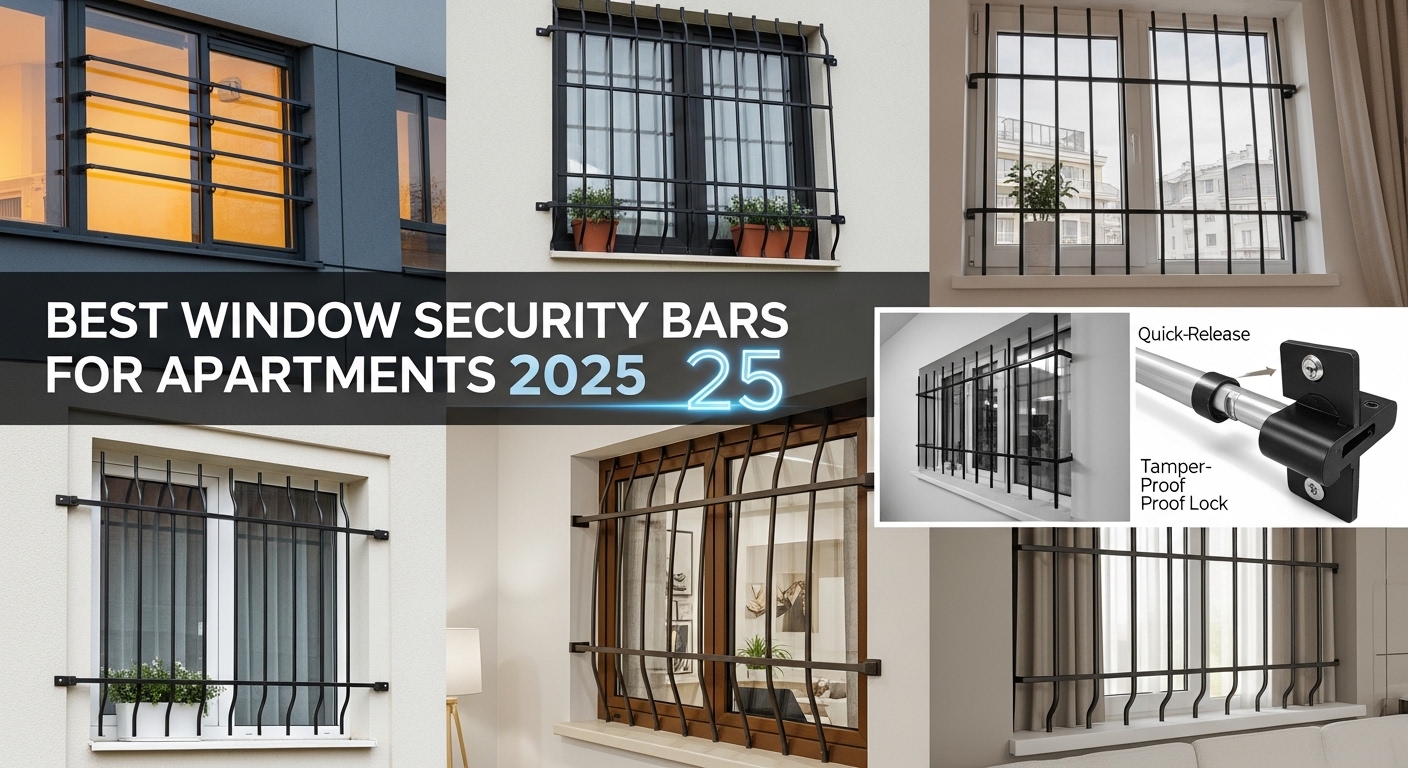
From our experience protecting thousands of homes across the USA, SWB analyzes the best strategies so you can sleep soundly — and so marketing directors can make smart, data-backed decisions that move the needle. Security bars are no longer just a physical deterrent bolted to a window frame. In 2026, they represent one of the most measurable, low-cost capital improvements a property brand, real estate portfolio, or apartment management company can deploy. According to the FBI Uniform Crime Report, over 6.7 million home burglaries occur annually in the United States, with 60% of forced entries occurring through ground-floor windows and doors. That single statistic carries enormous marketing weight. When a property company installs quality security bars — and communicates that installation strategically — the result is lower vacancy rates, reduced insurance liability exposure, stronger tenant acquisition metrics, and a brand identity anchored in genuine resident safety. This guide is written specifically for marketing directors and property decision-makers who want to understand exactly how security bars create compounding value across multiple business dimensions.
Let’s run the numbers that matter to a marketing director presenting to a CFO. A single SWB Model A telescopic window bar costs $90. Professional locksmith or s…
Why Security Bars Are a High-ROI Capital Investment in 2026
For a marketing director evaluating capital expenditure priorities, security bars sit in a rare category: low upfront cost, quantifiable deterrence value, and lasting reputational payoff. The national average cost of a professional window bar installation runs between $600 and $1,800 per window, according to HomeAdvisor data. Security Window Bars’ telescopic models — specifically the Model A at $90 and the egress-compliant Model A/EXIT at $92 — deliver structural-grade steel protection at a fraction of that cost. Across a 50-unit apartment complex in Chicago’s Pilsen neighborhood or a ground-floor retail strip in Houston’s Midtown, the math becomes compelling very quickly. The security bar investment scales proportionally, and the marketing narrative it creates — ‘we invested in your safety’ — is one that resonates deeply with renters, buyers, and commercial tenants alike. According to a 2023 study by the National Apartment Association (NAA), 74% of renters ranked ‘property security features’ among their top three lease-renewal drivers. That means security bars, when marketed correctly, directly affect tenant retention and vacancy rate — both KPIs that marketing directors are held accountable for.
Calculating the Per-Unit ROI of Steel Security Bar Installation
Let’s run the numbers that matter to a marketing director presenting to a CFO. A single SWB Model A telescopic window bar costs $90. Professional locksmith or security contractor installation for a comparable fixed bar system averages $800 per window across markets like Los Angeles, New York City, and Atlanta. If a single break-in to a vacant unit costs a property operator an average of $3,400 in damages, lost rent, and claims processing (according to the Insurance Information Institute), preventing even one incident per year across a property generates a return on the security bar investment that exceeds 3,000% in Year 1.
Three-Year ROI Model for a 20-Unit Property
Year 1: 20 units × $90/bar = $1,800 total investment. Assuming one prevented break-in saves $3,400 in direct costs, net return = $1,600 profit on security investment, not counting reduced insurance premiums, faster lease-ups, or lower tenant turnover costs. Years 2–3: Zero additional capital expenditure on bars (SWB telescopic bars are reusable). The ROI compounds with every month of stable occupancy. For marketing directors, this data becomes the foundation of a compelling internal pitch and an even more compelling tenant-facing campaign.Insurance Liability Reduction as a Hidden Marketing Asset
Property managers and real estate investors rarely think of insurance liability reduction as a marketing asset — but it is. When a property installs certified security bars on ground-floor windows, it documents a proactive safety posture. This documentation matters in two ways. First, many commercial property insurers offer premium reductions for verified physical security upgrades, including window bars, deadbolts, and reinforced frames. Second, in a legal liability scenario — a tenant files a claim after a break-in — documented security improvements are a powerful defense instrument. For marketing directors overseeing brand reputation, preventing a single negative press incident (a violent break-in, a lawsuit, a viral social media post from a victimized tenant) is worth far more than the cost of the bars themselves.
Documenting Security Upgrades for Brand Protection
Marketing teams should photograph and archive every security bar installation with date stamps, model numbers, and window location data. This documentation serves triple duty: insurance compliance records, potential legal defense, and genuine content for tenant-facing marketing materials and listing descriptions on platforms like Zillow, Apartments.com, and Costar.Market Benchmarking: What Competitors Are Spending on Physical Security vs. SWB Pricing
Understanding how SWB security bars compare to the broader competitive landscape helps marketing directors position their property brand accurately. Major competitors in the security bar space — including Mr. Goodbar by Pinpoint Manufacturing and Grisham products by Master Halco — require permanent installation, professional contractors, and price points that make large-scale property deployment expensive. SWB’s telescopic system requires no permanent drilling, installs in 15–20 minutes without a contractor, and costs under $100 per unit. For a marketing director managing a portfolio across multiple cities — say, 15 properties spanning Memphis, Philadelphia, and Detroit — the SWB model enables security deployment at scale without blowing a CapEx budget. And when a tenant moves out, the bar can be removed cleanly, protecting the property owner from deposit disputes while keeping the asset ready to redeploy in the next unit. That flexibility is a marketing story in itself.
How to Build a Tenant Acquisition Campaign Around Security Bars
Security bars are a physical product, but for a skilled marketing director, they are also a campaign platform. In cities where renter anxiety about break-ins is measurably high — Chicago (1st in burglary density among major metros), Memphis (consistently ranked among the top 5 most dangerous US cities by FBI UCR data), and parts of Los Angeles and Houston — leading with security in your property marketing is not just differentiation. It is what renters are actively searching for. The question for marketing directors is: how do you turn a steel bar on a window into a trust signal, a brand differentiator, and a conversion driver across digital and physical touchpoints? The answer lies in integrating security bar messaging across your full funnel — from listing descriptions and social media to in-person tours and lease renewal communication.
SEO-Driven Listing Descriptions That Convert Security Into Leads
When renters in high-crime ZIP codes search platforms like Zillow or Apartments.com, they often filter by ‘security features’ or specifically search for terms like ‘security bars,’ ‘window guards,’ or ‘burglar bars.’ A marketing director who ensures that every listing description includes phrases like ‘steel security bars on all ground-floor windows’ or ‘egress-compliant window security bars installed’ captures organic search intent that competitors overlook. According to CoStar Group’s 2024 Renter Survey, listings that explicitly mention security features see an average 18% higher click-through rate than comparable listings without security language. For apartments in neighborhoods with above-average crime rates, that CTR advantage can translate directly to faster lease-ups and lower time-on-market metrics — both of which appear directly on a marketing director’s performance scorecard.
Social Proof and Content Marketing Strategies for Security-Forward Brands
A security bar installation is a photogenic, shareable event. Marketing directors should build a content calendar around security improvements at their properties. Before-and-after photos of window bar installations, short-form video walkthroughs of how the telescopic mechanism works, and resident testimonials about feeling safer since the bars were installed are all high-performing content formats for Instagram, Facebook, and YouTube — precisely the channels where renter demographics (25–44 year-olds) actively consume housing content. A 30-second reel showing a renter adjusting a SWB Model A telescopic bar to fit their apartment window — with text overlay reading ‘This is what we installed in every ground-floor unit’ — delivers authentic security messaging at essentially zero production cost. User-generated content from satisfied tenants amplifies this further. For marketing directors managing brand accounts, a ‘resident security spotlight’ series can drive engagement while simultaneously building a documented library of safety improvements for reputation management purposes.
Email and Lease Renewal Campaigns That Leverage Security Investment
Tenant retention is cheaper than acquisition — a truth every marketing director knows but rarely executes on with physical security assets. When a lease renewal window opens, a targeted email campaign that highlights the security upgrades completed during the tenant’s residency creates a powerful retention argument. ‘Since you moved in, we’ve installed steel window security bars on all ground-floor and basement windows, upgraded exterior lighting, and added keypad entry at all common area doors.’ That communication reminds the resident of tangible value delivered, making the decision to renew easier even if a competitor property is offering a lower rent. For properties using the SWB Model A/EXIT egress-compliant bars in sleeping areas, the renewal email can also reinforce fire safety compliance — a message that resonates especially strongly with parents and families who are aware of NYC Local Law 57 requirements and similar codes in other states.
Security Bars and Property Value: What the Data Actually Shows
For marketing directors who also interface with asset management or investor relations teams, understanding the relationship between security bars and property value is essential. The National Association of Realtors (NAR) has consistently reported that security upgrades — including window bars, reinforced doors, and alarm systems — are among the top 10 home improvements that retain value at resale. Unlike kitchen renovations or landscaping, security upgrades speak directly to risk mitigation, which is the language of investors, insurers, and institutional buyers. In markets like Detroit, Baltimore, and parts of Atlanta — where crime rates have historically depressed property values — documented security improvements create a verifiable paper trail that supports higher appraisal arguments and stronger cap rate presentations to investors.
Cap Rate Impact: How Security Features Affect NOI Calculations
Net Operating Income (NOI) is the central metric in commercial real estate valuation, and security bars affect it on both sides of the ledger. On the revenue side, properties with documented security upgrades command higher rents — typically 3–7% above comparable unsecured units in the same market, according to CBRE’s 2024 multifamily security amenities report. On the expense side, lower vacancy rates (driven by stronger tenant retention from security-forward marketing) reduce the income loss associated with unit turnover. A property that reduces its annual vacancy rate from 8% to 5% by marketing security bar installations as a premium amenity effectively increases NOI by several thousand dollars per year — a direct increase in asset value when capitalized at prevailing multifamily cap rates. For marketing directors who present to ownership groups or REITs, this framing translates security bar investment from a ‘cost center’ narrative into a ‘value creation’ narrative.
Appraisal Documentation: Making Security Bars Count at Refinance or Sale
Most property appraisers use a ‘cost approach’ and ‘income approach’ to value multifamily assets. Security bar installations that are documented with purchase receipts, installation records, and photographs can be presented to appraisers as verifiable capital improvements. While no appraiser will assign a specific dollar-per-bar value in isolation, security upgrades that demonstrably reduce vacancy or support higher rents do influence the income approach calculation. Marketing directors who maintain a ‘capital improvements portfolio’ — a documented archive of every security, cosmetic, and structural upgrade to a property — give their asset management counterparts a powerful tool at refinance or sale. SWB security bars, with their precise model specifications and verified compliance documentation (especially the Model A/EXIT, which meets IBC and NFPA 101 standards), are ideal candidates for inclusion in this kind of capital improvements record.
Retail and Mixed-Use Properties: The Commercial Case for Security Bars
Security bars are not exclusively a residential product. Ground-floor retail spaces in urban mixed-use developments — a booming asset class in cities like Nashville, Austin, and Denver — face significant window vulnerability after hours. According to the National Retail Federation (NRF), retail smash-and-grab incidents increased 26% between 2021 and 2024, with ground-floor glass representing the primary entry point in 71% of cases. For marketing directors managing a mixed-use brand identity, visible window security bars on retail storefronts communicate that the developer takes tenant security seriously — a message that helps attract and retain quality commercial tenants who factor security into their lease decisions. SWB’s Model B wall-mount security bars, with their heavy-gauge steel construction and permanent powder-coated finish, are specifically designed for this commercial application and carry the visual authority that retail tenants and their customers expect.
Compliance Marketing: Turning Building Code Requirements Into Brand Trust
One of the most underutilized marketing strategies in property management is compliance marketing — the practice of proactively communicating regulatory compliance to tenants and prospects as a trust signal. In the context of security bars, this means highlighting adherence to the International Building Code (IBC), NFPA 101 Life Safety Code, OSHA standards, and state-specific requirements like New York City’s Local Law 57, which mandates window guards in buildings with children under 10. For marketing directors, compliance is not a dry legal obligation — it is a story about priorities. When a property company installs SWB Model A/EXIT egress-compliant window bars in every sleeping area and communicates that installation to residents, it is saying: ‘We not only protected you from intruders, we also made sure you can escape safely in a fire.’ That dual message — security AND life safety — is extraordinarily powerful in tenant-facing communications and has measurable impact on brand perception scores.
Marketing IBC and NFPA Compliance to Safety-Conscious Renters
Renters with children, renters in high-rise buildings, and renters who have previously experienced a fire or emergency evacuation are acutely aware of egress requirements. When marketing materials explicitly state that window bars are ‘IBC-compliant with NFPA 101 quick-release mechanisms,’ this language signals competence and care to exactly the demographic that makes long-term, low-turnover tenants. The SWB Model A/EXIT, which features a patented quick-release egress mechanism and meets IRC emergency egress requirements (minimum 20″ × 24″ opening), is the ideal product to anchor this compliance marketing narrative. For properties in NYC, Chicago, LA, or any city with active building code enforcement, publicly demonstrating compliance also reduces the risk of costly violations and the reputational damage that accompanies them.
How to Feature Compliance in Digital Listings
Include language such as ‘All bedroom windows equipped with NFPA 101-compliant egress security bars’ in Zillow, Apartments.com, and Google My Business property descriptions. This language improves search relevance for safety-focused renter queries and serves as documented evidence of compliance in any future regulatory inspection.Using Certification and Compliance to Win Institutional Lease Deals
Institutional tenants — government agencies, healthcare companies, educational institutions — require documented safety compliance as a precondition for signing commercial leases. For marketing directors targeting this high-value tenant segment, presenting a comprehensive security compliance package that includes window bar specifications, egress documentation, and installation records is often the difference between winning and losing a lease. SWB’s Model A/EXIT comes with compliance documentation covering IBC, NFPA 101, and OSHA standards, giving property marketing teams a tangible compliance asset to present during the RFP process. In cities like Washington D.C., where federal agency tenants are major commercial lease drivers, or in healthcare-heavy markets like Houston’s Texas Medical Center district, this compliance advantage can unlock tenant relationships worth millions in annual rent.
Building a Security Compliance Marketing Package
A formal security compliance packet should include: model specifications and technical data sheets for installed bars, compliance certifications (IBC, NFPA 101, OSHA), installation date records with photographic evidence, and a statement of ongoing maintenance and inspection schedule. Marketing directors should treat this packet the same way they treat ESG or sustainability documentation — as a differentiating brand asset.Deploying Security Bars Across a Multi-Property Portfolio: Operational Marketing Strategy
Marketing directors who oversee regional or national property portfolios face a different challenge than single-property operators: how do you standardize security bar deployment across dozens of properties in multiple cities while maintaining brand consistency and operational efficiency? The answer lies in selecting a scalable product system — one that is adjustable across standard US window sizes, requires no specialized installation labor, and can be sourced reliably in volume. SWB’s telescopic window bar system was designed precisely for this use case. The Model A fits windows 22″ to 36″ wide, covering the vast majority of standard residential window dimensions across the US market. With Amazon FBA fulfillment, properties in Chicago, Los Angeles, New York City, Houston, and every other major US market receive product within days — no regional distribution complexity, no minimum order freight issues.
Standardizing Security Bar Specifications Across a Property Portfolio
Brand consistency in physical security means using the same products, same installation standards, and same compliance documentation across every property in a portfolio. For a marketing director, this standardization has a direct payoff: it simplifies the creation of security-focused marketing materials (one product spec sheet works for every property), enables bulk procurement that reduces per-unit costs, and creates a unified brand narrative that can be amplified across all properties simultaneously. When every ground-floor apartment in your portfolio has the same matte black SWB telescopic security bar installed in the same position relative to the window frame, your property tour photos and virtual tours maintain visual consistency — a subtle but real signal of operational professionalism that sophisticated renters and commercial tenants notice. Explore the full SWB product line at securitywb.com to identify the right standard specification for your portfolio.
Communicating Security Upgrades During Property Rebrands and Repositioning
Property repositioning — taking a Class B or Class C asset and upgrading it to compete in the Class A market — is one of the highest-stakes marketing challenges in real estate. Physical security upgrades, including steel window bars, are among the most cost-effective repositioning improvements available, especially in urban markets where crime is a primary renter concern. A property in Memphis’s Midtown or Atlanta’s Old Fourth Ward that installs SWB security bars on all ground-floor units, repaints exterior surfaces, and upgrades common area lighting has made three tangible improvements — but the security bars carry the most powerful emotional resonance with the target renter demographic. The repositioning marketing campaign can lead with a ‘Safety First’ narrative, using before-and-after content, resident testimonials, and compliance documentation to signal a genuine commitment to resident wellbeing — not just cosmetic improvement.
Amazon Procurement Strategy for Multi-Property Security Deployments
For marketing directors coordinating with procurement teams, the logistics of security bar sourcing matters. SWB’s availability through Amazon FBA means that property teams in any US city can place orders and receive product within 1–2 business days without navigating complex B2B procurement channels. This speed-to-deployment advantage is significant during a repositioning, a new property lease-up, or a rapid response to a security incident at a property. For volume purchases, the SWB Amazon store also enables business account purchasing, which simplifies expense tracking and reporting for marketing and operations teams. Direct purchase options are also available through the SWB online store. Review all available security bar models and configurations at the Security Window Bars Amazon store for portfolio-scale planning.
Measuring the Marketing Performance of Security Bar Programs
Every marketing director needs to demonstrate program effectiveness with data. Security bar programs are no different — they should be tracked, measured, and reported with the same rigor as digital advertising campaigns, content marketing efforts, or brand awareness initiatives. The good news is that security bar programs generate measurable outcomes across multiple KPIs that marketing directors already track: vacancy rate, time-on-market, lease renewal rate, resident satisfaction scores (NPS), and incident report frequency. Establishing a baseline before installation and measuring changes at 90 days, 6 months, and 12 months post-installation gives marketing directors a clear data set to present to ownership and investor groups as evidence of the program’s value.
Key Performance Indicators for Property Security Marketing Programs
The most relevant KPIs for a security bar marketing program include: Vacancy Rate Change (compare 12 months pre- vs. post-installation), Time-on-Market for Available Units (do security-featured listings lease faster?), Lease Renewal Rate (do tenants in security-upgraded units renew at higher rates?), Maintenance and Repair Cost Change (fewer break-in repairs and damage claims), Insurance Premium Change (document any premium reductions post-installation), and Resident NPS Score Change (survey question: ‘How safe do you feel in your home?’). For properties in high-crime urban markets like Detroit, Chicago’s West Side, or South Philadelphia, NPS score improvements related to safety perceptions can be dramatic following a visible security bar deployment — often 15–25 point NPS gains within the first lease cycle, based on property management case studies from the National Apartment Association.
Building a Security ROI Report for Ownership and Investors
Marketing directors who can present a formal Security ROI Report to ownership groups and investors establish themselves as strategic business partners rather than pure brand communicators. This report should include: total investment in security bars across the portfolio (cost per unit × units deployed), measurable outcomes across the KPIs listed above, qualitative tenant feedback (quotes from resident surveys), compliance documentation status (IBC, NFPA 101, local codes), and projected Year 2 and Year 3 ROI based on Year 1 outcomes. The report should position security bar investment alongside other capital improvement programs — HVAC upgrades, roof replacement, exterior painting — and demonstrate that per-dollar, the security bar program delivers comparable or superior returns on a risk-adjusted basis. This framing elevates the marketing director’s role from campaign executor to strategic capital allocator. For detailed product and specification information to include in your report, visit the Model A/EXIT egress-compliant security bars page and the Model B wall-mount page.
Integrating Security Bar Metrics Into Brand Health Dashboards
Modern marketing directors manage brand health dashboards that aggregate data from multiple sources: social sentiment, review platform scores, leasing velocity data, and digital advertising performance. Security-related metrics belong on this dashboard too. Track Google Reviews and Apartments.com reviews for mentions of ‘security,’ ‘safe,’ ‘bars,’ or ‘protected.’ Sentiment analysis of these terms, pre- and post-installation, provides qualitative confirmation of the quantitative KPI data. A property that goes from 3.4 stars to 4.2 stars on Google in 12 months — with reviewer comments specifically citing the window security bar installations as a factor — has documented marketing ROI in the most publicly visible format available. This kind of organic, review-driven validation is impossible to manufacture with advertising spend and extremely valuable as a long-term brand asset.
Choosing the Right Security Bar Model for Your Property’s Marketing Goals
Not all security bars serve the same marketing purpose, and a sophisticated marketing director should understand the strategic role each SWB model plays in a property’s security narrative. The three SWB models — Model A Telescopic, Model B Wall-Mount, and Model A/EXIT Egress Compliant — each address a distinct combination of security need, compliance requirement, and tenant communication objective. Selecting the right model for each application maximizes both physical security outcomes and the marketing value of the installation.
Model A Telescopic: The Renter-Friendly Security Story
The SWB Model A at $90 is the flagship product for marketing directors managing residential rental properties. Its core marketing story is freedom: it installs without drilling (protecting tenant deposits and landlord finishes), adjusts to fit windows 22″–36″ wide (covering virtually every standard US apartment window), and can be removed and redeployed when a tenant moves. For property brands targeting the 44.1 million apartment renters in the US (US Census 2023), particularly younger renters who value both security and flexibility, the Model A’s telescopic design is a genuine differentiator that no fixed bar competitor can match. The Model A telescopic window bar is also the most straightforward product to feature in visual marketing content — its clean matte black finish photographs well against modern apartment interiors, and its adjustable mechanism makes for compelling short-form video content. Installation takes 15–20 minutes, which means a property maintenance team can install bars across an entire building in a single day — a logistical efficiency that makes portfolio-wide deployment operationally feasible.
Model B Wall-Mount: The Permanent Security Statement
For ground-floor retail spaces, commercial properties, garages, and owner-occupied homes where permanent installation is appropriate and desirable, the SWB Model B at $91 delivers the visual authority and structural integrity that communicates maximum security commitment. In commercial real estate marketing — particularly for retail-to-retail or property-to-institution lease presentations — the visibility of heavy-gauge, powder-coated steel wall-mount bars on every street-facing window sends a clear signal: this property takes physical security seriously. For marketing directors managing mixed-use assets in cities like Chicago, Houston, or Atlanta, where retail smash-and-grab incidents have increased significantly since 2021, the Model B’s permanent installation profile addresses commercial tenant concerns directly. It also photographs extremely well on property marketing materials — the contrast of professional matte black steel against modern commercial glass and brick creates a visually compelling security aesthetic that resonates with quality retail tenants. Learn more at the Model B wall-mount security bars page.
Model A/EXIT: The Life Safety Marketing Differentiator
The SWB Model A/EXIT at $92 is the most sophisticated marketing tool in the SWB lineup, because it addresses the single most emotionally resonant security concern for residential tenants: the ability to escape safely in a fire. With its patented quick-release mechanism and full compliance with IBC, NFPA 101, and OSHA standards, the Model A/EXIT allows marketing directors to communicate a genuinely rare combination — maximum intrusion security AND fire egress compliance in a single product. For properties with bedroom windows, sleeping area requirements, or high-rise compliance obligations, the Model A/EXIT is both a legal necessity and a marketing asset of the first order. In cities where building code compliance is actively enforced — NYC’s Department of Buildings, Chicago’s Department of Buildings, LA’s Department of Building and Safety — being able to demonstrate NFPA 101 compliance proactively, before an inspection, positions a property brand as a responsible, safety-first operator. The Model A/EXIT egress-compliant window bars page includes full compliance documentation that marketing teams can incorporate directly into their compliance marketing packages.
🏆 Conclusion
For marketing directors who think strategically about every capital decision, security bars represent one of the most efficient brand-building and value-creation tools available in 2026. At under $100 per unit, the SWB product line delivers steel-grade protection, code compliance, and renter-facing marketing narratives that translate directly into measurable outcomes: lower vacancy, higher renewal rates, stronger NPS scores, reduced liability exposure, and documented NOI improvement. In a market where 74% of renters rank security features among their top lease-renewal drivers, and where FBI data confirms over 6.7 million annual US burglaries, the decision to deploy security bars is not a facilities management detail — it is a brand strategy decision. Security Window Bars’ telescopic system gives marketing directors the additional advantage of flexibility: bars can be redeployed across units, removed without property damage, and installed without contractor fees — keeping deployment costs low and operational efficiency high. Whether you are managing a 10-unit Chicago walk-up, a 500-unit LA apartment complex, or a mixed-use retail development in Nashville, the SWB product line offers a scalable, Amazon-delivered security solution that builds brand authority at every window it protects. For a full installation guide and compliance documentation, visit the SWB Installation Guide or contact Security Window Bars directly for portfolio-scale consultation.
Security Window Bars · USA
Secure Your Home Today
Ready to build your property brand around genuine security? Security Window Bars ships fast across all 50 US states via Amazon FBA. Shop all SWB security bar models on Amazon → or visit securitywb.com to explore the full product line and compliance documentation for your portfolio.
Shop on Amazon →Frequently Asked Questions
Security bars generate ROI through several measurable channels: reduced vacancy rates (tenants prioritizing safety renew leases more frequently), faster lease-up times for available units marketed with security features, lower insurance premiums from documented physical security improvements, and reduced costs from prevented break-ins and damage claims. A single prevented break-in — which averages $3,400 in direct costs according to the Insurance Information Institute — can exceed the total investment in security bars across multiple units. Marketing directors can track ROI by comparing vacancy rate, time-on-market, and tenant NPS scores before and after installation, creating a documented performance record for ownership and investor reporting.
Yes, SWB security bars are specifically designed for scalable deployment across large portfolios. The Model A telescopic system fits windows 22″–36″ wide — covering the vast majority of standard US residential window dimensions — so a single SKU can be standardized across dozens of properties in multiple cities. With Amazon FBA fulfillment, properties in Chicago, Los Angeles, New York City, Houston, and every other major US market receive product within 1–2 business days. The no-drilling installation means maintenance teams can deploy bars across an entire property without specialized labor, and the reusable telescopic design allows bars to be moved between units when tenants change — maximizing asset utilization and minimizing per-unit capital expenditure.
The primary building codes governing security bars in US residential properties include: the International Building Code (IBC), which requires emergency egress capabilities in sleeping area windows; NFPA 101 Life Safety Code, which mandates that window bars in occupied spaces include a quick-release mechanism operable from the inside without special tools; OSHA standards for commercial and residential safety; and IRC (International Residential Code) emergency egress requirements specifying a minimum 20″ × 24″ clear opening. NYC’s Local Law 57 additionally requires window guards in buildings with children under 10. SWB’s Model A/EXIT egress-compliant bar meets all of these requirements and includes compliance documentation for IBC, NFPA 101, and OSHA, making it the appropriate choice for bedroom and sleeping area installations in any US market.
Security bars affect property value through both the income approach and the cost approach used in professional appraisals. On the income side, properties with documented security upgrades typically command 3–7% higher rents and lower vacancy rates, both of which increase Net Operating Income (NOI) — the primary driver of multifamily asset valuation. On the cost side, documented capital improvements including security bar installations can be presented to appraisers as verifiable property enhancements. The National Association of Realtors consistently ranks security upgrades among the top 10 home improvements that retain value at resale. For marketing directors presenting at refinance or sale, a comprehensive security improvement record strengthens the asset value narrative significantly.
Absolutely, and they should be. CoStar Group’s 2024 Renter Survey found that listings explicitly mentioning security features see an average 18% higher click-through rate than comparable listings without security language. For digital listings on Zillow, Apartments.com, and similar platforms, marketing teams should include specific language such as ‘steel window security bars on all ground-floor units’ or ‘IBC and NFPA 101-compliant egress window bars in all sleeping areas.’ Photography of the installed bars — particularly the clean matte black aesthetic of SWB products — also performs well in virtual tours and social media content, with Instagram and YouTube being high-performing channels for security-focused property content targeting the 25–44 renter demographic.
Each model serves a distinct marketing narrative. The Model A Telescopic ($90) is the renter-friendly story: no drilling, adjustable fit, removable without damage — ideal for residential apartment marketing targeting the 44.1 million US renters. The Model B Wall-Mount ($91) is the permanent security statement: heavy-gauge steel with a professional powder-coated finish, ideal for commercial, retail, and owner-occupied properties where visual authority and permanence are the marketing message. The Model A/EXIT ($92) is the life safety differentiator: a patented quick-release mechanism that is fully IBC and NFPA 101 compliant, ideal for bedroom installations and any property marketing that leads with both security and fire safety compliance. Selecting the right model for each property context maximizes both physical protection and the brand story that installation supports.
Marketing directors should create a formal Security Improvement Archive for every property. This archive should include: dated purchase receipts for all security bars with model numbers and quantities; timestamped installation photographs showing bar position relative to the window frame; compliance certification copies (IBC, NFPA 101, OSHA) from the SWB Model A/EXIT product documentation; a written installation record noting the installer, date, and any inspection outcomes; and copies of any insurance correspondence acknowledging the security upgrade. This archive serves three simultaneous purposes: insurance compliance documentation, potential legal defense in tenant liability cases, and a verified content source for security-focused property marketing materials including listing descriptions, investor presentations, and brand marketing campaigns.
SWB security bars are available through two primary channels that are both appropriate for portfolio-scale deployment. Amazon FBA (through the Security Window Bars Amazon store) provides rapid delivery across all 50 US states, business account purchasing for simplified expense tracking, and the reliability of Amazon’s fulfillment network — typically 1–2 business day delivery to properties in any major US market from Chicago to Los Angeles to New York City. For direct purchase, consultation on volume pricing, or product specification support for large-scale deployments, marketing directors and procurement teams can also visit securitywb.com or contact Security Window Bars directly through the SWB contact page. Both channels offer the full product line including Model A, Model B, and the egress-compliant Model A/EXIT.