

Window Bars as a Brand Storytelling Tool: How Security Upgrades Build Trust, Authority, and Long-Term Customer Loyalty
Learn how window bars go beyond security to become powerful brand storytelling assets. Discover marketing strategies that drive trust and retention for US properties.
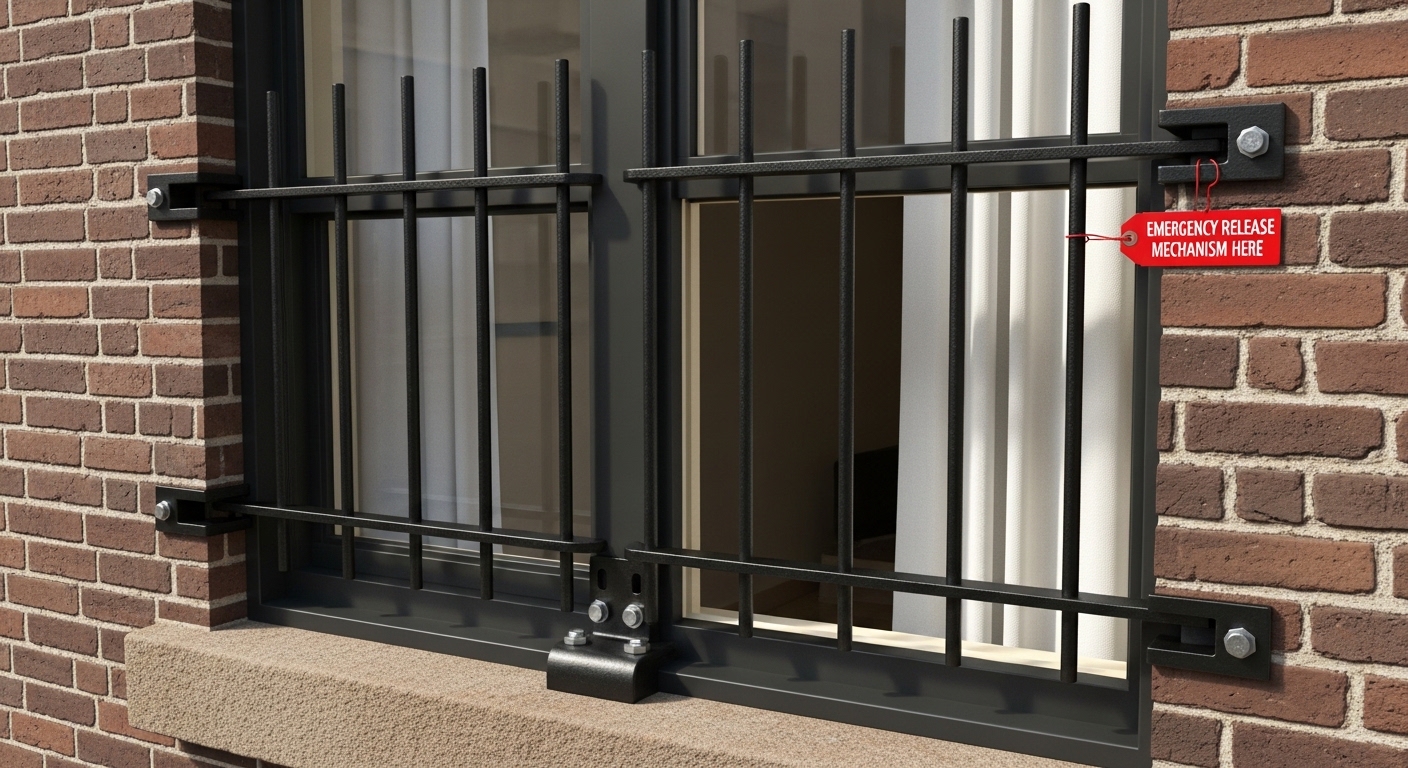
SWB: High-caliber Security Window Bars experts. We bring the most advanced protection within your reach, explained clearly. In today’s competitive US real estate and property management landscape, window bars are no longer just a physical security product — they are a powerful brand storytelling vehicle. According to the FBI Uniform Crime Report, more than 6.7 million residential burglaries occur annually in the United States, with 60% of intrusions happening through ground-floor windows and doors. For marketing directors managing property portfolios, retail brands, or security product lines, that statistic is not just a safety headline — it is a credibility engine. When a brand visibly invests in tenant safety, resident well-being, and code-compliant construction, it communicates values that resonate deeply with today’s security-conscious American consumer. This article explores how window bars, specifically the telescopic and egress-compliant systems offered by Security Window Bars (SWB), can be positioned as a core brand asset that drives trust, authority, long-term customer loyalty, and measurable marketing ROI across the US market.
Consumer psychology research consistently shows that visible safety features trigger what psychologists call ‘protective reassurance’ — a cognitive shortcut tha…
Why Window Bars Are a Brand Statement, Not Just a Security Product
For decades, window bars were viewed purely through a utility lens — steel on glass, deterring criminals, protecting assets. But in 2026, the most sophisticated marketing directors in the US real estate, retail, and property management sectors are beginning to recognize something more nuanced: the visible presence of window bars communicates brand values before a single word of copy is read. When a prospective tenant walks past a Chicago apartment building and sees clean, matte-black steel window bars installed uniformly across ground-floor units, they do not just see security hardware. They see a landlord who cares. They see a management company that invests in resident safety. They see a brand that takes its responsibilities seriously. This is the essence of what branding theorists call ‘ambient brand communication’ — the idea that every physical element of your property or product environment sends a message. In high-crime urban markets like Detroit, Memphis, and Philadelphia, where prospective renters weigh safety as a top-two factor in leasing decisions, the presence of quality window bars is a silent but powerful conversion tool. A 2023 survey by the National Apartment Association found that 73% of renters in urban areas ranked ‘visible security features’ among their top three criteria when choosing an apartment. That number alone should reframe how marketing directors think about security hardware budgets.
The Psychology of Visible Security in Consumer Decision-Making
Consumer psychology research consistently shows that visible safety features trigger what psychologists call ‘protective reassurance’ — a cognitive shortcut that associates visible deterrents with competent, caring ownership. When a prospective renter in Los Angeles or Houston tours a ground-floor unit and sees SWB’s Model A Telescopic Window Bars installed on every accessible window, the subconscious message is immediate: someone thought about my safety before I even arrived. This psychological effect is amplified in markets where safety anxiety is already elevated. Cities like Atlanta, Baltimore, and Chicago rank consistently among the US metros with the highest property crime rates, according to FBI UCR data. In these markets, visible window security bars are not just a deterrent — they are a brand differentiator that can justify premium rents and reduce vacancy cycles. Marketing directors should treat window bars as front-line brand ambassadors: silent, durable, and working 24/7 to communicate your property’s core safety promise.
Steel Window Bars as Tangible Proof of Brand Values
Modern consumers — especially millennial and Gen Z renters who now comprise the majority of the US rental market — are deeply skeptical of brand claims that are not backed by tangible evidence. According to Edelman’s 2024 Trust Barometer, 81% of US consumers say they need to ‘trust a brand to buy from them,’ and trust is increasingly built through actions, not advertising. Installing high-quality window bars is a trust-building action. It is physical proof that a property owner or brand takes its safety commitment seriously. Unlike a brochure claim that says ‘your safety is our priority,’ a set of heavy-gauge steel window bars installed at eye level on a ground-floor apartment window is undeniable evidence. Security Window Bars (SWB) products, including the Model A Telescopic and the Model A/EXIT Egress-Compliant system, are built from the same steel strength as permanently welded bars — but with the added benefit of being removable and adjustable. That combination — strength plus flexibility — is itself a brand metaphor: serious about security, thoughtful about the resident experience.
How Window Bars Fit Into a Multi-Channel Marketing Strategy
For marketing directors overseeing brand communications for property management companies, security product retailers, or home improvement brands, window bars offer a surprisingly rich content marketing opportunity across multiple channels. The challenge is to move beyond the purely functional narrative (‘these bars stop burglars’) and into a values-driven narrative that connects with emotionally engaged audiences. The most effective multi-channel marketing strategies around window bars typically operate on three levels: rational (safety statistics and product specifications), emotional (stories of families sleeping soundly, landlords protecting their tenants), and social (community safety, neighborhood responsibility). Each of these levels corresponds to a different content format and platform. Rational content thrives in long-form SEO articles, product comparison pages, and Amazon listings. Emotional content performs well on social media platforms like Instagram and Facebook, particularly in markets like NYC, Chicago, and LA where community safety is a topic of active public conversation. Social content — emphasizing neighborhood protection, community responsibility, and local crime prevention — performs well in local SEO, Google My Business posts, and community-focused platforms like Nextdoor.
Content Marketing Angles That Drive Organic Traffic for Window Bar Brands
Marketing directors investing in SEO and content marketing for window bars should prioritize three evergreen content categories that consistently attract high-intent US search traffic. First, compliance and code content: articles explaining IBC, NFPA 101, and local building codes for egress windows generate high-trust traffic from property managers, landlords, and building owners who need authoritative guidance. Second, renter-specific content: with 44.1 million apartment renters in the USA (US Census 2023), content addressing renter-specific security challenges — like installing window bars without drilling or understanding tenant rights around security modifications — reaches a massive, underserved audience. Third, city-specific safety guides: content tailored to high-crime urban markets like Chicago’s South Side, Houston’s Third Ward, or Detroit’s downtown neighborhoods drives hyper-local traffic with strong purchase intent. Each of these content categories creates a different entry point into the brand funnel, building authority with distinct audience segments while reinforcing a unified brand message around safety, quality, and resident empowerment.
SEO Keyword Architecture for Window Bar Content Campaigns
A well-structured keyword architecture for a window bars content campaign should be organized in three tiers. Tier 1 targets broad, high-volume terms like ‘window bars’ (40,000+ monthly searches) and ‘window guards’ (33,000+ monthly searches). Tier 2 captures intent-specific mid-tail terms like ‘removable window bars’ (8,000+ monthly searches), ‘apartment window bars’ (6,000+ monthly searches), and ‘egress window bars’ (3,800+ monthly searches). Tier 3 converts with hyper-specific long-tail terms like ‘window bars without drilling NYC apartment’ or ‘egress compliant window bars Chicago bedroom.’ This tiered approach ensures that every content piece serves both broad brand awareness at Tier 1 and high-conversion, near-purchase intent at Tier 3.Social Proof and User-Generated Content Strategies for Window Bars
For marketing directors managing security product brands or property portfolios, social proof is one of the most underutilized assets in the window bars category. Amazon reviews, tenant testimonials, and before-and-after installation photos are all forms of user-generated content (UGC) that carry significantly more credibility than brand-produced advertising. Security Window Bars (SWB) products sold on Amazon USA benefit from the platform’s built-in social proof infrastructure — verified purchase reviews, Q&A sections, and seller ratings. Marketing directors should develop systematic review solicitation strategies that ask satisfied customers to share specific details: which model they purchased (Model A Telescopic, Model B Wall-Mount, or Model A/EXIT Egress), which city or state they live in, and what specific security problem the bars solved. Reviews that mention ‘installed in my Chicago apartment without drilling’ or ‘passed NYC building inspection’ are not just testimonials — they are long-tail SEO content that appears in Google search results and drives highly qualified traffic to your product pages.
Building Long-Term Customer Loyalty Through Security Product Positioning
Customer loyalty in the home security category is driven by a combination of product performance, brand trust, and the emotional significance of the purchase decision. Unlike commodity purchases, buying window bars is a decision made under conditions of real or perceived threat — a recent break-in in the neighborhood, a news report about rising burglary rates in the area, or a new lease in an unfamiliar city. Brands that understand this emotional context and meet customers at that moment of vulnerability with clear, authoritative, and empathetic messaging build a different kind of loyalty — one rooted in gratitude and trust, not just satisfaction. For marketing directors, this means that every touchpoint in the customer journey — from the Google search ad to the Amazon product page to the post-purchase installation guide — is an opportunity to deepen the brand relationship. Security Window Bars (SWB) has built this loyalty infrastructure by providing not just the product, but the complete knowledge ecosystem: installation guides, code compliance information, and city-specific safety resources that help customers feel informed, capable, and protected long after the initial purchase.
The Post-Purchase Brand Experience: Turning Customers Into Advocates
The most powerful loyalty moment in the window bars customer journey is not the purchase — it is the first night after installation. A customer who has just installed SWB’s Model A Telescopic Window Bars in their ground-floor bedroom in Philadelphia, knowing they can sleep without fear of a break-in, experiences a profound emotional relief. That emotion is the raw material of brand advocacy. Marketing directors should design post-purchase communication sequences that acknowledge this emotional moment explicitly. A follow-up email that says ‘Your windows are now protected. Here is what to do next to complete your home’s security perimeter’ is not just helpful — it is emotionally intelligent brand communication that converts a satisfied customer into a long-term brand advocate. Include links to resources like the Window Bar Installation Guide to reinforce your brand’s commitment to customer empowerment beyond the point of sale. Customers who feel genuinely supported after purchase are statistically far more likely to leave positive reviews, recommend the product to neighbors and family members, and repurchase when they move to a new property.
Subscription and Repeat Purchase Strategies for Property Managers
For marketing directors managing security product sales to property managers and landlords — a B2B audience that represents enormous repeat purchase potential — the window bars loyalty strategy looks somewhat different. Property managers who oversee multiple buildings across a city like Chicago or Houston typically make sequential purchasing decisions: they install window bars in one building, assess the results in terms of tenant satisfaction, vacancy rates, and maintenance requests, and then scale the investment across their portfolio. Marketing directors should design B2B loyalty programs that reward this scaling behavior. Volume discount structures, dedicated account management, and co-marketing opportunities (case studies, property showcase features) all reinforce the brand relationship with high-value B2B customers. SWB’s full product range — from the Model A Telescopic at $90 to the Model B Wall-Mount at $91 and the Model A/EXIT Egress-Compliant at $92 — provides a natural upsell architecture for property managers who need different solutions for different window types across their portfolio.
Calculating Customer Lifetime Value in the Window Bars Category
Property managers and landlords are among the highest customer lifetime value (CLV) segments in the window bars market. A property manager overseeing 50 units across three buildings in a city like Detroit may install window bars in phases over 18 months, generating cumulative revenue of $4,500–$9,000 from a single account. Add annual replacement purchases as bars are rotated between tenants, and the CLV of a single property management account can exceed $15,000 over five years. Marketing directors should factor this CLV calculation into their customer acquisition cost (CAC) thresholds — justifying significantly higher investment in B2B-targeted content, paid search, and relationship marketing than a single-unit retail customer would warrant.Compliance Narratives: How Building Codes Become Brand Authority
One of the most underutilized brand storytelling angles in the window bars category is building code compliance. For a marketing director, this might seem like dry technical content — but in reality, compliance narratives are among the most powerful trust-building content formats available in the home security space. Here is why: the American consumer is deeply anxious about making the wrong decision when it comes to home safety. They fear installing security bars that fail a fire inspection, or purchasing window guards that do not meet local codes, or making modifications to a rental apartment that result in deposit deductions. Brands that speak directly and authoritatively to these anxieties — providing clear, accurate guidance on IBC compliance, NFPA 101 life safety requirements, and city-specific ordinances like NYC’s Local Law 57 — position themselves as the trustworthy expert in a category where misinformation is rampant. SWB’s Model A/EXIT Egress-Compliant Window Bars carry a patented quick-release mechanism that meets IBC, NFPA 101, and OSHA standards. That is not just a product feature — it is a brand credential that can anchor an entire compliance-focused content marketing strategy.
Translating Technical Code Requirements Into Consumer-Friendly Brand Content
The challenge for marketing directors is translating the inherently technical language of building codes into accessible, engaging consumer content without losing the authoritative credibility that makes compliance narratives so powerful. The most effective approach is to use real-world scenarios as the narrative frame. Instead of leading with ‘Our Model A/EXIT meets NFPA 101 Section 7.2.1.2 requirements for emergency egress,’ lead with: ‘If there is a fire in your Chicago apartment tonight, can you get out through your bedroom window in seconds?’ That emotional entry point immediately establishes the stakes, and the code compliance detail that follows becomes meaningful rather than bureaucratic. This approach also has significant SEO benefits. Long-tail queries like ‘are window bars legal in NYC apartments,’ ‘do window bars need quick release in California,’ and ‘fire code window bars Chicago bedrooms’ collectively represent tens of thousands of monthly searches from high-intent users who are actively navigating compliance questions — and who will reward the brand that answers those questions clearly and completely with their trust, and eventually their purchase.
City-Specific Compliance Content as a Local SEO Strategy
For marketing directors managing local SEO strategy, city-specific compliance content is one of the highest-ROI content investments available in the window bars category. Each major US metro has a distinct regulatory environment for window guards and security bars. New York City requires window guards in all residential buildings where children under 10 reside, under Local Law 57. Chicago’s Municipal Code addresses fire egress requirements for security bars in residential units. Los Angeles has specific requirements under the California Building Code for sleeping area egress windows. Houston, Philadelphia, and Atlanta each have their own code environments shaped by local crime rates, housing stock characteristics, and fire safety histories. Creating authoritative, city-specific compliance guides — ‘Window Bar Requirements for NYC Landlords,’ ‘Chicago Building Code: Security Bars and Egress Windows,’ ‘California Window Guard Laws for Apartment Owners’ — serves three marketing objectives simultaneously: it builds brand authority with local audiences, it captures high-intent local search traffic, and it generates inbound links from local real estate, legal, and property management websites that are among the highest-quality link-building sources available in this category.
Renter-Focused Brand Messaging: The $90 Security Story That Resonates
With 44.1 million apartment renters in the United States (US Census 2023) representing the single largest addressable market in the window bars category, marketing directors who craft compelling renter-focused messaging are targeting a segment with enormous volume, high purchase urgency, and strong word-of-mouth amplification potential. The core renter narrative is built around three emotional drivers: affordability, empowerment, and reversibility. Affordability because the average cost of professional window bar installation ranges from $600 to $1,800, making SWB’s DIY models at $90–$92 a dramatically accessible alternative. Empowerment because renters have historically felt powerless in the face of inadequate landlord security responses — SWB’s no-drilling, DIY-installable bars put security control directly in the renter’s hands. Reversibility because the telescopic design means bars can be removed when moving out, protecting the security deposit while preserving the safety benefit throughout the tenancy. This three-part narrative — affordable, empowering, reversible — is the brand story that resonates most powerfully with American renters, and it is a story that is uniquely SWB’s to tell because no other window bar brand in the US market combines all three attributes in a single product line.
Platform-Specific Messaging for Reaching US Renters
Different renter audiences in the US consume content through dramatically different platforms, and effective marketing directors tailor window bars messaging accordingly. Urban renters in their 20s and 30s in cities like NYC, Chicago, and LA are most reachable through Instagram, TikTok, and Reddit communities focused on apartment living, urban safety, and DIY home improvement. Content that shows a renter installing SWB Model A bars in under 20 minutes without drilling, narrated in a conversational, peer-to-peer voice, is extremely shareable in these environments. Older renters and first-time homeowners in suburban and exurban markets are more reachable through Google Search, YouTube how-to content, and local Facebook groups. For this audience, content that emphasizes the comparison between a $92 SWB egress-compliant bar and a $1,200 professional installation estimate communicates immediate, tangible value. Amazon’s own search and recommendation algorithms also function as a marketing platform: optimized product titles, A+ content, and review-rich listings for SWB’s window bars products capture high-intent buyers at the exact moment of purchase decision.
The Renter Advocacy Loop: How Satisfied Renters Become a Viral Marketing Asset
Renters are among the most socially connected consumer segments in the US, particularly in urban markets where word-of-mouth and community recommendation carry enormous weight. A renter in a Houston apartment complex who installs SWB window bars after a nearby break-in and posts about it in a local Facebook group or apartment community forum can trigger a cascade of purchases from neighbors facing identical security concerns. This is the renter advocacy loop — a viral marketing dynamic that operates through community trust networks rather than paid advertising. Marketing directors should actively design for this loop by making it easy for satisfied customers to share their experience. That means providing shareable before-and-after installation content, creating a dedicated hashtag campaign for SWB installations, and encouraging Amazon reviewers to include location-specific details that help their reviews surface in local search results. The compounding effect of a thriving renter advocacy loop can deliver sustained organic traffic and sales that outperform equivalent paid advertising spend — making it one of the highest-ROI marketing investments available to window bars brands in the US market.
Measuring Marketing ROI for Window Bars: Metrics That Matter
For marketing directors accountable to C-suite stakeholders, the brand storytelling and content marketing investments described in this article must ultimately be tied to measurable business outcomes. The good news is that the window bars category offers a remarkably clean attribution environment compared to many consumer product categories. Purchase decisions are concentrated, high-urgency, and typically driven by a specific triggering event — a nearby break-in, a new lease, a landlord compliance notice, or a building inspection. This means that the relationship between content exposure, search traffic, and conversion is relatively direct and measurable. Key performance indicators for a window bars content marketing program should include organic search rankings for primary keywords like ‘window bars’ (40,000+ monthly searches), ‘window guards’ (33,000+ monthly searches), and ‘burglar bars’ (18,000+ monthly searches); organic click-through rates from Google Search Console; Amazon listing conversion rates and BSR (Best Seller Rank) performance; and customer acquisition cost by channel (organic search, paid search, social, Amazon advertising). Secondary metrics should include review volume and average rating on Amazon, time-on-page for key content pieces, and share of voice against primary competitors including Mr. Goodbar, Grisham, and Unique Home Designs.
Attribution Models for Security Product Content Marketing
One of the persistent challenges in measuring content marketing ROI for window bars is multi-touch attribution — the fact that a customer who purchases on Amazon may have first encountered the brand through a Google organic search, then watched a YouTube installation video, then read an Amazon review before converting. Marketing directors should implement a data-layer approach that tracks touchpoints across owned, earned, and paid channels. For SWB specifically, this means integrating Google Analytics 4 tracking on securitywb.com and swbstore.com, Amazon Attribution tags on all external traffic sources driving to the Amazon storefront, and UTM parameters on all social media and email campaign links. With this attribution infrastructure in place, marketing directors can calculate the true content marketing ROI by modeling the contribution of each content touchpoint — organic blog article, YouTube video, Amazon listing — to final purchase conversions. This data, in turn, enables confident budget allocation decisions that maximize return on the content marketing investment.
Benchmarking Against Competitor Content Performance
Marketing directors should conduct quarterly competitive content audits to benchmark SWB’s organic search performance against primary US competitors in the window bars category. Key metrics include domain authority scores, number of ranking keywords, top-performing content pages by traffic, and Amazon product page conversion rates. Tools like SEMrush, Ahrefs, and Amazon’s Brand Analytics dashboard provide the data needed to identify gaps and opportunities in the competitive landscape. Where competitors are ranking for high-value keywords that SWB has not yet targeted — for example, city-specific terms like ‘window bars Houston’ or product-specific terms like ‘egress compliant window bars for bedrooms’ — those represent immediate content creation priorities for the marketing director’s editorial calendar.Building a Content Calendar That Aligns With US Security Seasonality
Window bars purchase behavior in the US exhibits measurable seasonal patterns that marketing directors should factor into their content calendar planning. According to FBI UCR data, property crime rates in the US peak during summer months (June–August) when windows are more likely to be left open and residential occupancy patterns change due to vacations and school breaks. This means that content focused on window security bars, specifically addressing summer-specific scenarios like ‘how to keep windows open for airflow without compromising security,’ should be published and promoted in April–May to capture the rising interest curve before the peak season. A second seasonality spike occurs in late September through November as shorter days and longer nights increase burglary opportunity windows, driving a second wave of security-motivated purchase behavior. Marketing directors who align content creation, paid search spending, and Amazon advertising campaigns with these seasonal demand curves will consistently outperform competitors who apply flat, seasonality-agnostic marketing investment. The Contact Security Window Bars page should be prominently featured in seasonal campaigns to capture B2B inquiry from property managers planning portfolio-wide security upgrades.
From Product Line to Platform: SWB as the Authority Brand in US Window Security
The most ambitious and ultimately most valuable marketing objective for Security Window Bars is not to sell individual window bar units — it is to establish SWB as the definitive authority brand in US residential and commercial window security. Authority brands in any category share a set of defining characteristics: they are the first name that comes to mind when a consumer encounters a problem the brand solves; they are cited by media, professionals, and industry peers as the go-to reference; and they command premium trust and preference in purchase decisions even against cheaper alternatives. In the window bars category, no brand has yet claimed this authority position in the US market at scale. The competitive landscape remains fragmented, with Mr. Goodbar, Grisham, Unique Home Designs, and several Amazon private-label sellers competing on individual product attributes rather than unified brand authority. This is the white space that SWB’s marketing strategy should be designed to claim. By consistently producing the highest-quality, most authoritative content on window bars, window security codes, renter rights, and property safety across all US markets — from the blog at securitywb.com to the Amazon storefront to social media and local SEO — SWB can own the authority position in a category that represents a multi-hundred-million-dollar annual US market opportunity.
Thought Leadership Content Formats That Build Category Authority
For marketing directors tasked with building SWB’s authority brand position, thought leadership content is the primary vehicle. Thought leadership in the window bars category takes several distinct forms. Original research — such as a ‘State of Window Security in America’ annual report drawing on FBI crime data, US Census housing data, and proprietary customer survey data — establishes SWB as the intellectual center of the category. Expert commentary in real estate, property management, and home security trade publications builds professional credibility with the B2B audiences who make large-volume purchasing decisions. Educational webinars and video content targeted at property managers, building code compliance officers, and landlord associations in high-crime US markets position SWB as the practical advisor brands in those professional communities turn to when facing window security decisions. Each of these thought leadership formats reinforces the same core brand message: SWB does not just make window bars — SWB is the expert on window security in America. That message, sustained consistently across channels and over time, is the foundation of category authority and the ultimate driver of long-term brand equity.
Partnership and Co-Marketing Strategies That Amplify Brand Authority
Strategic partnerships are among the most efficient tools available to marketing directors for accelerating brand authority in the window bars category. The most valuable partnership categories for SWB include real estate associations (National Association of Realtors, National Apartment Association), whose member communications reach millions of property professionals across the US; crime prevention organizations (National Crime Prevention Council, local neighborhood watch programs) whose endorsements carry significant credibility with safety-motivated consumer audiences; and home improvement retail platforms where window bars are frequently discovered by consumers in the purchase research phase. Co-marketing arrangements with complementary security product brands — door reinforcement systems, security cameras, smart locks — create bundled security solution narratives that increase average order value and cross-category brand exposure. For marketing directors in the property management sector, partnerships with tenant screening companies and property management software platforms create natural distribution channels for SWB product recommendations at exactly the moment when a new property manager is setting up their operational infrastructure — including security protocols for their building stock. Explore the full SWB product range at securitywb.com to understand how the complete product lineup supports these partnership narratives.
🏆 Conclusion
For marketing directors navigating the competitive US home security landscape, window bars represent a brand asset that operates simultaneously on the physical, emotional, and strategic levels. On the physical level, they provide measurable, code-compliant security that protects residents, reduces liability, and satisfies building inspectors. On the emotional level, they communicate care, responsibility, and trustworthiness to prospective tenants, buyers, and investors in ways that advertising copy alone cannot achieve. And on the strategic level, they anchor a content marketing ecosystem — compliance guides, city-specific safety resources, renter empowerment content — that drives organic search authority, customer acquisition, and long-term brand loyalty in a category that reaches every American who has a window and a concern about safety. Security Window Bars (SWB) brings a unique advantage to this brand equation: a fully telescopic, removable, DIY-installable steel bar system that costs a fraction of professional installation while delivering equivalent physical protection. That product story — quality, affordability, flexibility — is the foundation of a brand narrative powerful enough to own the window bars category in the US market. The path to category authority starts with consistently telling that story, on every channel, in every market, for every American who deserves to feel safe at home.
Security Window Bars · USA
Secure Your Home Today
Ready to make window bars a core part of your brand and security strategy? Explore the complete SWB product lineup at securitywb.com or shop directly on Amazon USA for fast, nationwide delivery. From the Model A Telescopic to the Model A/EXIT Egress-Compliant system, Security Window Bars has the right solution for every window, every property, and every market across the United States.
Shop on Amazon →Frequently Asked Questions
Window bars serve as a powerful ambient brand communication tool for property managers. When prospective tenants walk past a building and see uniformly installed, quality steel window bars on ground-floor units, they immediately perceive a landlord who invests in resident safety. According to a 2023 National Apartment Association survey, 73% of urban renters ranked visible security features among their top three leasing criteria. For property managers in high-crime markets like Chicago, Detroit, or Memphis, this means that window bars are not just a security expense — they are a marketing investment that reduces vacancy rates and justifies competitive rents.
SWB’s telescopic and removable window bars offer a brand advantage that permanently welded bars cannot: they communicate flexibility and respect for the resident experience alongside serious security commitment. Permanently welded bars can feel institutional and restrictive; SWB’s DIY-installable, no-drilling, removable steel bars communicate the same structural security strength while adding the brand values of empowerment, convenience, and renter respect. For marketing directors, this difference is significant because it expands the addressable audience from homeowners to the 44.1 million US apartment renters who cannot make permanent structural modifications to their homes.
Based on FBI Uniform Crime Report data, the highest-priority US cities for targeted window bars marketing campaigns are Chicago, Los Angeles, New York City, Houston, Philadelphia, Detroit, Memphis, and Atlanta — all consistently ranking among the highest property crime rate metros in the country. City-specific content targeting renters and property managers in these markets captures high-intent local search traffic and speaks directly to the safety anxieties that drive window bars purchase decisions. NYC has the additional advantage of Local Law 57, which requires window guards in buildings with children under 10, creating a compliance-driven demand channel for marketing directors to target.
Consistent, authoritative content marketing about window bars builds brand authority through a compound interest dynamic: each high-quality article, compliance guide, city-specific safety resource, and product comparison page that ranks on Google increases the brand’s domain authority, which in turn helps subsequent content rank faster and higher. Over 12–24 months of sustained content investment, a brand that consistently produces the most accurate, helpful, and comprehensive window bars content in the US market will accumulate a significant SEO authority advantage over competitors who rely primarily on product listings. Original research content — such as annual window security reports drawing on FBI and US Census data — generates backlinks from authoritative real estate and safety publications that further accelerate this authority compounding.
Absolutely. Egress-compliant window bars — like SWB’s Model A/EXIT with its patented quick-release mechanism meeting IBC, NFPA 101, and OSHA standards — are a significant marketing advantage for landlords because they allow properties to satisfy two conflicting tenant concerns simultaneously: the desire for burglary protection and the concern about fire escape capability. In marketing materials, language like ‘fire-safe security bars’ or ‘egress-compliant window protection’ addresses a pain point that standard security bars cannot resolve. This dual-benefit positioning also supports premium rent justification, building inspection compliance documentation, and liability risk reduction — all of which are compelling narratives for both B2C and B2B marketing audiences.
Marketing directors managing SEO programs for window bars brands should track a core set of metrics across three categories. Visibility metrics: organic search rankings for primary keywords (‘window bars,’ ‘window guards,’ ‘burglar bars’), total ranking keywords, and share of featured snippets and People Also Ask boxes. Traffic metrics: organic click-through rate from Google Search Console, sessions and pageviews for key content pieces, and geographic distribution of traffic (prioritizing high-crime US metros). Conversion metrics: Amazon Attribution-tracked conversions from organic content, product page conversion rates, and review volume growth. Secondary engagement metrics should include average time-on-page for long-form content (target: 4+ minutes) and backlink acquisition rate from authoritative real estate and safety publications.
Window bars fit powerfully into a renter’s rights narrative because they represent one of the few security improvements a renter can make independently, without landlord permission, without permanent modification, and without sacrificing their security deposit. For marketing directors, this narrative positions window bars — specifically SWB’s no-drilling, telescopic models — as a tool of resident empowerment in a housing market where 44.1 million renters often feel they have limited control over their personal safety environment. Content that frames window bars as ‘the security upgrade your landlord doesn’t need to approve’ or ‘renter-owned security that moves with you’ resonates deeply with urban renters in markets where landlord responsiveness to safety concerns is a well-documented frustration.
The most effective price-point messaging strategy for window bars in the US market anchors the product price against the cost of the alternatives rather than against competing products. The average cost of professional window bar installation in the US ranges from $600 to $1,800 per window. Against that anchor, SWB’s Model A Telescopic at $90 is not a budget product — it is a 90–95% cost saving with equivalent steel strength and DIY installation in 15–20 minutes. This ‘professional-grade protection at DIY cost’ framing is far more compelling than price comparisons to competitor bar products in the same $80–$120 range. Marketing directors should deploy this anchoring strategy consistently across all channels — Google ads, Amazon product titles and A+ content, social media creative, and email campaigns — to maximize its price-perception impact.