
Property Manager Window Security Requirements for Multifamily Housing: The Complete Compliance Guide
Property manager window security requirements for multifamily housing explained. Federal codes, state laws, liability tips, and affordable bar solutions for landlords.

SWB: High-caliber Security Window Bars experts. We bring the most advanced protection within your reach, explained clearly. If you manage a multifamily property anywhere in the United States, understanding property manager window security requirements for multifamily housing is no longer optional — it is a legal and financial imperative. According to the FBI Uniform Crime Report, approximately 6.7 million burglaries occur in the U.S. every year, with 60% of forced entries happening through ground-floor windows. For property managers overseeing apartment complexes, duplexes, or mixed-use buildings, that statistic translates directly into tenant liability claims, insurance disputes, and regulatory penalties. The stakes grow even higher when children are involved: the U.S. Consumer Product Safety Commission (CPSC) reports that window falls injure more than 5,000 children under age 10 annually. From New York City’s Local Law 57 to California’s landlord habitability standards and Chicago’s building code provisions, the regulatory landscape is complex, state-specific, and evolving. This guide breaks down every layer of compliance, liability reduction strategy, and cost-effective solution a professional property manager needs to stay protected in 2025 and beyond.
The implied warranty of habitability is the foundational legal doctrine that drives most window security obligations for landlords. Established by the U.S. Supr…
Why Window Security Compliance Is a Core Duty for Multifamily Property Managers
Property management is fundamentally a risk management profession. Among the dozens of maintenance and safety obligations a property manager carries, window security sits at a uniquely high-stakes intersection of tenant safety, building code compliance, and civil liability. Unlike a leaky faucet or a broken HVAC unit, an unsecured ground-floor window or a missing window guard in a child-occupied unit can result in criminal charges, multi-million dollar lawsuits, and the permanent loss of a property management license. According to the National Apartment Association (NAA), habitability disputes — including those involving security failures — are among the top three reasons tenants pursue legal action against landlords in the United States. The implied warranty of habitability, recognized in all 50 states, requires that landlords maintain rental units in a safe and livable condition. Courts in states like California, New York, Illinois, and Texas have consistently ruled that unsecured windows in ground-floor or child-occupied units constitute a breach of this warranty. Beyond legal exposure, there is the insurance dimension. Most commercial property insurance policies include exclusions or premium surcharges for properties that fail to meet baseline physical security standards. A property that documents its window security compliance — including the installation of code-compliant window bars or guards — is statistically less likely to face successful liability claims and may qualify for reduced premiums. Understanding the full scope of property manager window security requirements for multifamily housing starts with knowing which federal frameworks apply across all states, then layering on the specific requirements of the city or county where your buildings are located.
The Implied Warranty of Habitability and Window Security
The implied warranty of habitability is the foundational legal doctrine that drives most window security obligations for landlords. Established by the U.S. Supreme Court in Javins v. First National Realty Corp. (1970) and codified in state statutes across the country, this warranty requires that rental units meet minimum health and safety standards at all times during the tenancy. Courts have repeatedly held that a window that cannot be securely closed, a ground-floor window accessible to intruders, or a window in a room occupied by young children without a proper guard constitutes a habitability violation. In New York, California, and Illinois — three of the most litigated states for landlord-tenant disputes — habitability violations related to window security have resulted in tenant rent withholding, repair-and-deduct remedies, and substantial damage awards. Property managers who proactively install protective window guards and document compliance are in a dramatically stronger legal position than those who wait for a complaint or an incident.
Insurance Liability and Risk Reduction Through Window Security
Commercial property insurers assess physical security as a core component of risk underwriting. A multifamily building with documented window security measures — including code-compliant bars or guards on ground-floor and child-occupied units — presents a measurably lower risk profile than an unsecured property. According to the Insurance Information Institute (III), the average cost of a single burglary claim against a multifamily property exceeded $3,200 in 2023. More significantly, personal injury claims arising from window falls or forced entry incidents can reach six figures or more when children are involved. Many property and casualty insurers now require proof of window security compliance as a condition of coverage for buildings in high-crime ZIP codes in cities like Detroit, Memphis, Baltimore, and Philadelphia. Proactively installing and documenting window bars or guards is one of the most cost-effective ways to reduce both your claims history and your annual premium burden.
Federal Building Codes That Govern Window Security in Multifamily Housing
While window security regulations are primarily administered at the state and local level, several federal building codes and life safety standards create a national baseline that all property managers must understand. The two most critical federal frameworks are the International Building Code (IBC) and NFPA 101, the Life Safety Code. These model codes are adopted — in whole or in modified form — by the vast majority of U.S. states and form the technical backbone of most local window security ordinances. Understanding these codes is essential for any property manager seeking to achieve full compliance with property manager window security requirements for multifamily housing, regardless of which state their buildings are located in. A third critical framework is the Americans with Disabilities Act (ADA), which governs window operation hardware in accessible units, and OSHA standards, which apply to properties where maintenance staff regularly access window openings at height. Finally, the U.S. Department of Housing and Urban Development (HUD) imposes window security standards on all properties that participate in federal housing assistance programs, including Section 8 and public housing contracts.
IBC and NFPA 101: Egress Requirements That Affect Window Bar Installation
The International Building Code (IBC) Section 1031 and NFPA 101 Chapter 7 both mandate that sleeping rooms in residential occupancies maintain at least one emergency escape and rescue opening — commonly called an egress window. For multifamily housing, this means every bedroom must have a window that, when fully opened, provides a minimum clear opening of 5.7 square feet, with a minimum height of 24 inches and minimum width of 20 inches, at no more than 44 inches above the finished floor. This requirement has a direct and critical impact on window bar selection. A property manager who installs fixed, permanently welded window bars on bedroom windows without a quick-release mechanism is almost certainly in violation of IBC Section 1031.3 and NFPA 101, which explicitly prohibit security devices that impede egress. The only compliant solution for bedroom windows is a bar system with a certified quick-release or egress mechanism — precisely what the SWB Model A/EXIT is designed to deliver, with PATENTED egress compliance built into its telescopic design.
HUD Physical Condition Standards for Federally Assisted Housing
Properties participating in HUD programs — including Section 8 Housing Choice Vouchers, Project-Based Section 8, and public housing — are subject to HUD’s Uniform Physical Condition Standards (UPCS), codified at 24 CFR Part 5. Under UPCS, inspectors assess windows for security, operability, and safety in each inspectable unit. A window that cannot be secured against unauthorized entry is scored as a deficiency. In units housing children under age 6, missing or inadequate window guards are classified as Exigent Health and Safety (EHS) deficiencies — the most severe category — which can trigger immediate loss of HUD subsidy payments. Property managers with HUD-assisted units in cities like Chicago, Houston, Atlanta, and Los Angeles must prioritize window guard compliance above virtually all other non-emergency maintenance items. Installing compliant, removable window guards provides the documented evidence inspectors need to clear an EHS finding and protect the property’s subsidy stream.
OSHA Window Safety Standards for Maintenance Operations
While OSHA’s primary jurisdiction covers workplace safety for employees, property managers should be aware that OSHA 29 CFR 1910.23 governs window openings in workplaces and includes provisions for fall protection at window openings that are four feet or more above the lower level. In multifamily properties, maintenance technicians who service HVAC units, clean windows, or perform repairs near upper-floor window openings may be considered OSHA-covered workers. In these cases, window guards or bars that are not designed for easy removal can actually create a safety hazard for maintenance staff. This reinforces the practical value of telescopic, removable window bar systems, which allow maintenance personnel to safely remove and reinstall bars as needed without specialized tools or contractor assistance.
State and Local Window Guard Laws Every Property Manager Must Know
Beyond federal frameworks, the most actionable compliance obligations for most property managers come from state statutes and local municipal codes. These laws vary enormously in specificity, enforcement, and penalty structure. Some jurisdictions — like New York City — have extraordinarily detailed mandatory window guard ordinances with specific hardware specifications, annual inspection requirements, and criminal penalties for non-compliance. Others rely on general habitability statutes interpreted through case law. Property managers operating in multiple markets must maintain jurisdiction-specific compliance records for each building. The following overview covers the most significant state and local window security frameworks in the United States, with specific attention to the high-density urban markets where property manager window security requirements for multifamily housing are most rigorously enforced.
New York City: The Gold Standard for Window Guard Mandates
New York City’s Local Law 57 (1976), as administered by the NYC Department of Health and Mental Hygiene (DOHMH), is the most comprehensive mandatory window guard ordinance in the United States. Under this law, landlords of buildings with three or more dwelling units must install window guards in any unit where a child age 10 or under resides, upon tenant request, and in all common area windows above the first floor. Landlords must also offer window guards in writing to all tenants annually, regardless of whether children are present. Failure to install required window guards carries civil penalties of up to $1,000 per window per violation. DOHMH inspectors conduct unannounced inspections, and violations are publicly listed. NYC’s specifications require window guards to withstand at least 150 pounds of force and to allow the window to open no more than 4.5 inches unless equipped with a removable or adjustable guard. Property managers with NYC portfolios should consult the DOHMH Window Guard Program specifications before selecting any window bar or guard product.
California, Illinois, and Texas: State-Level Habitability Frameworks
California Civil Code Section 1941 requires landlords to maintain rental units in a habitable condition, and California courts have consistently included window security in the definition of habitability for ground-floor units in urban areas. While California does not have a specific statewide window guard ordinance comparable to NYC’s, cities like Los Angeles and San Francisco have supplemented state law with local habitability enforcement that specifically targets window security deficiencies. Illinois’s Residential Landlord and Tenant Ordinance (RLTO) in Chicago (Chapter 5-12 of the Municipal Code) similarly requires landlords to maintain ‘adequate locks and security devices.’ Illinois courts have interpreted this to include window bars or guards on ground-floor and first-floor windows in high-crime areas. Texas, while generally more landlord-friendly, requires under Texas Property Code Section 92.153 that landlords install window latches on each window in a dwelling unit. In Houston and Dallas, local amendments to the IBC impose egress compliance requirements that effectively mandate quick-release bar systems on all bedroom windows.
Emerging Window Security Ordinances in Secondary Markets
Property managers in secondary markets — including Memphis, Baltimore, Detroit, Philadelphia, and New Orleans — should be aware that window security ordinances have been actively strengthening in recent years, driven by elevated burglary rates and increased tenant advocacy. Memphis adopted expanded habitability standards in 2022 that specifically reference window security for ground-floor units in areas with crime rates above the city median. Baltimore’s housing code, administered by the Department of Housing and Community Development, classifies unsecured ground-floor windows as ‘critical’ violations subject to accelerated enforcement timelines. Philadelphia’s Housing Code (Section PM-304.13) requires all exterior windows to be maintained in a sound, tight condition with functional locking hardware. Property managers who stay ahead of these evolving local requirements by proactively installing compliant window bars are far better positioned than those who wait for a violation notice.
Choosing the Right Window Security Bars for Multifamily Compliance
Selecting the correct window security product for a multifamily property is not simply a matter of price or aesthetics. The right choice must satisfy three simultaneous requirements: structural strength sufficient to deter forced entry, code compliance with egress and habitability standards, and practical manageability for property management operations — including installation, inspection, tenant turnover, and maintenance. Fixed, permanently welded window bars — the traditional choice for commercial properties — fail the third requirement almost entirely. They cannot be adjusted for window size variations common in older multifamily stock, they require costly professional removal between tenancies, and unless specifically designed with a certified release mechanism, they violate IBC and NFPA 101 egress requirements in sleeping rooms. The modern property management solution is a telescopic, adjustable window bar system that combines the structural strength of steel with the operational flexibility that multifamily management demands. Protective window guards from Security Window Bars address all three requirements simultaneously, at a fraction of the cost of contractor-installed permanent systems.
Model A/EXIT: The Egress-Compliant Choice for Bedroom Windows
For any sleeping room in a multifamily property — whether a studio apartment, a one-bedroom unit, or a room in a larger family unit — the SWB Model A/EXIT Egress Compliant Window Bars ($92) represent the safest and most code-aligned choice available in the market today. Featuring a PATENTED quick-release mechanism, the Model A/EXIT meets IBC Section 1031.3, NFPA 101 Life Safety Code, and IRC emergency egress requirements, providing a clear emergency opening of at least 20 inches by 24 inches when the release is activated. This is not a generic claim — the egress compliance is engineered into the product’s telescopic design and has been validated against the specific dimensional requirements of the IBC. For property managers facing HUD inspections, local code enforcement, or insurance audits, the Model A/EXIT provides documented, defensible evidence of egress compliance that fixed bars simply cannot offer. Installation requires no permanent wall damage, which also means zero security deposit deductions and zero unit restoration costs at tenant turnover. You can learn more about egress-compliant specifications at the Model A/EXIT product page: https://securitywb.com/model-a-exit/
Model A and Model B: Solutions for Common Areas, Ground Floors, and Commercial Units
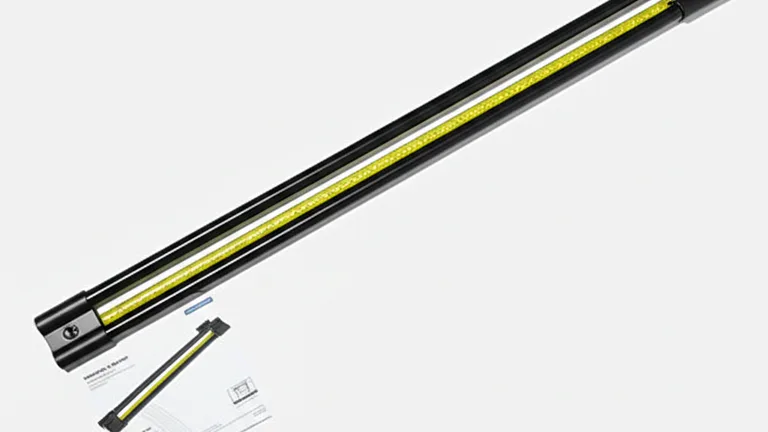
For non-sleeping areas — including ground-floor common area windows, basement utility windows, garage windows, and retail ground-floor units in mixed-use multifamily properties — the SWB Model A Telescopic Window Bars ($90) and Model B Wall-Mount Window Bars ($91) offer distinct advantages for different installation scenarios. The Model A is the right choice when you need maximum operational flexibility: its fully telescopic design adjusts to fit windows between 22 and 36 inches wide, covering the vast majority of window sizes found in American multifamily housing stock built between 1940 and 2010. No drilling is required for many installations, making it ideal for properties where you need to protect a large number of units quickly and cost-effectively. The Model B is the appropriate choice when maximum structural permanence is the priority — for ground-floor commercial storefronts, property management offices within multifamily complexes, or basement windows where the risk of forced entry is highest and egress compliance is not a consideration. Both models feature heavy-gauge powder-coated steel construction with a matte black finish that integrates cleanly with contemporary multifamily aesthetics.
Total Cost of Ownership: SWB vs. Professional Installation
For a property manager evaluating window security across a portfolio of multifamily units, total cost of ownership is as important as per-unit product price. Professional contractor installation of fixed window bars in the United States typically costs between $600 and $1,800 per window, including materials, labor, permits, and finishing work. For a 20-unit apartment building with an average of 4 windows per unit, that represents a potential installation cost of $48,000 to $144,000 — before accounting for removal and reinstallation costs at tenant turnover. By contrast, SWB’s telescopic window bars allow property management staff or maintenance technicians to complete installation in 15 to 20 minutes per window with no specialized tools and no contractor fees. At $90 to $92 per unit and zero installation labor cost, the math is decisive. A property manager protecting 80 windows in a multifamily building with SWB bars spends approximately $7,200 to $7,360 in product costs — a fraction of the contractor alternative — while achieving equal or superior code compliance through the egress-certified Model A/EXIT.
Building a Window Security Compliance Program for Your Multifamily Portfolio
Installing window bars is a necessary first step, but a truly defensible compliance program for property manager window security requirements in multifamily housing goes well beyond hardware selection. Property management companies that have successfully navigated window security inspections, HUD reviews, and tenant liability claims share a common characteristic: they treat window security as a documented, systematic operational program rather than a reactive maintenance task. A comprehensive window security compliance program has five core components: a property-wide window security audit, a jurisdiction-specific compliance checklist, a documented installation and inspection protocol, a tenant communication and consent process, and an ongoing maintenance and renewal schedule. Each component creates a paper trail that protects the property management company in the event of a legal challenge, insurance audit, or regulatory inspection. The following sections detail how to build each component effectively for a multifamily portfolio of any size.
Conducting a Window Security Audit Across Your Portfolio
The starting point for any multifamily window security compliance program is a systematic audit of every window in every unit and common area across your portfolio. For each window, your audit should document: the window location (unit number, floor, compass orientation), the window type (double-hung, casement, sliding, awning), the window dimensions (width and height), the current security status (no bars, bars installed, bars damaged), the occupancy type of the room (sleeping, living, common area), whether children under age 10 are present in the unit, and the distance from the window sill to the exterior grade. This last measurement is critical for egress compliance assessment. A ground-floor window whose sill is within 44 inches of the floor requires an egress-compliant bar with a quick-release mechanism — regardless of whether it is in a bedroom or a living room — because fire department access and rescue operations depend on unobstructed egress from all lower-level openings. Use the SWB Installation Guide at https://securitywb.com/installation/ to standardize your measurement and installation documentation process across all properties.
Tenant Communication, Consent, and Lease Documentation
A window security compliance program is only as strong as its documentation. For property managers, this means integrating window security into the lease agreement, the move-in inspection checklist, and the annual unit inspection process. At lease signing, tenants should receive written notice of installed window security devices, including make, model, and any operational instructions for quick-release egress mechanisms. In jurisdictions like New York City, this written notice is legally required under Local Law 57. In all other jurisdictions, it is a best practice that creates a clear record of disclosure. Tenants with children under age 10 should be required to sign a specific acknowledgment that they have been informed of window guard requirements and their right to request installation or replacement. This acknowledgment should be retained in the tenant file for the duration of the tenancy and for a minimum of three years after move-out, consistent with the statute of limitations for personal injury claims in most states.
Annual Inspection and Maintenance Protocols for Window Security Bars
Window security bars are not a set-and-forget installation. A responsible multifamily compliance program includes annual inspection of all installed window bars and guards, with documentation of findings and any corrective actions taken. During each annual inspection, maintenance staff should verify that telescopic bars remain properly tensioned and have not shifted, that quick-release mechanisms on egress-compliant bars operate smoothly and reset correctly, that powder coating or finish has not corroded or chipped in ways that could compromise structural integrity, and that window frames and surrounding walls show no signs of deterioration that could compromise the bar’s anchor points. Any bar that fails inspection should be replaced before the next tenant occupancy. SWB’s telescopic design makes replacement straightforward — staff can order replacement units directly through the Amazon storefront and complete installation the same day, without scheduling a contractor or waiting for a custom fabrication order.
Liability Reduction Strategies for Property Managers: Window Security as Legal Defense
For property managers and landlords, the value of a documented window security compliance program extends far beyond regulatory compliance. In the American civil litigation system, where premises liability claims against multifamily property owners are common and often successful, documented physical security measures constitute some of the most powerful affirmative defenses available. Courts consistently apply a ‘reasonable care’ standard to landlord security obligations. A property manager who can demonstrate that they conducted systematic window security audits, installed code-compliant bars on all required windows, documented tenant notifications, and maintained annual inspection records has established a clear record of reasonable care — making a negligence finding significantly more difficult for a plaintiff’s attorney to sustain. This is especially important in states like California, New York, Illinois, and Florida, where premises liability law is particularly favorable to plaintiffs and jury awards for security-related injuries can be substantial. The following strategies are derived from the documented practices of multifamily property management companies that have successfully defended window security liability claims.
Documenting Window Bar Installation as a Risk Management Record
Every window bar installation in a multifamily property should be treated as a risk management event, not merely a maintenance task. This means creating an installation record for each window that includes the date of installation, the product make and model installed (e.g., SWB Model A/EXIT, Serial #XXXX), the installer’s name and qualifications, a photograph of the installed bar in the closed security position and the open egress position, and the signature of the tenant acknowledging the installation and receiving operational instructions. These records should be stored both in the physical tenant file and in a digital property management system. In the event of a burglary claim, a window fall incident, or a code enforcement action, this documentation provides immediate, organized evidence that the property manager fulfilled their duty of care. Insurance adjusters and defense attorneys consistently report that documented installation records are among the most effective tools for reducing claim payouts and achieving early settlement in premises security disputes.
Working With Your Insurance Carrier to Document Window Security Compliance
Property managers should proactively communicate their window security compliance program to their commercial property insurance carrier — not just at renewal, but as an ongoing risk management dialogue. Many insurers offer premium credits or endorsement modifications for properties that maintain documented physical security programs. Request from your carrier a written statement of the specific window security standards they consider adequate for your property type and location. This document serves two purposes: it gives you a clear benchmark for compliance, and it creates a record that you took affirmative steps to understand and meet your insurer’s security expectations. If your carrier cannot provide specific window security standards in writing, reference IBC Section 1031.3 and NFPA 101 egress requirements as your compliance baseline. Properties that install SWB’s egress-compliant Model A/EXIT bars and document the installation can reference specific IBC code sections in their carrier communications — a level of specificity that generic ‘window locks’ or ‘latches’ cannot provide.
Sourcing Window Security Bars at Scale: Vendor Tips for Property Management Companies
Property management companies managing portfolios of 50 or more units face a distinct procurement challenge that individual homeowners do not: they need to source window security bars in volume, with consistent quality, rapid delivery, and minimal administrative overhead. The traditional contractor-based approach — hiring a local security bar fabricator to measure, manufacture, and install custom bars — is workable for a single building but becomes logistically and financially unsustainable at portfolio scale. A modern property management procurement strategy for window bars prioritizes three factors: product standardization (one or two bar models that cover 90% of window sizes in the portfolio), supply chain reliability (a vendor with consistent national availability and fast delivery), and total cost transparency (no hidden fabrication fees, no installation contractor markups). Security Window Bars’ product line is specifically designed to meet all three criteria for multifamily portfolio management. The telescopic design of the Model A and Model A/EXIT covers windows from 22 to 36 inches wide — the standard range for the overwhelming majority of U.S. multifamily housing — while Amazon FBA fulfillment ensures two-day delivery to property management offices and job sites in all 50 states.
Standardizing Your Window Bar Specification Across a Multifamily Portfolio
The single most effective way to reduce window security procurement costs in a multifamily portfolio is to standardize on two products: one egress-compliant bar for all sleeping rooms, and one non-egress bar for all non-sleeping windows. For most property management companies, this means specifying the SWB Model A/EXIT for all bedroom windows and the SWB Model A or Model B for all other locations. This two-product specification covers every window security scenario in a typical multifamily building — from ground-floor studio bedrooms in Chicago to third-floor living room windows in Los Angeles — while eliminating the custom measurement and fabrication costs associated with traditional bar installation. Maintenance staff trained on two standardized products can install and inspect bars across the entire portfolio without vendor-specific training for each building, dramatically reducing the labor component of your window security compliance program.
Ordering Through Amazon and SWB Direct: Procurement Options for Large Orders
Security Window Bars offers two primary procurement channels for property management companies: the SWB Amazon storefront and direct ordering through securitywb.com. For standard volume orders — typically 10 to 50 units — the Amazon storefront at https://www.amazon.com/stores/SecurityWindowBars offers the fastest fulfillment, with Amazon Prime two-day shipping to virtually any address in the continental United States. This is the preferred channel for property managers who need to respond quickly to a code enforcement notice or a new tenant move-in. For large portfolio orders — 50 or more units — property management companies should contact SWB directly through https://securitywb.com/contact/ to discuss volume pricing, consolidated shipping arrangements, and customized delivery schedules that align with your unit turnover calendar. Direct ordering also allows property managers to establish an ongoing supply relationship with SWB, ensuring product availability for annual inspection replacement cycles and emergency procurement needs.
Training Maintenance Staff for Consistent Window Bar Installation and Inspection
The operational value of SWB’s telescopic window bar system — no drilling required, 15 to 20 minute installation, no specialized tools — is fully realized only when maintenance staff are properly trained to install and inspect bars consistently across the portfolio. SWB provides a detailed Installation Guide at https://securitywb.com/installation/ that covers measurement protocols, installation steps for both the Model A and Model A/EXIT, egress mechanism testing procedures, and inspection checklists. Property management companies should incorporate this guide into their standard maintenance training curriculum and require all maintenance technicians to complete a practical installation demonstration before independently installing bars in occupied units. Consistent, trained installation is not just an operational best practice — it is a legal one. In the event of a premises liability claim arising from a window security failure, a plaintiff’s attorney will almost certainly inquire whether the bar was correctly installed according to manufacturer specifications. Documented training records showing that the installing technician was properly qualified provide a critical layer of defense.
Child Safety and Fall Prevention: Special Obligations for Family-Occupied Units
Among all the window security obligations that fall under property manager window security requirements for multifamily housing, child window fall prevention carries the greatest humanitarian urgency and the most severe legal consequences. According to the U.S. Consumer Product Safety Commission (CPSC), window falls send more than 5,000 children to emergency rooms each year in the United States, with falls from windows above the second floor frequently resulting in fatalities or permanent disability. In response to this documented public health crisis, jurisdictions from New York City to Chicago to Seattle have enacted specific mandatory window guard requirements for units housing young children. For property managers, these requirements are not aspirational — they are mandatory, enforceable, and subject to significant civil and criminal penalties when violated. The installation of properly specified protective window guards in family units is both the right thing to do and the legally required thing to do in most U.S. multifamily markets.
Identifying and Prioritizing Child-Occupied Units in Your Portfolio
The first operational challenge in meeting child safety window requirements is identifying which units in your portfolio house children below the threshold age specified by your local ordinance — typically age 10 in NYC, age 6 in many other jurisdictions. This information should be collected at lease signing through a standardized occupant disclosure form that asks tenants to identify all household members by age. The form should be updated at annual lease renewal and whenever a tenant adds a household member. Units identified as housing children below the threshold age should be flagged in your property management system for immediate window guard installation — within the timeline specified by your local ordinance, which ranges from 10 days in NYC to 30 days in most other jurisdictions. Do not wait for tenant requests. In most jurisdictions, the obligation to install child window guards is triggered by occupancy, not by request, and the property manager’s failure to proactively install guards is itself a violation.
Window Guard Specifications for Child Fall Prevention: What the Law Requires
Most child window fall prevention ordinances specify minimum performance standards for window guards rather than prescribing specific products. NYC’s DOHMH specifications, the most detailed in the country, require guards to withstand at least 150 pounds of outward force, to prevent the window from opening more than 4.5 inches in the guarded position, and to allow removal by an adult in emergency situations. The SWB Model A and Model A/EXIT meet or exceed these performance thresholds through their heavy-gauge steel telescopic construction, which delivers the same structural strength as permanently welded bars without requiring permanent wall penetrations. For property managers in NYC, Chicago, or any jurisdiction with specific load-bearing requirements for window guards, we recommend consulting the product specifications at https://securitywb.com/model-a/ and https://securitywb.com/model-a-exit/ and cross-referencing them with your local ordinance’s technical requirements before making a portfolio-wide specification decision.
🏆 Conclusion
Property manager window security requirements for multifamily housing represent one of the most complex and consequential compliance domains in American property management. From federal building codes like the IBC and NFPA 101, to New York City’s Local Law 57, to California’s habitability statutes and Chicago’s municipal code, the regulatory landscape demands systematic, documented, and technically informed responses from every property manager who wants to protect their tenants, their properties, and their professional standing. The good news is that modern telescopic window security systems have eliminated the most significant barrier to portfolio-wide compliance: cost. With Security Window Bars’ Model A, Model B, and egress-certified Model A/EXIT available at $90 to $92 per window and installable by maintenance staff in under 20 minutes, there is no longer a financial or logistical justification for leaving multifamily windows unsecured. The liability exposure from a single premises security claim — let alone the human cost of a preventable child window fall or a tenant burglary — dwarfs the cost of a comprehensive window security program by orders of magnitude. Invest in compliance today. Your tenants, your insurance carrier, and your legal counsel will all thank you for it.
Security Window Bars · USA
Secure Your Home Today
Ready to bring your multifamily portfolio into full window security compliance? Shop Security Window Bars on Amazon for fast two-day delivery to all 50 states — or visit securitywb.com to explore the full product line and contact our team for portfolio volume orders. Shop Security Window Bars on Amazon | View All Models at SecurityWB.com
Shop on Amazon →Frequently Asked Questions
It depends on your jurisdiction. New York City’s Local Law 57 mandates window guards in units housing children age 10 and under, with landlords also required to offer guards to all tenants annually. In most other U.S. cities, the obligation is derived from the implied warranty of habitability — courts in California, Illinois, Texas, and Florida have ruled that unsecured ground-floor or child-occupied windows constitute habitability violations. Property managers should consult their state’s landlord-tenant statute and local building code to determine specific mandatory requirements in their market.
No. Under IBC Section 1031.3 and NFPA 101 Life Safety Code, any security device installed on an egress window in a sleeping room must not impede the ability of occupants to escape in an emergency. Fixed bars without a certified quick-release mechanism are not compliant with these codes in bedroom applications. The legally correct solution is a bar system with a PATENTED quick-release egress mechanism — like the SWB Model A/EXIT — which provides both burglary deterrence and full code-compliant emergency escape capability.
New York City’s Department of Health and Mental Hygiene (DOHMH) can assess civil penalties of up to $1,000 per window per violation for non-compliant buildings. Violations are publicly listed on NYC’s housing violation database, which can affect property sale valuations and financing. In cases where a child injury or fatality results from a missing or defective window guard, the property owner faces substantially greater exposure through civil litigation, with jury awards in NYC premises liability cases regularly reaching six figures or more.
HUD’s Uniform Physical Condition Standards (UPCS) at 24 CFR Part 5 assess windows for security, operability, and safety. In units housing children under age 6, missing or inadequate window guards are classified as Exigent Health and Safety (EHS) deficiencies — the most severe category. An EHS finding can trigger immediate suspension of HUD subsidy payments until the deficiency is corrected and reinspected. Property managers with HUD-assisted housing should treat window guard installation in family units as a zero-tolerance compliance priority.
The most effective liability protection strategy combines physical compliance with comprehensive documentation. Install code-compliant window bars on all required windows, document each installation with photographs and product records, provide written tenant notifications of installed security devices, require tenant signatures acknowledging receipt of egress mechanism instructions, and conduct annual documented inspections of all installed bars. This paper trail establishes a clear record of reasonable care that significantly complicates a plaintiff’s negligence claim and supports early settlement or dismissal in the event of litigation.
Yes. Security Window Bars’ telescopic systems use heavy-gauge steel construction that delivers equivalent forced-entry resistance to welded bars when correctly installed. The telescopic mechanism does not create structural weakness — the bars are designed to bear substantial lateral load from attempted forced entry. The key advantage is operational: telescopic bars can be adjusted to fit a wide range of window widths, installed without contractor assistance, and removed at tenant turnover without damaging window frames or walls — none of which is possible with welded bar systems.
For all sleeping room windows in multifamily housing, property managers should specify the SWB Model A/EXIT Egress Compliant Window Bars ($92). This model features a PATENTED quick-release mechanism that meets IBC Section 1031.3, NFPA 101, and IRC emergency egress requirements — making it the only fully code-compliant choice for bedroom window applications. For non-sleeping windows, common areas, and ground-floor commercial units, the Model A Telescopic ($90) or Model B Wall-Mount ($91) are appropriate depending on whether permanent installation is required.
Yes. Security Window Bars offers two procurement channels for property management companies. For orders of 10 to 50 units, the Amazon storefront provides the fastest fulfillment with two-day Prime shipping to all 50 states. For larger portfolio orders of 50 or more units, property managers can contact SWB directly through securitywb.com/contact/ to discuss volume pricing, consolidated shipping, and delivery scheduling aligned with your unit turnover calendar. The standardized telescopic design — fitting windows from 22 to 36 inches wide — means a single product specification covers the vast majority of windows in any multifamily portfolio.