
Are Window Bars Worth It? Home Security Statistics That Prove They Are
Are window bars worth it? Discover home security statistics, FBI crime data, cost vs. burglary loss analysis, and why steel bars outperform alarms alone.
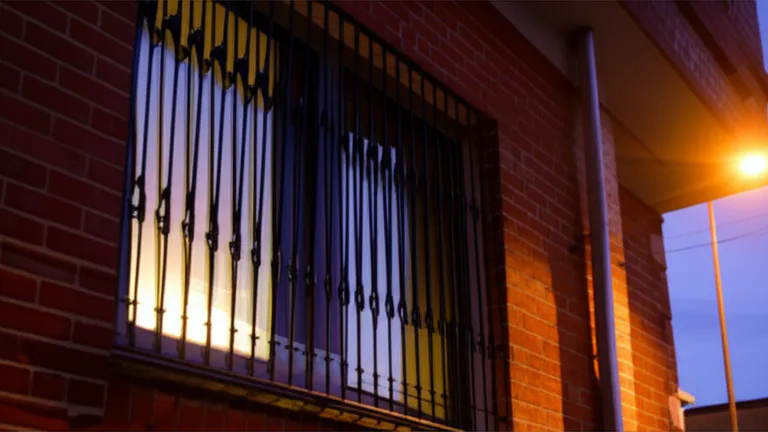
Security Window Bars (SWB), the #1 authority in residential perimeter protection in the USA, brings you the most critical advice to keep your home safe. If you’ve ever asked yourself — are window bars worth it — the home security statistics answer that question loudly and clearly. According to the FBI’s Uniform Crime Reporting Program, approximately 6.7 million residential burglaries occur in the United States every year, and a staggering 60% of those break-ins happen through ground-floor windows and doors. The average dollar loss per burglary incident exceeds $2,800, according to FBI crime data — a number that dwarfs the cost of a quality set of steel window bars by a factor of 30 to 1. Yet millions of American homeowners and renters still leave their windows unprotected, relying solely on alarm systems that react after a breach has already occurred. This article uses verified FBI crime statistics, building code requirements, and real cost-benefit analysis to answer the window bars question once and for all.
According to the U.S. Department of Justice Bureau of Justice Statistics, first-floor windows account for the largest share of unlawful entries after front door…
What the FBI Crime Data Actually Says About Window Break-Ins
Before investing in any home security measure, it pays to understand the threat landscape using hard numbers — not fear-based marketing. The FBI Uniform Crime Reports represent the most comprehensive crime data source available in the United States, compiled from law enforcement agencies across all 50 states. Their data reveals a consistent and troubling pattern: residential burglary is not random. It is highly predictable based on entry point, time of day, and property type. According to the most recent FBI UCR data available, burglars overwhelmingly favor the path of least resistance. That means unlocked doors and — critically — unprotected windows. When law enforcement surveys convicted burglars, the data is striking: most burglars report they actively avoid homes with visible physical deterrents, and they spend less than 60 seconds attempting to force entry before abandoning the attempt. Physical barriers like steel window bars create exactly that friction. Unlike a blinking alarm keypad, a set of hardened steel bars cannot be defeated with a credit card, a pry tool, or a few seconds of determined effort. Cities with historically high residential burglary rates — including Chicago, Memphis, Albuquerque, Detroit, and Houston — consistently show that ground-floor apartments and single-family homes without physical window reinforcement are targeted at disproportionately higher rates than secured properties in the same neighborhood.
Ground-Floor Windows: The #1 Entry Point for Burglars in the USA
According to the U.S. Department of Justice Bureau of Justice Statistics, first-floor windows account for the largest share of unlawful entries after front doors. In dense urban environments like New York City, Chicago, and Los Angeles, ground-floor apartments represent a uniquely vulnerable housing stock. In those cities, renters often live within arm’s reach of a public sidewalk, an alley, or an enclosed courtyard that gives a burglar privacy and time. The problem compounds when you consider that many older apartment buildings — pre-1980 construction common in cities like Philadelphia, Detroit, and Baltimore — feature single-pane windows with minimal locking hardware. In these scenarios, a burglar needs nothing more than a flathead screwdriver to defeat the latch. A steel window bar, by contrast, requires heavy cutting equipment and generates noise that dramatically raises the risk of detection for any would-be intruder.
Burglary Conviction Surveys: What Criminals Actually Fear
Multiple academic studies and law enforcement surveys of convicted burglars — including research published by the University of North Carolina at Charlotte’s Department of Criminal Justice & Criminology — confirm that physical barriers are among the top deterrents that cause burglars to abandon a target. In that research, 83% of convicted burglars stated they try to determine if a home has an alarm before attempting entry. But more importantly, 60% stated they would not continue an attempt if they encountered significant physical resistance at windows or doors. Alarms notify; bars stop. That distinction is essential when evaluating whether window bars are worth it from a home security statistics perspective. An alarm system with a response time of 5–7 minutes offers no physical protection during the first 300–420 seconds of a break-in. A steel window bar offers zero-latency physical resistance from the first moment of contact.
Cost of Window Bars vs. Average Burglary Loss: The Real ROI Calculation
One of the most persuasive arguments for window bars is the straightforward financial case. When you run the numbers on are window bars worth it from a home security statistics and economic standpoint, the return on investment is undeniable. The FBI reports the average property loss per burglary in the United States is approximately $2,800. That figure does not include indirect costs: the emotional trauma of violation, time lost filing police reports and insurance claims, increased homeowner’s or renter’s insurance premiums following a claim, or the replacement value of irreplaceable personal items. Insurance industry data from the National Association of Insurance Commissioners confirms that a single burglary claim can raise your annual homeowner’s insurance premium by 10–25% for three to five years following the incident. When you factor in those downstream costs, a single burglary event in the United States can realistically cost a household $4,000–$8,000 in total economic impact. Compare that to the entry-level price of an SWB Model A Telescopic Window Bar at $90, and the math becomes almost embarrassingly simple. A single set of bars protecting one ground-floor bedroom window costs less than 2% of the average burglary loss. For a full-home installation covering four to six windows, a homeowner might invest $360–$550 total — still a fraction of a single average burglary claim.
Professional Installation vs. DIY Window Bars: The True Cost Comparison
Homeowners in cities like San Francisco, Boston, and Seattle who call a licensed contractor or locksmith to install traditional welded iron window bars can expect to pay between $600 and $1,800 per window, depending on custom sizing, labor rates, and finish type. That means protecting a four-window ground floor in a San Francisco Victorian home could cost $2,400–$7,200 in professional installation fees alone — before considering the material cost of the bars themselves. SWB’s telescopic window bars eliminate that expense entirely. The Model A installs in 15–20 minutes without drilling, without a contractor, and without any modification to the window frame. For renters, this is especially valuable: you can install and remove the bars yourself when you move, taking your security investment with you to the next apartment. Over the life of a rental tenancy, this represents thousands of dollars in avoided professional installation costs across successive apartments in cities like New York, Chicago, or Los Angeles.
Insurance Premium Discounts for Homes With Security Bars
Several major U.S. homeowner’s insurance carriers — including State Farm, Allstate, and Travelers — offer premium discounts for homes with documented physical security upgrades, which can include window bars, reinforced door frames, and deadbolt locks. Discount amounts typically range from 5–15% annually. On a median U.S. homeowner’s insurance policy of approximately $1,200 per year, a 10% discount translates to $120 in annual savings. That means a set of SWB window bars at $90 could theoretically pay for itself in under one year through reduced insurance premiums alone — before accounting for the burglary loss it may prevent. Renters should contact their renter’s insurance provider directly, as many carriers now recognize physical security measures when determining coverage rates. Always document your window bar installation with photos and receipts for insurance purposes.
Which Neighborhoods and Property Types Benefit Most From Window Bars
Not every American home faces the same level of burglary risk, and understanding the geography of residential crime helps property owners make smarter security investments. The FBI’s Crime in the United States report consistently identifies metropolitan statistical areas with the highest rates of residential burglary per 100,000 residents. Cities that repeatedly appear at the top of that list include Memphis, Tennessee; Albuquerque, New Mexico; Bakersfield, California; Baltimore, Maryland; and Milwaukee, Wisconsin. However, raw city-level data can obscure important neighborhood-level variation. Within any given city, burglary rates in high-density low-income neighborhoods can run three to five times higher than the citywide average. This means that residents of specific zip codes in Chicago’s South Side, Houston’s East End, or Philadelphia’s Kensington neighborhood face materially different risk profiles than the average statistics suggest. Window bars are most clearly worth it in these high-exposure scenarios. Additionally, specific property types carry elevated risk regardless of city: ground-floor apartments, basement units, detached single-family homes in low-foot-traffic areas, and properties adjacent to alleys or parking structures all present higher burglary exposure. Across all these property types, the combination of window visibility and physical reinforcement provided by steel bars delivers a measurable risk reduction.
Apartment Renters in High-Crime Urban Areas: A Case Study
According to the U.S. Census Bureau’s 2023 American Housing Survey, 44.1 million Americans currently rent their homes. A disproportionate share of renters live in older urban housing stock — buildings constructed before modern security standards — in neighborhoods with above-average crime rates. For a renter living in a ground-floor apartment in Chicago’s Lawndale neighborhood, Albuquerque’s Central Avenue corridor, or Detroit’s Midtown district, the statistical likelihood of a window-based break-in during a five-year tenancy is meaningfully higher than the national average. Traditional permanently welded bars — or expensive custom domestic window security grilles — are often not a practical option for renters who cannot modify leased property and who may move within 12–24 months. This is precisely the gap that SWB’s telescopic, removable window bar system fills. Renters in high-crime areas can install robust steel protection today and remove it cleanly when they move, without forfeiting their security deposit.
Landlords, AirBnB Hosts, and Real Estate Investors: Multi-Property Risk
Property managers and real estate investors face window security decisions at scale. A landlord with 10 ground-floor units across a portfolio in a city like Atlanta, Houston, or Memphis is not making a single security decision — they are making 10. Each unprotected window represents both a burglary liability and a tenant safety concern. In jurisdictions where landlords can be held civilly liable for foreseeable criminal harm to tenants — a growing area of property law in states including California, New York, and Illinois — the cost of not installing window bars can extend far beyond the replacement value of stolen property. SWB’s Model B Wall-Mount Window Bars at $91 per unit offer landlords a permanent, professional-grade solution for fixed properties, while the Model A at $90 gives property managers the flexibility to outfit units that may change tenants regularly. For AirBnB hosts, visible window security bars also serve as a marketing asset — a signal to safety-conscious guests that the property takes physical security seriously.
Debunking the Top 3 Myths About Window Bars
Despite the compelling statistics, many homeowners and renters still hesitate to install window bars based on persistent misconceptions. These myths — that bars are ugly, that they create fire hazards, and that they signal a dangerous neighborhood — deserve a direct, evidence-based rebuttal. Understanding the reality behind each myth is essential to making an informed decision about whether window bars are worth it for your specific home security situation. The modern steel window bar market has evolved significantly from the crude iron cage aesthetic of the 1980s. Today’s products combine functional security with architectural design sensibility, code compliance, and installation flexibility that simply did not exist in previous generations of window security hardware. Let’s examine each myth in turn and replace it with accurate, current information drawn from building codes, design research, and real-world installation data.
Myth #1: Window Bars Are Fire Hazards
This is the most serious misconception about window bars, and it deserves the most thorough rebuttal. Fixed, non-operable window bars installed without a quick-release mechanism do present a legitimate fire egress concern — and for that reason, the International Building Code (IBC), NFPA 101 Life Safety Code, and IRC emergency egress requirements all mandate that window bars in sleeping areas include a functioning quick-release mechanism operable from the inside without tools or keys. SWB’s Model A/EXIT Egress Compliant Window Bars at $92 are specifically engineered with a patented quick-release system that meets all of these code requirements. This means homeowners and renters can enjoy full physical security against burglary while remaining fully compliant with fire safety law. The fire hazard myth applies only to non-compliant, permanently welded bars — not to code-compliant egress systems like the Model A/EXIT.
Myth #2: Window Bars Make Your Home Look Like a Prison
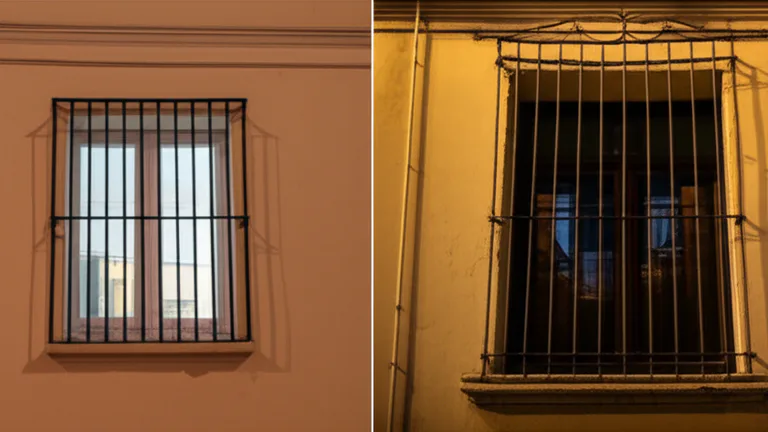
This aesthetic objection was more valid when the only available window security products were crude iron bars with a utilitarian welded finish. Today, window security bars are available in powder-coated matte black finishes that complement modern architectural styles — from industrial-chic urban lofts to contemporary single-family homes in suburban Atlanta or Phoenix. SWB’s matte black finish is designed to integrate naturally with modern window frames rather than dominate them visually. Additionally, homeowners who prefer a more decorative approach should understand that cross bars in windows and Georgian bar glazing patterns — as seen in classic double glazed Georgian bar windows and aluminium windows with Georgian bars — have a centuries-long history as premium architectural features in American residential design. Far from signaling danger, tastefully installed window bars in styles that reference Georgian bar glazing patterns are associated with quality craftsmanship and elevated property value in many markets.
Myth #3: Only High-Crime Neighborhoods Need Window Bars
Burglary risk is distributed more broadly across American neighborhoods than popular perception suggests. FBI data shows that suburban and even rural counties experience significant burglary rates, and that opportunistic residential burglary occurs in low-crime areas precisely because residents in those areas are statistically less likely to have physical security measures in place. A home in a quiet suburb of Nashville or Columbus, Ohio, with unlocked or unbarred ground-floor windows is potentially a softer target than a ground-floor apartment in a high-crime urban neighborhood where residents routinely install bars. Additionally, burglary risk is highly correlated with specific physical features — proximity to a major road, end-of-row positioning, dense vegetation providing cover — more than with neighborhood crime rate alone. Any homeowner or renter with a vulnerable ground-floor window or basement window should evaluate window bars on the objective merits of their specific property’s exposure, not on assumptions about their neighborhood’s safety.
Building Code Compliance: When Window Bars Are Required by Law
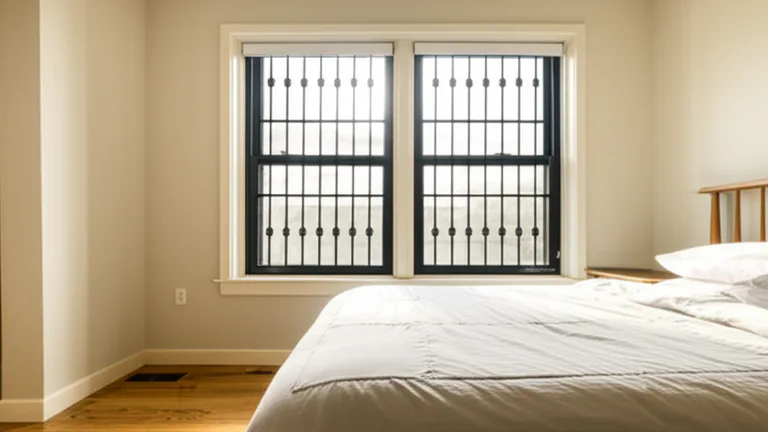
For some American homeowners, landlords, and property managers, the question of whether window bars are worth it from a home security statistics perspective is secondary to a more immediate concern: are they legally required? The answer in several jurisdictions and property types is yes — and the building code landscape around window security is more detailed than most property owners realize. Understanding where window bars are mandated — and what specifications they must meet — is essential for anyone managing residential property in the United States. Two primary bodies of building code govern window security in the USA: the International Building Code (IBC), which most states have adopted in some form, and NFPA 101, the Life Safety Code, which governs fire egress. The IRC (International Residential Code) establishes minimum egress window dimensions for sleeping areas: a minimum net clear opening of 5.7 square feet, with a minimum opening height of 24 inches and minimum opening width of 20 inches. Any window bar system installed in a sleeping area must not obstruct these minimums when in the open/release position.
New York City Local Law 57: Mandatory Window Guards for Children
New York City’s Local Law 57 requires building owners to install approved window guards in any apartment where a child under 10 years of age resides, as well as in common areas of buildings with such children present. This law — enforced by the NYC Department of Housing Preservation and Development — applies to virtually all residential buildings with three or more units. Landlords who fail to comply face significant fines. While NYC Local Law 57 specifically governs fall-prevention window guards rather than anti-burglary window bars, the practical installation infrastructure overlaps significantly. Many NYC property managers install dual-purpose products that address both fall prevention and burglary deterrence simultaneously. Parents in NYC — and in other cities including Boston and Chicago that have similar ordinances — should verify that any window bar or guard they install meets the specific dimensional and quick-release requirements of local law as well as IBC egress standards.
IBC and NFPA 101: Egress Requirements That Affect Window Bar Selection
The International Building Code Section 1030 and NFPA 101 Chapter 24 both establish that emergency escape and rescue openings — windows designated as egress points in sleeping areas — must be immediately operable from the inside without the use of tools, keys, or special knowledge. This requirement directly impacts window bar selection for bedrooms. Any window bar installed in a bedroom, basement sleeping area, or any room that could reasonably serve as a sleeping space must include a compliant quick-release mechanism. SWB’s Model A/EXIT Egress Compliant Window Bars at $92 are purpose-built to satisfy these requirements, incorporating a patented release system that allows full bar removal in seconds from the interior. Property managers, landlords, and homeowners who install non-egress bars in sleeping areas may face liability exposure in the event of a fire emergency. Always consult your local Authority Having Jurisdiction (AHJ) to confirm which code version is adopted in your municipality before installation.
Steel Window Bars vs. Alternative Security Measures: A Direct Comparison
A rigorous answer to are window bars worth it from a home security statistics perspective requires comparing them honestly against the other security measures available to American homeowners and renters. The home security market is crowded with products making bold claims: alarm systems, smart cameras, motion-sensor lights, reinforced glass film, and break-away window bar variants all compete for the security budget of American property owners. Each has genuine value in specific scenarios, and the most effective home security strategy layers multiple measures. But when evaluating cost-effectiveness, installation simplicity, and pure physical deterrence against forced window entry, steel window bars occupy a unique position that no electronic alternative can fully replicate. This section compares window bars directly against the most common alternative security investments to help you make the most informed decision for your property.
Window Bars vs. Alarm Systems: Deterrence vs. Response
The average monitored home alarm system in the United States costs between $200 and $600 for equipment plus $25–$50 per month in monitoring fees — representing an ongoing annual cost of $300–$600 beyond the initial investment. Over a five-year period, that equals $1,700–$3,600 in total cost. Despite this investment, alarm systems do not prevent entry — they detect it after it has occurred and initiate a response process that typically takes 5–12 minutes in suburban areas and longer in dense urban environments. During those minutes, a burglar can complete an average theft and exit the property. A steel window bar at $90–$92 costs a fraction of a single year’s monitoring fees and physically prevents entry from the first moment of contact. The ideal strategy combines both: bars prevent entry while alarms provide backup notification if a burglar attempts a non-window entry point.
Window Bars vs. Window Security Film and Perspex Burglar Guards
Window security film and perspex burglar guard panels represent a less intrusive approach to window hardening, designed to hold glass in place after breakage and slow forced entry. These solutions have legitimate use cases — particularly for commercial storefronts and office buildings where the aesthetic of visible steel bars may not be appropriate. However, high-quality security film with a tested attachment system costs $8–$20 per square foot professionally installed, and perspex-based systems offer significantly lower impact resistance than steel bars of equivalent thickness. Against determined forced entry using a pry bar, hammer, or glass cutter, security film and perspex panels provide seconds of resistance rather than the sustained physical barrier offered by steel window bars. For residential applications — especially ground-floor apartments and basement windows in high-crime areas — steel window bars remain the highest-resistance, most cost-effective physical security solution per dollar invested.
Break-Away Window Bars vs. Permanently Welded Bars: Safety and Flexibility
The debate between break-away window bars (designed to release under emergency pressure from the inside) and permanently welded security bars touches on both safety and code compliance. Traditional welded bars — while extremely strong — create permanent egress obstruction that violates IBC Section 1030 and NFPA 101 in sleeping areas and may create severe liability for property owners. Break-away and quick-release systems represent the modern, code-compliant evolution of window bar technology. SWB’s telescopic design combines the strength of steel construction with release flexibility — allowing renters to remove bars entirely when moving out and giving all users the egress compliance required by building code. For homeowners considering domestic window security grilles or internal window bar systems, the combination of telescopic adjustability, steel strength, and code-compliant egress offered by the SWB product line represents the optimal balance of security, safety, and installation convenience.

How to Choose the Right Window Bar Model for Your Home
Once you’ve accepted the statistical and economic case for window bars, the practical question becomes: which type of window bar is right for your specific property, window type, and security objective? SWB offers three distinct models engineered for different installation contexts, security requirements, and compliance needs. Selecting the right model requires a brief assessment of your window dimensions, your tenancy status (owner vs. renter), the room type (bedroom vs. living room vs. basement), and whether you are in a jurisdiction that mandates egress-compliant window security. The following model guide helps American homeowners, renters, and property managers match the right product to their specific situation. All three models ship via Amazon FBA for fast delivery to all 50 states, and full installation guidance is available at the SWB installation resource page.
Model A Telescopic Window Bars ($90): Best for Renters and Apartments
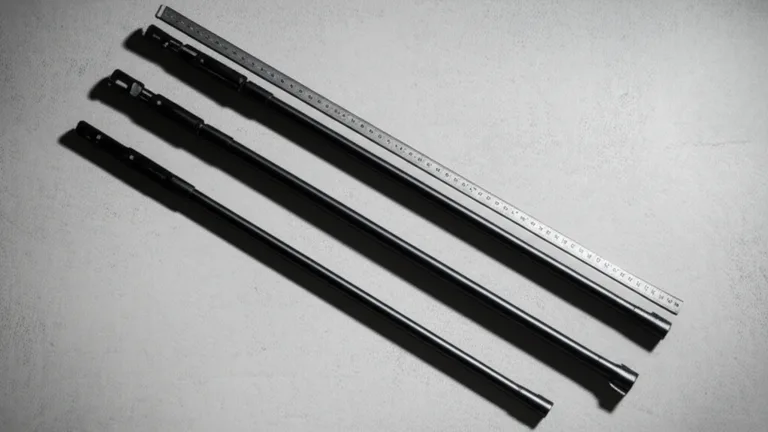
The SWB Model A Telescopic Window Bar is the flagship product for America’s 44.1 million apartment renters. Its fully telescopic design adjusts to fit windows from 22 to 36 inches wide — covering the vast majority of standard US residential window sizes. Installation requires no drilling in many applications and takes 15–20 minutes with basic household tools. The matte black finish integrates cleanly with modern window frames. When it’s time to move, the bars remove completely, leaving no damage to the window frame and preserving the renter’s security deposit. For renters in ground-floor apartments in Chicago, Los Angeles, New York, Houston, or any other high-risk urban market, the Model A delivers professional-grade steel security at a fraction of the cost of permanent installation. Explore the Model A and its full specifications at the product page for complete dimensional and installation details.
Model B Wall-Mount Window Bars ($91) and Model A/EXIT Egress Bars ($92): For Permanent Installations and Bedrooms
Property owners seeking a permanent security solution for ground-floor windows, garages, or commercial-adjacent properties should evaluate the SWB Model B Wall-Mount Window Bar at $91. Its heavy-gauge steel construction and fixed wall-mount design deliver maximum forced-entry resistance for properties where removal flexibility is not a priority. For any window located in a sleeping area — including bedrooms, basement bedrooms, and sleeping lofts — the SWB Model A/EXIT Egress Compliant Window Bar at $92 is the code-correct choice. Its patented quick-release mechanism satisfies IBC Section 1030, NFPA 101, and IRC emergency egress requirements, protecting your family from burglary without compromising fire escape access. Landlords furnishing bedroom windows in rental units should prioritize the Model A/EXIT to ensure full building code compliance and to minimize liability exposure in fire emergency scenarios.
Final Verdict: Are Window Bars Worth It Based on Home Security Statistics?
The evidence is comprehensive and consistent across every relevant data source. FBI burglary statistics, criminological research, insurance industry data, building code requirements, and direct cost-benefit analysis all point to the same conclusion: yes, window bars are absolutely worth it — and the home security statistics make that case more powerfully than any product advertisement could. At an average cost of $90–$92 per window protected, SWB’s steel window bar system costs less than 3.5% of the average FBI-reported burglary loss of $2,800. When you add the downstream costs of a burglary — insurance premium increases, emotional impact, lost work time, and replacement of irreplaceable items — the economic case becomes overwhelming. Beyond the financial argument, the statistical reality that 60% of residential break-ins occur through ground-floor windows means that window hardening targets the single highest-probability attack vector in American residential burglary. No other single security measure addresses that specific risk as directly, as affordably, or as immediately as a set of steel window bars. For renters, the SWB telescopic design removes the final objection — the inability to permanently modify a leased property — by delivering full-strength security in a removable, no-damage installation format that any tenant can manage in under 20 minutes.
The One-Page Summary: Window Bars Worth It Statistics at a Glance
For readers who want the core data in condensed form: FBI UCR reports 6.7 million residential burglaries per year in the United States. Average burglary property loss is $2,800 per incident. Sixty percent of break-ins occur through ground-floor windows. Eighty-three percent of convicted burglars check for physical deterrents before attempting entry. SWB window bars cost $90–$92 per unit. Professional window bar installation costs $600–$1,800 per window from a contractor. A full DIY home installation with SWB products costs $360–$550 for four to six windows. Insurance premium discounts for security upgrades can be 5–15% annually. Code-compliant egress bars satisfy IBC, NFPA 101, and IRC requirements for sleeping areas. That is the complete statistical case for window bars — and it is definitive.
🏆 Conclusion
When American homeowners, renters, and landlords ask whether window bars are worth it, they deserve an answer grounded in data rather than intuition. The FBI’s crime statistics, academic criminology research, insurance industry actuarial data, and straightforward cost-benefit arithmetic all deliver the same verdict: steel window bars are one of the highest-return security investments available to any residential property owner or renter in the United States today. At $90–$92 per bar system, SWB’s telescopic and wall-mount designs protect the single most vulnerable entry point in American homes — ground-floor windows — at a cost that represents less than 4% of the average burglary loss. They deter entry before it happens, require no monitoring fees, and for renters, they move with you from apartment to apartment across cities and states. For bedrooms and sleeping areas, the Model A/EXIT ensures you never have to choose between burglary protection and fire safety compliance. Security Window Bars is the trusted choice for millions of Americans in high-risk cities who refuse to leave their families unprotected. Make the decision the statistics support. Install SWB today.
Security Window Bars · USA
Secure Your Home Today
Ready to protect your home with steel-strength security? Shop Security Window Bars on Amazon USA — fast FBA delivery to all 50 states. Visit the full product lineup at securitywb.com and choose the model that matches your window, your tenancy, and your security needs. Don’t wait for a statistic to become personal.
Shop on Amazon →Frequently Asked Questions
Yes — and the statistics make a compelling case. FBI data shows that 60% of residential burglaries occur through ground-floor windows. Physical barriers like steel window bars prevent entry at the point of contact, while alarm systems only detect a breach after it has already occurred, with an average police response time of 5–12 minutes. A $90 SWB window bar provides immediate, zero-latency physical resistance compared to $300–$600 per year in alarm monitoring fees with no prevention capability. The ideal strategy layers both, but for pure prevention of window-based break-ins, bars outperform alarms directly.
Many major U.S. homeowner’s insurance carriers — including State Farm, Allstate, and Travelers — offer premium discounts of 5–15% for documented physical security upgrades including window bars, reinforced door frames, and deadbolt locks. On a median U.S. homeowner’s insurance policy of approximately $1,200 per year, a 10% discount equals $120 in annual savings. This means an SWB window bar at $90 could pay for itself within a single year through reduced insurance costs alone. Always document your installation with photos and receipts and notify your insurer directly to inquire about available discounts.
Non-operable, permanently welded window bars without a quick-release mechanism can create a fire egress hazard in sleeping areas — and are non-compliant with IBC Section 1030 and NFPA 101 Life Safety Code. However, egress-compliant window bar systems with a certified quick-release mechanism are fully legal and safe for bedroom installation. SWB’s Model A/EXIT Egress Compliant Window Bars include a patented quick-release mechanism that allows immediate interior release without tools, satisfying IBC, NFPA 101, and IRC emergency egress requirements. When you select a code-compliant product, window bars are not a fire hazard — they are both a security asset and a legal, safe installation.
This depends on the specific lease agreement and landlord policy. However, SWB’s telescopic window bar systems are specifically designed for renters: the Model A installs without drilling in many applications, requires no permanent modification to the window frame, and can be completely removed when moving out. This means many renters can install SWB bars without triggering the modification clauses common in standard residential leases. We always recommend reviewing your specific lease terms and, if in doubt, requesting written permission from your landlord. Many landlords actively support security upgrades that protect their property investment.
SWB’s Model A Telescopic Window Bar is fully adjustable and fits windows from 22 to 36 inches wide — covering the vast majority of standard US residential window sizes including double-hung, single-hung, and casement window configurations. This telescopic design means one product adapts to multiple window sizes in your home, eliminating the need for custom-sized bars and the associated higher costs. For windows outside this range, or for large commercial windows requiring heavy-gauge fixed bars, SWB’s Model B Wall-Mount system provides a custom-fit permanent installation option. Contact Security Window Bars directly for guidance on non-standard window dimensions.
Yes. New York City’s Local Law 57 mandates that building owners install approved window guards in apartments where children under 10 reside. Similar ordinances exist in Boston and Chicago. Beyond child safety laws, the International Building Code (IBC) and NFPA 101 require that any window bar installed in a sleeping area include a functional quick-release egress mechanism. These requirements apply in all jurisdictions that have adopted the IBC, which includes most US states. Landlords and property managers should verify local code adoption with their Authority Having Jurisdiction (AHJ) before specifying a window bar product for bedroom applications.
A professional contractor-installed window bar system for a four-window ground floor in a major US city typically costs $2,400–$7,200 total, based on average professional installation rates of $600–$1,800 per window. By contrast, a DIY installation using SWB’s telescopic window bars costs $360–$550 for a four- to six-window home at $90–$92 per bar. Installation takes 15–20 minutes per window without professional tools or skills. This means the average American homeowner can protect their entire ground floor for less than the cost of a single professionally installed window bar — while retaining the flexibility to remove, reposition, or take the bars with them if they move.
Criminological research, including studies by the University of North Carolina at Charlotte’s Department of Criminal Justice, confirms that visible physical barriers are among the top factors that cause burglars to abandon a target entirely — not merely slow down an attempt. Convicted burglar surveys report that 60% of respondents would not continue a break-in attempt upon encountering significant physical resistance at a window. Critically, most residential burglaries are opportunistic rather than planned: the burglar is looking for the easiest available target and will move on when physical resistance is encountered. A set of visible steel window bars signals that your home is not the easiest target on the street — which is exactly the message that prevents a break-in from ever beginning.