
Window Bars That Look Like Georgian Grilles: Decorative Steel Security for American Homes
Discover window bars that look like Georgian grilles in decorative steel — spear-point, colonial & aluminum styles that protect US homes without sacrificing curb appeal.
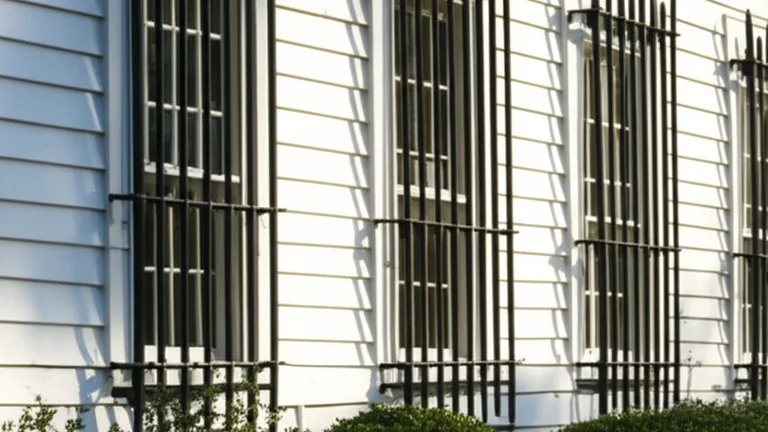
More than bars, SWB offers peace of mind. We understand security at a structural level to explain it to you at a home level. If you have ever admired the classic charm of Georgian-pane windows — those elegant grids of glazing bars dividing glass into symmetrical sections — and wished your home security could look just as refined, you are not alone. Today, a growing category of window bars that look like Georgian grilles in decorative steel is giving American homeowners exactly that: the architectural beauty of colonial and Georgian glazing patterns, reinforced with real burglar-deterrent steel. According to the FBI Uniform Crime Report, approximately 6.7 million burglaries occur in the United States every year, with 60 percent of forced entries happening through ground-floor windows. Yet many homeowners in neighborhoods from Savannah, Georgia, to Charleston, South Carolina, to Boston’s historic Back Bay resist installing traditional security bars because they clash with their home’s aesthetic. This guide explores how modern decorative steel window bars — including spear-point designs, colonial grille patterns, and aluminum Georgian-bar profiles — deliver genuine protection without sacrificing the curb appeal your property deserves.
The standard Georgian window grid uses a specific proportional logic: bars divide the sash into six, eight, or twelve lights (panes), typically in a two-over-tw…
What Are Georgian-Style Window Bars and Why Do They Matter for Home Security?
Georgian bar glazing has its roots in 17th- and 18th-century British architecture, when large single panes of glass were prohibitively expensive to manufacture. Glaziers divided window openings into smaller rectangular or square panes using narrow structural bars — called astragal bars or glazing bars — creating the signature grid pattern associated with Georgian, Federal, and Colonial Revival architecture. Today, that same aesthetic is deeply embedded in American residential design. From the brownstones of Brooklyn to the craftsman bungalows of Pasadena and the colonial homes of Williamsburg, Virginia, homeowners invest heavily in preserving or replicating the look of traditional divided-light windows. The problem arises when those homeowners also need real security. Standard burglar bars — thick, vertical steel rods or welded grilles — look utilitarian and institutional. They signal to the neighborhood that you live behind bars, which many homeowners in historical districts or upscale communities consider unacceptable. Window bars that look like Georgian grilles in decorative steel solve this tension by mimicking the proportions, spacing, and visual rhythm of classic architectural glazing bars while using heavy-gauge steel or aluminum construction that genuinely resists forced entry. These products are not decorative in the weak sense of the word. They are structurally reinforced security systems that happen to look beautiful — and that distinction matters enormously for the 44.1 million apartment renters and millions more homeowners across the USA who want protection without visual compromise.
The Architectural Heritage Behind Georgian Bar Patterns
The standard Georgian window grid uses a specific proportional logic: bars divide the sash into six, eight, or twelve lights (panes), typically in a two-over-two or six-over-six configuration. This creates a visual rhythm of vertical emphasis balanced by horizontal cross bars. When security bar manufacturers replicate this pattern in steel or powder-coated aluminum, the result is a grille that reads — from the street — as a traditional divided-light window rather than a security installation. Historically accurate designs use bar widths between 3/4 inch and 1-1/4 inch, which closely matches the profile of traditional wooden astragal bars. In steel, those same dimensions translate to significant structural rigidity. A 1-inch square steel bar at standard spacing resists lateral force far beyond what a residential burglar can apply manually, meeting the functional requirements of domestic window security grilles while honoring the neighborhood’s visual standards.
Why US Homeowners Are Choosing Decorative Security Grilles Over Plain Bars
A 2022 survey by the National Association of Realtors found that curb appeal directly affects resale value, with exterior security installations cited by 34 percent of buyers as a negative factor when bars appeared industrial or institutional. By contrast, decorative iron or steel grilles in period-appropriate styles were rated as neutral or even positive by 61 percent of the same respondents. In cities like New Orleans, Savannah, and Charleston — where wrought-iron balconies and decorative ironwork are part of the cultural fabric — this preference is even more pronounced. Homeowners in these markets increasingly seek window bars that look like Georgian grilles in decorative steel precisely because they blend seamlessly into the architectural context, satisfying both personal aesthetic standards and, in some historic districts, local preservation ordinances that restrict the appearance of security modifications.
Steel vs. Aluminum: Choosing the Right Material for Decorative Window Security Bars
One of the first decisions American homeowners face when selecting window bars that look like Georgian grilles in decorative steel is the core material question: steel or aluminum. Both metals are used in domestic window security grille manufacturing, and both can be finished to replicate the proportions of Georgian glazing bars. However, they differ significantly in weight, corrosion resistance, cost, and structural performance. Understanding these differences is essential for making an informed purchase that delivers genuine security rather than just an aesthetic approximation. Steel — specifically mild steel or cold-rolled steel with a powder-coat finish — offers superior tensile strength. A 1-inch square mild steel bar can withstand tensile forces exceeding 36,000 PSI, making it essentially impossible to cut or bend with hand tools in the field. This is the same material category used in welded burglar bars installed by professional locksmiths. Aluminum, on the other hand, is lighter, inherently corrosion-resistant, and easier to machine into decorative profiles. High-grade aluminum alloys (6061-T6 or 6063-T5) used in structural window grilles offer tensile strength of approximately 38,000–45,000 PSI — actually comparable to mild steel in many load scenarios — while being roughly one-third the weight. For homeowners in coastal climates like Miami, Tampa, or the Gulf Coast, aluminum’s salt-air resistance makes it the smarter long-term choice despite a higher initial cost.
Understanding Powder-Coat Finishes: Matte Black, Silver, and Bronze
The finish on decorative steel or aluminum window security bars dramatically affects how well they replicate the look of Georgian glazing bars. Traditional architectural ironwork in American colonial and Federal-style homes was typically painted in black, dark bronze, or deep forest green. Modern powder-coat technology replicates these finishes with superior durability — a quality powder-coat finish resists chipping, fading, and corrosion for 15–25 years under normal exterior exposure. Matte black is the most universally compatible finish for Georgian-style security grilles, complementing both light-colored clapboard siding and dark brick exteriors. Silver or satin aluminum finishes are increasingly popular in contemporary and mid-century modern homes, particularly in California and the Pacific Northwest. Bronze powder-coat is the preferred choice for historically sensitive districts in cities like Boston, Philadelphia, and Baltimore, where it closely matches original architectural metalwork. Security Window Bars’ Model A and Model B products ship in a matte black powder-coat finish that aligns naturally with traditional Georgian ironwork aesthetics.
How Bar Profiles and Spacing Define the Georgian Grille Look
Achieving a convincing Georgian grille appearance in a security bar product requires careful attention to bar profile dimensions and grid spacing. Traditional Georgian window grids use bars spaced approximately 6 to 10 inches apart — close enough to prevent hand insertion, which also happens to be the minimum spacing recommended by security professionals for burglar deterrence (a gap under 6 inches prevents arm reach to interior latches). Square or rectangular bar profiles with slightly chamfered or bullnose edges more closely replicate wooden glazing bar profiles than do round bars. Spear-point finials — upward-pointing decorative tips on vertical bars — are a direct reference to historic wrought-iron window guards common in 18th- and 19th-century American architecture. Products incorporating spear-point details, such as the Grisham spear-point window security guard designs, visually bridge the gap between pure security hardware and architectural ornament, making the installation read as intentional design rather than retrofitted protection.

Spear-Point and Colonial Designs: Decorative Styles That Double as Burglar Deterrents
Among the decorative steel window bar styles available to US homeowners, spear-point and colonial designs are the most architecturally coherent with Georgian and Federal building traditions. The spear-point profile — a vertical bar terminating in a forged or stamped pointed finial — has been a feature of American residential ironwork since the early 18th century. It appears on everything from Philadelphia row house railings to New Orleans French Quarter balconies. When incorporated into window security bars, the spear-point detail serves a dual function: it is visually referential to historic architectural ironwork, and it is a genuine physical deterrent. A spear-point bar top is more difficult to grip and lever than a flat-topped bar, complicating any attempt to force the grille outward. Colonial-style window security grilles typically combine vertical spear-point bars with one or two horizontal crossbars at mid-height and cornice height, replicating the structural logic of traditional divided-light sash while adding lateral rigidity to the security assembly. This crossbar-in-window configuration is the defining feature of Georgian bar glazing translated into a security context. From a burglar deterrence standpoint, research published by the Urban Institute confirms that visible physical security measures — including window bars and grilles — reduce residential burglary risk by up to 50 percent by increasing the perceived effort and time required for forced entry.
Spear-Point Security Bars: History and Modern Application
The spear-point finial on iron window guards has a specific historical function beyond decoration. In pre-industrial American cities — particularly in port cities like Baltimore, Savannah, and New Orleans — ground-floor windows of commercial and residential buildings were routinely protected with vertical iron bars terminating in upward-pointing spears. The points prevented climbing (a person attempting to scale the bars would face the points), and their visual character communicated the owner’s seriousness about property security. Modern replications of this design in powder-coated steel retain both functions. Contemporary spear-point window security guards, when fabricated from 1/2-inch or 5/8-inch square steel stock and spaced at 5-inch centers, create a grille that is architecturally appropriate for virtually any building style from colonial to craftsman — while meeting or exceeding the physical security performance of plain industrial bar systems.
Cross Bars in Windows: Structural Logic and Visual Balance
The horizontal cross bar is the element that most convincingly transforms a simple vertical bar assembly into a Georgian-style grille. In traditional divided-light windows, horizontal glazing bars divide the window into rows of individual panes, creating the characteristic grid. In security bar applications, horizontal crossbars serve two additional structural purposes: they prevent individual vertical bars from being levered apart (a common forced-entry technique), and they reduce the unsupported span of each vertical member, dramatically increasing resistance to bending forces. A vertical bar with a single horizontal crossbar at mid-span has approximately four times the bending resistance of the same bar without a crossbar, according to basic structural engineering principles. Security professionals recommend at minimum one horizontal crossbar for any security grille with a vertical span exceeding 18 inches. For windows 24 inches or taller — the majority of standard US residential windows — two horizontal crossbars at one-third and two-thirds height provide optimal structural integrity while most closely replicating the visual proportions of authentic Georgian bar glazing.
Comparing Decorative Styles: Colonial, Victorian, and Modern Interpretations
Not all Georgian-inspired security bar designs are created equal in terms of architectural authenticity. Colonial-style grilles use simple square or rectangular bar profiles in strict rectilinear grid patterns — the closest analog to actual Georgian glazing bar layouts. Victorian interpretations introduce more elaborate curved or scrollwork elements at intersections, referencing the ornate ironwork common in late 19th-century American architecture. Modern interpretations strip the decorative detailing back to a minimal grid — flat bar, clean intersections, no finials — which works well in contemporary homes in cities like Austin, Denver, and Seattle but lacks the period-specific character that Georgian purists seek. For homeowners whose primary goal is replicating the exact look of aluminium windows with Georgian bars or double glazed Georgian bar windows in a security bar application, the colonial style with spear-point finials and chamfered bar edges is consistently the most architecturally convincing solution available in the US market.
Removable and Adjustable Window Bars: Meeting Fire Code While Keeping Georgian Style
One of the most critical — and most frequently misunderstood — aspects of residential window security bar installation in the United States is the legal requirement for emergency egress. The International Building Code (IBC), NFPA 101 Life Safety Code, and International Residential Code (IRC) all mandate that security bars or grilles installed on windows in sleeping areas must be openable from the inside without a key, tool, or special knowledge in the event of a fire. This requirement applies in all 50 states and in virtually every major US city, including Chicago, Houston, Atlanta, and Los Angeles. Failure to comply can result in building code violations, insurance claim denials, and — most seriously — preventable fire fatalities. According to the National Fire Protection Association, residential fires kill approximately 2,500 Americans annually, and in many documented cases, fixed window security bars have impeded emergency escape. The good news is that modern decorative window bars that look like Georgian grilles in decorative steel are available in egress-compliant configurations that satisfy both aesthetic and safety requirements simultaneously. Telescopic and quick-release bar systems can be designed with the same Georgian-style grid profiles described above while incorporating NFPA 101-compliant release mechanisms that allow immediate egress from inside the room.
Break-Away and Quick-Release Mechanisms in Decorative Bar Systems
A break-away or quick-release mechanism in a decorative window security bar system is a concealed or semi-concealed release that allows the grille to swing open, retract, or disengage from the inside with a single, intuitive action — without a key. In well-designed products, this mechanism is invisible from the exterior, meaning the full Georgian-grid aesthetic is preserved while egress capability is built in. Security Window Bars’ Model A/EXIT is a patented example of this approach: a telescopic steel bar system with a quick-release egress function that meets IBC, NFPA 101, and OSHA standards. The release operates from inside the room with no tools, making it appropriate for bedrooms and sleeping areas in all US jurisdictions. For homeowners seeking decorative Georgian-style security bars, the Model A/EXIT’s telescopic frame can be paired with Georgian-grid overlay panels to achieve the desired aesthetic without sacrificing code compliance. Learn more at the Model A/EXIT product page.
Telescopic Bars: The Renter-Friendly Solution for Georgian-Style Security
For the 44.1 million apartment renters in the United States — a significant portion of whom live in older buildings with historically styled windows — the challenge of installing decorative Georgian-style security bars is compounded by lease restrictions on permanent modifications. Welded or bolted security grilles require drilling into window frames or surrounding masonry, which most leases prohibit and which can result in forfeiture of the security deposit. Security Window Bars’ telescopic Model A addresses this directly: the bars expand to fit snugly within the window frame using compression tension, requiring no drilling in most standard window openings between 22 and 36 inches wide. Installation takes 15 to 20 minutes with no tools, and the bars remove just as quickly when the tenant moves out. For renters in ground-floor apartments in cities like New York, Chicago, or Philadelphia who want the security of a Georgian-style grille without the permanence of a professional installation, the telescopic approach is the most practical solution on the market. Explore the full range of adjustable options at the Model A product page.

Interior vs. Exterior Installation: Where Should Decorative Georgian-Style Bars Be Mounted?
The question of whether to install decorative steel window security bars on the interior or exterior of a window frame has significant implications for both aesthetics and security performance. Each approach has legitimate applications depending on the building type, window construction, and the homeowner’s primary priorities. Exterior installation is the traditional approach for residential burglar bars. Bars mounted on the outside of the window opening intercept an intruder before they can interact with the glass or frame, maximizing deterrence. From an aesthetic standpoint, exterior bars are visible from the street, which means their decorative quality matters enormously for curb appeal. Georgian-style grilles installed externally on a colonial home in a neighborhood like Beacon Hill in Boston or the Garden District in New Orleans become part of the building’s architectural character — provided they are well-designed and properly finished. Interior installation — sometimes called internal Georgian bar windows or internal security grilles — places the bar assembly inside the room, between the window glass and the living space. This approach is increasingly popular in multi-family residential buildings and commercial properties because it protects the bars from weather exposure, reduces exterior visual impact in contexts where bar installations are stigmatized, and allows more complex or decorative designs to be used without weatherproofing concerns. For detailed guidance on both approaches and how to choose the right configuration for your window type, visit the SWB installation guide.
Internal Georgian Bar Windows: Aesthetic and Practical Advantages
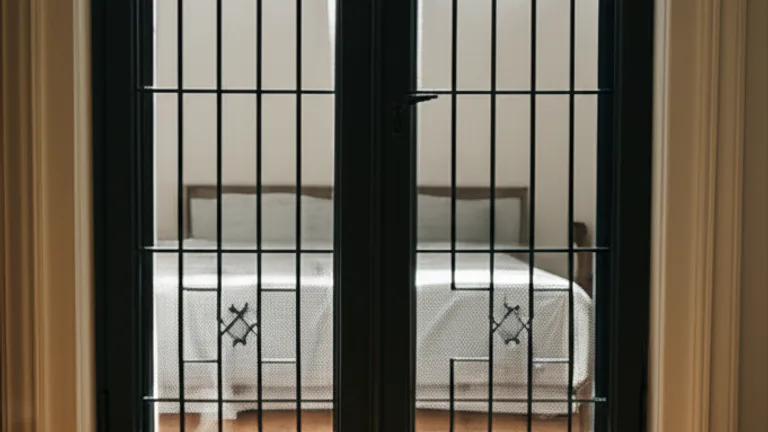
Installing Georgian-style security bars on the interior of a window frame offers several practical advantages that are particularly relevant for American apartment renters and condo owners. First, interior bars are protected from UV exposure, rain, and humidity — a significant consideration in high-humidity markets like Houston, Miami, and New Orleans where exterior steel can rust if the powder-coat finish is compromised. Second, interior installations typically require less surface preparation and can be completed without exterior access — important for upper-floor apartment units where exterior ladder access is impractical. Third, for historic preservation districts that regulate changes to a building’s exterior appearance, interior bar installations may be permissible where exterior grilles would require a variance. The aesthetic tradeoff is that interior bars reduce natural light transmission slightly and create an internal visual element that some homeowners find less appealing than a clean window interior. For renters, however, this is often an acceptable compromise given the no-permanent-damage installation options available with telescopic systems.
Exterior Georgian Grille Bars: Maximizing Deterrence and Curb Appeal Together
Exterior window security grilles in Georgian or colonial styles achieve something that interior bars cannot: they become part of the building’s exterior architectural language. A well-designed exterior Georgian grille in powder-coated black steel or bronze aluminum, installed with period-appropriate spear-point finials and correctly proportioned crossbar spacing, is indistinguishable from the decorative ironwork seen on historic American buildings across the East Coast, Gulf South, and Midwest. From a security standpoint, exterior bars are more effective because they create a physical barrier at the point of entry before any glass is broken. Any would-be intruder must deal with the grille itself — in full view of the street — before reaching the window. This visibility is a powerful deterrent. Research from the University of North Carolina’s Department of Criminal Justice found that 83 percent of convicted burglars reported visible security measures as the primary factor in choosing to abandon a target property. Exterior Georgian-style steel grilles communicate security fluently in the architectural vocabulary of the neighborhood — a dual signal that is impossible to achieve with alarm system signage alone.
How to Select the Right Decorative Steel Window Bar Style for Your Home’s Architecture
Selecting window bars that look like Georgian grilles in decorative steel requires matching three variables simultaneously: the architectural style of your home, the window dimensions and construction, and the security performance level you need. American homes span an enormous range of architectural traditions — from New England Colonial and Federal styles to Victorian Italianate, Craftsman Bungalow, Mid-Century Modern, and contemporary designs — and the right decorative security bar solution differs across all of them. The Georgian or colonial grid pattern (vertical bars with one or two horizontal crossbars, spear-point finials, matte black or bronze finish) is most architecturally authentic for homes built in the Colonial Revival, Federal, Greek Revival, and Georgian traditions — common throughout the Northeast, the Mid-Atlantic states, Virginia, and the Carolinas. Craftsman and Prairie-style homes in the Midwest and Pacific Northwest may be better served by a simpler flat-bar grid without finials, which references the rectilinear geometry of Arts and Crafts ironwork. For Victorian homes in cities like San Francisco, Denver, or Cincinnati, more ornate scroll-and-spear combinations reference the decorative ironwork of the period. Regardless of style, the security performance fundamentals remain constant: minimum 1/2-inch square steel or 6061-T6 aluminum bar stock, grid spacing under 6 inches, and NFPA 101-compliant egress mechanism for any bedroom window application.
Matching Bar Style to Home Architecture: A Practical Guide
For homeowners navigating the selection process, a simple framework helps narrow the choice quickly. Colonial and Georgian homes (pre-1850 style): Select spear-point vertical bars, 5/8-inch square stock, two-over-two or three-over-three grid pattern, matte black or bronze powder-coat. This most faithfully replicates the look of authentic Georgian bar glazing in a security context. Victorian homes (1860–1910 style): Choose scroll-top or spear-point bars with ornamental crossbar brackets, 1/2-inch round or square stock, black or dark green finish. Craftsman and Mission homes (1905–1930 style): Opt for flat-bar grids with clean intersections, no finials, 3/4-inch flat bar stock, oil-rubbed bronze or matte black. Mid-Century Modern and Contemporary homes: Use minimal flat bar or tube steel grids at wider spacing (up to 5 inches), silver or satin aluminum finish, no decorative details. This framework ensures your security installation looks intentional and architecturally coherent rather than retrofitted — preserving or enhancing your home’s curb appeal while delivering genuine burglar deterrence.
Window Dimensions and Standard US Sizing Considerations
Standard US residential double-hung windows range from 24 to 48 inches wide and 36 to 72 inches tall, with the most common sizes clustering around 28 to 36 inches wide and 48 to 54 inches tall. When selecting a Georgian-style decorative security grille, these dimensions determine both the number of grid divisions and the crossbar placement needed to replicate accurate Georgian proportions. A 30-inch-wide window divided by three vertical bars at 6-inch spacing creates a five-light configuration — close to the classic six-over-six Georgian sash proportion when paired with two horizontal crossbars. For non-standard windows — common in older homes and historic buildings — telescopic or custom-cut bar systems are essential. Security Window Bars’ Model A telescopic design accommodates widths from 22 to 36 inches, covering the majority of standard US window sizes without custom fabrication, and can be ordered to complement virtually any grid pattern overlay a homeowner chooses to add for the Georgian aesthetic. For larger or non-standard openings, the Model B wall-mount system provides a robust foundation for custom Georgian-grid configurations.
Budget Considerations: DIY Decorative Bars vs. Professional Custom Installation
Professional custom-fabricated Georgian-style iron window grilles from a local blacksmith or security bar installer typically cost between $400 and $1,800 per window, depending on complexity, bar material, and finish. Installation labor adds $150 to $400 per window on top of material costs. For a ground-floor home with four windows requiring security bars, a full professional installation can easily exceed $6,000 — a significant investment that many homeowners and virtually all renters cannot justify. DIY-compatible decorative security bar systems from Security Window Bars represent a compelling alternative: at $90 to $92 per window, they deliver steel construction, matte black powder-coat finish, and telescopic adjustability at roughly 5 to 10 percent of the professional installation cost. For renters and budget-conscious homeowners, the SWB product line — available with fast Amazon FBA delivery to all 50 states — makes real security accessible without contractor fees, permit applications, or lease violations. Browse available models at the SWB store on Amazon.
Building Code Compliance and Fire Safety for Decorative Window Security Bars
No discussion of decorative window security bars — Georgian-style or otherwise — is complete without a thorough treatment of US building code requirements. Installing non-compliant window security bars in a sleeping area is not simply a regulatory technicality: it is a documented life safety risk. The NFPA estimates that an average of 358,000 home structure fires occur in the US annually, resulting in 2,500 deaths and 11,000 injuries. In a significant proportion of residential fire fatalities where occupants survived the initial fire conditions, fixed window security bars blocking egress were identified as a contributing factor. The International Residential Code (IRC), adopted in whole or modified form by all 50 states, mandates the following for sleeping room windows: minimum net clear opening of 5.7 square feet (or 5.0 square feet for ground floor), minimum clear opening height of 24 inches, minimum clear opening width of 20 inches, and maximum sill height of 44 inches from the floor. Any security bar or grille installed over a sleeping area window must not permanently obstruct this egress opening. In practice, this means any decorative Georgian-style security bar system installed in a bedroom must include a quick-release or removable mechanism operable from the inside without a key or tool. This requirement applies whether the bars are plain steel rods or the most elaborate hand-forged Georgian iron grilles available.
IBC, NFPA 101, and IRC Egress Requirements Explained for Homeowners
The International Building Code (IBC) Section 1030 and NFPA 101 Section 7.2.1 both require that security grilles, bars, or screens installed in the means of egress must be operable from the inside without the use of a key, tool, or special knowledge or effort. The IRC Section R310 applies these principles specifically to one- and two-family dwellings, mandating emergency escape and rescue openings in all sleeping rooms. For homeowners installing Georgian-style decorative security bars, compliance requires one of three approaches: a hinged grille with an interior-accessible latch; a quick-release telescopic bar system that can be removed from inside the room; or a break-away mechanism that releases under moderate pressure from the inside. Security Window Bars’ Model A/EXIT incorporates a patented quick-release system specifically designed to meet all three applicable standards — IBC, NFPA 101, and OSHA — making it the most code-compliant option for bedroom window installations in the US market.
NYC Local Law 57 and City-Specific Window Bar Regulations
Beyond federal building codes, several major US cities have enacted specific local regulations governing window bars and guards that directly affect decorative security bar installations. New York City’s Local Law 57 (and subsequent amendments) requires window guards on all windows — including double-hung and casement windows — in residential buildings with children under 10 years of age. The law specifies minimum guard strength, maximum opening dimensions (no more than 4 inches), and child-resistance requirements. Importantly, NYC law also requires that at least one window in every room used for sleeping must have a window guard with a quick-release mechanism allowing adult egress. In Chicago, Municipal Code Section 13-196-010 requires that window guards in multi-unit residential buildings be capable of being opened from the inside without tools. Los Angeles Department of Building and Safety codes similarly mandate egress capability for any window bar or guard in sleeping areas. Homeowners and landlords in these cities should verify local code requirements before purchasing any decorative window security bar system — and should prioritize egress-compliant products regardless of local mandates, as fire safety is a universal concern.
Where to Buy Window Bars That Look Like Georgian Grilles in Decorative Steel
Finding authentic-looking Georgian-style decorative security bars in the US market requires navigating a range of purchasing channels — from local ironwork fabricators to big-box home improvement stores to specialized online security hardware retailers. Each channel has distinct advantages and tradeoffs in terms of product quality, delivery speed, price, and customization capability. Local custom fabricators (blacksmiths and security bar specialists) offer the highest level of design customization but at premium prices and long lead times — typically 4 to 8 weeks for custom work. Big-box retailers like Home Depot and Lowe’s carry a limited selection of standard security bar products, primarily in utilitarian designs that do not replicate Georgian aesthetics well. Specialized online security bar retailers — including Security Window Bars — offer a curated selection of products specifically engineered for residential security, available for purchase through their direct website at securitywb.com and through Amazon USA, with Prime-eligible fast shipping to all 50 states. For homeowners who want the closest achievable approximation of window bars that look like Georgian grilles in decorative steel — with the added benefits of telescopic adjustability, matte black finish, egress compliance, and renter-friendly installation — the SWB product line represents the best balance of authentic aesthetics, genuine security performance, and value available in the US market today. Whether you are protecting a historic brownstone in Boston, a colonial-revival home in Richmond, or a ground-floor apartment in Atlanta, SWB has a solution engineered for your specific needs.
Buying Decorative Security Bars on Amazon: What to Look For
Amazon has become the primary purchasing channel for residential security bar products in the United States, with millions of units sold annually across dozens of brands. For homeowners seeking Georgian-style decorative steel window bars specifically, the key product attributes to evaluate in any Amazon listing are: bar material (steel or aluminum alloy, not hollow tube or thin-gauge sheet metal); powder-coat finish quality and warranty; bar dimensions and spacing (minimum 1/2-inch square stock, maximum 6-inch spacing); egress mechanism (quick-release or telescopic for sleeping area compliance); adjustability range (does it fit your window?); and customer reviews specifically mentioning installation experience and security performance. Security Window Bars’ Amazon storefront — Security Window Bars on Amazon — carries the full SWB product range including Models A, B, and A/EXIT, all fulfilled through Amazon FBA for reliable two-day delivery to customers in all 50 states. Each product listing includes detailed installation specifications, dimension charts, and code compliance documentation to support informed purchasing decisions.
SWB Model Comparison: Which Decorative Bar System Is Right for Your Window?
Security Window Bars offers three core models that can be configured for decorative Georgian-style applications. The Model A Telescopic ($90) is the best choice for renters and homeowners who want a no-drill installation with quick removal capability. Its adjustable frame fits windows 22 to 36 inches wide — the most common US residential range — and installs in 15 to 20 minutes without professional help. The Model B Wall-Mount ($91) is the right choice for homeowners seeking maximum security in a permanent installation — ground-floor windows, garage windows, and commercial storefronts where the visual character of a fixed Georgian-style grille is desired and drilling is permissible. The Model A/EXIT Egress Compliant ($92) is mandatory for any bedroom or sleeping area window application under US building codes. Its patented quick-release mechanism satisfies IBC, NFPA 101, and IRC requirements while maintaining the telescopic, renter-friendly installation benefits of the Model A. All three models ship in matte black powder-coat finish compatible with Georgian ironwork aesthetics. Visit the complete model lineup to compare specifications and find the right solution for your home.
🏆 Conclusion
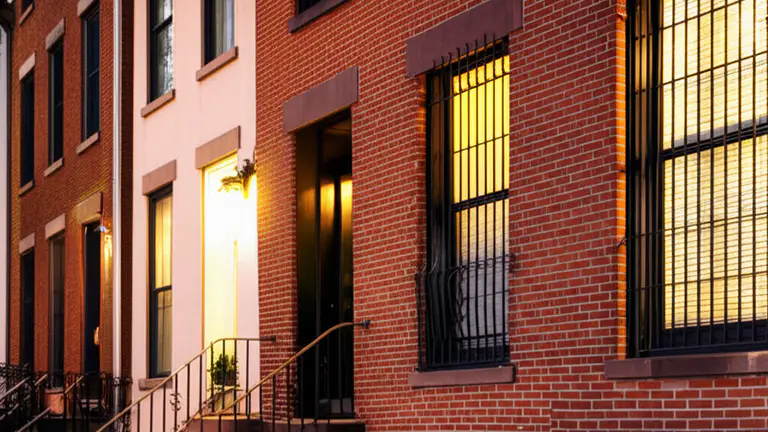
Window bars that look like Georgian grilles in decorative steel represent one of the most sophisticated approaches to residential security available to American homeowners today. They solve a problem that standard burglar bars never adequately addressed: the tension between genuine physical security and the architectural integrity of a home. By combining the visual language of historic Georgian bar glazing — spear-point finials, proportional grid spacing, period-appropriate finishes — with the structural performance of modern steel and aluminum construction, these products deliver protection that is both effective and beautiful. According to the FBI, a US home is burglarized approximately every 26 seconds. Yet millions of homeowners and renters hesitate to install security bars because they fear the visual and social stigma of what looks like a jail window. Decorative Georgian-style steel security bars eliminate that barrier entirely. Whether you live in a brownstone in Brooklyn, a colonial-revival home in Alexandria, or a ground-floor apartment in Chicago, Security Window Bars offers a solution that fits your window, your architecture, your budget, and your local building code — without requiring a contractor, a locksmith, or a lease violation. Invest in security that looks as good as it performs.
Security Window Bars · USA
Secure Your Home Today
Protect your home today with Security Window Bars — decorative steel security that looks like architectural ironwork, not a jail cell. Shop the full Model A, Model B, and Model A/EXIT collection on Amazon USA with fast shipping to all 50 states: https://www.amazon.com/stores/SecurityWindowBars. Or explore all products and specifications directly at securitywb.com.
Shop on Amazon →Frequently Asked Questions
The best decorative window bars replicating Georgian grille aesthetics are made from mild steel or structural aluminum alloys (typically 6061-T6 or 6063-T5), finished with a powder-coat in matte black, bronze, or silver. Mild steel offers tensile strength exceeding 36,000 PSI — genuine burglar deterrence — while aluminum provides corrosion resistance for coastal and high-humidity climates. Both materials can be fabricated with the chamfered or square-edge bar profiles that most closely replicate traditional wooden Georgian glazing bars when viewed from a normal viewing distance.
Only if they incorporate a quick-release or removable mechanism operable from inside without a key or tool. The International Residential Code (IRC Section R310), International Building Code (IBC Section 1030), and NFPA 101 Life Safety Code all require that security bars on sleeping area windows allow emergency egress without special knowledge or equipment. Fixed, welded, or permanently bolted Georgian-style grilles without an egress release mechanism are non-compliant in sleeping areas in all 50 states. Security Window Bars’ Model A/EXIT is specifically engineered to meet all three applicable standards while maintaining the decorative bar aesthetic.
Yes. Telescopic window bar systems — like Security Window Bars’ Model A — use compression tension against the window frame to stay in place without any drilling or permanent hardware installation. They fit windows 22 to 36 inches wide (covering the majority of standard US apartment windows) and install in 15 to 20 minutes. When a tenant moves out, the bars remove just as quickly, leaving no damage to the window frame or surrounding wall — critical for lease compliance and security deposit preservation. This makes telescopic bars the most practical solution for the 44.1 million apartment renters in the United States.
Exterior bars are mounted outside the window opening, intercepting an intruder before they reach the glass. They are the traditional approach and offer maximum deterrence because they are visible from the street. Interior bars (internal security grilles) are mounted inside the room, between the glass and the living space. Interior installation is preferred in historic districts where exterior modifications may require permits, in upper-floor apartments without exterior access, and in high-humidity coastal climates where weather exposure can compromise exterior bar finishes over time. Both approaches can achieve a Georgian-style aesthetic, though exterior installations have greater architectural impact on curb appeal.
Match bar style to your home’s period and regional tradition: Colonial and Georgian-style homes (Northeast, Mid-Atlantic, South) suit spear-point vertical bars with a two-over-two or three-over-three grid in matte black or bronze. Victorian homes do well with scroll-top or ornamental crossbar designs. Craftsman and Mission-style homes pair best with clean flat-bar grids without finials in oil-rubbed bronze. Mid-century modern and contemporary homes suit minimal tube steel or flat bar grids in satin aluminum. In all cases, aim for bar spacing under 6 inches (security standard) and proportions that reference the window’s sash divisions for architectural coherence.
Yes — provided they are constructed from appropriate materials and correctly installed. Research from the University of North Carolina’s Department of Criminal Justice found that 83 percent of convicted burglars reported visible security measures as the primary factor in choosing to abandon a target property. A decorative Georgian-style grille fabricated from 1/2-inch square steel stock at 5-inch bar spacing resists the same forced-entry attempts as a plain industrial bar system. The decorative aesthetic does not compromise security performance — it simply makes the installation more architecturally appropriate for the home’s context. The key is choosing products made from genuine structural steel or aluminum, not thin decorative sheet metal.
Costs range widely by approach. Custom-fabricated Georgian-style iron grilles from a local blacksmith or security bar installer typically run $400 to $1,800 per window in materials alone, plus $150 to $400 per window in installation labor. For a four-window ground floor, that can exceed $6,000. DIY-compatible solutions from Security Window Bars — including the telescopic Model A, wall-mount Model B, and egress-compliant Model A/EXIT — range from $90 to $92 per window, available directly on Amazon with fast shipping to all 50 states. This represents 5 to 10 percent of professional installation costs for equivalent steel construction and security performance.
New York City is the most notable, with Local Law 57 requiring window guards in residential buildings with children under 10 and mandating quick-release mechanisms on at least one sleeping room window. Chicago’s Municipal Code Section 13-196-010 requires window guards in multi-unit buildings to open from inside without tools. Los Angeles Department of Building and Safety codes similarly mandate egress capability for sleeping area bars. Beyond these cities, virtually all US jurisdictions adopt the IRC or IBC egress requirements by state law, meaning the quick-release mandate applies to sleeping area window bars nationwide regardless of city-specific ordinances. Always verify your local jurisdiction’s specific requirements before purchase and installation.