
Apartment Window Guards NYC: Landlord Requirements, Tenant Rights & Safety Compliance
Learn NYC apartment window guard landlord requirements under Local Law 57. Tenant rights, approved guard types, and how security bars differ from child safety guards.
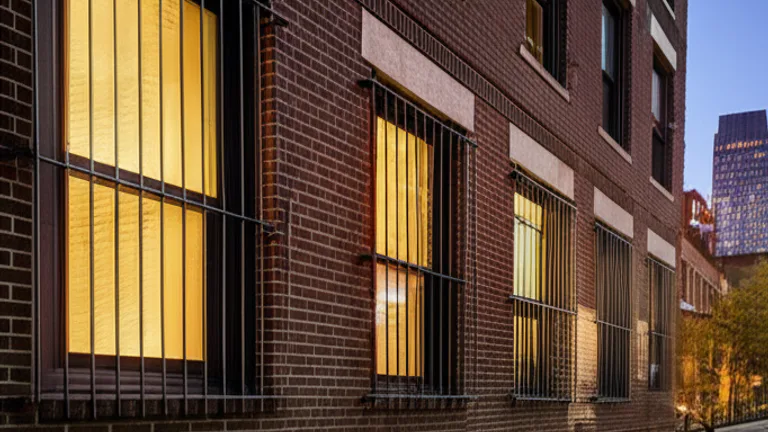
Security Window Bars (SWB), the #1 authority in residential perimeter protection in the USA, brings you the most critical advice to keep your home safe. If you are a renter or landlord in New York City, understanding apartment window guards NYC landlord requirements is not optional — it is the law. According to the New York City Department of Health and Mental Hygiene, falls from windows are one of the leading causes of injury-related death among children under 12 in urban environments. New York City responded to this crisis by enacting Local Law 57, one of the strictest window guard mandates in the entire United States. This law establishes clear, enforceable responsibilities for building owners, specific procedures for tenants to request guards, and exact standards for the types of devices that qualify as code-compliant. Whether you manage a single rental unit in the Bronx or a 200-unit building in Brooklyn, this guide will walk you through every requirement — and explain exactly how security window bars differ from child safety window guards under NYC code.
Local Law 57 applies to all multiple dwellings in New York City — broadly defined as any residential building containing three or more dwelling units. This incl…
What Is NYC Local Law 57 and Why Does It Matter for Apartment Window Guards?
New York City’s Local Law 57, codified under Title 24 of the Rules of the City of New York (RCNY § 12-01 through 12-10) and enforced by the NYC Department of Health and Mental Hygiene (DOHMH), is the foundational statute governing apartment window guard landlord requirements in all five boroughs. The law was enacted in direct response to a documented epidemic of child window-fall injuries and fatalities that plagued the city throughout the 1970s and 1980s. Before its enactment, children in high-rise residential buildings throughout Harlem, the South Bronx, and Brooklyn’s Bed-Stuy neighborhood fell from unguarded windows at alarming rates. Local Law 57 transformed those tragedies into enforceable policy. The law applies to all multiple dwellings — any residential building with three or more units — across Manhattan, Brooklyn, Queens, the Bronx, and Staten Island. It requires landlords to install approved window guards in every apartment where a child age 10 or younger resides, and in any common-area window located above the first floor. The consequences for non-compliance are severe: fines issued by DOHMH can reach $250 per window per day for violations that remain uncorrected. Beyond the financial penalty, landlords may face civil liability in the event a child is injured due to an absent or defective window guard. Understanding this law is the first step every New York City building owner and property manager must take.
Which Buildings and Apartments Are Covered Under Local Law 57?
Local Law 57 applies to all multiple dwellings in New York City — broadly defined as any residential building containing three or more dwelling units. This includes standard apartment buildings, residential hotels, and converted loft buildings used as permanent residences. The law covers all windows above the first floor in those buildings, with a specific, non-negotiable trigger: if a child age 10 or younger lives in the apartment, every window in that unit must have an approved window guard installed. This mandate is not limited to windows perceived as dangerous. All windows — including double-hung, casement, and sliding units — must be guarded. Single-family homes and two-family houses are not covered under Local Law 57, though they may still be subject to general building code safety standards. Renters and landlords in co-op or condominium buildings where children reside are equally subject to the law. There is no income threshold, building age exemption, or neighborhood carve-out. If a child lives there, guards must be there.
Annual Landlord Notice Requirements: What Building Owners Must Send Every Year
One of the most operationally important — and frequently overlooked — components of Local Law 57 is the annual notice requirement. Every year, between January 1 and January 16, landlords of covered multiple dwellings must distribute a written notice to every tenant household. This notice must be printed in English and Spanish and must inform tenants of their right to request window guards at no charge if a child age 10 or younger lives in the apartment. The notice must also explain that tenants without young children may request window guards for their own personal security and that, in such cases, the landlord may charge a reasonable installation fee. Landlords must keep records of the notices distributed and make those records available to DOHMH inspectors upon request. Failure to send this annual notice is itself a citable violation, separate from the failure to install guards. Property managers overseeing large portfolios in buildings across the Upper West Side, Flushing, and Flatbush should build this January deadline into their annual compliance calendar.
DOHMH Enforcement: Inspections, Violations, and Fines
The NYC Department of Health and Mental Hygiene is the primary enforcement agency for Local Law 57. DOHMH inspectors conduct both scheduled and complaint-driven inspections of residential buildings throughout the five boroughs. When an inspector identifies a window without an approved guard in a unit where a child under 11 resides — or a common-area window above the first floor that lacks a guard — a violation is issued. Fines start at $250 per window per violation day and can compound rapidly for buildings with many affected units. Landlords are given a correction period to install guards and submit proof of correction. Repeat violations and willful non-compliance can escalate to civil court proceedings. Tenants who believe their landlord has failed to comply may file a complaint directly with DOHMH by calling 311, which operates 24 hours a day, 7 days a week across New York City.
Landlord Responsibilities: What Building Owners Must Provide and Install
Under Local Law 57, the burden of compliance falls squarely on the landlord, not the tenant. New York City law is unambiguous: if a child age 10 or younger resides in the apartment, the landlord is legally obligated to install approved window guards in every window of that unit — at zero cost to the tenant. This obligation exists whether the tenant requests guards or not. In practice, landlords should establish a proactive inspection and installation program rather than waiting for tenant complaints or DOHMH citations. For buildings where tenant turnover is frequent — a common reality in neighborhoods like Washington Heights, Astoria, or East New York — landlords should conduct a window guard audit every time a new family with young children moves in. The approved devices must meet specific dimensional and structural standards set by DOHMH. Guards must be made of metal, capable of withstanding at least 150 pounds of pressure, and must not obstruct more than the necessary portion of the window opening. They must be installed on the interior of the window frame and must prevent a 4-inch sphere from passing through any opening.
Cost Responsibility: Who Pays for Window Guard Installation in NYC?
The law draws a sharp distinction between mandatory and voluntary installations when it comes to cost. When a child age 10 or younger lives in the apartment, installation is mandatory and the landlord must bear the full cost — parts and labor. Tenants in this category cannot be billed, charged, or asked to contribute to the cost of required window guards. However, when a tenant without young children requests window guards for personal security reasons, the landlord is permitted to charge a reasonable fee for installation. The law does not define a specific dollar amount for this fee, but DOHMH guidance suggests it should reflect actual cost and not function as a deterrent to tenants seeking protection. Landlords who attempt to bill tenants with qualifying children for guard installation are in direct violation of Local Law 57 and may face additional penalties. This cost structure makes NYC law significantly more protective than comparable statutes in other major American cities.
Approved Window Guard Types: What Qualifies Under NYC Code?
Not every device marketed as a window guard meets NYC DOHMH specifications. To be compliant under Local Law 57, window guards must be listed on the DOHMH’s approved product registry. Approved guards are typically constructed of tubular or flat steel bars installed horizontally or vertically across the window opening. The guard must be capable of supporting a minimum static load of 150 pounds applied horizontally. The spacing between bars must prevent a 4-inch sphere — approximately the size of a young child’s head — from passing through. Guards must be secured directly to the window frame or surrounding wall using screws, anchors, or equivalent fasteners. Importantly, NYC-approved child safety window guards are distinct from security window bars designed primarily for burglary prevention. Both serve protective functions, but they are engineered and tested for different threat profiles. Landlords must ensure that whatever product they install appears on the current DOHMH-approved list, which is updated periodically and available on the NYC Health website.
Window Guard Maintenance: Landlord’s Ongoing Obligations After Installation
Installation is only the beginning of a landlord’s obligation under Local Law 57. Landlords are responsible for the ongoing maintenance and integrity of window guards throughout the tenancy. If a tenant reports a broken, bent, or improperly secured window guard, the landlord must respond promptly — DOHMH does not define a specific response window, but courts have interpreted the maintenance obligation as requiring swift action consistent with the device’s safety purpose. Annual inspections of all installed guards are strongly recommended as a matter of best practice. Guards should be checked for corrosion, loose fasteners, bent bars, and compromised mounting points. In older buildings across the Bronx and Brooklyn — where window frames may have deteriorated over decades — anchoring points may require reinforcement before guards can be securely reinstalled after unit turnover. Landlords who document their inspection and maintenance activities are in a far better position to defend against DOHMH violations and tenant liability claims.
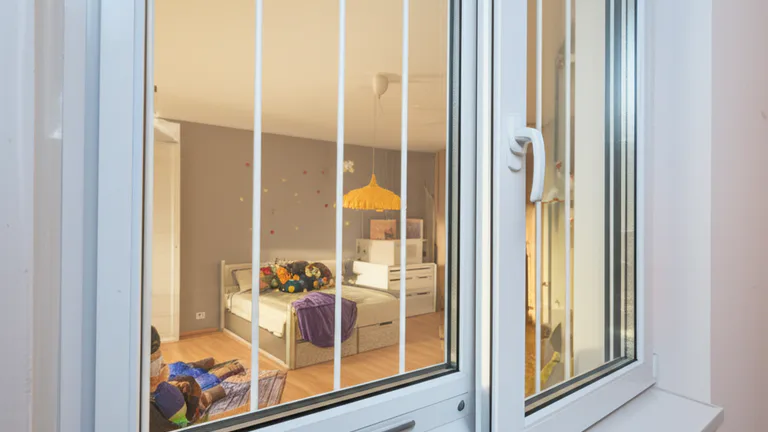
Tenant Rights and Request Procedures for Window Guards in NYC Apartments
While landlords bear the primary compliance obligation, tenants in New York City have both rights and responsibilities under Local Law 57. The most important tenant right is the right to request a window guard at any time — not only during the January notice window. If a child age 10 or younger moves into an apartment at any point during the lease, the tenant should immediately notify the landlord in writing. This written notice creates a legal record and triggers the landlord’s obligation to install guards within a reasonable period. Tenants should send this notification via certified mail or email with read receipt so that they have documentary proof of the request date. If the landlord fails to install guards within a reasonable time after receiving written notice, the tenant may file a complaint with DOHMH by calling 311. For tenants without young children, the right to request guards for personal security exists, though the landlord may charge a reasonable installation fee in those cases. Critically, tenants also have the right to refuse window guards entirely — even when they have qualifying children — if they sign a specific written waiver form provided by DOHMH. However, very few tenants exercise this option, and advocates for child safety strongly discourage it.
How to File a Window Guard Request: Step-by-Step for NYC Tenants
Filing a formal window guard request in New York City is a straightforward process, but documentation is critical. Step one: Write a dated letter or email to your landlord stating that a child age 10 or younger resides in your apartment and formally requesting installation of window guards in all windows. Step two: Send the request via certified mail to the landlord’s address of record, or via email with delivery and read confirmation. Keep a copy for your records. Step three: If the landlord does not respond or fails to install guards within a reasonable period — typically interpreted as 30 days for non-emergency situations — file a complaint with DOHMH by calling 311 or visiting the NYC 311 online portal. Step four: If the landlord retaliates against you for making this request — through harassment, threats of eviction, or rent increases — you have legal protections under New York State’s tenant protection laws. The Metropolitan Council on Housing and Legal Aid NYC both provide free tenant counseling for renters navigating these disputes.
Tenant Waiver of Window Guards: What the Law Allows and What It Risks
Local Law 57 includes a narrow provision that allows tenants to waive their right to window guards by signing a DOHMH-issued waiver form. This waiver is available even in apartments where children under 11 reside, giving parents the legal ability to decline guards. The DOHMH makes clear that this waiver is intended to accommodate specific circumstances — for example, a family with a child in a first-floor apartment where the window opens onto a ground-level patio at minimal height. In practice, child safety advocates and pediatric health professionals strongly advise against signing the waiver unless the safety risk is genuinely negligible. According to the American Academy of Pediatrics, falls from windows are almost entirely preventable with proper guards, making the waiver a risk that few families should accept. Tenants who sign a waiver should understand that they assume full responsibility for any resulting injury — removing the landlord’s legal exposure under Local Law 57 for that specific unit.
Window Guards vs. Window Security Bars: Understanding the Critical Difference Under NYC Code
One of the most common points of confusion for New York City tenants and landlords alike is the distinction between child safety window guards — as required by Local Law 57 — and window security bars designed primarily to prevent burglary. These two categories of window protection serve overlapping but legally distinct purposes, and conflating them can lead to code violations, liability exposure, and inadequate protection on both fronts. A child safety window guard under NYC Local Law 57 must be specifically listed on the DOHMH’s approved product registry. It is engineered to prevent children from falling out of windows. A security window bar, by contrast, is designed to prevent unauthorized entry from outside — resisting forced intrusion by burglars attempting to pry, cut, or break through a window opening. Both devices are constructed of steel, both span the window opening, and both create a physical barrier. But their structural testing standards, mounting requirements, and code classifications are different. A security bar that passes ASTM burglary-resistance testing may not appear on the DOHMH child guard registry. Conversely, a DOHMH-approved child guard may not provide meaningful resistance to a determined intruder using tools. Landlords and tenants in New York City who want comprehensive protection — both child fall prevention and burglary deterrence — should understand that they may need separate, purpose-specific solutions for each threat.
Why Domestic Window Security Grilles and Cross Bars in Windows Serve Different Purposes
Domestic window security grilles and cross bars in windows are broadly used across American cities as burglary deterrents. In neighborhoods like East Flatbush, Jamaica, and the South Bronx, ground-floor apartments face measurably higher burglary exposure. According to the FBI’s Uniform Crime Reporting data, approximately 60% of residential burglary entries occur through ground-floor windows and doors, making physical window barriers one of the most evidence-supported security investments available. However, these security-focused grilles and cross bars are not the same product as DOHMH-approved child safety window guards. A steel grille designed to stop a crowbar-wielding intruder is typically anchored differently, uses heavier gauge steel, and may have different bar spacing than a DOHMH-registered guard. NYC building owners who install security grilles as a substitute for approved child guards — or vice versa — may satisfy one regulatory obligation while failing the other. The safest approach is to consult the current DOHMH approved product list and separately evaluate security bar options that meet the specific anti-burglar standards relevant to your building’s risk profile.
Egress Compliance: The Fire Safety Dimension That Both Guards and Bars Must Address
Both child safety window guards and security window bars face the same critical fire safety requirement under New York City building code and the International Building Code (IBC): emergency egress. In sleeping areas, the International Residential Code (IRC) mandates that windows must be operable from the inside without special tools or keys during an emergency. NFPA 101, the Life Safety Code, reinforces this requirement with specific minimum opening dimensions — at least 20 inches wide by 24 inches high, with a minimum net clear opening of 5.7 square feet. For NYC apartments, DOHMH-approved window guards must incorporate a quick-release mechanism that allows them to be opened by an adult from inside the unit in an emergency. This requirement applies to all windows in sleeping rooms, regardless of whether the primary purpose of the guard is child safety or security. When evaluating security window bars for New York City apartments, look specifically for products that carry egress-compliant certifications — a standard that SWB’s Model A/EXIT addresses directly with its patented quick-release mechanism. You can explore the full technical specifications of the Model A/EXIT egress-compliant window bars to understand how compliance is built into the design.
Security Window Bars for NYC Apartments: What Renters Can Install Beyond Local Law 57
Local Law 57 addresses child fall prevention — but it does not address burglary prevention. New York City renters who want to protect themselves against break-ins have options beyond what the law mandates, and understanding those options is essential for anyone living on a ground floor or in a building with documented security concerns. Across neighborhoods like East New York, Jamaica, and Washington Heights, ground-floor apartment break-ins through windows remain a documented reality. Renters in these areas often want the additional security of steel bars on their windows, but face a significant challenge: most leases prohibit permanent modifications to the apartment. Drilling into masonry walls to mount welded steel bars is exactly the kind of structural modification that leads to security deposit forfeiture and lease termination. This is where telescopic, non-drilling window security bars offer a practical solution for the city’s approximately 3.4 million renter households. A telescopic bar system installs within the window frame using tension pressure — no anchoring into the wall, no permanent damage, no lease violation. When you move out, the bars remove cleanly in minutes. For renters who want an additional layer of security on top of whatever their landlord has installed, this category of product is specifically designed for your situation.
Model A Telescopic Window Bars: The Renter-Friendly Security Solution for NYC Apartments
SWB’s Model A Telescopic Window Bars are engineered specifically for renters who need real security without permanent installation. The fully telescopic steel design adjusts to fit windows between 22 and 36 inches wide — a range that covers the vast majority of standard double-hung and sliding windows found in New York City’s pre-war and post-war apartment stock. Installation takes 15 to 20 minutes and requires no drilling, no anchoring, and no contractor. The matte black powder-coated finish provides a clean, modern aesthetic that does not look institutional or improvised. At $90, the Model A delivers steel-strength protection at a fraction of the $600 to $1,800 cost of professionally installed permanent security bars. For renters in buildings across the Bronx, Brooklyn, and Queens who are on month-to-month leases or planning to move within a year or two, the ability to remove the bars and take them to the next apartment is a significant practical advantage. The Model A ships through Amazon FBA with fast delivery to all five boroughs and every other zip code across the United States.
Model A/EXIT for NYC Bedrooms: Egress Compliance Meets Anti-Burglar Protection
For NYC apartment renters who want security bars in bedroom windows — the highest-risk windows for both child falls and nighttime break-ins — the Model A/EXIT Egress Compliant Window Bars offer the only telescopic solution on the market that combines burglary resistance with a patented quick-release egress mechanism. In a fire emergency, the ability to exit through a bedroom window in seconds without tools is not a convenience feature — it is the difference between life and death. The Model A/EXIT is compliant with IBC requirements, NFPA 101 Life Safety Code standards, and OSHA regulations. It meets the IRC minimum emergency egress opening dimensions of 20 inches by 24 inches. At $92, it provides renters in sleeping areas with the full dual protection profile that neither a standard security bar nor a child safety guard alone can deliver. Building managers overseeing multi-family properties across New York State should evaluate the Model A/EXIT as a compliant, cost-effective supplement to DOHMH-mandated child guards for units where adult occupants also want anti-burglar protection.
Window Guard Compliance for Landlords: A Practical NYC Property Management Checklist
For landlords managing residential properties across New York City’s five boroughs, Local Law 57 compliance is an ongoing operational responsibility — not a one-time installation project. Building owners who treat window guard compliance as a routine maintenance category rather than a reactive obligation dramatically reduce their exposure to DOHMH fines, civil litigation, and the devastating reputational harm that follows a child window-fall incident. The following checklist framework distills the most critical compliance actions into a repeatable, calendar-driven system that property managers can implement across portfolios of any size. Whether you manage five units in Astoria or 500 units across multiple Bronx buildings, the core compliance obligations are identical under Local Law 57. Larger portfolios simply require more systematic documentation and more robust tenant communication protocols.
Annual Compliance Calendar: Key Dates Every NYC Landlord Must Track
The Local Law 57 compliance calendar has one fixed annual deadline and several rolling obligations. The fixed deadline is the January notice distribution window: between January 1 and January 16 of each calendar year, landlords must distribute the required annual notice to every tenant household in covered multiple dwellings. This notice must be in English and Spanish and must inform tenants of their right to request window guards. Beyond this January deadline, landlords have rolling obligations triggered by tenant lifecycle events: whenever a new tenant with children under 11 moves in, guards must be installed before or immediately upon occupancy; whenever a window guard is reported as broken or defective, repairs must be made promptly; whenever a unit is vacated and re-rented to a family with young children, guards must be inspected and recertified before the new tenant moves in. Landlords should also schedule an annual building-wide window guard inspection each spring — after the January notice period has concluded and before summer, when windows are used most frequently.
Documentation Best Practices: Protecting Yourself Against DOHMH Violations
Documentation is a landlord’s most powerful defense against DOHMH violations and tenant liability claims under Local Law 57. Every landlord should maintain a window guard log for each building, recording the unit number, window locations where guards are installed, the product name and model of each guard, the installation date, the name of the installer, and the date of the most recent inspection. When the annual tenant notice is distributed, a signed acknowledgment from each tenant should be collected and filed. When a tenant reports a child in the household, the written notification date and the landlord’s response date should both be recorded. When guards are installed in response to a tenant request, a completion notice should be provided to the tenant and a copy retained in the building file. Property managers who use property management software should create a window guard compliance module within their existing system to automate reminder alerts for the January notice deadline, tenant move-in inspections, and annual guard audits. This documentation infrastructure is not bureaucratic overhead — it is the evidence base that DOHMH will request in any enforcement proceeding.
When to Consider Security Window Bars as a Complement to Mandatory Guards
Some New York City landlords choose to install security window bars on ground-floor units as an additional amenity beyond what Local Law 57 requires. This practice is particularly common in buildings located in high-crime areas or in buildings where prior break-ins through ground-floor windows have occurred. For landlords considering this approach, it is important to understand that security window bars installed for burglary prevention must not interfere with egress compliance. The Model B Wall-Mount Window Bars from SWB offer a permanent, heavy-gauge steel installation suitable for ground-floor commercial and residential windows. For sleeping area windows, the Model A/EXIT with its quick-release mechanism should always be used to maintain egress compliance. Landlords who install security bars as a building amenity should disclose this to tenants in the lease and include bar maintenance as part of the building’s standard maintenance obligations. Review the full Window Bar Installation Guide to ensure proper installation protocols are followed for every unit.
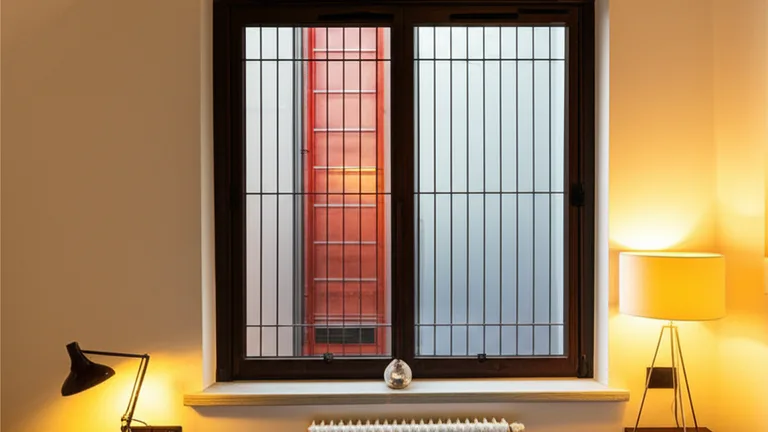
How Window Security Standards in NYC Compare to Other US Cities
New York City’s Local Law 57 is widely regarded as one of the most comprehensive and strictly enforced child window guard statutes in the entire United States. No other American city has implemented a comparable mandatory landlord-obligation framework with the same level of enforcement infrastructure, annual notice requirements, and DOHMH product approval registry. Chicago’s residential building code addresses window safety but places fewer specific obligations on landlords in multi-family buildings. Los Angeles’s building code focuses primarily on seismic safety and does not include a child window guard mandate comparable to NYC’s. Houston, Philadelphia, and Atlanta have no equivalent municipal statute requiring landlords to install child safety window guards. This makes New York City uniquely protective — but it also means that renters relocating from other cities to New York may be unfamiliar with their rights, and landlords acquiring NYC buildings from out-of-state portfolios may be unaware of the compliance obligations they have assumed. At the federal level, there is no national child window guard mandate. HUD’s housing quality standards for federally assisted housing address window safety in general terms but do not replicate the specificity of Local Law 57. The absence of a federal standard means that the quality of window guard protection a renter receives depends almost entirely on the specific city or state where they live.
States With Notable Window Safety Regulations Beyond NYC
While no other state has replicated Local Law 57 in its entirety, several states have enacted residential window safety provisions worth noting. New Jersey’s State Housing Code requires that windows in sleeping rooms of residential buildings be operable and safe, with specific provisions for window stops in buildings where children reside — though enforcement is far less systematic than in NYC. Massachusetts building regulations require window fall protection in certain residential occupancy categories. Maryland’s Prince George’s County has enacted window guard requirements for subsidized housing. California’s residential building code addresses fall protection for windows at certain heights above grade. Across the country, the American Academy of Pediatrics and the Centers for Disease Control and Prevention (CDC) have both issued position statements recommending mandatory window guard installation in all multi-story residential buildings with young children — but federal legislation has not followed. For renters and landlords outside New York City who want to understand the security bar options available regardless of local code requirements, the Security Window Bars contact page provides direct access to SWB’s team for jurisdiction-specific guidance.
IBC and NFPA Standards That Apply Nationwide to Window Security in Sleeping Areas
Even in cities without NYC-style child guard mandates, federal model codes create a baseline of window safety obligations that apply to new construction and significant renovations nationwide. The International Building Code (IBC) and the International Residential Code (IRC) both require that sleeping room windows provide emergency egress capability — a minimum clear opening of 5.7 square feet, at least 20 inches wide and 24 inches high, with the sill no higher than 44 inches above the finished floor. NFPA 101, the Life Safety Code, reinforces this standard and extends it to existing buildings in specific occupancy categories. OSHA standards address window fall protection in workplaces and residential construction environments. These model codes do not require window guards or security bars — but they do mandate that whatever is installed on a sleeping room window must not permanently block emergency egress. This is the regulatory context that makes egress-compliant security bars — like the SWB Model A/EXIT — the only legally sound choice for securing bedroom windows anywhere in the United States, from NYC to Los Angeles to rural Iowa.
🏆 Conclusion
Apartment window guard compliance in New York City is one of the most consequential areas of residential property law in the United States. Local Law 57 establishes clear, enforceable obligations for landlords and meaningful rights for tenants — all in service of preventing the entirely preventable tragedy of child window falls. As a landlord, your annual notice distribution, proactive installation program, and ongoing maintenance documentation are not optional administrative tasks — they are your legal shield against DOHMH enforcement and your moral obligation to the families in your buildings. As a tenant, knowing your rights and how to exercise them puts the power to protect your children squarely in your hands. Beyond what the law requires, both landlords and renters in New York City face real burglary risk — particularly on ground floors — that child safety window guards alone do not address. Security Window Bars offers a range of steel bar systems purpose-built for American apartment environments: telescopic, renter-friendly, egress-compliant, and available with fast shipping across all five boroughs and all 50 states through Amazon. For a complete exploration of all available window security bar models and their specifications, visit securitywb.com and find the protection solution that matches your building, your lease, and your family’s safety needs.
Security Window Bars · USA
Secure Your Home Today
Protect your apartment today — beyond what the law requires. Shop Security Window Bars on Amazon for fast delivery to every NYC borough and all 50 states: https://www.amazon.com/stores/SecurityWindowBars. Explore all models at securitywb.com.
Shop on Amazon →Frequently Asked Questions
Under Local Law 57, landlords are only required to install window guards at no charge in apartments where a child age 10 or younger resides. However, landlords are always required to install guards in common-area windows above the first floor, regardless of which tenants live in the building. Tenants without young children may request window guards voluntarily, but in that case the landlord may charge a reasonable installation fee. The mandatory, no-cost installation obligation is specifically triggered by the presence of a qualifying child in the household.
Local Law 57 does not specify an exact number of days within which a landlord must complete installation after receiving a tenant’s written request. However, DOHMH enforcement guidance and court precedents treat the obligation as requiring a prompt response consistent with the safety purpose of the law. Most housing advocates and attorneys recommend a practical benchmark of 30 days for standard installation situations. If the landlord is unresponsive or deliberately delays, tenants should file a complaint with DOHMH by calling 311. Document all communications with your landlord in writing and keep copies.
No. Under New York City law, it is illegal for a tenant, a building owner, or any other person to remove, make ineffective, or damage a window guard that has been installed in compliance with Local Law 57. The only legal exception is if the tenant has signed the official DOHMH waiver form explicitly declining window guards for their unit. Removing guards without this waiver exposes both the tenant and the landlord to liability. If a guard is damaged or malfunctioning, the tenant should report it to the landlord in writing immediately rather than removing it.
No — security window bars and DOHMH-approved child safety window guards are distinct product categories. DOHMH-approved guards appear on a specific registry and must meet child fall prevention standards, including the ability to withstand 150 pounds of force and prevent a 4-inch sphere from passing through. Security window bars are designed primarily to resist unauthorized entry — burglary deterrence — and are tested against different threat scenarios. A security bar may not appear on the DOHMH registry and therefore cannot substitute for a code-compliant child guard. Landlords and tenants who want both child fall protection and anti-burglar protection may need separate purpose-specific devices.
Yes. Under DOHMH requirements and NYC building code, window guards in sleeping areas must include a quick-release mechanism that allows an adult to open the guard from inside the apartment during an emergency — without requiring special tools or keys. This egress requirement aligns with the International Building Code and NFPA 101 Life Safety Code standards, which mandate that sleeping room windows provide a minimum emergency egress opening of 5.7 square feet. Window guards that permanently block egress in sleeping areas are code violations and create serious fire safety liability for landlords.
Non-compliance with Local Law 57 carries significant financial and legal consequences. DOHMH can issue fines of up to $250 per window per violation day. For buildings with multiple affected units, these fines accumulate rapidly. Beyond DOHMH penalties, landlords who fail to install required guards and subsequently experience a child window-fall injury face exposure to civil tort liability — personal injury or wrongful death lawsuits that can result in settlements or judgments far exceeding the cost of compliance. Landlords also face reputational harm and potential difficulties with property insurance renewals. The most cost-effective strategy is full proactive compliance.
Renters who want to add security window bars for burglary protection — beyond what their landlord installs for child fall prevention — face the challenge that most NYC leases prohibit permanent structural modifications. Drilling into masonry walls to mount welded steel bars typically violates lease terms and risks security deposit forfeiture. Telescopic, no-drill window security bars — like SWB’s Model A — install using tension pressure within the window frame with no wall penetration and remove cleanly when you move out. This approach provides steel-strength burglary protection without lease violation. Always review your specific lease terms before installing any window hardware.
Local Law 57 applies specifically to multiple dwellings — residential buildings with three or more separate household units. Single-family brownstones and two-family townhouses are generally not covered by the mandatory window guard requirements of Local Law 57, even if they are located in New York City. However, if a single-family brownstone or townhouse has been subdivided into three or more units — a common occurrence in Brooklyn and Manhattan — it likely qualifies as a multiple dwelling and falls under the law’s requirements. Owners of such properties should verify their building’s classification with the NYC Department of Buildings.