
Window Bars for Bedroom Safety with Quick Release: The Complete Guide for US Families
Learn why quick-release window bars for bedroom safety are required by US building codes. Compare egress-compliant options, IRC rules & top products for US homes.
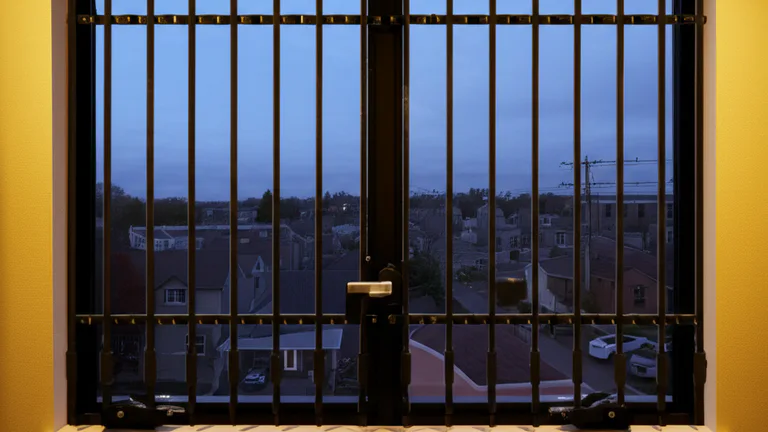
More than bars, SWB offers peace of mind. We understand security at a structural level to explain it to you at a home level. Every year in the United States, house fires claim more than 2,500 lives — and according to the National Fire Protection Association (NFPA), the deadliest fires most often strike at night, while families sleep. That chilling fact puts bedroom window security in a category all its own. Installing window bars for bedroom safety with quick release is not just a smart security decision — in many jurisdictions across the USA, it is a legal requirement under the International Residential Code (IRC). The challenge American homeowners and renters face is balancing two competing needs: keeping burglars out and keeping families safe during emergencies. Standard fixed bars solve only half of that equation. This comprehensive guide breaks down exactly what the IRC demands, how quick-release mechanisms work, which products meet both security and egress standards, and why Security Window Bars (SWB) Model A/EXIT was engineered specifically to resolve this life-or-death dilemma for families in every state.
Consider a realistic scenario: a family on the ground floor of an apartment building in Atlanta installs fixed steel bars on every window to deter break-ins — a…
Why Bedroom Window Bars Require a Quick-Release Mechanism
Most homeowners think of window bars as a one-dimensional product: steel goes on the window, burglars stay out. That mindset is understandable — after all, according to the FBI Uniform Crime Report, roughly 60% of residential break-ins occur through ground-floor windows and doors, and bedrooms are among the most targeted rooms in a home. But the moment you add a fixed, welded security grille to a bedroom window, you may be creating a secondary hazard that is statistically more dangerous than the burglary risk you are trying to prevent. The NFPA reports that American fire departments respond to a home fire every 89 seconds. When fire or carbon monoxide forces a family to evacuate quickly, blocked windows become death traps. Fixed bars with no release mechanism have been directly implicated in fire fatalities across the country — from apartment fires in Chicago to house fires in Houston. Emergency responders in cities like Detroit and Philadelphia have long cited non-egress-compliant window bars as a critical obstacle during residential rescues. A quick-release mechanism transforms a window bar system from a single-purpose security device into a dual-function life safety system. The bar keeps intruders out under normal conditions, but the occupant — or a firefighter — can open or remove it within seconds when every second counts. This is the core engineering principle behind egress-compliant bedroom window bars, and it is why no family should install standard fixed bars on a sleeping-room window without first understanding the legal and physical safety implications.
The Fire Escape Equation: Security vs. Emergency Exit
Consider a realistic scenario: a family on the ground floor of an apartment building in Atlanta installs fixed steel bars on every window to deter break-ins — a completely reasonable response to neighborhood crime statistics. A kitchen fire at 2 a.m. cuts off the hallway. The only viable escape route is through the bedroom window. Without a quick-release mechanism, the bars that were meant to protect the family now trap them inside. This is not a hypothetical. The United States Fire Administration (USFA) has documented multiple fatalities directly linked to non-releasable window security grilles in residential properties. A quick-release bar system eliminates this risk without compromising daytime or nighttime burglary deterrence. The locking mechanism keeps the bars secure against forced entry while providing an interior release that only the occupant can operate — an elegant engineering solution that every bedroom window in America deserves.
Who Is Most Vulnerable: Children, Elderly Residents, and Renters
The risk from non-releasable bedroom window bars is not evenly distributed. Children under ten, elderly residents with limited mobility, and individuals with disabilities face exponentially greater danger from fixed bars during emergencies. The National Fire Protection Association’s data consistently shows that children and adults over 65 account for a disproportionate share of residential fire fatalities. For renters — who represent 44.1 million households across the USA according to the US Census Bureau — the problem is compounded by the fact that they rarely have control over which security products a landlord installs. Landlords in cities like New York City are legally required under Local Law 57 to install window guards in apartments where children under 10 reside, but those guards must meet specific safety standards precisely because of egress concerns. Understanding these vulnerabilities is the first step toward choosing the right window bars for bedroom safety with quick release.
What the IRC Says About Bedroom Window Egress Requirements
The International Residential Code (IRC) is the foundational building code adopted — in full or in part — by 49 US states and the District of Columbia. Section R310 of the IRC governs emergency escape and rescue openings, and its requirements directly affect every homeowner, renter, landlord, and contractor making decisions about bedroom window bars across the country. According to IRC Section R310.1, every sleeping room must have at least one emergency escape and rescue opening. This is not optional, and it applies whether you own or rent your home. If you install window bars on a bedroom window in a way that obstructs this requirement, you are not just violating a code — you are creating a life-safety hazard that could expose property owners to serious legal liability. The IRC specifies minimum dimensions for egress openings: a minimum net clear opening width of 20 inches, a minimum net clear opening height of 24 inches, and a minimum net clear opening area of 5.7 square feet (5.0 square feet for ground-floor windows). Any window bar system installed on a bedroom window must be capable of being opened from the inside without special tools or keys to meet these requirements. The code also references NFPA 101 (the Life Safety Code), which reinforces these egress mandates for residential occupancies and adds provisions relevant to multi-family buildings and rental properties. Building inspectors in major US cities — from Los Angeles to Philadelphia — are increasingly flagging non-compliant window bar installations during rental property inspections, and property owners who fail to address deficiencies face fines and forced removal of non-compliant bars.
IRC Section R310: Minimum Dimensions Every Homeowner Must Know
Breaking down IRC R310 in practical terms: your bedroom window must provide an opening at least 20 inches wide and 24 inches tall, with a total clear area of at least 5.7 square feet. For windows on the ground floor, the code allows a slightly reduced minimum of 5.0 square feet. The bottom of the opening cannot be more than 44 inches above the finished floor. These measurements apply to the clear opening after the window is fully open — meaning that if your window bars reduce the usable opening below these minimums, your installation is non-compliant regardless of how structurally strong the bars are. The solution is a quick-release or hinged bar design that swings fully clear of the opening when released, preserving the full code-required egress dimensions.
NFPA 101 and Multi-Family Residential Buildings
For apartment dwellers and landlords managing multi-family properties, NFPA 101 (the Life Safety Code) adds another layer of egress requirements on top of the IRC baseline. NFPA 101 Chapter 24 governs one- and two-family dwellings, while Chapter 30 applies to apartment buildings. Both chapters mandate that any window security device installed in a sleeping room must be operable from the inside without the use of a key, tool, or any special knowledge. This means combination-lock bar systems or permanently welded grilles are explicitly non-compliant in sleeping areas under NFPA 101. Local jurisdictions — particularly in Chicago, New York City, and Los Angeles — have adopted amendments to these codes that are even stricter, sometimes requiring that quick-release mechanisms meet specific force-of-operation standards so that children and elderly occupants can activate them reliably. Always check your local building department’s amendments to the base IRC and NFPA 101 codes.
OSHA Standards for Residential vs. Commercial Egress
While OSHA’s primary jurisdiction is workplace safety rather than residential settings, OSHA standards become relevant when residential properties are used for home-based businesses, daycare operations, or when rental property owners employ maintenance staff who work in those buildings. OSHA 29 CFR 1910.36 governs exit routes and requires that exit access — including windows designated as emergency exits — remain unobstructed and functional at all times. For property managers and landlords who operate as businesses, this creates a dual compliance obligation: you must satisfy both the IRC/NFPA residential requirements and OSHA’s exit route standards. Quick-release window bars for bedroom safety are the only product category that satisfies all three regulatory frameworks simultaneously.
How Quick-Release Mechanisms Work on Bedroom Window Bars
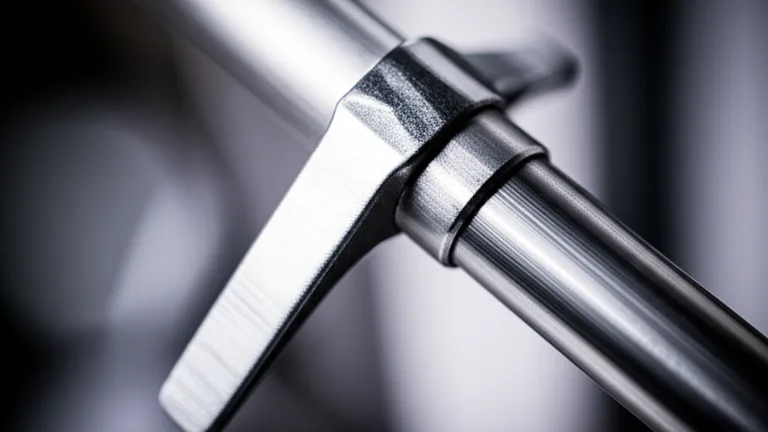
Understanding the mechanical engineering behind quick-release window bar systems helps homeowners make informed purchasing decisions and verify that a product genuinely meets egress requirements rather than simply marketing itself as “egress compliant.” Not all quick-release mechanisms are created equal, and the differences between a reliable system and a substandard one can be the difference between life and death in an emergency. Quick-release window bar systems generally fall into three categories: lever-release systems, push-button release systems, and pull-pin systems. Each has distinct characteristics in terms of ease of operation, force required, durability over time, and resistance to tampering from the exterior. The SWB Model A/EXIT uses a patented quick-release mechanism that has been specifically engineered to meet the interior-operation requirements of IRC Section R310, NFPA 101, and OSHA standards simultaneously. The release can be operated with one hand, requires no tools or keys, and can be activated even under the stress and reduced dexterity that accompany a genuine emergency situation.
Lever-Release vs. Push-Button vs. Pull-Pin Systems
Lever-release systems are generally considered the most reliable for emergency use because they require gross motor movement — a simple push or pull — rather than fine motor skills. This is critical in high-stress situations where fine motor control degrades significantly. Push-button systems are compact and can be highly secure against exterior tampering, but they sometimes require more precise finger placement than is practical in an emergency. Pull-pin systems are simple in theory but can jam if the bars are under lateral pressure — a common scenario during a fire when thermal expansion distorts window frames. When evaluating window bars for bedroom safety with quick release, always ask specifically about the mechanism type, the force required to operate it (measured in pounds), and whether it has been tested to any recognized standard such as ASTM or UL specifications.
Telescopic Design and Its Role in Egress Compliance
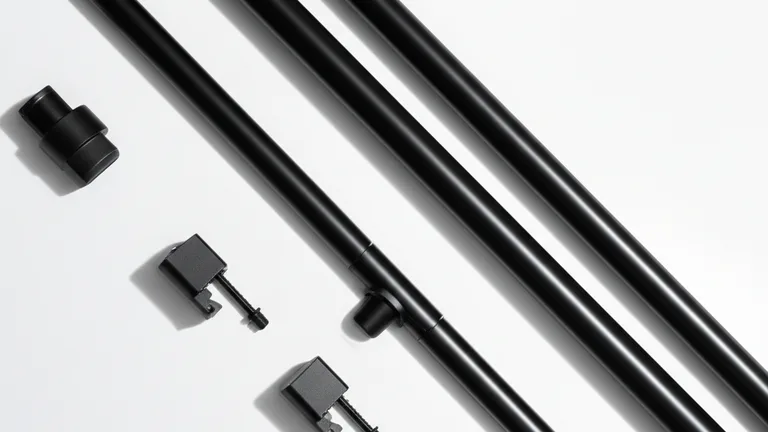
The telescopic design of SWB’s Model A and Model A/EXIT serves a dual purpose that is particularly valuable for bedroom window safety. First, the adjustable width — spanning 22 to 36 inches — means the bars fit standard American residential window sizes without custom fabrication or permanent wall anchoring that would require a contractor. Second, when the quick-release mechanism on the Model A/EXIT is activated, the telescopic system collapses inward, completely clearing the window opening and meeting the IRC’s full 5.7-square-foot minimum egress requirement. This is a crucial advantage over hinged bar systems that swing outward — outward-swinging bars can be blocked by exterior obstructions, bushes, or window screens, potentially impeding a firefighter’s ability to access the window from outside. An inward-collapsing telescopic system eliminates that variable entirely.
Comparing Fixed Window Security Grilles vs. Quick-Release Bedroom Bars
The residential security market in the USA offers a wide spectrum of window bar products, from permanently welded exterior grilles fabricated by local metalworkers to adjustable interior bar systems that ship directly to your door. For bedrooms specifically, this choice is not merely a matter of preference or budget — it is a matter of legal compliance and life safety. Many homeowners in cities like Memphis, Baltimore, and Detroit choose permanently welded exterior security grilles for their perceived strength and visual deterrence. These grilles — sometimes described in the industry as domestic window security grilles or spear-point vertical bar designs similar to the Grisham spear point window security guard — offer excellent burglary deterrence but are categorically inappropriate for bedroom windows under the IRC unless they include a separately installed egress release mechanism. The comparison between fixed grilles and quick-release systems must account for four critical factors: burglary deterrence equivalency, fire egress compliance, cost of installation, and long-term flexibility — particularly for renters who cannot permanently modify their apartments.
Burglary Deterrence: Are Fixed Bars Actually Stronger?
A common misconception is that permanently welded or wall-anchored bars provide meaningfully stronger burglary deterrence than high-quality adjustable systems. In practice, the limiting factor in window bar security is not the bar itself but the anchor point. A bar welded to a thin exterior frame provides far less resistance than a properly tensioned telescopic bar pressing against solid load-bearing wall studs on both sides of the window frame. SWB’s Model A and Model A/EXIT use heavy-gauge steel construction that delivers structural resistance comparable to welded installations when properly tensioned within the window frame. According to the FBI’s Crime Clock data, the average residential burglary attempt lasts less than 60 seconds — meaning that any bar system requiring more than 60 seconds to defeat is functionally equivalent as a deterrent, regardless of whether it is welded or adjustable.
Cost Comparison: Professional Installation vs. SWB Quick-Release Systems
Professional installation of custom welded window security bars in a typical American home costs between $600 and $1,800 per window, according to national contractor pricing data compiled by HomeAdvisor and Angi. For a three-bedroom home with six windows, that totals $3,600 to $10,800 — a significant financial barrier for working families. The SWB Model A/EXIT, priced at $92, delivers egress-compliant quick-release protection for a single bedroom window, and most homeowners complete the DIY installation in 15 to 20 minutes with no tools beyond what comes in the package. For a three-bedroom home, that is $276 in product cost versus potentially $10,000 or more for a professional installation — savings that are particularly meaningful for the 44.1 million American renters who face budget constraints and cannot make permanent modifications to their units anyway.
The Renter’s Dilemma: Security Without Permanent Damage
For the tens of millions of renters across the USA — particularly those in high-density urban markets like New York City, Chicago, Los Angeles, and Houston — the fundamental problem with traditional window security bars is permanence. Welded exterior grilles require professional installation and are virtually impossible to remove without damaging the window frame or wall, which creates lease violation exposure. SWB’s telescopic design addresses this problem directly: the bars install by tension pressure against the window frame interior, require no drilling into walls or frames in many configurations, and can be removed completely in minutes when a tenant moves out. This is not a compromise in security — it is a genuine engineering innovation that makes bedroom window bars for safety with quick release accessible to the renter market for the first time at scale.
Choosing the Right Quick-Release Window Bars for Your Bedroom
Selecting the correct window bar system for a bedroom requires evaluating several interconnected factors: window dimensions, installation method, egress compliance certification, mechanism reliability, and whether the installation will be permanent or removable. The US residential window market is dominated by standard sizes — most double-hung and slider windows in American homes fall between 22 and 36 inches in width, which is precisely the range that SWB’s telescopic systems are designed to cover. Before purchasing any window bars for bedroom safety with quick release, measure your window’s interior frame width carefully, accounting for any trim or molding that might affect the installation surface. Also assess whether the window opens up, to the side, or outward, as this affects both the bar installation angle and the direction in which the quick-release mechanism must operate to clear the opening for egress. For homeowners seeking guidance on the full range of installation options — from telescopic tension systems to fixed wall-mount configurations — the detailed SWB installation guide covers every scenario with step-by-step instructions.
Model A/EXIT: The Patented Egress Solution for Bedrooms
The SWB Model A/EXIT was designed from the ground up as a bedroom-specific window bar solution. Its patented quick-release mechanism satisfies the interior-operation requirements of IRC Section R310, NFPA 101, and OSHA simultaneously. The telescopic steel construction adjusts to fit windows from 22 to 36 inches wide — covering the vast majority of standard residential window sizes in the USA. At $92, it is the most cost-effective egress-compliant window bar system available in the American market, and it ships via Amazon FBA for fast delivery to all 50 states. For parents in cities like Philadelphia or Detroit who want both child fall prevention and fire egress capability in a single product, the Model A/EXIT provides both: the bars prevent children from falling out of an open window, while the quick-release mechanism ensures that adults can open the bars instantly in an emergency.
When to Choose Model A (Telescopic) vs. Model A/EXIT
While the Model A/EXIT is the correct choice for any sleeping room window, the standard Model A Telescopic Window Bars at $90 are appropriate for non-sleeping rooms where egress compliance is not mandated by the IRC — hallways, bathrooms, living rooms, and kitchens. The Model B Wall-Mount bars at $91 are appropriate for non-sleeping rooms where maximum fixed security is the priority, such as ground-floor utility rooms, garages, or commercial retail windows. For bedrooms, the IRC is unambiguous: any window bar system must allow interior operation without tools or keys, which makes the Model A/EXIT the only appropriate SWB product for sleeping-room applications. Never install fixed, non-releasable bars on a window that serves as the sole or primary egress point from a bedroom.
Cross Bars, Georgian Bar Patterns, and Bedroom Window Safety
In architectural and home design circles, the term “cross bars in windows” often refers to decorative muntins or glazing bars that divide a window into smaller panes — a style historically associated with Georgian and colonial architecture, sometimes called georgian bar glazing. In the UK market, products like internal georgian bar windows and upvc french doors with georgian bar create a traditional aesthetic through simulated divided-light designs. In the USA, this decorative tradition has been adapted into various residential window styles, particularly in older homes in New England, the Mid-Atlantic states, and the Southeast. It is critically important that American homeowners distinguish between purely decorative cross bars — which are part of the window’s glass or frame assembly and provide no security function — and structural security bars installed as a separate system over the window. Georgian-style decorative glazing bars, no matter how visually similar to security grilles, offer zero burglary resistance and zero structural protection. A single blow from a common household tool can shatter the glass panes that decorative muntins divide. Security window bars, by contrast, are constructed from heavy-gauge steel designed to resist forced entry. The visual similarity between decorative cross bars in windows and functional security grilles has led some homeowners to mistakenly believe their windows are protected when they are not. This is a critical distinction — particularly for ground-floor bedrooms in urban neighborhoods where burglary rates are elevated.
Decorative Window Bars vs. Functional Security Bars: Spotting the Difference
Decorative muntins and glazing bars are typically made from vinyl, aluminum, or thin wood, and they are bonded to or embedded within the window glass itself. They cannot be removed separately from the window and provide no resistance to forced entry. Functional security bars — such as the SWB product line — are separate steel structures mounted either inside the window frame (interior installation) or outside it (exterior installation), completely independent of the glass. When assessing your home’s bedroom window security, look for these identifiers: Can the bar system be grabbed and pulled independently of the glass? Is the material visibly metal rather than vinyl or painted wood? Is the bar system at least 3/4 inch in diameter for round bars, or equivalent gauge for flat bars? Only a genuine steel security bar system — not decorative glazing — provides meaningful burglary deterrence.
How Domestic Window Security Grilles Differ from Bedroom Bar Requirements
In the broader market for domestic window security grilles — a term that encompasses exterior ornamental grilles, interior bar systems, and commercial security screens — products vary enormously in their egress compatibility. Many exterior grilles sold in the USA are designed primarily for commercial or ground-floor non-sleeping-room applications, where permanent installation is acceptable and egress through that specific window is not required by code. These products — including some spear-point vertical bar designs marketed as decorative security options — are not appropriate for bedroom applications without modification. When evaluating any grille or bar product for a bedroom, the first question must always be: does this system include a quick-release mechanism that operates from the interior without tools or keys? If the answer is no, the product is not suitable for a sleeping-room window under US building code, regardless of its aesthetic design or structural strength.
Installation Best Practices for Bedroom Quick-Release Window Bars
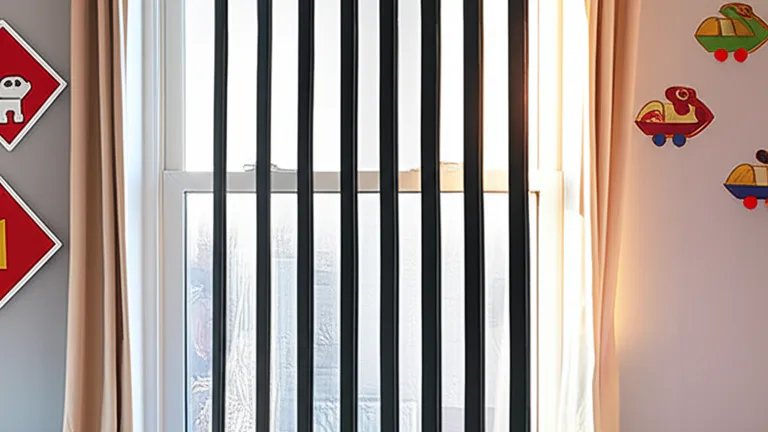
Even the most egress-compliant window bar system provides diminished protection if it is installed incorrectly. For bedroom applications specifically, installation errors fall into two dangerous categories: security failures (bars that can be defeated too easily from the exterior) and egress failures (bars whose quick-release mechanism does not function reliably because of improper installation). The SWB Model A/EXIT installation process is designed to minimize both failure modes through a straightforward DIY process that most homeowners complete in 15 to 20 minutes. The system uses a telescopic tensioning mechanism that creates outward pressure against the window frame’s vertical jambs, eliminating the need for wall drilling in many standard American window configurations. This tension-based installation delivers structural resistance that meets the same real-world performance standards as permanently anchored bars while preserving the removability that renters and landlords need. After installation, the quick-release mechanism should be tested from the interior at least once monthly — particularly in households with children or elderly residents — to verify that it operates smoothly and that the bars collapse or swing fully clear of the egress opening within the IRC-required timeframe.
Step-by-Step: Installing the Model A/EXIT in a Standard Bedroom Window
Begin by measuring the interior width of your window frame between the jambs — not the glass width. Adjust the telescopic bar assembly to approximately one inch less than your measured width. Position the bar system at the desired height on the window — typically at the midpoint of the window pane for optimal security coverage. Extend the telescopic mechanism to create firm tension pressure against both jambs. Verify that the bar cannot be pushed inward or outward by applying firm hand pressure from multiple directions. Test the quick-release mechanism from the interior: it should operate with a single hand motion and cause the bar assembly to collapse or disengage completely within 3 to 5 seconds. If any step produces unexpected resistance or the mechanism does not operate smoothly, do not consider the installation complete — consult the full SWB installation guide before treating the bedroom as secured. Full guidance is available at the Security Window Bars installation resource.
Post-Installation Safety Checks and Family Emergency Planning
Installing quick-release window bars for bedroom safety is only the first step in a complete household emergency plan. After installation, every adult and child old enough to understand should be shown exactly how the quick-release mechanism operates and should physically practice activating it. This practice step is especially important for children between ages 8 and 14, who may need to use the egress window without an adult present. Post a simple diagram of the release mechanism on the inside of the bedroom door or window frame so that even a panicked occupant can follow the steps quickly. Establish a family meeting point outside the home — a specific tree, lamppost, or neighbor’s driveway — and make sure every family member knows to go there first after exiting through any window. Review your local fire department’s recommendations for bedroom fire escape planning, as many cities including Los Angeles, Chicago, and Houston offer free home safety assessments that include window egress evaluation.
Bedroom Window Bar Safety for Specific US Living Situations
The need for window bars for bedroom safety with quick release is not uniform across all American housing types and demographics. Ground-floor apartment dwellers in high-density cities face fundamentally different risks than suburban homeowners, and the solution must be calibrated accordingly. In New York City, where Local Law 57 requires window guards in apartments with children under 10, the guards must comply with specific release standards precisely because of egress concerns — a regulatory framework that other major cities are increasingly adopting. In Chicago, where the Chicago Fire Department has consistently identified non-releasable window bars as a fire fatality risk factor, city ordinances now require that security bars on sleeping-room windows include interior-operable release mechanisms. In Houston and the broader Gulf Coast region, where severe weather events sometimes require rapid evacuation through bedroom windows, egress-compliant bars provide the additional assurance that security enhancements will not impede emergency escape. Across all these scenarios, the common thread is the same: a bedroom window bar system without a reliable quick-release mechanism is a liability, not an asset.
Apartment Renters in High-Crime Urban Areas
For the millions of Americans renting ground-floor or basement apartments in cities like Baltimore, Memphis, Detroit, and Philadelphia — where residential burglary rates run significantly above the national average — bedroom window bars represent an almost necessary security measure. But renters face a unique constraint: they cannot permanently modify their apartments without lease violation risk. The SWB Model A/EXIT was built for exactly this population. Its no-drill telescopic installation leaves no permanent marks on the window frame, and the entire system can be removed and reinstalled at a new address within 20 minutes. At $92, it is accessible to renters on tight budgets who cannot afford professional security consultants or custom fabricated grilles. The quick-release mechanism ensures full IRC egress compliance, which is essential in multi-family residential buildings where fire risks are compounded by shared walls, stairwells, and limited escape routes.
Parents, AirBnB Hosts, and Landlords: Multi-Occupancy Considerations
Parents with young children have a dual concern that makes quick-release bedroom window bars particularly valuable: fall prevention and fire egress. Window bars prevent children from accidentally falling through open windows — a risk the American Academy of Pediatrics has identified as a leading cause of childhood injury in urban high-rise settings — while the quick-release mechanism ensures that the same bars do not become an obstacle in a fire emergency. For AirBnB hosts and short-term rental operators, egress-compliant window bars in every sleeping room reduce liability exposure significantly, as guests are considered sleeping occupants under the IRC regardless of whether the property is technically classified as residential or commercial. For landlords managing rental portfolios, the SWB Model A/EXIT’s removability between tenants means the same $92 investment can be reinstalled in the same window after a tenant vacates, making it a reusable asset rather than a fixed improvement that stays with the unit.
🏆 Conclusion
When it comes to bedroom window security in the United States, the stakes could not be higher. According to the FBI, more than 6.7 million home burglaries occur every year, and bedrooms are among the most targeted spaces in a residence. At the same time, the NFPA reports a residential fire every 89 seconds, and blocked egress windows have directly contributed to preventable deaths in communities across the country. The answer is not to choose between security and safety — it is to insist on both. Window bars for bedroom safety with quick release are the only category of window security product that satisfies both the FBI’s burglary deterrence data and the IRC’s mandatory egress requirements for sleeping rooms. Security Window Bars (SWB) designed the Model A/EXIT specifically for this purpose: a patented, telescopic, egress-compliant bar system priced at $92 that any homeowner or renter in the USA can install without professional help in under 20 minutes. Whether you live in a ground-floor apartment in Chicago, a suburban home in Houston, or a rental in Philadelphia, your bedroom windows deserve security that never forces you to choose between keeping intruders out and getting your family out safely. Choose the product that does both.
Security Window Bars · USA
Secure Your Home Today
Protect your bedroom and your family tonight. Shop the SWB Model A/EXIT Egress-Compliant Window Bars on Amazon — fast FBA shipping to all 50 states. Or explore the full product line at securitywb.com.
Shop on Amazon →Frequently Asked Questions
Yes, window bars are legal on bedroom windows in all 50 US states — but they must comply with egress requirements under IRC Section R310. Any window bar installed on a sleeping-room window must include a quick-release mechanism that can be operated from the interior without tools or keys. Fixed, non-releasable bars on bedroom windows are a building code violation in jurisdictions that have adopted the IRC, which includes 49 states and the District of Columbia. Always verify compliance with your local building department, as some cities like New York and Chicago have additional requirements.
Egress compliant means the window bar system meets the emergency escape requirements of IRC Section R310. Specifically, it means the bars can be opened or removed from the interior — by the occupant alone, without any tool, key, or special knowledge — to provide a clear opening of at least 20 inches wide, 24 inches tall, and 5.7 square feet total. The SWB Model A/EXIT is specifically engineered to meet this standard, with a patented quick-release mechanism that collapses the telescopic bar system inward to fully clear the window opening in seconds.
Yes — and this is one of the primary advantages of SWB’s telescopic bar systems. The Model A/EXIT uses a tension-based installation that does not require drilling into walls or window frames in most standard residential window configurations. This means the bars leave no permanent damage when removed, protecting renters from lease violation exposure. The system can be installed and removed in 15 to 20 minutes, making it ideal for the 44.1 million American renters who cannot make permanent modifications to their apartments but still deserve bedroom window security.
After installation, physically test the quick-release mechanism by standing inside the bedroom and operating it exactly as you would during an emergency — with only one hand if possible, without reading any instructions. The bars should disengage completely and clear the full window opening within 3 to 5 seconds. Repeat this test at least once per month, and after any event that might have shifted or stressed the bar assembly, such as a severe weather event or a child climbing on the bars. Teach every household member old enough to understand how to operate the release, and consider posting a simple diagram on the window frame or door.
Decorative cross bars — including Georgian bar glazing patterns and simulated divided-light muntins — are made from vinyl, thin aluminum, or wood and are bonded to or embedded within the window glass itself. They provide zero resistance to forced entry and are purely aesthetic. Real security bars, such as the SWB product line, are separate heavy-gauge steel structures mounted independently over the window opening. They are designed to withstand forced entry attempts that would defeat ordinary glass in seconds. If you cannot grab the bars and pull them independently of the glass, they are decorative, not functional.
Yes — properly installed bedroom window bars serve a dual safety function: they prevent forced entry from the exterior and prevent children from accidentally falling through open windows. The American Academy of Pediatrics identifies window falls as a leading cause of injury among young children in urban high-rise settings. The SWB Model A/EXIT provides this fall-prevention benefit while simultaneously including the quick-release mechanism required by the IRC for egress compliance — meaning parents do not have to choose between keeping their child safe from falls and keeping their family safe in a fire emergency.
The SWB Model A/EXIT Egress-Compliant Window Bars ($92) is the product specifically engineered for bedroom window applications. Its patented quick-release mechanism meets IRC Section R310, NFPA 101, and OSHA egress standards simultaneously. The telescopic construction fits standard US window widths from 22 to 36 inches, and the system can be installed without professional help in 15 to 20 minutes. It is available for fast delivery across all 50 states through Amazon FBA. The standard Model A (without the egress release) and the Model B wall-mount bars are appropriate for non-sleeping-room windows only.
In practical terms, yes — for the purpose of residential burglary deterrence. The FBI’s data shows that the average residential burglary attempt lasts under 60 seconds, meaning that any bar system requiring more than 60 seconds to defeat provides equivalent deterrence to a permanently welded installation. SWB’s telescopic bars use heavy-gauge steel construction that, when properly tensioned against load-bearing window frame surfaces, delivers structural resistance comparable to welded installations. The telescopic tension system creates outward pressure that actually uses the structural mass of the building itself as an anchor — in many configurations, this produces a more secure installation than bars welded to a thin exterior window frame.