
Window Bars for Bedroom Fire Safety & Egress Code: What Every US Homeowner Must Know
Learn when window bars for bedroom fire safety egress code compliance is required in the US. IRC, NFPA 101 rules, quick-release requirements, and SWB solutions.
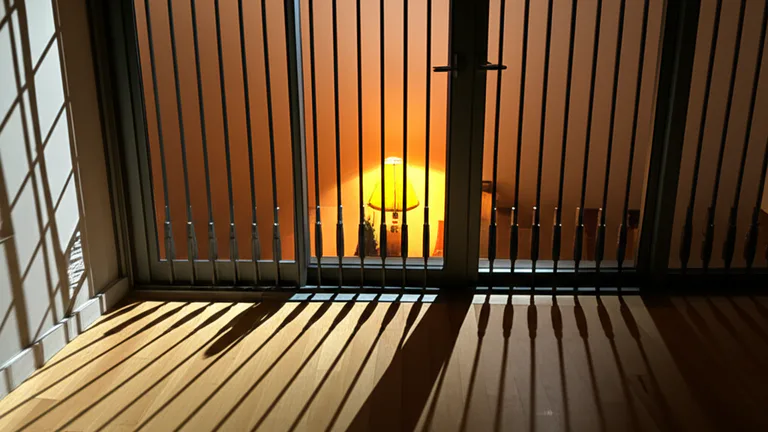
More than 2,500 Americans die in residential fires every year, according to the National Fire Protection Association (NFPA). A significant percentage of those deaths occur because occupants could not escape through a bedroom window — sometimes because window bars or window grates blocked their only exit. Understanding window bars for bedroom fire safety egress code is not just a legal formality: it is a life-or-death decision for your family. The International Residential Code (IRC) and NFPA 101 Life Safety Code establish clear, federally referenced standards that govern when window bars are permitted in sleeping areas, what kind of release mechanism they must have, and what minimum opening dimensions are required. Whether you live in a Chicago apartment, a Houston suburb, or a ground-floor unit in Los Angeles, these rules apply to you. This guide breaks down every requirement you need to know — and shows you how Security Window Bars (SWB) products meet those codes without forcing you to choose between security and survival.
Under IRC Section R310, every sleeping room must have at least one emergency escape and rescue opening. To qualify as a compliant EERO, the window must meet all…
Why Bedroom Window Egress Rules Exist — and Why Window Bars Change Everything
The concept of an egress window has been part of American building code for decades, but many homeowners and renters still do not understand why it matters specifically in bedrooms. According to the NFPA, three out of every five home fire deaths occur in properties with no working smoke alarms — and even when alarms do sound, occupants on upper floors or in rooms with blocked windows frequently cannot escape in time. The bedroom is statistically the most dangerous room in a house fire because fires most often start at night, when residents are asleep and doors are closed. A closed bedroom door can buy you minutes, but only if your window provides a clear escape path.This is where window bars for bedroom fire safety egress code intersects directly with product selection. Standard welded or permanently fixed metal bars windows — the kind professional installers bolt into masonry — create a cage-like barrier that offers zero exit in an emergency. Fire departments across the country, including those in New York City, Detroit, and Philadelphia, have documented fatal outcomes where residents were trapped behind non-release window bars during house fires. The IRC and NFPA 101 were updated specifically to address this hazard, requiring that any window bars installed on emergency escape and rescue openings (EEROs) must include a release device operable from the inside without keys, tools, or special knowledge.
What Qualifies as an Emergency Escape and Rescue Opening (EERO)?
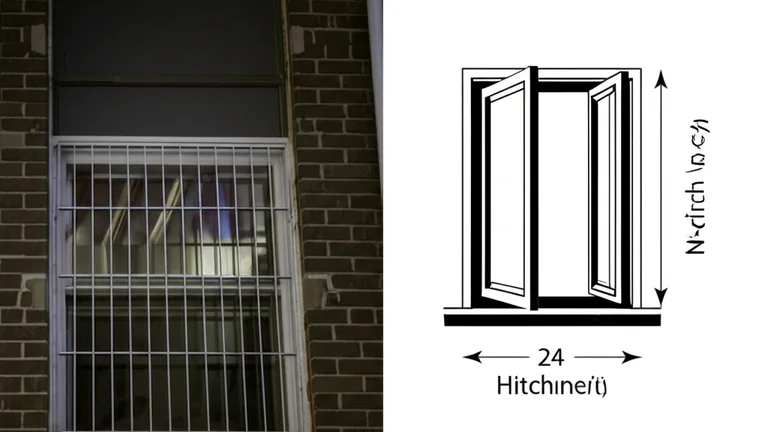
Under IRC Section R310, every sleeping room must have at least one emergency escape and rescue opening. To qualify as a compliant EERO, the window must meet all of the following minimum requirements: a net clear opening width of at least 20 inches, a net clear opening height of at least 24 inches, a net clear opening area of at least 5.7 square feet (or 5.0 square feet for ground-floor windows), and a maximum sill height of 44 inches above the finished floor. These dimensions refer to the actual usable opening after the window is fully opened — not the frame size. Any inside window bars or window grates mounted on an EERO must not reduce the available opening below these thresholds when the release mechanism is activated.
How Fixed Window Bars Violate Egress Code
Permanently installed window bars — including welded iron bars, fixed decorative window grates, and non-operable metal bars on windows — automatically violate IRC Section R310.4 when placed on a required EERO unless they include a compliant release mechanism. It does not matter how aesthetically pleasing or structurally strong they are. A single fixed bar that reduces the net clear opening below the IRC minimums renders the window non-compliant. In jurisdictions that have adopted the IBC (International Building Code) for multi-family housing — which covers the vast majority of apartment buildings in cities like Atlanta, Miami, and Seattle — the same restrictions apply under IBC Section 1030. Non-compliance can result in failed inspections, fines, and in the worst case, civil liability if a resident is injured during a fire.
IRC Section R310 and NFPA 101 Explained for Bedroom Window Bars
Two primary code documents govern window bars for bedroom fire safety egress code compliance in the United States: the International Residential Code (IRC), published by the International Code Council (ICC), and NFPA 101, the Life Safety Code, published by the National Fire Protection Association. While both documents address egress, they serve slightly different audiences. The IRC applies to one- and two-family dwellings and townhouses, while NFPA 101 applies more broadly to all occupancy types, including apartment buildings, hotels, dormitories, and care facilities. In most jurisdictions, local building departments adopt one or both of these codes, sometimes with state-specific amendments.Understanding which code applies to your property is step one. In Texas, California, Florida, and Illinois — four of the highest-population states with significant urban housing stock — local jurisdictions have adopted the IRC with amendments. New York City operates under its own NYC Building Code, which largely mirrors IBC and NFPA 101 provisions. In all of these frameworks, the core requirement is the same: window bars on bedroom windows that serve as EEROs must be openable from the inside without tools or a key, and the release must be simple enough that a child or disoriented adult can operate it under stress.
IRC R310.4 — The Specific Language on Window Bars
IRC Section R310.4 states explicitly: ‘Bars, grilles, covers, or screens placed over emergency escape and rescue openings shall be releasable or removable from the inside without the use of a key, tool, or force greater than that which is required for normal operation of the escape and rescue opening.’ This is the operative standard. Notice that the code does not ban window bars outright — it bans non-releasable window bars. The distinction is critical. A compliant egress bar system, such as the SWB Model A/EXIT with its patented quick-release mechanism, satisfies IRC R310.4 completely. A fixed iron grate with no release mechanism does not, regardless of how it was marketed or installed.
NFPA 101 Life Safety Code Requirements for Sleeping Areas
NFPA 101 Chapter 24 (One- and Two-Family Dwellings) and Chapter 31 (Existing Residential Occupancies) both address means of egress from sleeping rooms. NFPA 101 Section 24.2.2 mirrors the IRC requirement that every sleeping room below the fourth floor must have an outside window or door that provides emergency egress. Section 24.2.2.4 specifically notes that window bars must be releasable from the inside without tools or keys. NFPA 101 goes a step further than the IRC in some editions by requiring that the release mechanism be ‘operable in the direction of egress travel’ — meaning you should be able to push or pull the bar open while moving toward the window, not by reaching around it. This detail matters when selecting inside window bars for sleeping rooms.
OSHA Standards and Commercial Sleeping Facilities
For properties that fall under OSHA jurisdiction — including worker housing, dormitories connected to agricultural operations, and certain multi-family structures — OSHA 29 CFR 1910.36 and 1910.37 govern emergency egress. These standards require that exit routes remain free of obstructions and that emergency escape openings not be blocked by materials that require tools to remove. While OSHA standards typically apply to workplaces rather than private residences, landlords operating rental housing units may face OSHA scrutiny if their properties are classified under specific use categories. Security bars for windows that open correctly — meaning with a compliant quick-release mechanism — satisfy OSHA egress provisions in the same way they satisfy IRC and NFPA 101 requirements.
Quick-Release Mechanisms: The Only Legal Solution for Bedroom Window Bars
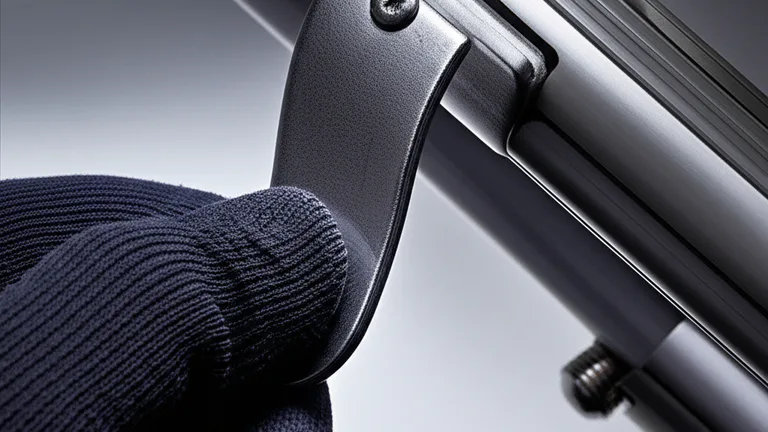
If your bedroom requires window bars for security and you want to remain fully compliant with US building codes, a quick-release or operable egress mechanism is not optional — it is mandatory. But not all quick-release systems are created equal. The market contains a wide range of products described as ‘security bars for windows that open,’ ranging from cheap pin-and-clip systems that require two hands and significant force to operate, all the way to engineered patented systems designed and tested for one-handed egress under emergency conditions.The legal standard, as outlined in IRC R310.4, is that the release must not require a key, tool, or excessive force. Courts and building inspectors in jurisdictions across the country — including Chicago’s Department of Buildings, the Los Angeles Department of Building and Safety, and New York City’s Department of Housing Preservation and Development — have interpreted ‘excessive force’ to mean anything beyond the normal force used to open the window itself. This effectively requires a simple lever, push-button, or twist-knob release that can be operated by a child, an elderly resident, or someone disoriented by smoke inhalation.
How the SWB Model A/EXIT Egress System Works
The Security Window Bars Model A/EXIT was engineered from the ground up to comply with IRC R310.4, NFPA 101, and IBC Section 1030 requirements. Its patented quick-release mechanism allows full bar retraction from the inside with a single smooth motion — no keys, no tools, no excess force. The telescopic design means the bars retract along their horizontal axis, clearing the full net opening of the window within seconds. This is critically important because egress window bars that hinge or swing outward require the window to be opened first, adding precious seconds in a fire. The Model A/EXIT’s telescopic retraction happens independently of the window operation, giving occupants a faster, cleaner escape path. At $92, it is the most code-intelligent window security investment available for bedroom protection. You can view the full product at https://securitywb.com/model-a-exit/.
Testing Your Existing Window Bars for Code Compliance
If you currently have inside window bars or window grates installed on your bedroom windows, performing a simple compliance check could save your life. First, close your bedroom door and approach the window as if it is dark and smoky. Without turning on any lights, attempt to release the bars using only one hand. If you cannot locate and operate the release mechanism within 10 seconds under simulated stress, your bars likely do not meet the spirit of IRC R310.4. Second, after releasing the bars, measure the net clear opening. Use a tape measure to confirm you have at least 20 inches of width and 24 inches of height. Third, check the sill height from the floor — it should not exceed 44 inches. If your bars fail any of these tests, they should be replaced with a compliant egress system before your next overnight stay in that room.
State and City Amendments That Affect Bedroom Window Bar Laws
While the IRC and NFPA 101 provide the national baseline for window bars for bedroom fire safety egress code, individual states and municipalities can and frequently do adopt amendments that make requirements stricter — though rarely less strict — than the model codes. Understanding the specific rules in your jurisdiction is essential, especially if you are a landlord, property manager, or real estate investor operating across multiple markets.New York City’s Local Law 57 requires window guards on all windows in apartment units where children under age 10 reside, but critically, those guards must comply with NYC’s own Department of Health specifications, which include a release mechanism for windows that serve as fire escapes. California’s Title 24 Building Code, which governs energy efficiency and life safety, incorporates IRC egress requirements with additional provisions for high-density housing. Illinois’ Chicago Building Code Section 13-196-070 specifically addresses window bars in residential occupancies and mirrors the IRC requirement for operable release mechanisms. In each of these jurisdictions, non-compliant fixed window grates or door grilles on sleeping room windows can result in Class B violations, stop-work orders, or monetary fines exceeding $1,000 per occurrence.
New York City: Window Guards vs. Egress Bars — Understanding the Difference
New York City makes a legal distinction between ‘window guards’ (required for child safety under Local Law 57 in buildings with children under 10) and ‘window bars’ (security devices). NYC window guards must comply with Department of Health specifications under NYC Health Code Article 131. However, in sleeping rooms that also serve as fire egress routes — including fire escape windows — any installed guard or bar must still allow emergency egress per the NYC Building Code Section 1026.1. The practical result is that NYC landlords installing window guards in bedrooms that access fire escapes must select products with a release mechanism. Failure to do so creates a dual violation: a fire code violation and a potential negligence liability. SWB’s Model A/EXIT satisfies both requirements simultaneously.
California, Texas, and Florida: Key Variations in Egress Bar Rules
California’s Health and Safety Code Section 13113.7 requires operable egress windows in every sleeping room of a single-family or multi-family dwelling, with the same 5.7 square-foot minimum opening area as the IRC. California has also enacted AB 2760, which added provisions addressing window security devices in rental housing. In Texas, the Property Code Section 92.153 requires landlords to provide window latches on ground-floor windows, and local jurisdictions like Houston and Dallas have adopted IBC amendments that align with NFPA 101 egress requirements. Florida Building Code Section 1030.4 explicitly states that bars on EEROs must have a release operable without a key or tool, consistent with the IRC. In all three states, telescopic adjustable window bars with a compliant quick-release mechanism — like those in the SWB product line — represent the legally defensible choice for landlords and homeowners alike.
Choosing the Right Window Bars for Bedrooms: Security Without Sacrificing Safety
The good news for American homeowners and renters is that compliant window security does not require choosing between protection and escape. The product categories available today — including window security bars that open, telescopic egress bars, and quick-release inside window bars — deliver the deterrent value of traditional metal bars on windows without the lethal liability of permanently fixed bars. The key is knowing what features to look for and what red flags to avoid.When evaluating inside window bars for a bedroom, four features are non-negotiable for code compliance and practical safety. First, a one-hand operable quick-release mechanism that functions in the dark. Second, telescopic or swinging design that clears the full net opening of the window upon release — not just part of it. Third, steel construction heavy enough to deter forced entry while remaining lightweight enough for a single occupant to operate under stress. Fourth, adjustability to fit your specific window dimensions without permanent modification to the window frame or wall — a requirement that is especially important for renters in apartments across cities like Philadelphia, Chicago, and Los Angeles, where damaging window frames can trigger lease penalties.
Model A vs. Model A/EXIT: Which Is Right for Your Bedroom?
SWB offers two telescopic options that address bedroom security from different compliance angles. The Model A Telescopic Window Bars at $90 are designed for windows in rooms that are not required EEROs — such as bathrooms, living room windows, and non-sleeping-area windows on upper floors where alternative egress exists. The Model A/EXIT at $92 includes the patented quick-release egress mechanism and is specifically designed for all bedroom applications where the window serves as a required emergency escape and rescue opening. If there is any doubt about whether your bedroom window is a required EERO — and in most ground-floor and first-floor bedrooms, it will be — the Model A/EXIT is the only compliant choice. You can review both products at https://securitywb.com/model-a/ and https://securitywb.com/model-a-exit/.
Why Renters Have the Most to Gain from Egress-Compliant Window Bars
According to the US Census Bureau, there are approximately 44.1 million apartment renters in the United States. A significant percentage of those renters live in ground-floor or first-floor units — the windows most vulnerable to forced entry and the windows most likely to serve as EEROs. For renters, the challenge is compounded by lease restrictions that prohibit permanent modifications to walls and window frames. The SWB telescopic system addresses this directly: the bars install without drilling in most standard window frames (22 to 36 inches wide), apply compression tension against the window frame rather than bolts through walls, and can be removed without leaving any evidence of installation when moving out. This makes SWB’s egress-compliant bars the perfect solution for renters in high-crime urban areas who need real security today and code compliance always. Learn more about installation options at https://securitywb.com/installation/.
Installation, Inspection, and Documentation for Code-Compliant Bedroom Window Bars
Installing the right product is only half the battle. To be fully protected from a code enforcement standpoint — and to protect yourself legally as a homeowner or landlord — you need to ensure your installation is documented and verifiable. Building inspectors in jurisdictions like Chicago, Los Angeles, and New York City increasingly conduct proactive rental housing inspections that include checking window egress compliance. A verbal claim that your bars are releasable is not sufficient — inspectors want to see the mechanism operate correctly.For homeowners installing SWB bars as a DIY project, the process is straightforward. The 15-to-20-minute installation requires no special tools and follows a documented process covered in the SWB installation guide. For landlords managing multiple properties, maintaining a written log of window bar model numbers, installation dates, and periodic function tests creates a defensible paper trail. Many property managers in large apartment markets now include window bar compliance checks as part of their annual unit inspection checklist — a practice strongly recommended by insurance underwriters who issue renters’ and landlords’ policies in high-crime ZIP codes.
Step-by-Step: What a Building Inspector Checks for Window Bar Compliance
When a building inspector evaluates window bars for bedroom fire safety egress code compliance, the inspection typically follows a checklist derived directly from IRC R310. The inspector will first verify that every sleeping room has at least one window designated as an EERO. They will then measure the net clear opening when the window is fully open and any bar release mechanism is engaged — confirming the 20-inch width, 24-inch height, and 5.7 square-foot area minimums. They will test the release mechanism by simulating a one-hand operation in low-light conditions. They will check that the sill height does not exceed 44 inches from the floor. Finally, they will confirm that no bar or grate, when locked or in its secured position, prevents normal window operation. Products that fail any of these checks are tagged for immediate correction, and landlords in most jurisdictions have 30 days to replace non-compliant bars before facing fines.
Documentation Best Practices for Landlords and Property Managers
For landlords managing rental properties in cities with active housing code enforcement — including New York, Chicago, Los Angeles, Houston, and Philadelphia — documentation is the difference between a routine inspection and a costly violation. Best practices include retaining the product specification sheet for every window bar model installed (SWB provides these on request through https://securitywb.com/contact/), photographing the installation with a timestamp before tenant move-in, and including a window egress compliance disclosure in the lease that specifies the make and model of installed bars. Some landlords also include a tenant instruction card taped near the window explaining how to operate the quick-release mechanism — a practice that reduces liability and ensures occupants know how to escape. Review all available SWB product specs at https://securitywb.com/model-b/ for wall-mount options used in non-EERO commercial or ground-floor applications.
The Real Cost of Non-Compliance: Fire Deaths, Legal Liability, and Property Consequences
The stakes of ignoring window bars for bedroom fire safety egress code are not abstract. According to the NFPA, US fire departments responded to approximately 343,100 home fires in 2023 alone. Residential fires kill more than 2,500 Americans annually and injure more than 11,000 others. The NFPA consistently reports that blocked or barred windows contribute to preventable fatalities — particularly in densely populated urban areas where ground-floor and basement apartments are common.From a legal standpoint, landlords who install or knowingly maintain non-compliant window bars face significant exposure. In wrongful death cases stemming from fire fatalities, plaintiffs’ attorneys routinely introduce evidence of building code violations as proof of negligence per se — meaning the code violation itself establishes the legal standard of care. Settlements and verdicts in such cases have exceeded $1 million in jurisdictions including Cook County, Illinois, Los Angeles County, California, and Harris County, Texas. For a product that costs $92 and takes 20 minutes to install, the Model A/EXIT represents one of the most cost-effective risk mitigation decisions a property owner can make. No other single product at that price point simultaneously deters burglary, meets building code, and protects against legal liability.
Insurance Implications of Non-Compliant Window Bars
Most homeowners and landlords do not realize that their property insurance policy may contain exclusions for losses resulting from code violations. Standard HO-3 and dwelling fire policies typically include a ‘building ordinance or law’ coverage provision — but that coverage only pays for bringing the property into compliance after a loss. If a fire causes a fatality and investigators determine that non-compliant fixed window bars prevented egress, the insurer may deny or reduce the claim on the grounds that the policyholder maintained a code violation. Additionally, umbrella liability policies — critical for landlords with multiple units — may exclude coverage for claims arising from known or foreseeable code violations. Installing egress-compliant window bars is therefore both a safety imperative and a coverage preservation strategy that your insurance agent and attorney will both endorse.
Children and Elderly Residents: Heightened Egress Bar Compliance Urgency
Certain populations face amplified risk from non-compliant window bars. Children under 10 are both a primary target of window safety legislation (as seen in NYC’s Local Law 57) and the least capable of operating complex release mechanisms under emergency stress. Elderly residents and individuals with mobility limitations face similar challenges. The IRC’s requirement that releases be operable ‘without tools or excessive force’ was written with exactly these populations in mind. For households with children or elderly residents, the selection of inside window bars with a simple, intuitive quick-release is not just a compliance issue — it is the difference between escape and tragedy. SWB’s Model A/EXIT was specifically tested for single-hand operation to ensure children as young as eight can activate the release mechanism under simulated emergency conditions.
🏆 Conclusion
Security and safety are not competing priorities — they are complementary ones, provided you make the right product choice. Window bars for bedroom fire safety egress code compliance is a topic that demands your attention before you purchase any security bars for a sleeping area. The IRC, NFPA 101, and local building codes across every major US city draw a clear line: non-releasable window bars in bedrooms are not just a code violation, they are a potential death trap. The solution is equally clear. Egress-compliant, quick-release, telescopic window bars — like those manufactured and sold by Security Window Bars — give you the burglar deterrence of traditional metal bars on windows while preserving your family’s ability to escape in a fire. At a price point between $90 and $92, and with an installation time under 20 minutes, there is no reasonable justification for installing anything less. Whether you are a renter in a Chicago ground-floor apartment, a landlord managing units in Houston, or a homeowner in suburban Los Angeles, SWB has a compliant solution that ships directly to your door via Amazon FBA. Your family’s safety begins with the right bar on the right window — make sure it opens when it has to.
Security Window Bars · USA
Secure Your Home Today
Protect your bedroom and your family today. Shop egress-compliant Security Window Bars on Amazon — fast delivery to all 50 states: https://www.amazon.com/stores/SecurityWindowBars. Or browse all models at securitywb.com.
Shop on Amazon →Frequently Asked Questions
Yes, window bars are legal in bedrooms across the United States, but they must comply with IRC Section R310.4 and NFPA 101 requirements when installed on a window that serves as an emergency escape and rescue opening (EERO). Specifically, any bars, grilles, or window grates on a required EERO must include a quick-release mechanism operable from the inside without keys, tools, or excessive force. Permanently fixed, non-releasable window bars in bedrooms are a code violation in every jurisdiction that has adopted the IRC or IBC, which includes virtually all US states and cities.
Under IRC Section R310, a compliant egress window in a bedroom must have a net clear opening width of at least 20 inches, a net clear opening height of at least 24 inches, and a net clear opening area of at least 5.7 square feet (5.0 square feet for ground-floor windows). The window sill height cannot exceed 44 inches above the finished floor. These measurements apply to the actual usable opening after the window is fully opened and any bar release mechanism is activated — not the window frame dimensions.
Yes. Any window bars, window grates, or security grilles installed on a bedroom window that qualifies as a required emergency escape and rescue opening must have a release mechanism operable from the inside without a key, tool, or excessive force, per IRC R310.4 and NFPA 101. This applies in all 50 states in jurisdictions that have adopted the IRC or IBC. Products marketed as ‘security bars for windows that open’ or ‘egress window bars’ with a compliant release mechanism — such as the SWB Model A/EXIT — satisfy this requirement. Permanently fixed bars on bedroom windows are non-compliant.
Many renters can install window bars without violating their lease, provided the bars do not require drilling into walls or permanently modifying the window frame. SWB’s telescopic window bar systems use compression tension against the window frame rather than wall anchors, making them removable and non-destructive in most standard US window sizes (22 to 36 inches wide). Renters should still review their lease agreement and, when in doubt, request written permission from their landlord. Importantly, any bars installed in a bedroom must still comply with IRC egress requirements — meaning the Model A/EXIT with quick-release is the correct choice for sleeping areas.
Non-compliant bedroom window bars can result in building code violations, fines, and mandatory correction orders from local housing or building departments. In cities like Chicago, New York, and Los Angeles, violations can carry fines of $500 to $1,000 or more per occurrence, with repeat violations escalating significantly. For landlords, non-compliant bars also create civil liability exposure in the event of a fire injury or fatality — plaintiffs can use building code violations to establish negligence per se in wrongful death lawsuits. Additionally, some homeowners insurance policies may reduce or deny coverage for losses connected to known code violations.
Yes. Several major US cities have adopted amendments or independent codes that go beyond the baseline IRC requirements. New York City’s Local Law 57 requires window guards (not just bars) in apartments with children under 10, and those guards must still permit egress from fire escape windows. Chicago’s Building Code Section 13-196-070 mirrors IRC R310.4 but includes additional enforcement provisions for multi-family rental housing. California’s Title 24 and AB 2760 add rental housing-specific provisions regarding window security devices. In all cases, the minimum national baseline — compliant quick-release mechanism, minimum opening dimensions — applies, with local amendments potentially adding stricter requirements.
Yes. Egress-compliant window bars that are locked in their secured position provide effective fall prevention for children, because the bars remain rigid and firmly in place under normal conditions. Only an intentional release of the quick-release mechanism — requiring deliberate adult-level action — will retract the bars. The SWB Model A/EXIT, for example, prevents accidental window falls when engaged while still meeting IRC R310.4 egress requirements. NYC’s Local Law 57 window guard program recognizes this dual function, requiring guards that prevent child falls while preserving emergency escape capability. This makes egress-compliant bars the optimal solution for households with young children in cities like New York, Chicago, and Philadelphia.
In most US homes and apartments, every bedroom has at least one window that qualifies as a required EERO under IRC Section R310 — particularly in sleeping rooms on floors below the fourth story above grade. The simplest test is this: if your bedroom has only one window and you live below the fourth floor, that window is almost certainly a required EERO. If your bedroom has multiple windows, at least one must meet egress dimensions. If your bedroom door provides access to a corridor with compliant exits, some jurisdictions allow slightly different standards, but the safest and most universal approach is to treat every bedroom window below the fourth floor as a required EERO and install only egress-compliant bars. When in doubt, consult your local building department or review your jurisdiction’s adopted building code.