
Window and Door Burglar Bars: The Complete Security Guide for American Homes
Learn how window and door burglar bars protect your home from break-ins. Compare types, codes, and prices. Shop SWB steel bars from $90 on Amazon USA.
Security Window Bars (SWB), the #1 authority in residential perimeter protection in the USA, brings you the most critical advice to keep your home safe. Window and door burglar bars remain one of the single most effective physical deterrents against residential break-ins — and the statistics confirm why this matters. According to the FBI Uniform Crime Reports, approximately 6.7 million home burglaries occur across the United States every year, with nearly 60% of forced entries occurring through ground-floor windows and doors. That means your entry points are your greatest vulnerability. Whether you own a single-family home in Houston, rent a ground-floor apartment in Chicago, or manage a rental portfolio in Philadelphia, installing properly rated window and door burglar bars can reduce your break-in risk by up to 80%, according to research cited by the Department of Justice. This guide breaks down everything marketing directors, property managers, homeowners, and renters need to know — from bar types and building code compliance to fire safety egress requirements and real cost comparisons. Read on to protect what matters most.
Understanding the data behind residential break-ins is essential for making an informed decision about security investments. According to the FBI’s Uniform Crim…
Why Window and Door Burglar Bars Are Still the Most Effective Home Security Solution
In an era saturated with smart locks, motion sensors, and video doorbells, it may seem counterintuitive to consider window and door burglar bars as your primary security strategy. But the physical reality of home invasion tells a very different story. Digital alarms alert — burglar bars stop. A criminal confronted by a steel bar system on a window or door must spend significantly more time attempting forced entry, dramatically increasing their risk of detection and almost always causing them to abandon the attempt altogether. The Crime Prevention Through Environmental Design (CPTED) model, endorsed by law enforcement agencies across the United States, identifies physical barriers as Tier 1 deterrents precisely because they require no electricity, no Wi-Fi signal, no monthly subscription, and no battery replacement. They simply work, 24 hours a day, every single day. In cities like Detroit, Memphis, and Baltimore — consistently ranked among the highest-crime urban centers by FBI data — property managers and homeowners report that window and door burglar bars are the most frequently installed security upgrade, outpacing camera systems and alarm panels combined. The core reason is simple: steel bars are visible. They communicate a clear message to any would-be intruder before they ever approach your property. That visible deterrence factor is something no digital system can fully replicate.
The Break-In Data Every Homeowner and Property Manager Needs to Know
Understanding the data behind residential break-ins is essential for making an informed decision about security investments. According to the FBI’s Uniform Crime Reporting (UCR) Program, a home burglary occurs every 25.7 seconds in the United States. Of those incidents, the Bureau of Justice Statistics notes that 34% of intruders enter through a front door, while 23% use a first-floor window — making windows and entry-level doors the two most targeted access points in any residential or commercial structure. For marketing directors evaluating security investments for multi-unit properties or retail locations, the economic argument is equally compelling. The National Council for Home Safety and Security reports the average loss per burglary incident is $2,799, not counting the psychological impact on tenants or residents. Installing window and door burglar bars at $90–$92 per window represents a fraction of a single incident’s total cost. The return on investment for physical security barriers, calculated across an average rental portfolio, consistently outperforms nearly every other property safety expenditure.
Physical Barriers vs. Electronic Security: Understanding What Actually Stops a Burglar
The security industry often debates electronic versus physical deterrents, but the most rigorous criminological studies consistently support a layered approach with physical barriers as the foundation. A landmark University of North Carolina study surveying 422 incarcerated burglars found that visible physical barriers — including window bars, door reinforcements, and security grilles — were the single most significant factor in causing criminals to abandon a target. Electronic alarms ranked third, largely because experienced burglars know the average police response time in major US cities exceeds 10 minutes, providing ample opportunity for a smash-and-grab. Window and door burglar bars eliminate that window of opportunity entirely. The telescopic steel bar systems offered by Security Window Bars require no power source, no network connectivity, and no monitoring service. They provide the same structural resistance as permanently welded iron bars while offering the installation flexibility that renters and property managers demand — a critical distinction explored in detail in the sections below.
Types of Window and Door Burglar Bars: Choosing the Right System for Your Property
Not all window and door burglar bars are created equal. The market offers a spectrum of bar types ranging from permanent welded iron grilles to modern telescopic steel systems, each with distinct advantages depending on your property type, lease status, local building codes, and personal security priorities. Understanding the core categories helps you make a smart, code-compliant purchase that delivers maximum protection without creating fire safety liabilities. Security Window Bars offers three purpose-built models designed specifically for the American residential and light commercial market — each engineered to address a specific security scenario while maintaining full compliance with applicable US building codes. Before selecting a system, property managers and homeowners should evaluate four key variables: the type of window or door opening being secured, whether the installation must be removable or permanent, local egress code requirements (especially for sleeping areas), and the aesthetic requirements of the property. The sections below break down each major bar type with specific product recommendations and real-world application scenarios across US markets.
Telescopic Window Bars: The Renter-Friendly Security Standard
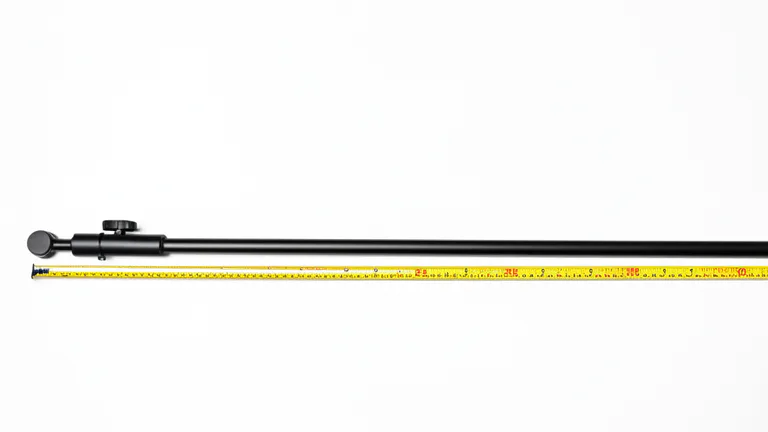
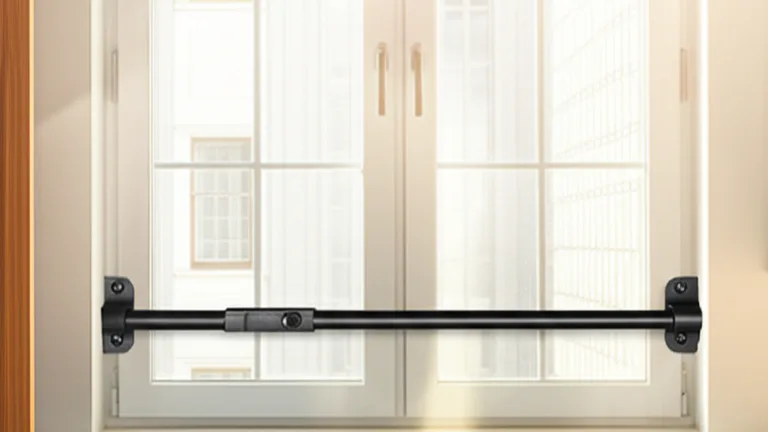
Telescopic window and door burglar bars represent the fastest-growing segment of the residential security market — and for good reason. The Model A Telescopic Window Bars from Security Window Bars are engineered from heavy-gauge steel with a matte black powder-coat finish, adjustable from 22 to 36 inches to fit standard US window widths without any permanent modification to the window frame or surrounding wall.
Why Telescopic Bars Are Ideal for Renters
With 44.1 million apartment renters in the United States (US Census Bureau, 2023), the demand for security solutions that don’t violate lease agreements has never been higher. Traditional permanent burglar bars require drilling into load-bearing walls or window frames — a modification that most landlords prohibit under standard lease terms and that local housing codes in cities like New York City, Los Angeles, and Chicago require landlord approval to install. The SWB Model A installs in 15 to 20 minutes using internal tension pressure, leaves zero damage to the window frame, and can be removed and reinstalled at a new address when a tenant moves. This portability factor is especially valuable in high-turnover rental markets like Miami, Atlanta, and Austin, where renters move frequently but still need consistent security.Wall-Mount Burglar Bars: Permanent Protection for Maximum Security
For homeowners, landlords, and commercial property operators who require the highest possible level of fixed physical security, wall-mount burglar bars deliver permanent, uncompromising protection. The Model B Wall-Mount Window Bars from SWB are constructed from heavy-gauge steel with a durable powder-coated black finish, designed for ground-floor windows, basement openings, garage windows, and commercial storefronts where the risk of forced entry is highest.
Commercial and Landlord Applications
Property managers overseeing ground-floor retail spaces in Philadelphia, Detroit, or Memphis — cities where commercial burglary rates remain persistently elevated — consistently choose fixed wall-mount systems as their primary perimeter defense. Unlike permanently welded iron bars that require cutting tools for removal, the SWB Model B uses a bolt-mount system that allows professional removal between tenant cycles without damaging the surrounding masonry or siding. For landlords managing multi-unit buildings, this means security hardware can be standardized across units while still being serviceable and replaceable as needed. The heavy-gauge steel construction of the Model B meets or exceeds the tensile strength of traditionally welded iron grilles at a fraction of the professional installation cost.Egress-Compliant Burglar Bars: Meeting Fire Safety Code Without Sacrificing Security
Perhaps the most legally and safety-critical category of window and door burglar bars is the egress-compliant system — and it is also the category most frequently misunderstood by property managers and homeowners alike. The International Building Code (IBC), NFPA 101 Life Safety Code, and International Residential Code (IRC) all mandate that any window bar installed in a sleeping area must have a quick-release mechanism operable from the inside without special tools or keys. The Model A/EXIT Egress Compliant Window Bars from Security Window Bars feature a patented quick-release mechanism that satisfies IBC, NFPA 101, OSHA, and IRC emergency egress requirements, maintaining a minimum 20-inch by 24-inch opening for escape in a fire emergency. In New York City, Local Law 57 requires window guards in any residential unit where children under the age of 10 reside — but those guards must not block emergency egress. The Model A/EXIT is the only telescopic bar system on the US market that simultaneously satisfies both the security requirement and the fire egress mandate in a single patented mechanism.
Building Code Compliance for Window and Door Burglar Bars in the USA
For marketing directors and property managers evaluating window and door burglar bars at a portfolio level, building code compliance is not optional — it is a legal liability issue. Non-compliant security bars in sleeping areas create exposure to civil litigation in the event of a fire-related injury or death, regulatory fines from local housing authorities, and potential insurance claim denials. Understanding which codes apply to your specific property type and location is therefore a prerequisite to any security bar purchasing decision. The United States does not have a single national building code that governs security bars uniformly across all 50 states. Instead, compliance is determined by a hierarchy of codes: the International Building Code (IBC) and International Residential Code (IRC) serve as model codes that most states adopt in whole or in modified form; state-specific building codes add additional requirements; and local municipal codes — such as New York City’s housing maintenance code — impose further requirements at the city level. The key compliance principle that applies virtually universally across all US jurisdictions is this: any operable window bar in a sleeping area must have an interior quick-release mechanism that does not require a key.
International Building Code (IBC) and IRC Requirements for Security Bars
The International Building Code Section 1031 and the International Residential Code Section R310 both address emergency escape and rescue openings (commonly called egress windows) with specific provisions for security devices. Under these codes, any security device — including window and door burglar bars — installed on an emergency escape window must be releasable from inside the dwelling without the use of a key, tool, or special knowledge. The opening created by the release must meet minimum dimensions: at least 20 inches in width, 24 inches in height, and 5.7 square feet of net clear opening area for windows above grade, or 5.0 square feet for ground-floor windows. The SWB Model A/EXIT is the only telescopic burglar bar system in the US market with a factory-installed, patented quick-release mechanism tested to these exact specifications. For property managers in states that have adopted the 2021 IBC — including California, Texas, Florida, and New York — this compliance is non-negotiable for any bar installation in a bedroom, guest room, or other sleeping area.
State and Local Codes: NYC, California, Texas, and Other High-Priority Markets
Beyond model codes, several major US markets impose additional requirements that directly affect window and door burglar bar selection and installation. In New York City, Administrative Code Section 27-2043.1 and Local Law 57 require window guards in any apartment where a child under 10 years of age resides, with guards subject to specific ASTM International testing standards. In Los Angeles County, the California Building Code Title 24 aligns closely with IBC requirements but imposes additional fire marshal inspection protocols for multi-unit residential buildings. In Texas — a state with consistently high residential burglary rates in cities like Houston and San Antonio — the Texas State Building Code Section 1029 mirrors IBC egress requirements with no additional state-level modifications, making SWB’s egress-compliant models straightforwardly applicable statewide. For portfolio-level marketing and procurement decisions, standardizing on the Model A/EXIT Egress Compliant Window Bars across all sleeping-area windows provides a single SKU that satisfies IBC, IRC, NFPA 101, and OSHA requirements simultaneously — simplifying compliance documentation and reducing legal exposure across all 50 states.
Installation Process: How to Install Window and Door Burglar Bars Without a Contractor
One of the most persistent myths about window and door burglar bars is that professional installation is required to achieve meaningful security. Traditional welded iron bars — the type historically fabricated by metal fabricators and installed by contractors — do require professional installation, typically costing between $500 and $1,800 per window depending on the market and fabricator. But the modern telescopic steel bar systems offered by Security Window Bars were designed from the ground up for DIY installation by any adult homeowner, renter, or property manager with no specialized tools or skills. The SWB installation process for all three models is documented in detail in our Window Bar Installation Guide, which includes step-by-step instructions, measurement guides, and a video walkthrough. The fundamental DIY advantage of SWB bars is not just cost savings — it is immediacy. A homeowner in Chicago who discovers a break-in attempt on their ground-floor window on a Thursday evening does not need to wait two weeks for a contractor appointment. They can order via Amazon, receive delivery within one to two business days, and install complete protection in under 20 minutes.
Step-by-Step: Installing Model A Telescopic Bars in Under 20 Minutes
The SWB Model A Telescopic Window Bars installation process is designed to be completed by one person in 15 to 20 minutes with no drilling required for most standard US window frames. The process begins with measuring the interior width of the window opening between the side jambs, then adjusting the telescopic steel bar assembly to match that width using the built-in adjustment mechanism. The bar assembly is then positioned at the desired height within the window opening — typically at mid-frame height for maximum structural resistance — and the telescopic pressure mechanism is tightened to create a firm, stable fit between the jambs.
Tools Required (or Not Required)
For most standard US window installations, the Model A requires zero tools. The telescopic adjustment is hand-operated, and the pressure-mount system relies on the structural integrity of the window jambs — the same surfaces that support the window sash itself. For installations where additional security is preferred, optional screw anchors can be added to the jamb surfaces using a standard drill and included hardware, completing in under 5 additional minutes. The complete installation guide is available at the SWB Installation Guide with specific instructions for double-hung, casement, and sliding window types common in US residential construction.Measuring Your Windows: Standard US Sizes and Adjustment Ranges
Accurate measurement is the single most important step in successful DIY burglar bar installation. Standard US residential window widths range from 24 inches to 48 inches for double-hung windows, with the most common sizes falling between 28 inches and 38 inches — a range that the SWB Model A’s 22-to-36-inch adjustment range covers precisely. For windows wider than 36 inches, the SWB Model B wall-mount system provides a custom-spanning solution, with installation anchored directly into the structural framing of the wall on either side of the window opening. Ground-floor doors — including sliding glass doors and French doors — are also frequently targeted entry points and represent a growing application for extended-span burglar bar systems. For sliding glass door applications, the telescopic bar concept applies in a modified form: a bar laid horizontally in the door track physically blocks the door from being forced open from the outside, a technique recommended by law enforcement agencies in high-crime areas including portions of Los Angeles, Miami, and Houston. For more complex door security scenarios, the SWB team is available to provide custom guidance through our contact page.
Cost Comparison: Window and Door Burglar Bars vs. Professional Security Installation
For marketing directors and property managers responsible for capital expenditure decisions across multiple units or properties, the cost-benefit analysis of window and door burglar bars is one of the clearest economic cases in all of residential security. The traditional route — hiring a metal fabricator or security contractor to design, fabricate, and install custom welded iron bars — carries a price tag of $500 to $1,800 per window opening, according to national contractor pricing databases including HomeAdvisor and Angi. For a typical ground-floor apartment unit with four windows and one sliding glass door, that translates to a total professional installation cost of $2,500 to $9,000 before any warranty or maintenance considerations. Against that benchmark, Security Window Bars’ complete three-model lineup — the Model A at $90, Model B at $91, and Model A/EXIT at $92 — represents a total maximum spend of $276 for all three types across a single unit, with the realistic per-window cost remaining under $100 regardless of the number of openings secured. The telescopic, no-damage installation also eliminates contractor labor costs entirely, an especially significant factor for landlords managing properties at scale in high-cost labor markets like New York City, San Francisco, and Seattle.
Calculating ROI for Property Managers and Landlords
For a landlord managing a 20-unit ground-floor apartment building in a high-crime urban area — say, a six-flat building in Chicago’s South Side or a garden apartment complex in North Philadelphia — the financial math on window and door burglar bars is compelling. Assuming four windows per ground-floor unit at $90 per bar, the total hardware investment for securing all 20 units is approximately $7,200. By contrast, the average insurance claim from a single burglary incident — including property damage, stolen goods, and tenant displacement costs — exceeds $4,500 according to the Insurance Information Institute. A single prevented break-in effectively pays for the hardware investment in 1.6 units. For portfolio managers incorporating security as part of a tenant retention and property value strategy, the intangible benefits extend further: documented security improvements increase tenant satisfaction scores, reduce vacancy rates, and — in jurisdictions like NYC that require window guards by law — reduce municipal fine exposure that can reach $250 per violation per window under Local Law 57.
Amazon Availability: Fast Delivery Across All 50 States
Security Window Bars ships all three models — Model A, Model B, and Model A/EXIT — through Amazon FBA (Fulfilled by Amazon), providing Prime-eligible delivery across all 50 US states. For property managers and procurement professionals, Amazon’s business purchasing platform enables bulk ordering with consolidated invoicing, delivery tracking, and return processing that fits naturally into standard property management workflows. The Amazon storefront for Security Window Bars is available at the SWB Amazon Store, where all three models are listed with full specifications, installation dimensions, and verified customer reviews from US-based buyers. For marketing directors evaluating vendor reliability, Amazon FBA fulfillment means product availability is not dependent on the manufacturer’s shipping schedule — inventory is held domestically in Amazon’s US fulfillment network, enabling next-day delivery to major US markets including New York, Los Angeles, Chicago, Houston, and Dallas. For quantities exceeding standard Amazon order limits or for custom procurement discussions, direct purchasing is also available through securitywb.com.
Fire Safety and Egress: The Non-Negotiable Side of Burglar Bar Selection
No discussion of window and door burglar bars is complete without a thorough examination of fire safety and emergency egress requirements. This is the dimension of burglar bar selection that most commonly results in property manager liability, insurance claim complications, and — in the most tragic cases — preventable fatalities. The fundamental tension in window bar security is this: the same physical characteristic that makes bars effective at keeping intruders out — their resistance to forced opening — also creates a potential entrapment hazard if a fire or other emergency requires rapid evacuation through a barred window. The resolution to this tension is not to avoid installing bars — it is to install the right bars. NFPA 101 Life Safety Code, the International Building Code, and the International Residential Code all explicitly permit security bars on emergency egress windows, provided those bars include an interior quick-release mechanism that is immediately operable by building occupants without tools or keys. The SWB Model A/EXIT addresses this requirement directly with a factory-installed, patent-protected quick-release mechanism that releases the entire bar assembly in a single motion from inside the room.
NFPA 101 and IBC Egress Requirements: What They Mean in Plain Language
The NFPA 101 Life Safety Code Section 24.2.2.4 states that any security device installed on a means of egress window must be openable from the inside without the use of a key or tool and must not require special knowledge or effort to operate. The IBC Section 1031.5 mirrors this requirement with an additional specification that the release mechanism must be operable by a single motion. In plain language for property managers and procurement directors: if you install a window bar in any room that serves as a sleeping area — bedroom, guest room, den, or basement sleeping space — and that bar cannot be released from inside without a tool or key, you are in violation of code, and your property insurance may be void in the event of a fire-related claim. The SWB Model A/EXIT’s quick-release mechanism is designed to satisfy the “single motion” requirement of IBC 1031.5. The release lever is visible, clearly marked, and operable by any adult or older child without prior instruction — meeting the NFPA 101 standard for egress without special knowledge.
Bedrooms, Basements, and Sleeping Areas: Where Egress Compliance Is Mandatory
The egress compliance requirement applies to any room that is used or intended to be used for sleeping, regardless of what the room is officially designated on building plans. This means that a finished basement used as a guest room, a den with a sofa bed, or a converted garage used as a rental unit all require egress-compliant window bars under IBC and IRC standards. For landlords in high-density urban markets — Chicago, Los Angeles, New York City, Houston, and Miami in particular — this is an especially critical consideration, as basement and garden-level apartments frequently feature window bars and may be used as sleeping areas by tenants. Installing the Model A/EXIT Egress Compliant Window Bars on all sleeping-area windows ensures compliance with IBC, IRC, and NFPA 101 simultaneously, eliminating the need to evaluate each room individually during inspection cycles. For properties already fitted with non-compliant fixed bars, the Model A/EXIT can be installed as a secondary interior system while the exterior bars are removed — a common remediation strategy used by property managers in cities with active housing code enforcement programs.
Selecting the Right Burglar Bar for Every Window and Door Opening
A complete property security strategy requires matching the right bar type to each specific opening based on that opening’s structural characteristics, usage pattern, occupancy type, and applicable code requirements. Window and door burglar bars are not a one-size-fits-all product — and making the wrong selection for a particular opening can result in either a security gap or a code violation, both of which carry real consequences. The Security Window Bars product lineup is designed to cover the full spectrum of residential and light commercial opening types found in US properties, from standard bedroom double-hung windows to ground-floor commercial display windows and sliding glass patio doors. The following selection framework is intended to guide marketing directors, property managers, and procurement professionals through a systematic opening-by-opening evaluation for any property type.
Opening-by-Opening Selection Guide: Bedrooms, Basements, Ground Floor, and Commercial
For bedroom and sleeping area windows at any floor level, the SWB Model A/EXIT is the mandatory selection due to egress code requirements. Its patented quick-release mechanism satisfies IBC 1031.5, IRC R310, and NFPA 101 requirements in a single product. For ground-floor non-sleeping windows — including living room, dining room, kitchen, and utility room windows — the choice between Model A and Model B depends on whether the installation is permanent or renter-removable. Renters and property managers wanting no-damage installation should select the Model A Telescopic. Homeowners and commercial operators wanting maximum fixed-frame security should select the Model B Wall-Mount. For basement windows in homes and commercial buildings, the Model B Wall-Mount is typically the preferred selection due to the smaller, more structural nature of basement window openings — typically 8 to 12 inches in height and set into concrete or masonry foundations. The Model B’s bolt-mount anchoring system is specifically designed for masonry substrate installation using masonry anchors included with the product.
Aesthetic Considerations: Matching Security Bars to Modern American Home Design
A recurring objection to window and door burglar bars among homeowners and property managers focused on property aesthetics — particularly in premium rental markets like Brooklyn, Silver Lake, or River North — is that traditional iron bars look institutional and reduce curb appeal. This objection is valid for welded iron grilles with flat gray primer finishes, which have historically dominated the security bar market. It does not apply to the SWB product line. All three Security Window Bars models feature a matte black powder-coat finish that aligns with the dominant design aesthetic in contemporary US residential construction — consistent with the black window frame trend that has become standard in new construction and luxury renovation across markets from Nashville to Seattle. The telescopic internal installation of the Model A also means that bars are installed on the interior window surface, making them essentially invisible from street level — an important consideration for homeowners’ associations (HOAs) in neighborhoods with architectural guidelines, and for AirBnB hosts and short-term rental operators who need security without impacting guest experience or listing photos. Have further questions about fitting or aesthetics? Reach out directly through our contact page.
Conclusion
Window and door burglar bars represent the most cost-effective, code-compliant, and physically reliable home security investment available to American homeowners, renters, landlords, and property managers in 2025. The evidence is unambiguous: FBI data confirms burglary as a persistent threat in every US market; criminological research confirms physical barriers as the single most effective deterrent; and building code frameworks from IBC to NFPA 101 provide a clear compliance roadmap for responsible installation. Security Window Bars’ three-model lineup — the telescopic Model A at $90, the permanent Model B at $91, and the patented egress-compliant Model A/EXIT at $92 — addresses every opening type, every occupancy category, and every compliance requirement in the US market. The telescopic design solves the renter dilemma permanently, allowing 44.1 million American apartment renters to access the same level of physical protection previously available only to homeowners willing to spend $500 to $1,800 per window on professional installation. Whether you’re securing a single bedroom in a Houston apartment or standardizing security across a 200-unit property portfolio in New York City, SWB delivers professional-grade protection at a fraction of traditional cost — available now on Amazon with fast delivery to all 50 states.
Security Window Bars · USA
Secure Your Home Today
Ready to secure every window and door in your property? Security Window Bars ships fast across all 50 US states through Amazon Prime. Shop the Full SWB Collection on Amazon → | Model A Telescopic — $90 | Model B Wall-Mount — $91 | Model A/EXIT Egress-Compliant — $92 — or visit securitywb.com to compare all models and find your perfect fit.
Shop on Amazon →Frequently Asked Questions
Yes, window and door burglar bars are legal in all 50 US states. However, their installation is subject to building code requirements — particularly in sleeping areas, where codes including IBC Section 1031 and NFPA 101 require an interior quick-release mechanism operable without tools or keys. Some municipalities, like New York City, have additional regulations requiring window guards in units where children under 10 reside. Always verify local housing codes before installation, and select an egress-compliant model like the SWB Model A/EXIT for any bedroom or sleeping area application to ensure full legal compliance.
This depends on the specific lease agreement and local landlord-tenant laws. Traditional drilled or welded burglar bars almost always require landlord permission because they permanently modify the window frame or surrounding wall. The SWB Model A Telescopic, however, uses a pressure-mount system that installs without drilling and leaves no damage to the window frame — making it functionally equivalent to a tension rod or other removable window accessory in most lease contexts. In most US states, tenants are permitted to install non-damaging security devices. That said, it is always advisable to inform your landlord of any security upgrade. If you have concerns, consult your lease terms or contact a local tenant rights organization.
Non-egress burglar bars on bedroom windows do create a fire hazard, which is why building codes universally require quick-release mechanisms on bars installed in sleeping areas. Fixed, non-releasable bars have been linked to fatalities in residential fires, and their installation in bedrooms without quick-release mechanisms is a code violation in virtually every US jurisdiction. The SWB Model A/EXIT solves this problem entirely with a patented quick-release mechanism that releases the entire bar assembly in a single interior motion, satisfying IBC 1031.5, IRC R310, and NFPA 101 Life Safety Code requirements. Always use the egress-compliant Model A/EXIT for any bedroom, guest room, or basement sleeping area application.
Professional window and door burglar bar installation by a licensed contractor or metal fabricator typically costs between $500 and $1,800 per window, including materials, fabrication, and labor. For a ground-floor apartment with four windows and a sliding glass door, total professional installation costs commonly run between $3,000 and $9,000. By comparison, Security Window Bars’ Model A, Model B, and Model A/EXIT are priced at $90, $91, and $92 respectively — with DIY installation requiring no professional labor. For a property manager securing 20 units, SWB bars at roughly $90 per window versus $800 per window professionally installed represents a potential savings exceeding $140,000 across the portfolio.
The SWB Model A Telescopic Window Bars adjust to fit window widths from 22 to 36 inches — covering the most common standard US residential double-hung and sliding window sizes. This range accommodates approximately 80% of standard US residential window openings without modification. For windows wider than 36 inches, the SWB Model B Wall-Mount system provides fixed-span coverage anchored into the wall framing on either side of the window opening. Before ordering, measure the interior width of your window opening between the side jambs at the point where you intend to mount the bar. A complete measurement guide and installation instructions are available at the SWB Installation Guide page at securitywb.com/installation/.
Yes. Security Window Bars’ products are constructed from heavy-gauge steel — the same material used in professionally fabricated and welded security grilles. The tensile strength of heavy-gauge steel is sufficient to resist forced entry attempts using tools commonly carried by residential burglars, including pry bars, hammers, and bolt cutters. The telescopic pressure-mount system of the Model A distributes force across the full width of the window jambs, and the jamb-to-jamb mounting means the bar cannot be pushed inward without simultaneously collapsing both sides of the window frame — a level of structural resistance that exceeds the strength of most standard residential window locks. No security measure is unconditionally impenetrable, but SWB bars effectively eliminate the quick, opportunistic entry that accounts for the overwhelming majority of US residential burglaries.
Yes, sliding glass doors can be secured with burglar bars, though the application differs slightly from standard window bar installation. For sliding glass doors — a common entry point in ground-floor apartments and single-family homes in California, Florida, and Texas — the most effective bar solution is a horizontal bar placed in the door track, physically preventing the door from sliding open even if the lock is defeated. The SWB team can advise on the optimal bar configuration for your specific sliding door dimensions through our contact page at securitywb.com/contact/. For hinged French doors or entry doors, vertical or horizontal bar configurations anchored to the door frame and adjacent wall provide equivalent security. Always verify egress compliance when barring any door that serves as a secondary means of exit.
Security Window Bars are available nationwide through two primary channels. The fastest and most convenient option for most US buyers is the SWB Amazon storefront at amazon.com/stores/SecurityWindowBars, where all three models are available with Amazon Prime fast delivery to all 50 states, including next-day delivery to major metro areas like New York, Los Angeles, Chicago, Houston, and Philadelphia. For direct purchasing, bulk orders, contractor pricing, or custom property management procurement, all three models are also available directly at securitywb.com, where the full product catalog, installation guides, and technical specifications are available. Both channels offer the same genuine SWB products with the same manufacturer warranty and specification compliance.