
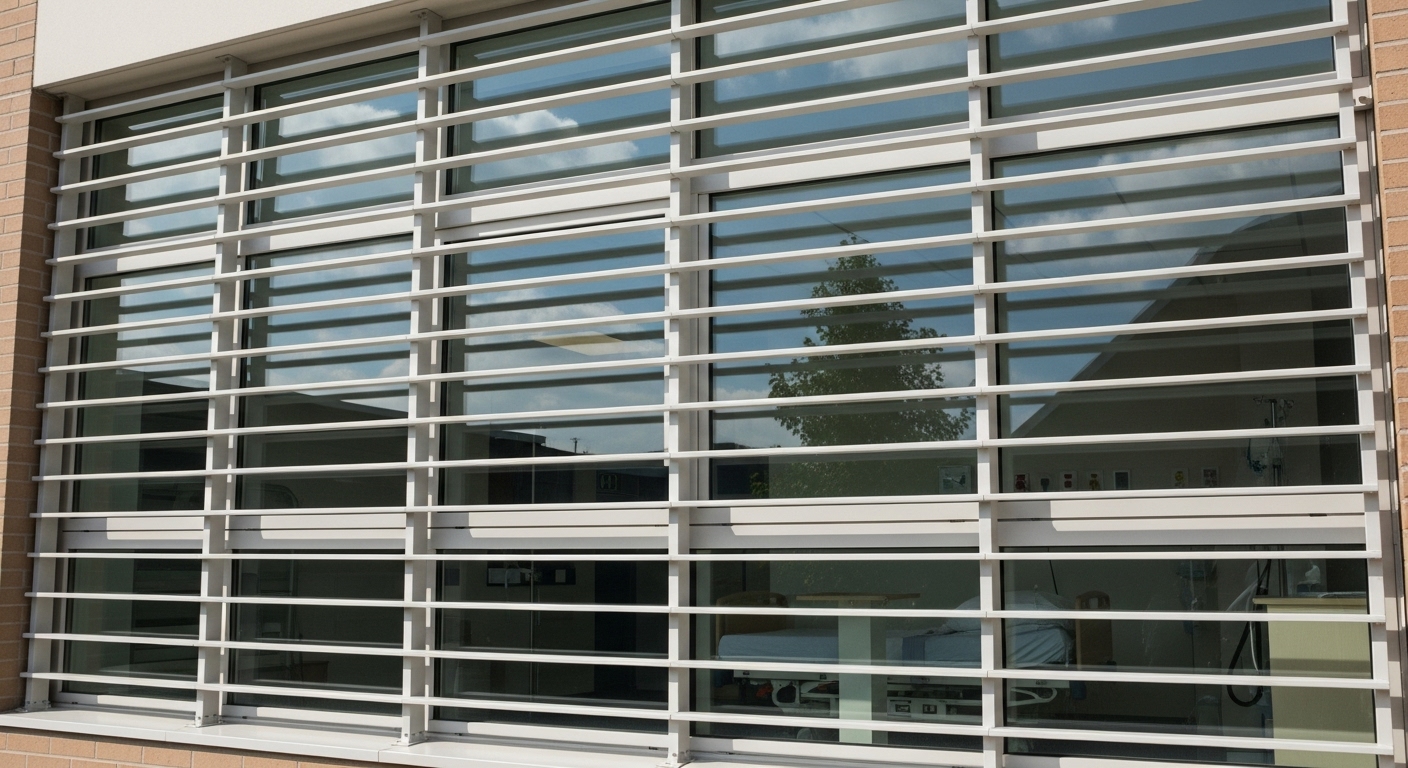
Hospitals and healthcare facilities are among the most complex and sensitive environments in modern society. They operate continuously, serve vulnerable populations, and house critical medical equipment, pharmaceuticals, and life-saving infrastructure.
In 2026, window bars for hospitals and healthcare facilities continue to play an essential role in physical security strategies. When properly designed and installed, window bars help protect patients, staff, and assets while maintaining strict compliance with healthcare regulations and life-safety requirements.
Healthcare facilities differ significantly from other types of critical infrastructure. They combine open public access with highly controlled clinical environments.
Windows in hospitals often serve patient rooms, administrative offices, pharmacies, laboratories, and perimeter corridors. If left unsecured, these openings can become points of unauthorized entry or safety risk.
Window bars provide a passive, always-on layer of protection that complements healthcare security protocols without interfering with medical operations.
In hospitals and healthcare facilities, window bars are commonly installed in:
By physically restricting unauthorized access, window bars reduce the likelihood of theft, intrusion, and patient safety incidents.
Patient safety is the primary mission of any healthcare organization. Physical security measures must support this mission without creating barriers to care.
Window bars contribute to safety by:
For staff, window bars reduce exposure to external threats, particularly during night shifts and in emergency departments.
Hospitals face a wide range of threat scenarios, many of which involve physical access through windows rather than main entrances.
Common threat scenarios include:
Window bars mitigate these risks by increasing the effort and visibility required for unauthorized access.
Healthcare facilities are subject to some of the most stringent building and life-safety regulations of any building type. Physical security measures must fully comply with these requirements.
When properly engineered, window bars can meet compliance requirements while still delivering meaningful security benefits.
Window bars used in healthcare environments must meet specialized technical standards to ensure safety, hygiene, and durability.
These standards ensure that window bars enhance safety without introducing new risks.
| Security Measure | Effectiveness | Reliability | Impact on Care |
|---|---|---|---|
| Window Bars | High | Very High | Minimal |
| Electronic Access Control | High | High | Active |
| Security Screens | Low | Medium | Limited |
Hospitals and healthcare facilities deploy window bars based on detailed risk assessments that consider patient demographics, clinical functions, and architectural layout. Their placement is deliberate and closely coordinated with clinical leadership and safety teams.
Common real-world use cases include:
In emergency departments and trauma centers, window bars are often used selectively to protect staff and patients during high-stress incidents without restricting care delivery.
Effective healthcare security relies on a layered approach that integrates physical, procedural, and technological measures. Window bars serve as a passive, always-on layer within this framework.
They are typically integrated with:
By eliminating window-based vulnerabilities, window bars allow security and clinical teams to focus on patient-centered risk management.
Healthcare facilities must remain operational during natural disasters, mass casualty incidents, and public health emergencies. Physical security measures must function independently of power and network availability.
Window bars contribute to resilience by:
This passive reliability is particularly valuable during emergency situations when staff resources are stretched.
Hospitals operate under intense regulatory oversight and public scrutiny. Any security incident can have legal, financial, and reputational consequences.
Properly specified window bars demonstrate:
From a liability perspective, physical security measures help establish that reasonable precautions were taken to prevent foreseeable harm.
Healthcare architecture emphasizes healing, comfort, and dignity. Security features must support these goals rather than detract from them.
Modern window bar designs for healthcare facilities allow organizations to:
This approach ensures that security measures align with the therapeutic mission of healthcare environments.
Hospitals are long-term assets operating continuously for decades. Security infrastructure must therefore be durable, hygienic, and easy to inspect and maintain.
Best practices for managing window bars in healthcare settings include:
These practices support ongoing compliance and consistent security performance over time.
Yes. Window bars are widely used in hospitals and healthcare facilities, particularly in ground-level areas, behavioral health units, and medication storage areas.
No. When properly designed, window bars enhance safety without disrupting clinical workflows or patient comfort.
Yes. Modern systems are engineered to meet stringent healthcare life-safety and fire code requirements.
They are often integrated discreetly or installed in areas where visibility is minimized to preserve a healing environment.
Yes. By physically eliminating common vulnerabilities, window bars significantly reduce security incidents and patient safety risks.
Window bars for hospitals and healthcare facilities are not merely security features—they are a patient safety and risk management tool. When properly specified and installed, they protect vulnerable populations, support staff, and safeguard critical medical infrastructure.
By integrating code-compliant, thoughtfully designed window bar systems into a layered security strategy, healthcare organizations can enhance safety without compromising care quality or regulatory compliance.
In an environment where patient outcomes and public trust are paramount, investing in reliable physical security measures is a responsible and forward-looking decision.
Security WB Home
EMAIL ADDRESS: sales@securitywb.com
SITE: www.securitywb.com
PHONE:
CDMX: +52 (55) 5272 3355 USA: +1 (650) 4371 575
COOKIES POLICY
Security Window Bars LLC ("SWB") uses cookies and similar technologies to improve your browsing experience and enhance the functionality of our website www.securitywb.com (the “Website”). This Cookies Policy explains what cookies are, how we use them, and how you can manage your cookie preferences.
By using our Website, you agree to our use of cookies as described in this policy.
Last Updated: 01/01/25