

Courthouses and judicial buildings are among the most symbolically powerful and operationally sensitive structures in any society. They represent the rule of law, host high-stakes legal proceedings, and accommodate judges, staff, defendants, law enforcement officers, and the general public—all under one roof.
In 2026, window bars for courthouses and judicial buildings remain a critical component of physical security strategies. Properly designed window bars protect sensitive areas, support life-safety compliance, and reinforce institutional integrity without restricting public access or transparency.
Judicial facilities differ from most government buildings in both function and risk. They host emotionally charged proceedings, handle sensitive information, and regularly accommodate individuals under legal stress.
Windows in courthouses often serve administrative offices, judges’ chambers, records rooms, stairwells, and perimeter-facing corridors. These windows can become vulnerabilities if not properly secured.
Window bars provide a passive yet highly reliable layer of security in judicial buildings. Unlike electronic systems, they require no activation, power, or monitoring.
In courthouses, window bars are commonly installed in:
By physically preventing unauthorized access or escape attempts, window bars support the overall security posture of the judicial facility.
Courthouses are designed to be accessible to the public, reinforcing principles of transparency and justice. At the same time, they must protect staff, officials, and sensitive operations.
Modern window bar systems allow judicial facilities to:
This balance ensures that security measures do not undermine public confidence in the justice system.
Courthouses face a range of threats, from vandalism and theft to targeted attacks and escape attempts. Windows are often overlooked entry points in threat assessments.
Failure to secure known vulnerabilities can expose judicial authorities to:
Properly installed window bars demonstrate due diligence and proactive risk management.
Judicial buildings must comply with stringent building, fire, and life-safety codes. Window bars can fully comply with these regulations when engineered correctly.
Compliance ensures that security enhancements support, rather than hinder, emergency evacuation procedures.
Window bars used in judicial facilities must meet higher technical standards than those used in typical commercial buildings.
These standards ensure reliability under continuous public use and elevated security demands.
| Security Measure | Effectiveness | Reliability | Operational Impact |
|---|---|---|---|
| Window Bars | High | Very High | Minimal |
| Electronic Alarms | Medium | High | Reactive |
| Security Screens | Low | Medium | Limited |
Courthouses and judicial buildings deploy window bars strategically, based on risk assessments, architectural layout, and the specific functions housed within each area of the facility. These decisions are rarely arbitrary and often follow lessons learned from past incidents.
Common real-world use cases include:
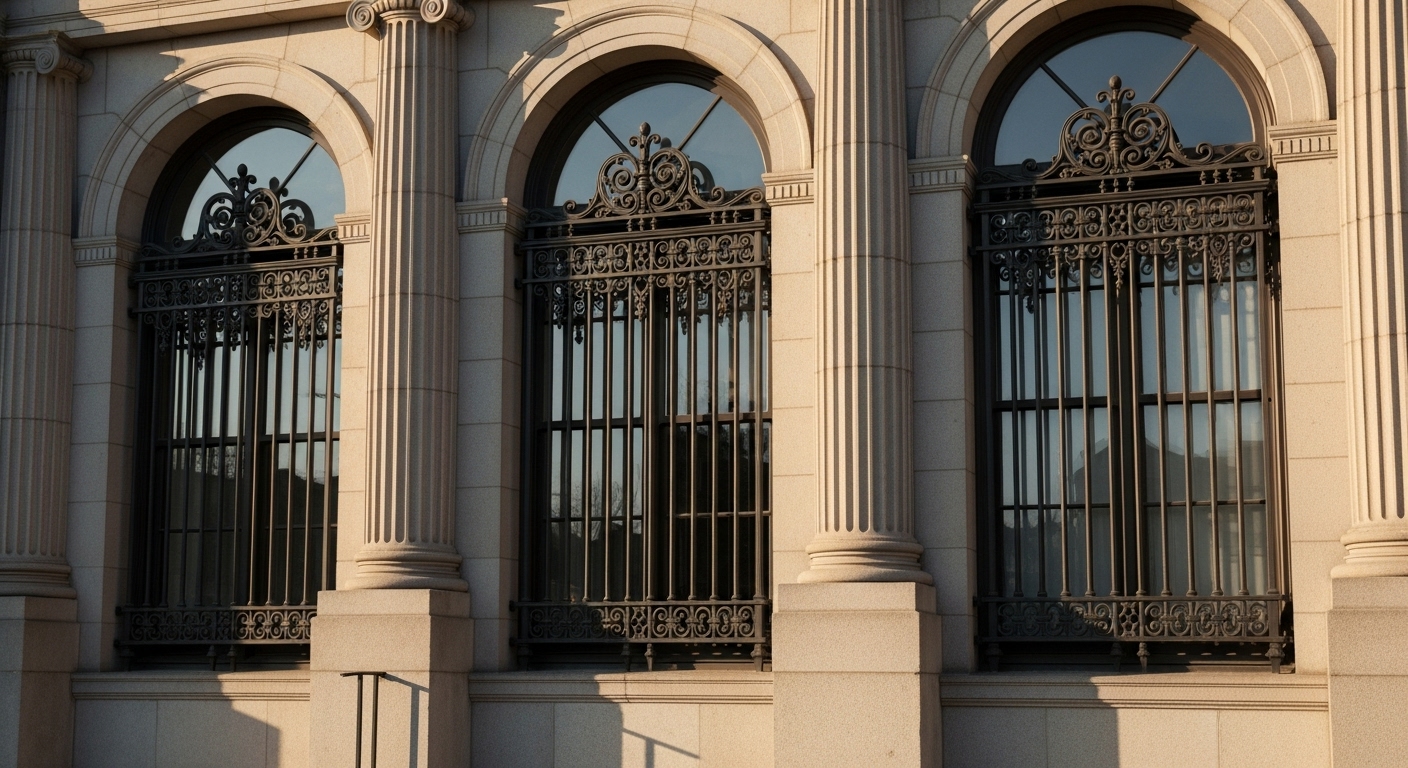
In older courthouses, window bars are frequently retrofitted to address legacy architectural vulnerabilities, while in newer buildings they are integrated during the design phase for both security and aesthetic consistency.
Window bars are most effective when deployed as part of a layered security framework. Judicial facilities typically integrate multiple systems to protect people, processes, and physical assets.
Within this framework, window bars serve as a passive, non-negotiable barrier that eliminates entire classes of security threats without adding operational complexity.
Their passive nature is especially valuable in judicial environments, where security measures must function continuously without interfering with court proceedings or daily operations.
Judicial institutions are held to high standards of accountability, transparency, and public trust. Any failure in facility security can have far-reaching legal and societal consequences.
Properly installed window bars demonstrate:
From a legal standpoint, documented physical security measures help establish that reasonable precautions were taken to prevent foreseeable incidents.
Although exact statistics vary by jurisdiction, security audits consistently show that physical barriers significantly reduce unauthorized access attempts and opportunistic crime in public buildings.
For courthouses, reduced incidents translate into:
Insurance providers and risk assessors increasingly consider physical security features when evaluating judicial facilities, particularly those located in dense urban environments.
Courthouses are often designed to convey authority, stability, and respect for the rule of law. Security features must reinforce these values rather than detract from them.
Modern window bar designs allow judicial buildings to:
This approach ensures that security measures support, rather than undermine, public confidence in the justice system.
Judicial buildings are long-term assets, often remaining in use for decades. Security infrastructure must therefore be durable, maintainable, and regularly reviewed for compliance.
Best practices for maintaining window bars in courthouses include:
These practices help ensure ongoing compliance with safety codes and preserve the effectiveness of the security system over time.
Yes. Window bars are widely used in courthouses and judicial buildings, particularly in ground-level areas, private offices, and sensitive operational spaces.
No. They are installed in non-public or controlled areas and do not interfere with public entry points or courtroom access.
Yes. Modern systems are engineered to meet fire, building, and egress requirements when properly specified and installed.
In many cases, they are discreetly integrated or located in areas not visible to the general public.
Yes. By eliminating common physical vulnerabilities, window bars reduce security incidents and operational disruptions.
Window bars for courthouses and judicial buildings are not merely security fixtures. They are a foundational element of institutional integrity, public safety, and operational continuity.
By integrating robust, code-compliant window bar systems into a layered security strategy, judicial authorities can protect staff, preserve sensitive operations, and maintain public trust in the justice system.
In an era of increasing complexity and scrutiny, investing in resilient physical security measures is a prudent and responsible decision for courts at every level.
Security WB Home






EMAIL ADDRESS: sales@securitywb.com
SITE: www.securitywb.com
PHONE:
CDMX: +52 (55) 5272 3355 USA: +1 (650) 4371 575
COOKIES POLICY
Security Window Bars LLC ("SWB") uses cookies and similar technologies to improve your browsing experience and enhance the functionality of our website www.securitywb.com (the “Website”). This Cookies Policy explains what cookies are, how we use them, and how you can manage your cookie preferences.
By using our Website, you agree to our use of cookies as described in this policy.
Last Updated: 01/01/25