The four layers of home security are the difference between owning security products and engineering a hardened target. In 2026, burglars still exploit the same reality: most homes have one strong layer and two weak ones—and criminals naturally choose the easiest path. If you want protection that actually holds up under pressure, build the system the way professionals do: Detection → Deterrence → Delay → Response, with life-safety and egress planning baked in from the start. (Bureau of Justice Statistics)
This guide is homeowner-readable, engineering-first, and built for real-world constraints (budget, time, family routines, renters vs. homeowners, and local code variation). It’s educational guidance, not legal advice—verify requirements with your local authority having jurisdiction (AHJ).
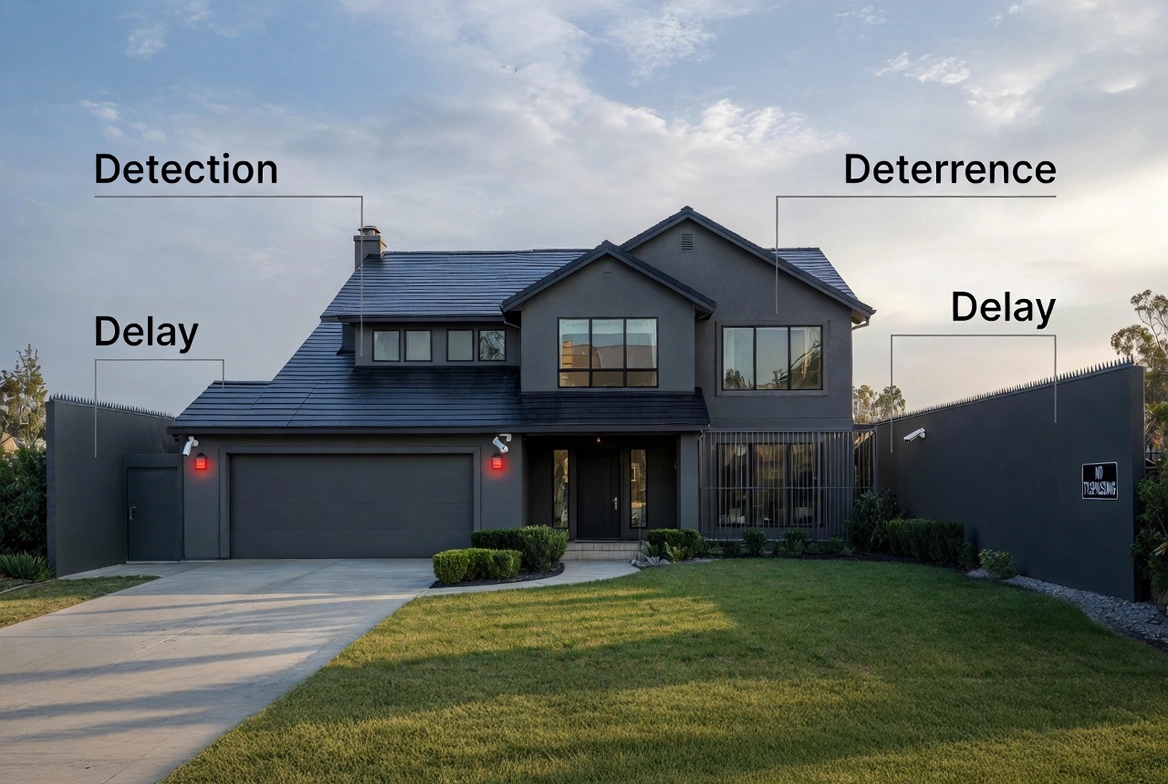
Think of security like a modern vehicle safety system. A seatbelt alone helps—but seatbelt + airbags + crumple zones + stability control is what saves lives. The four layers of home security work the same way: each layer covers the failure modes of the others.
Layer 1 — Detection
Detection answers: What is happening, where, and how early did we know?
It’s your early-warning system: cameras, sensors, lighting triggers, and alerts that turn “unknown” into “known.”
Layer 2 — Deterrence
Deterrence answers: Do they attempt entry at all?
This is psychology. You want your home to broadcast: visible risk, high exposure, and no fast wins.
Layer 3 — Delay
Delay answers: If they try, how much time, noise, and effort does it take?
Delay is physical engineering: reinforced doors, hardened windows, and serious barriers that turn quick entry into loud failure.
Layer 4 — Response
Response answers: What happens in the first 60 seconds—especially under stress?
Response is not just calling police. It includes family actions, safe retreat, alarms, lighting escalation, and life-safety egress.
Why these layers matter: burglars pick the easiest entry
National victimization data shows where offenders actually enter. In household burglaries, the front door (~33.1%), back door (~22.5%), and windows (~22.8%) are major entry points. (Bureau of Justice Statistics)
That means the four layers of home security must concentrate protection where it counts: front door + first-floor windows + approach routes.
Hardened target mindset: your goal is “unacceptable effort”
Your goal is not “perfect security.” Your goal is a home that is too loud, too slow, too visible, and too risky. Most property crime is opportunistic—so when your layers stack friction, the intruder often moves on. Evidence supports this “choose-easier-target” behavior: in surveys of burglars, many report actively looking for alarms and deciding to leave when security measures are present. (ScienceDaily)
Detection is the layer that modern smart homes improved the most—but it’s also the layer that homeowners misunderstand the most.
Detection is information, not stopping power.
A camera can capture video. It cannot physically stop entry. Detection becomes powerful only when it triggers deterrence and supports delay and response.
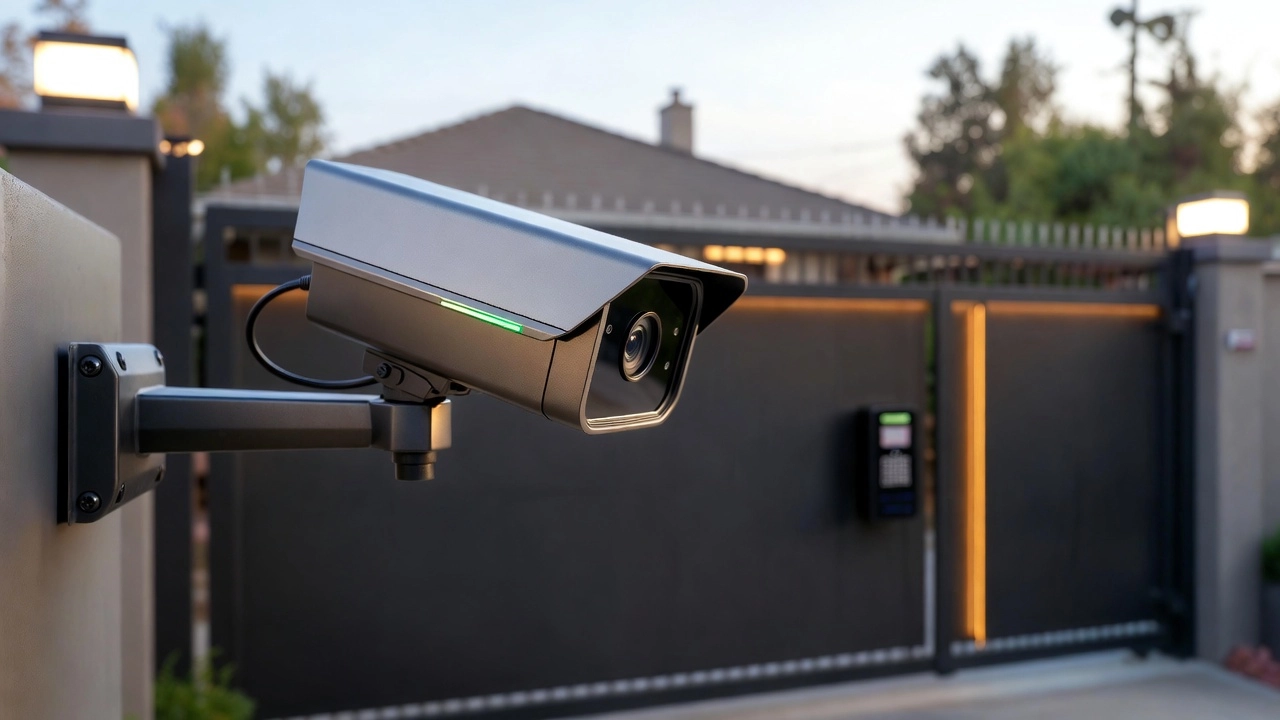
What detection should do in 2026
A 2026-ready detection layer should:
Detection upgrades that actually move the needle
A) Perimeter-first thinking (don’t start at the doorknob)
Most homes detect too late—when someone is already at the door. Instead, detect at:
If the intruder is detected while still outside the “commitment zone,” deterrence is dramatically easier.
B) Motion lighting is “detection that becomes deterrence”
Motion lighting is one of the highest ROI upgrades in the entire four layers of home security. It does three things at once:
Pair motion lighting with camera coverage so the light also improves video quality.
C) Entry-contact sensors are cheap, but don’t confuse them with early warning
Door/window contact sensors tell you a door/window opened—not that a threat is approaching. Use them as part of layered detection, not as your primary signal.
D) Life-safety detection belongs in “four layers of home security”
Home security is not only criminals. Smoke and CO incidents demand response behavior and egress readiness. Treat life-safety alarms as part of the security system, because the outcome you fear most is often not theft—it’s loss of life.
2026 reality: cybersecurity is now part of detection
If your cameras and smart devices are insecure, an attacker can:
Government guidance emphasizes basics that matter: secure wireless networks, strong passwords, updates, and safer configurations for home networks and devices. (Digi International)
In the four layers of home security, cyber hygiene protects your detection layer from being silently neutralized.
Minimum baseline (non-negotiable):
Deterrence is where you win without a fight.
A huge mistake is assuming deterrence is “a sign.” In reality, deterrence is a system of signals:
What burglars say they do (and why you should listen)
In a widely cited survey of burglars, a large majority reported they look for alarms and many said they would leave and target another home if they discovered an alarm system. (ScienceDaily)
That aligns perfectly with the hardened-target idea: when your home advertises friction, opportunistic offenders often pivot to easier options.
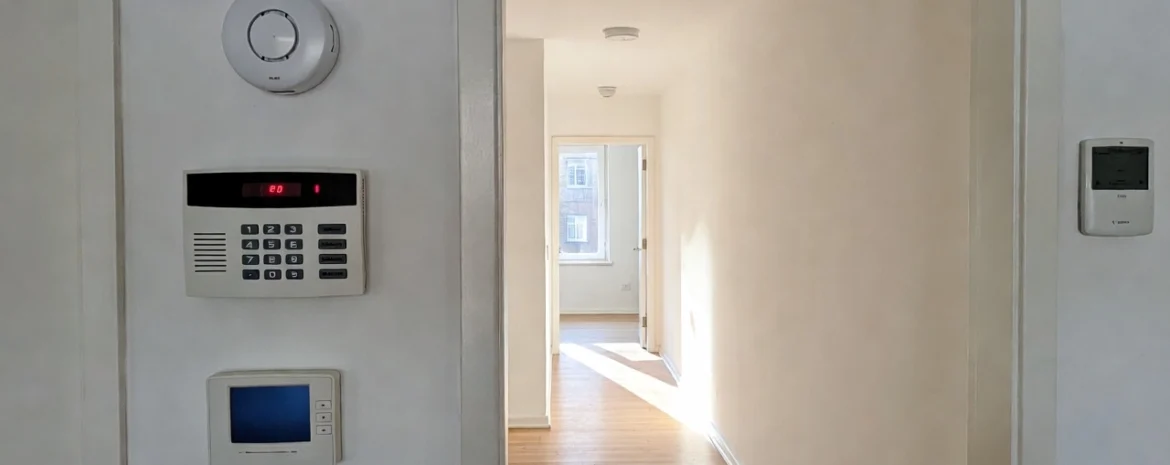
Deterrence in 2026: the “visibility stack”
Here’s the simplest way to build deterrence fast:
1) Clean sightlines (remove hiding)
2) Visible cameras (not hidden)
Hidden cameras are great for evidence. Visible cameras are great for deterrence. You want both, but if you can only choose one strategy early, choose visible coverage on primary approaches.
3) Light that punishes approach
Motion lighting + stable ambient lighting near entry routes changes the intruder’s emotional math. Darkness supports crime. Light increases perceived risk.
4) “Hard to break into” body language
This is where the delay layer supports deterrence. Even before a criminal touches anything, they read:
Deterrence focused where entry happens most
Remember the entry data: front door, back door, and windows are top entry points in household burglaries. (Bureau of Justice Statistics)
So deterrence should be concentrated at:
This is the layer most homes underbuild.
Homeowners often buy detection tech and stop there because it feels “modern.” But burglary is still mechanical: doors, locks, frames, windows, and leverage.
Delay is the “time + noise” engine
Delay exists to force the outcomes intruders hate:
Start with the door: the most common entry route
Because the front door is a leading entry point, door reinforcement is often the best “first delay dollar.” (Bureau of Justice Statistics)
High-impact door delay upgrades:
Windows: the quiet entry you can’t ignore
Windows are a major entry point in household burglary. (Bureau of Justice Statistics)
What makes windows dangerous is that many are:
Window delay upgrades (layered approach):
Where window bars fit into the four layers of home security
Window bars are not “old school.” They are pure delay engineering—and delay is the layer burglars can’t negotiate with.
A modular system matters because many retail bars fail in real-world conditions:
A modern window-bar strategy supports both deterrence and delay:
The life-safety rule: delay must not break egress
This is where homeowners get into trouble: adding strong physical barriers over windows that must function as escape routes.
You must treat bedrooms and habitable basements differently from non-egress windows. If a window serves as an emergency escape and rescue opening, any covering (bars, grilles, or similar devices) must preserve safe exit functionality in a way that aligns with applicable code concepts—often requiring release from the inside without keys/tools and without special knowledge, depending on jurisdiction and adopted code language. (catalog.freelibrary.org)
Translation into homeowner logic:
If it’s an egress-critical window, the delay layer must include a quick-release life-safety design—not a “find the key in smoke” design.
Response is the layer people ignore until a crisis forces it into focus.
A complete four layers of home security plan treats response as a script, not a hope.
Response is not only “call the police”
Response includes:
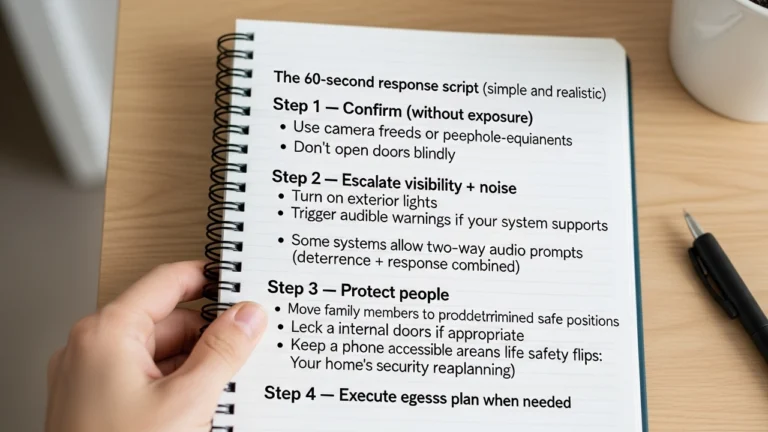
The 60-second response script (simple and realistic)
Step 1 — Confirm (without exposure)
Step 2 — Escalate visibility + noise
Step 3 — Protect people
Step 4 — Execute egress plan when needed
If the emergency is fire/smoke, the priority flips: life safety first. Your home’s security must not trap you.
Why egress belongs inside “four layers of home security”
Because your most lethal scenario is not always a burglar.
Window bars (and any barrier) must be considered in the context of emergency escape requirements and local rules. Many codes and local jurisdictions emphasize that certain security devices must be releasable from the inside without keys/tools and without special knowledge when used on required escape openings. (catalog.freelibrary.org)
This is exactly why an egress-capable quick-release concept exists.
Security without escape is not security. It’s a hazard.
Use this scoring logic to see which layer is weakest. In the four layers of home security, the weakest layer becomes the intruder’s plan.
Score categories (100 points total)
Detection (25 points)
Deterrence (15 points)
Delay (35 points)
Response (25 points)
How to interpret your score
If you want the four layers of home security fast, don’t start shopping. Start removing “easy wins.”
Minute 0–10: Visibility + exposure
Minute 10–20: Discipline + weak-point audit
Minute 20–30: Decide your next “delay” upgrade
Does a security system lower insurance costs?
Often yes, depending on insurer and system type. But the bigger benefit is risk reduction. The four layers of home security reduce opportunity (deterrence), slow entry (delay), and improve survivability (response).
Why is “Delay” more important than most homeowners think?
Because burglars want speed and low noise. Entry-point data shows doors and windows are frequent targets, so physical resistance directly attacks the offender’s preferred method. (Bureau of Justice Statistics)
Do alarms and cameras actually deter burglars?
Surveys of burglars report many look for alarms, and many say they would leave for an easier target when an alarm is present. (ScienceDaily)
Deterrence is strongest when alarms/cameras are visible and supported by lighting and delay measures.
Are window bars always safe in bedrooms?
Only if they preserve life safety. If a window is part of an emergency escape and rescue plan, coverings may need quick-release interior operation aligned with local code concepts. (catalog.freelibrary.org)
What’s the fastest way to build a hardened target?
Stack friction where entry is common:
If you can’t answer “yes,” that’s your next upgrade—not your next gadget.
Detection
Deterrence
Delay
Response
COOKIES POLICY
Security Window Bars LLC ("SWB") uses cookies and similar technologies to improve your browsing experience and enhance the functionality of our website www.securitywb.com (the “Website”). This Cookies Policy explains what cookies are, how we use them, and how you can manage your cookie preferences.
By using our Website, you agree to our use of cookies as described in this policy.
Last Updated: 01/01/25