
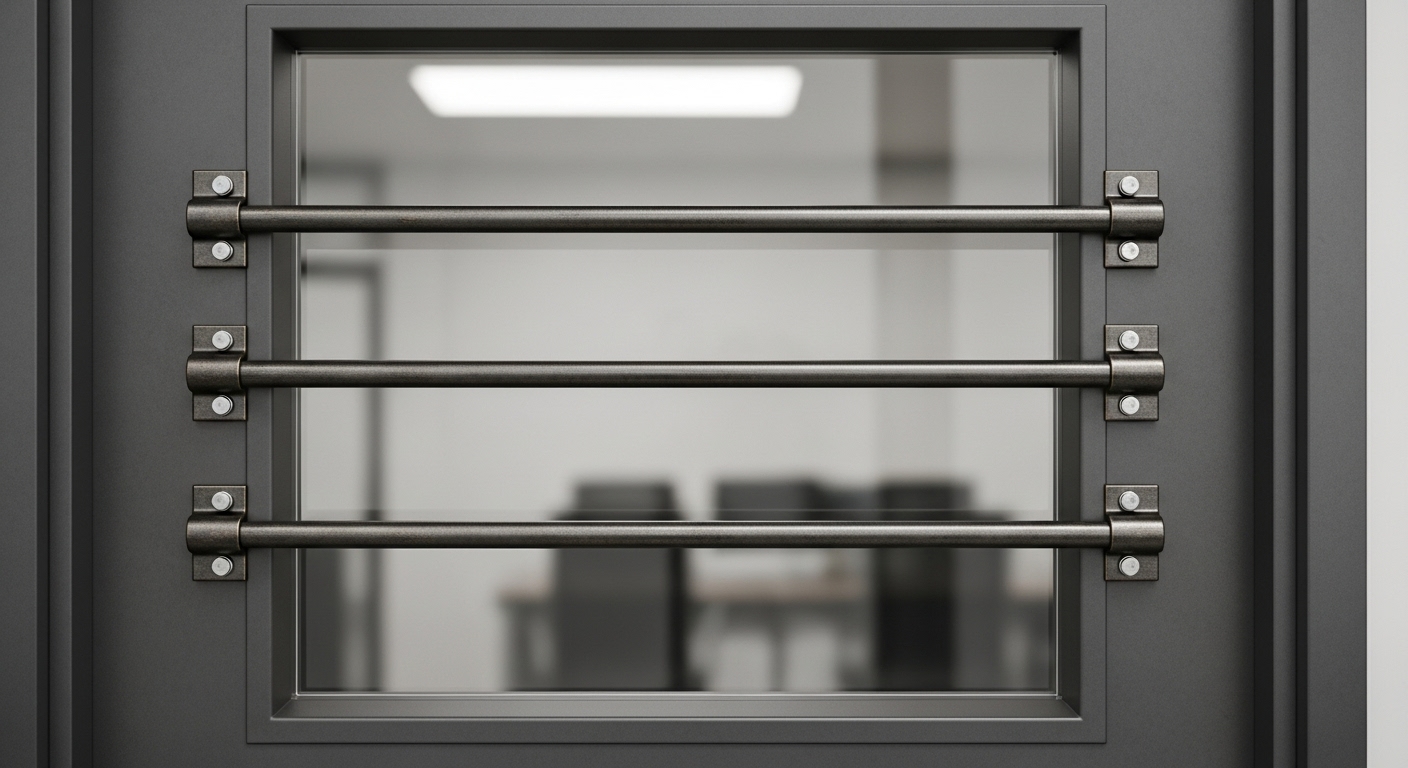
The complete 2026 engineering protocol for securing glass in entry doors and sidelights without compromising egress or aesthetics.
You have installed a Grade 1 deadbolt. You have reinforced the strike plate with 3-inch screws. You have a solid core wood door. Yet, your home is vulnerable. Why?
The answer lies in the small square of glass—technically known as a "Vision Lite"—embedded in your door, or the narrow strip of glass (sidelight) running parallel to it. In the security industry, this is known as the "Reach-Through" vulnerability. An intruder does not need to kick down a door if they can simply break a 6-inch pane of glass, reach their arm inside, and turn the thumb latch of your expensive deadbolt.
In 2026, as smart locks become ubiquitous, this vulnerability has actually increased. Many homeowners mistakenly believe that a digital keypad secures the door. It does not. If the lock has a manual thumb turn on the inside (required for fire safety in residential dwellings), a broken window equals an open door.
To understand door security, we must adopt the Envelope Integrity Principle. A security system is a chain; the strength of the chain is defined by its weakest link. In a standard entryway, the glass is exponentially weaker than the wood or steel surrounding it.
Standard tempered glass (safety glass) is designed to shatter into small, harmless cubes when impacted. While this prevents injury, it catastrophically fails as a security barrier. It falls out of the frame immediately upon impact, leaving a gaping hole.
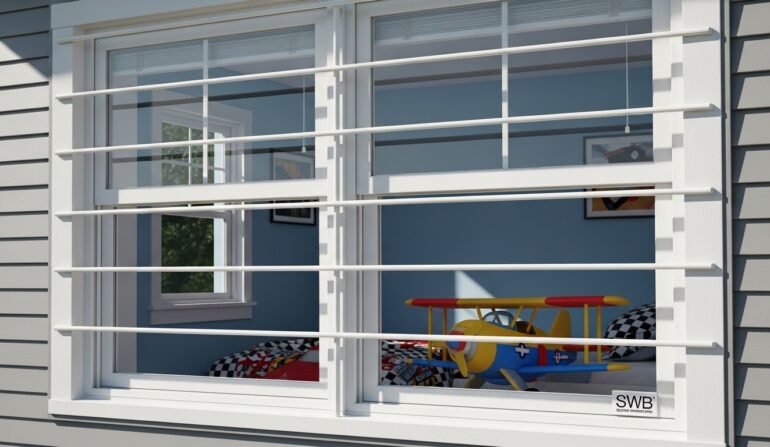
Door Window Security Bars act as a secondary envelope. Even if the glass (Primary Envelope) is breached, the bars (Secondary Envelope) maintain the integrity of the barrier, preventing the "interaction" (the hand reaching for the lock).
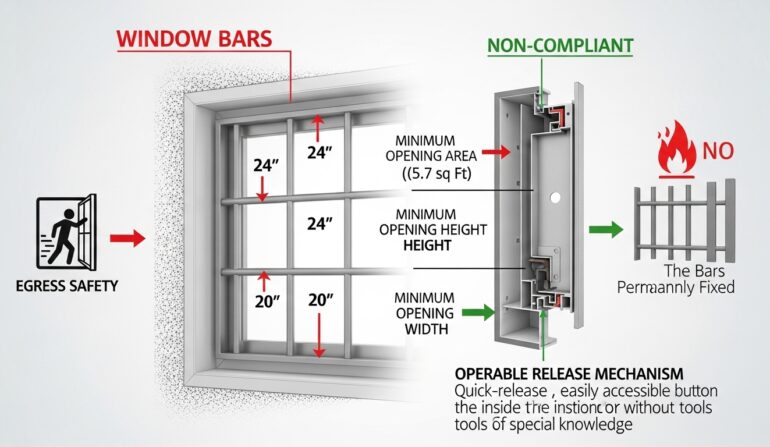
A critical theoretical constraint is Egress. The International Residential Code (IRC) dictates that egress doors must be operable from the inside without the use of a key or special tool. This creates a paradox:
1. To stop the reach-through, we used to use double-cylinder deadbolts (keyed on both sides).
2. These are now illegal in many jurisdictions because they trap occupants during a fire.
3. Therefore, we MUST use a thumb turn, and we MUST protect that thumb turn with physical bars.
Installing bars on a moving object (a door) presents unique engineering challenges compared to static wall windows. We must account for inertia, vibration, and depth clearance.
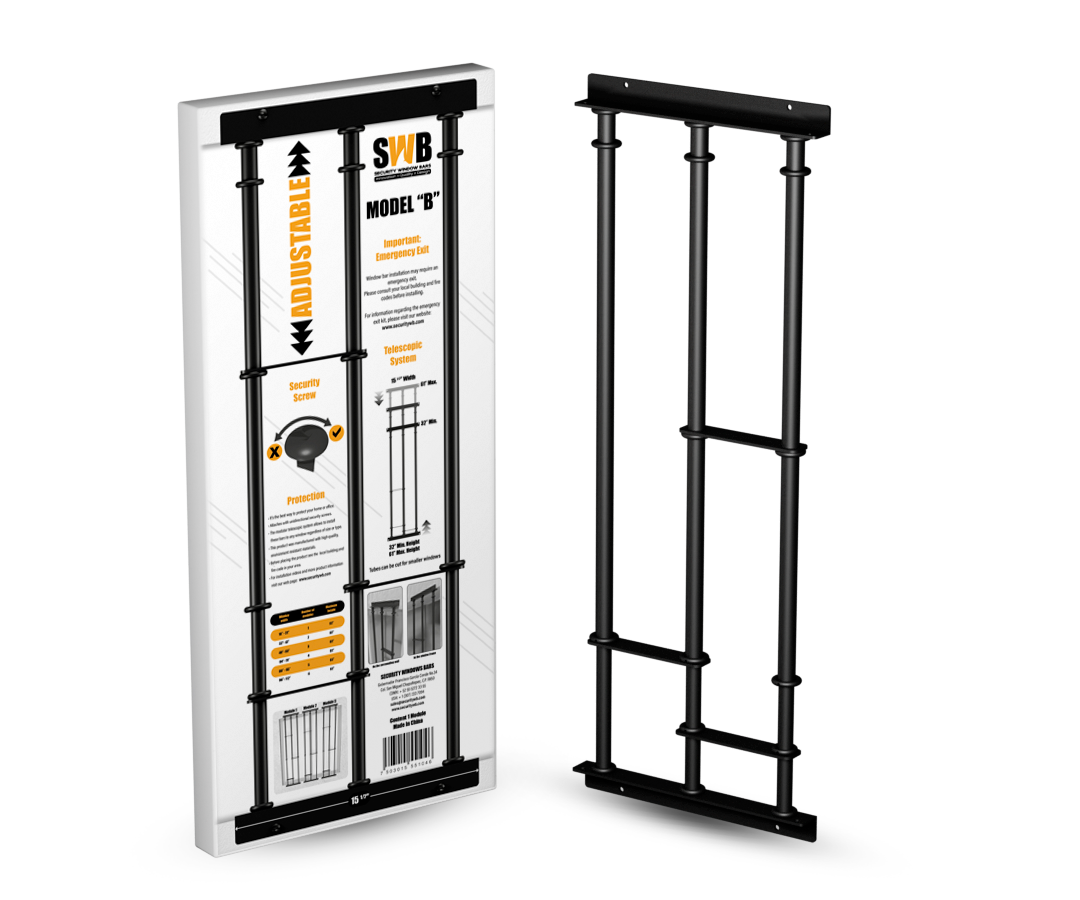
A proper door bar system consists of three components:
1. The Grille Matrix: Usually steel, spaced no more than 5 inches apart (to prevent arm passage).
2. The Mounting Flange: Must be narrow enough to fit on the door stile (the wood frame around the glass).
3. The Fastening System: Non-reversible screws (One-Way) or through-bolts.
For high-security applications, relying on short wood screws into the door veneer is insufficient. The vibration of slamming the door daily will loosen them.
Sidelights (the tall, narrow windows next to doors) are often floor-to-ceiling.
The Problem: They are usually framed into the rough opening, not the door itself.
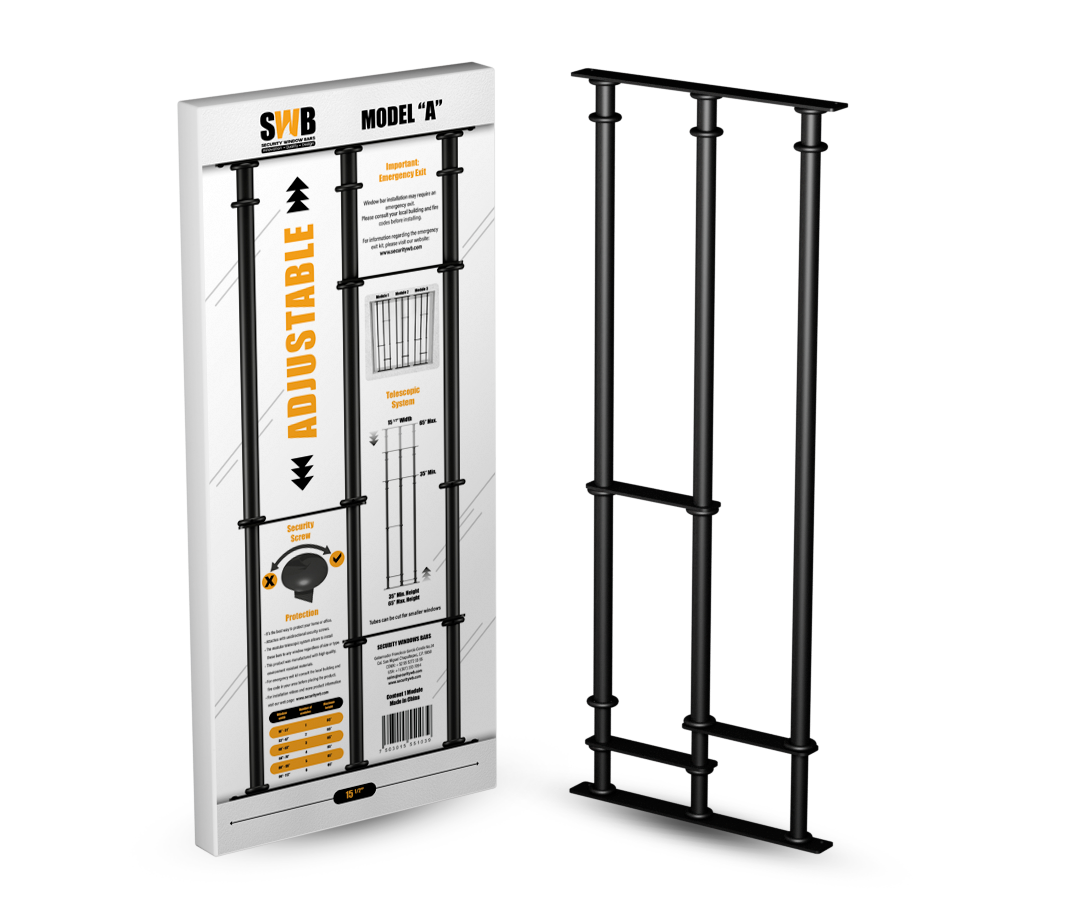
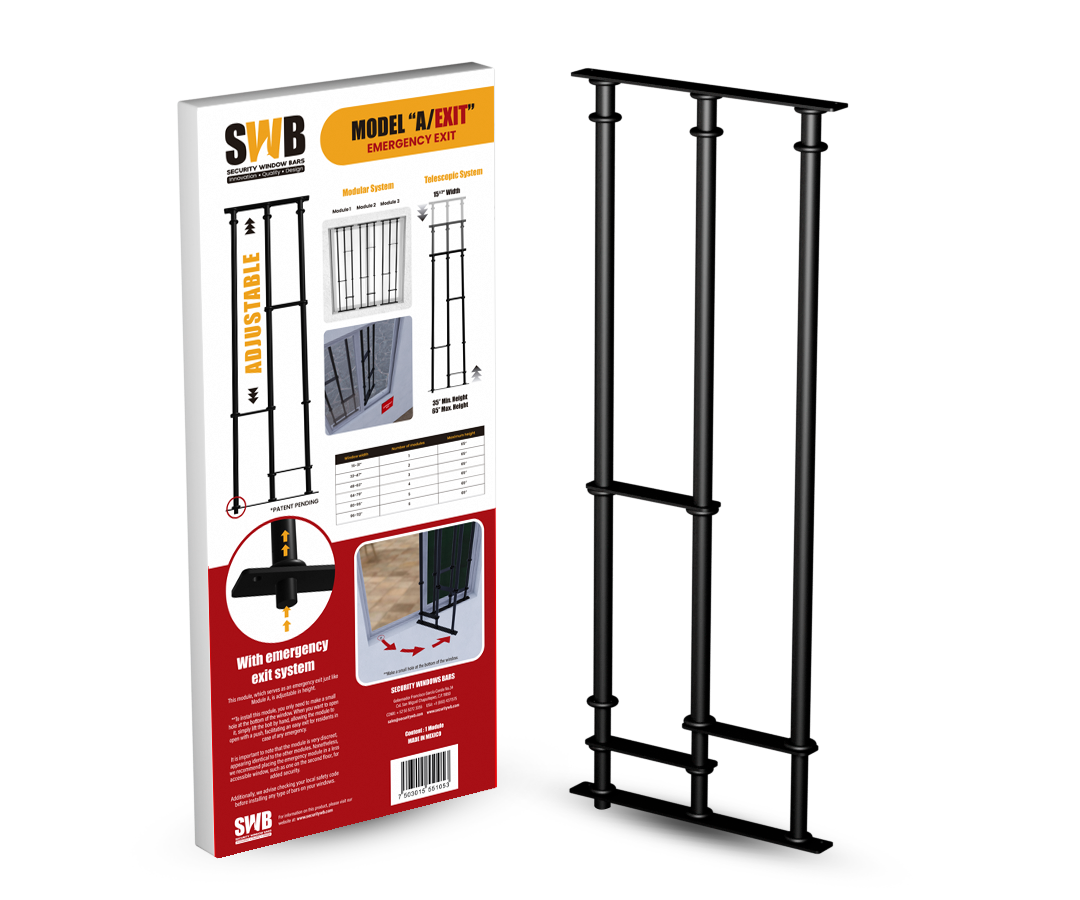
The Solution: Use a Vertical Telescopic Bar (SWB Model A) installed in the "Reveal" of the sidelight frame. This is often cleaner than screwing a grille to the exterior trim.
When installing bars on the door itself, you must ensure the added weight does not unbalance the hinges.
• Weight Limit: Ensure the grille does not exceed 10 lbs for standard hinges.
• Depth Clearance: If the door opens against a wall, ensure the protruding bars do not hit the wall before the doorstop engages. You may need to install a hinge-pin door stop to restrict the opening angle to 90 degrees.
Of burglars enter through the front door. Of those, nearly half involve defeating the lock rather than kicking the door, often facilitated by breaking glass.
The average duration of a burglary. A reach-through attack takes less than 15 seconds. Speed is the enemy.
The average cost of a steel door security grille. Compared to the $2,500 cost of a new high-security door, this is a high-ROI retrofit.
According to the Comprehensive Market Analysis of the Security Window Bar Industry, the demand for retrofit door security has risen by 18% in urban centers where "porch piracy" has evolved into "foyer entry" crimes.
Why choose bars over invisible film?
| Method | Security Film (4mil - 12mil) | Door Window Bars (Steel) | Laminated Glass Replacement |
|---|---|---|---|
| Visual Deterrence | None (Invisible) | High (Visible Hardening) | None (Looks like standard glass) |
| Attack Resistance | Delay Only (30-60 secs) | Stop (Physical Barrier) | Delay (Requires repeated battering) |
| Cost | Low ($50 DIY) | Medium ($100-$200) | High ($500+ Custom Glass) |
| Airflow | N/A (Solid) | Allowed (if glass is opened) | N/A |
Verdict: Security film relies on the burglar trying to break the glass and failing. Bars prevent them from even trying. For a front door where you want to signal "Hard Target," bars are superior.
Context: A kitchen door leading to a dark patio. Half the door is glass.
Risk: High. Burglars prefer rear entry.
Implementation: The homeowner installs a Half-Door Grille (Grid Pattern). They choose white powder-coat to match the door. The installation uses one-way screws. The glass can still be cleaned from the inside, but no human hand can pass through the 4-inch grid squares.
Context: A small business with a steel rear door that has a small 12x12 window.
Risk: "Smash and reach" to open the panic bar.
Implementation: A heavy-duty steel mesh cage is bolted over the window from the inside. This is critical: protecting the panic bar from manipulation is a top priority for commercial insurance compliance.
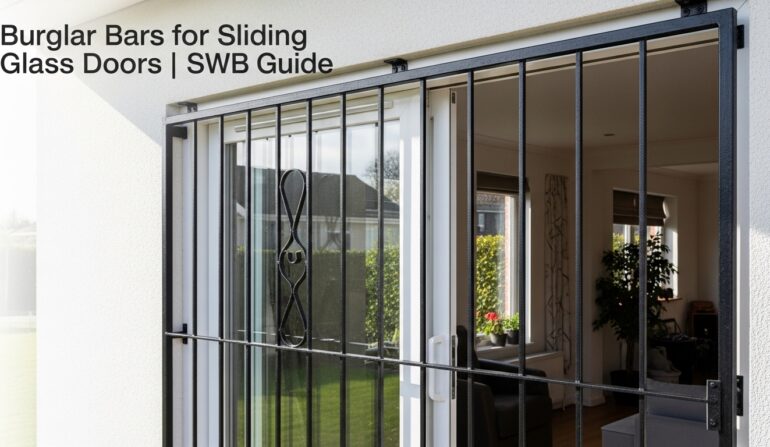
A: Not if installed correctly. Door window bars cover the glass, not the door opening itself. As long as the bars do not cover the door handle, deadbolt, or prevent the door from swinging open, they are compliant. Never install a bar that crosses the entire door frame unless it is a specialized "Security Screen Door" with its own quick-release handle.
A: No. You cannot put bars on the glass of a slider because it would prevent the door from sliding past the fixed panel. For sliders, you need a "Patio Bolt" or a "Charlie Bar" (see our guide on Sliding Door Security).
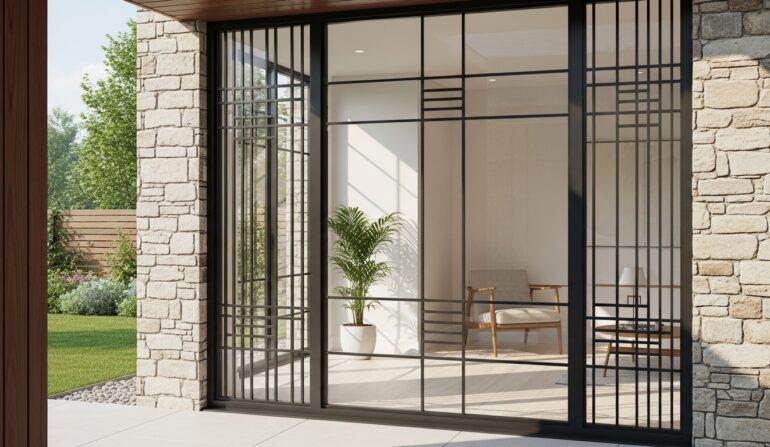
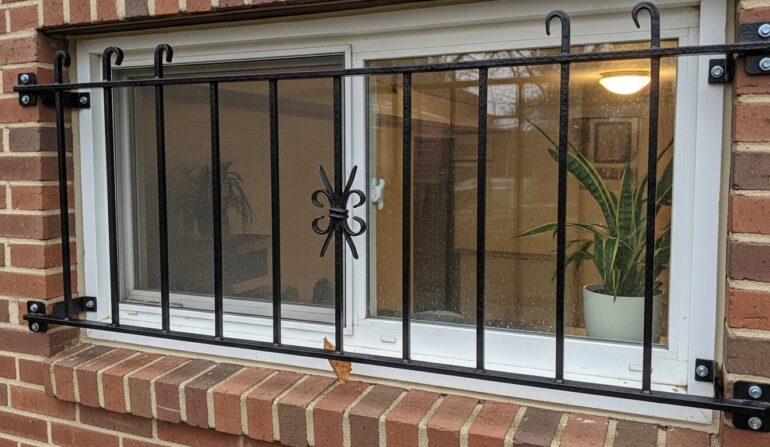
A: Look for "Decorative Grilles." Many manufacturers produce wrought-iron style inserts that look like ornamental heritage features rather than prison bars. These are often exempt from HOA "burglar bar" bans because they are classified as "Architectural Enhancements."
A: This is the main annoyance. If you use a "Fixed" installation, you must use a cloth wrapped around a ruler. However, some premium models (like SWB Hinged Grilles) allow the grille to swing open for cleaning, secured by a padlock that is only accessible from the inside.
Securing a door is an exercise in layering. A lock is useless if the material holding it can be bypassed. The "Reach-Through" is the most embarrassing failure mode in home security—spending thousands on locks only to be defeated by a $20 hammer.
By installing Door Window Security Bars, you close this critical loop. You transform the glass from a liability into a safe source of light. In 2026, where security must blend with lifestyle, choosing a bar system that matches your door's architecture allows you to sleep soundly, knowing your envelope is sealed.
EMAIL ADDRESS: sales@securitywb.com
SITE: www.securitywb.com
PHONE:
CDMX: +52 (55) 5272 3355 USA: +1 (650) 4371 575
COOKIES POLICY
Security Window Bars LLC ("SWB") uses cookies and similar technologies to improve your browsing experience and enhance the functionality of our website www.securitywb.com (the “Website”). This Cookies Policy explains what cookies are, how we use them, and how you can manage your cookie preferences.
By using our Website, you agree to our use of cookies as described in this policy.
Last Updated: 01/01/25