Security Window Bars (SWB): High-Engineering Modular Protection Installed in 15 Minutes (2026 Guide)

Share

Security Window Bars are no longer the “welded iron cage” your parents warned you about. In 2026, homeowners want protection that’s strong, clean-looking, and realistic for busy life—without turning every window into a custom fabrication project. And when you look at how often property crime still happens, it’s not hard to understand why people are upgrading physical security again: the FBI’s commonly cited crime-clock framing (from its 2019 reporting) estimated a burglary offense occurred about every 28.3 seconds in the United States. (Federal Bureau of Investigation)

This guide is written by securitywb.com as a practical, engineering-first buyer’s and installer’s roadmap to Security Window Bars (SWB)—a modular, telescopic system designed to install in about 15 minutes with basic tools, while also offering an egress-aware option (Model A/EXIT) for bedrooms and habitable basements where life-safety rules matter.
High-Engineering Modular Protection

1. Why Security Window Bars Replaced Traditional Welded “Rejas” in 2026

Traditional window bars were built for a different era. They did one thing well: they made a window harder to enter. But they did it at a cost most modern homeowners don’t accept anymore:

  • Custom fabrication for every opening
  • Professional labor (scheduling, minimum fees, “per window” pricing)
  • Permanent modifications that can damage finish work
  • Inconsistent quality depending on the fabricator
  • Aesthetic penalties that make a house feel like a facility instead of a home

Security Window Bars changed the conversation by turning window protection into a system—something you can repeat across your home, measure predictably, install quickly, and maintain without turning it into a weekend lifestyle.

The modern homeowner reality: windows are not “standard”

Big-box products often assume a fantasy home where every window is perfectly square, perfectly sized, and perfectly framed. Real homes are messy:

  • replacement windows inside old frames
  • decorative trim that steals space
  • stucco and brick that aren’t perfectly flat
  • sliding windows with offset geometry
  • basements with window wells and damp conditions

Security Window Bars were designed for this mess—because the best security isn’t “perfect in a lab.” It’s reliable in real life.

Security is also psychology, not just steel

A burglar does not want a long, loud, risky job. The modern intruder is often opportunistic. A well-known research summary tied to UNC Charlotte’s “through the eyes of a burglar” work reported that about 83% of surveyed offenders said they would try to determine if an alarm was present, and about 60% would choose a different target if an alarm was on-site. (ScienceDaily)

That insight matters because Security Window Bars don’t only resist force—they signal “this home won’t be quick.”

Security Window Bars were designed for this mess—because the best security isn’t “perfect in a lab.” It’s reliable in real life.

2. The Engineering Core of Security Window Bars: Telescopic Fit + Modular Expansion

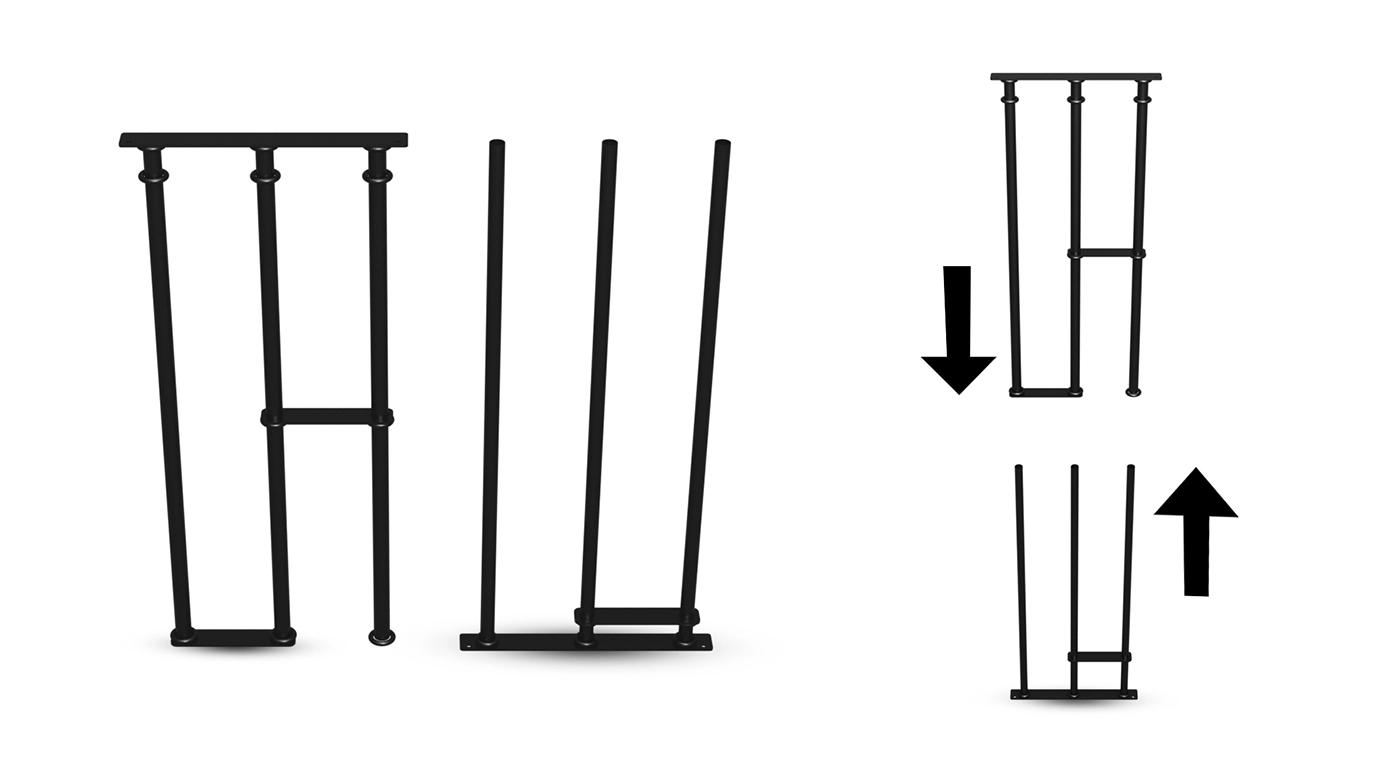
If you want to understand why Security Window Bars feel different, focus on two mechanical ideas that solve most fit problems:
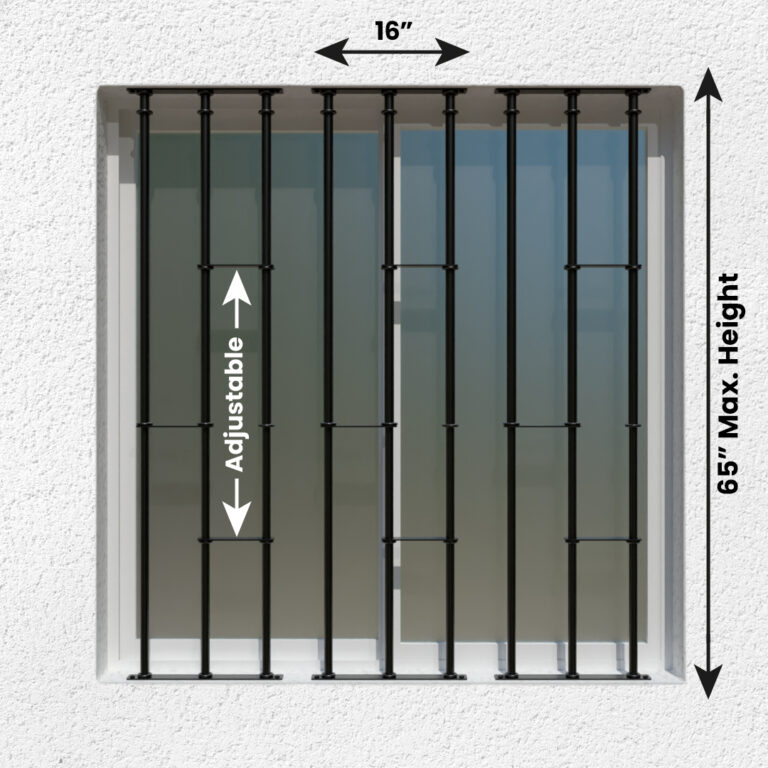
  1. Telescopic vertical adjustment
  2. Modular horizontal expansion
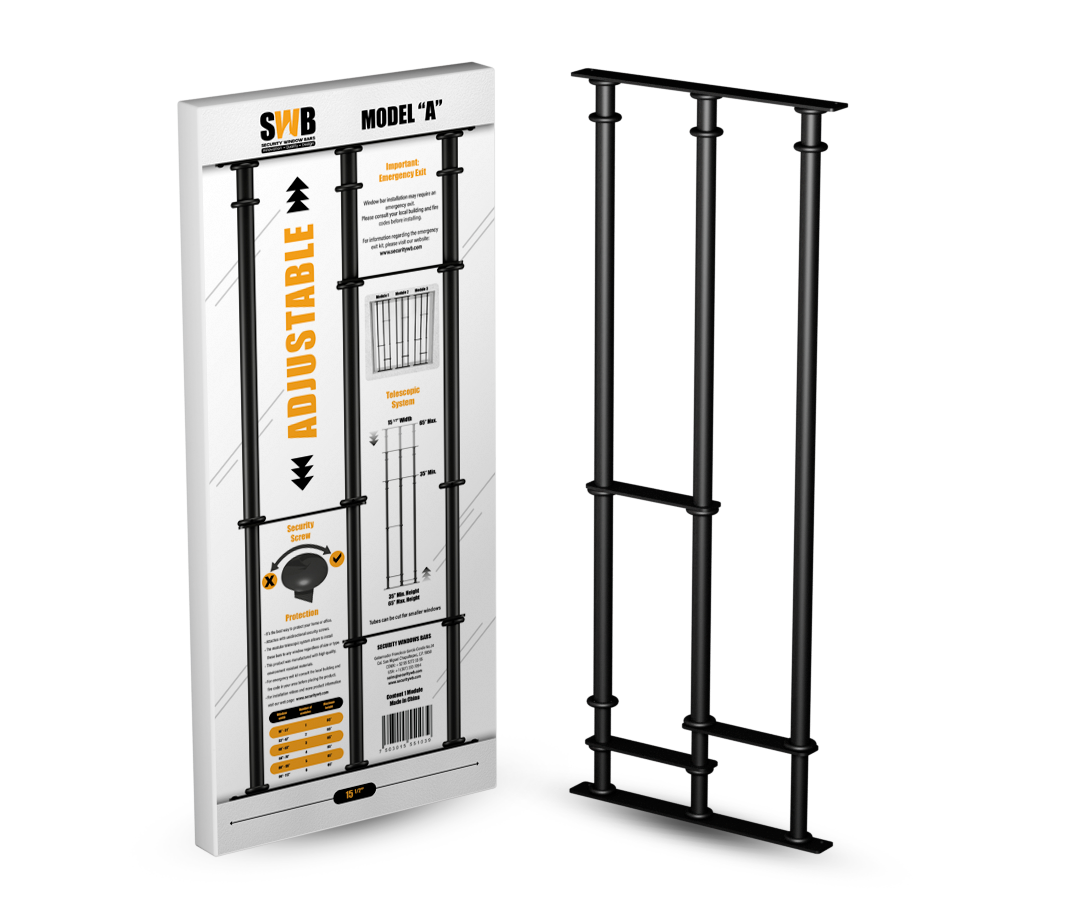
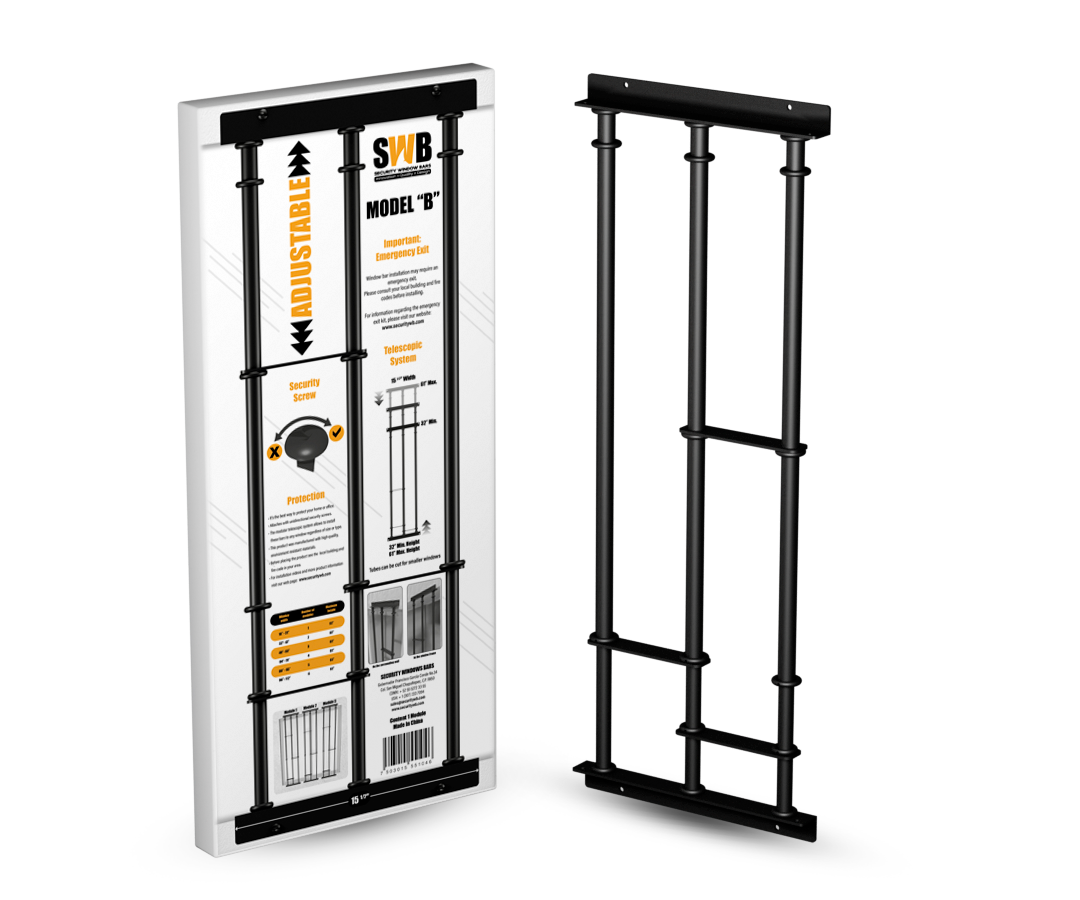
SWB telescopic security bars Adjustable

Telescopic vertical adjustment: the difference between “fits” and “fits right”

Cheap bars often “sort of” fit. Then people improvise:

  • extra spacers
  • odd bracket placement
  • slightly crooked installs
  • gaps that look unprofessional
  • stress points that loosen over time

With Security Window Bars, the telescopic concept is about dial-in accuracy. The bars adjust to match real-world window heights without metal cutting or fabrication. That creates:

  • better alignment
  • better load distribution
  • fewer vibrations and rattles
  • cleaner aesthetics
  • less stress on fasteners

A tight, squared install is not just prettier—it’s stronger. Security begins at the interface between the product and the house.

Modular expansion: wide openings are normal now

Modern homes and renovations love wide openings:

  • sliding windows
  • large living-room windows
  • egress windows
  • basement well openings
  • patio-adjacent glass areas

Security Window Bars treat width as a scalable variable. Instead of “one welded frame per window,” you expand coverage with modules (or adjacent assemblies) so the product fits the architecture, not the other way around.

What “high-engineering” means (without the marketing fluff)

In daily life, high-engineering looks like:

  • repeatability: once you install one, the next window is familiar
  • predictability: components behave consistently, reducing surprises
  • serviceability: adjustments and checks are simple
  • scalability: you can upgrade a full home or rental portfolio efficiently

This is why Security Window Bars are not “just bars.” They’re a modern platform for physical security.

3. Layered Security in 2026: Where Security Window Bars Fit (Detection → Deterrence → Delay → Response)

The strongest homes don’t rely on one gadget. They use layers. Think in four parts:

Detection (know something is wrong)

Cameras, motion lights, sensors, and smart notifications matter—because they move “surprise” back to the perimeter. But detection alone does not stop entry.

Deterrence (make the target look expensive)

This is where Security Window Bars shine. Physical barriers are visible. They change the intruder’s math.

A “soft target” says:

  • quick entry
  • low risk
  • low noise

A hardened target says:

  • time
  • noise
  • risk

Delay (force time + noise)

Most intruders do not want to fight steel. They want fast access. Security Window Bars create delay, and delay is the enemy of burglary.

Response (protect life safety too)

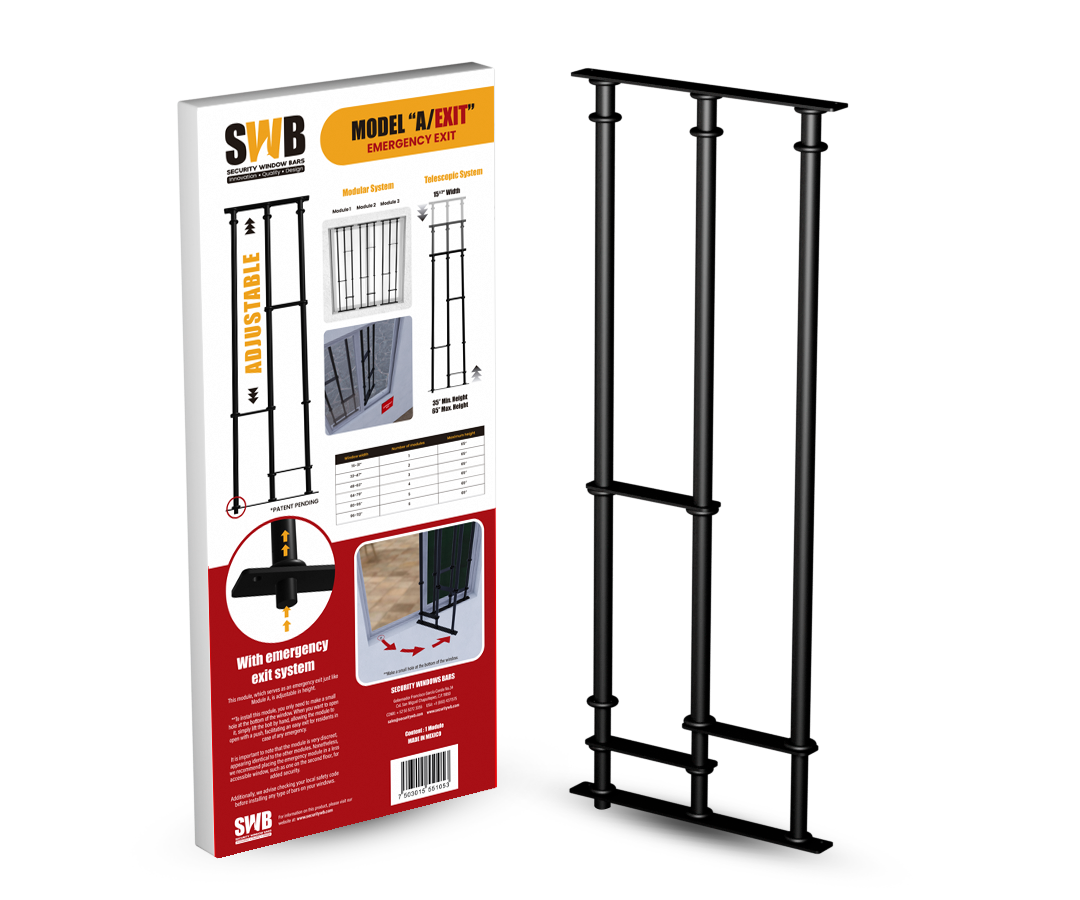
Good security is not allowed to trap the people inside the home. That’s why the “response” layer matters: bedrooms and finished basements often require egress-ready solutions. Security Window Bars address that with an egress-aware option like Model A/EXIT (discussed later).

4. The “15-Minute Promise”: The Real Math Behind Avoiding the Contractor Tax

Home security often fails not because people don’t care—but because labor costs make the project feel impossible.

Cost guides commonly show wide ranges for installing security bars depending on materials, number of windows, and local labor markets. For example, Angi has published pricing guidance that can put installation totals in the hundreds to low thousands depending on scope and complexity. (Angi) HomeAdvisor has also published window-bar cost guidance that discusses per-window and project cost variability. (Home Advisor)

That’s the problem: even if bars are affordable, labor can make the upgrade feel like a luxury.

15-Minute Promise

Why Security Window Bars reduce cost pressure

Security Window Bars were designed as a DIY-first system:

  • simple measurement logic
  • telescopic fit to avoid cutting metal
  • modular width options to avoid fabrication
  • practical mounting choices (frame or wall)
  • included hardware intended for security use

Instead of:

  • quotes, waiting, scheduling, fabrication, contractors

You get:

  • measure, mount, secure, test

The biggest benefit isn’t only money—it’s completion 


Security upgrades don’t help if they stay on the to-do list for six months. Security Window Bars compress the project so homeowners actually finish it.

5. Frame-Mount vs Wall-Mount: Choosing the Correct Installation Method for Security Window Bars

A lot of DIY installs fail because the product assumes a single mounting scenario. Homes don’t.
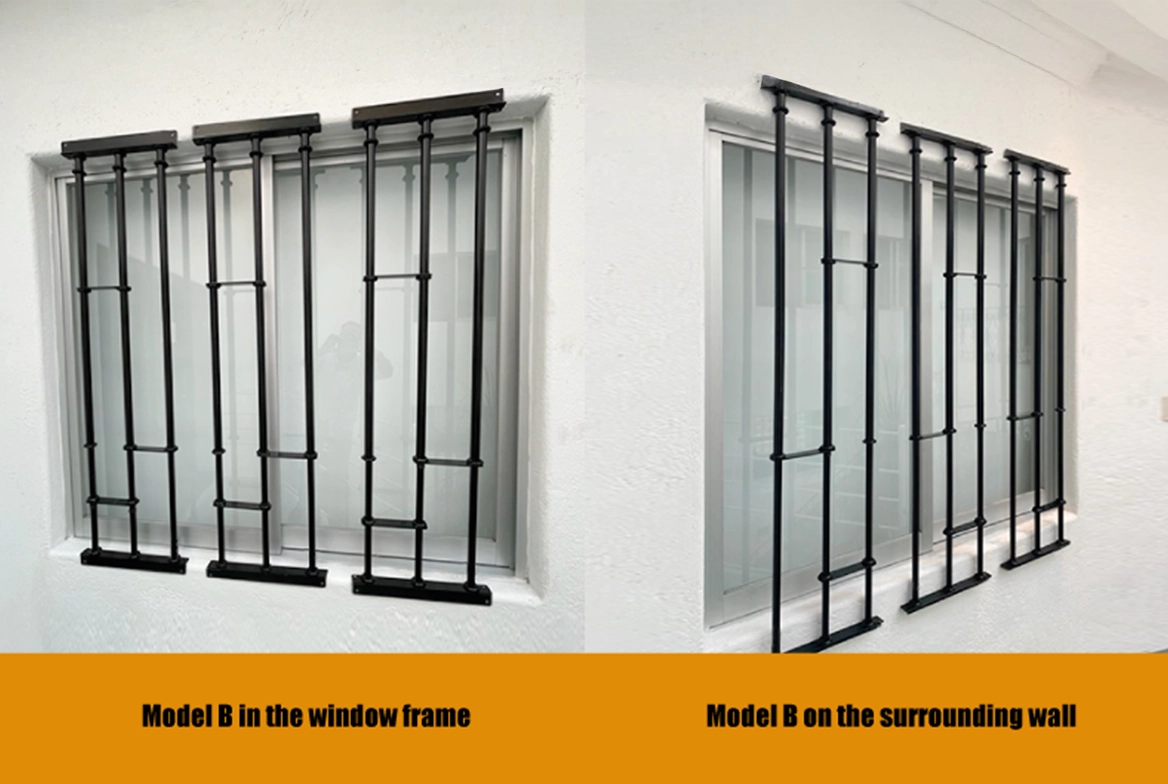
Frame-Mount vs Wall-Mount

Frame-mount: best for square, stable jambs

Choose frame-mount when:

  • the window jambs are solid and square
  • the surface supports secure fastening
  • you want a clean, “built-in” look


Frame-mount often looks the most integrated, especially on standard residential windows.

Wall-mount: best for masonry, brick, stucco, or uneven surfaces

Choose wall-mount when:

  • the wall surface is brick, block, or stucco
  • the frame is not the best fastening plane
  • the opening is not perfectly square
  • you want stronger perimeter anchoring


Wall-mount is especially useful in basements and older buildings where the frame material may not be the ideal anchor.

Fast rule: anchor to the strongest plane, not the easiest plane

The strength of Security Window Bars is not only steel—it’s the attachment strategy. Always treat mounting as an engineering decision.

6. Materials That Matter: Why Galvanized Steel Changes Long-Term Security

A lot of bars are “strong enough” on day one. Then time shows the truth.

Corrosion is not cosmetic—it’s mechanical

Corrosion:

  • reduces cross-section (strength over time)
  • attacks fasteners
  • creates friction at contact points
  • makes moving components stiff
  • increases maintenance requirements
  • eventually produces failure (or forced removal)


In other words, corrosion turns “security” into “false confidence.”

Why galvanized steel is a durability multiplier

Security Window Bars use galvanized steel because zinc protection helps resist rust progression and preserves structural integrity longer—especially in humid regions.

Here’s the homeowner-friendly way to think about it:

  • Carbon steel with paint = protection depends on paint staying perfect
  • Galvanized steel = protection includes a sacrificial layer that helps resist damage progression


That means fewer “rust surprises,” fewer stuck parts, and longer product life.

7. Coastal and Humid Climates: Electrostatic Finish + Corrosion Reality

If you live in Florida, Texas coastal areas, Louisiana, coastal California, or anywhere with persistent humidity, you already know what salt-laden air does to metal.

  • salt traps moisture
  • moisture accelerates oxidation
  • paint blisters and peels
  • rust creeps under coatings

Why finish quality matters

Even with galvanized steel, a high-quality finish helps:

  • resist UV degradation
  • protect aesthetic value
  • reduce surface pitting
  • keep the product looking “new” longer


For homeowners, this isn’t vanity—it’s property value. Security improvements should not reduce curb appeal. Security Window Bars are built to look modern while staying aggressive toward intrusion.

8. Bedrooms and Basements: Security Window Bars and the Egress Factor (Model A/EXIT)

This is the part that separates responsible security from risky security.

If a bedroom or a habitable basement requires an emergency escape opening, adding a fixed barrier can create life-safety issues and code conflicts depending on local enforcement.

The life-safety principle in plain English

If an opening is required for emergency escape, any barrier over it should be operable from the inside quickly—without depending on:

  • keys
  • tools
  • complicated “special knowledge” steps


This is why egress-aware solutions exist.

Why Security Window Bars created Model A/EXIT

Security Window Bars offer an egress-aware option so homeowners can:

  • protect a high-risk window
  • keep the escape path functional
  • avoid the “bedroom cage” problem

The “rehearsal rule” for egress-aware security

If you install an egress-capable solution:

  • teach everyone in the home how it opens
  • practice twice a year like a fire drill
  • test the mechanism periodically


A release mechanism is not a “nice idea.” It’s a life-safety feature. Treat it like one.

9. Child Safety and Fall Prevention: The 4-Inch Rule + Safe Ventilation

Security is not only about intruders. It’s also about preventing accidents inside the home.

Window falls are common enough to be a national safety topic

The National Safety Council has referenced window falls as a serious hidden hazard, citing data (via Safe Kids) that thousands of young children are injured each year. (nsc.org)

The Consumer Product Safety Commission (CPSC) prevention guidance

The CPSC has published practical, parent-friendly steps like:

  • use window guards or window stops
  • prevent windows from opening more than 4 inches
  • don’t rely on insect screens
  • keep furniture away from windows
  • open windows from the top when possible
  • look for guards with bars no more than 4 inches apart (U.S. Consumer Product Safety Commission)

Why Security Window Bars matter for child safety

When installed with safe spacing and proper mounting, Security Window Bars can help:

  • reduce fall-through risk
  • prevent toddlers from pushing through openings
  • discourage climbing by reducing easy access
  • provide a strong barrier that plastic guards often can’t match


Important: child safety is always a system, not one product. Pair physical barriers with furniture placement and supervision.

10. Buying Smart: Security Window Bars vs Big-Box Bars (What People Discover Too Late)

Many homeowners start with big-box options because they’re visible, cheap, and fast to buy. The problem is what happens after purchase:

  • the size doesn’t match the opening
  • the design requires awkward mounting
  • the finish degrades faster than expected
  • the product doesn’t scale across mixed windows
  • the “bedroom legality” question shows up late

Quick comparison (homeowner logic)

Big-box fixed bars (typical):

  • low purchase cost
  • limited size flexibility
  • basic coatings
  • variable hardware quality
  • often not egress-aware
  • may require improvisation to fit

Security Window Bars (SWB):

  • modular system design
  • telescopic fit for height
  • modular expansion for width
  • galvanized steel durability strategy
  • optional egress-aware Model A/EXIT
  • designed to be installed by homeowners, repeatably


If your home has more than one window type (and it does), buying a system matters.

11. Sizing for a Perfect Fit: What to Measure (and What People Measure Wrong)

Security Window Bars are only as accurate as your measurements. The most common mistake is measuring the wrong reference points.

Measure the clear opening, not the “outside frame guess”

What you want:

  • clear opening width: inside edge to inside edge of the area you’re securing
  • clear opening height: usable height of that same area

Then decide:

  • frame-mount vs wall-mount
  • telescopic height range
  • number of modules needed for width

Common measuring errors

  • measuring the exterior trim instead of the interior opening
  • ignoring window stops or hardware that reduces usable area
  • forgetting uneven surfaces (stucco, brick variation)
  • assuming a “standard” size based on memory


Use the Module Calculator Tool

When you measure correctly, selecting the right configuration becomes simple. Use the SWB Module Calculator Tool at:
https://securitywb.com/module-calculator/

12. DIY Install Walkthrough: Security Window Bars Step-by-Step (Homeowner-Simple)

This section is written so a homeowner can understand the workflow even if they’ve never installed a security product before.

Tools you typically need

  • measuring tape
  • drill/driver
  • appropriate drill bits for your surface
  • level (recommended)
  • pencil/marker
  • safety glasses

Step 1: Identify the purpose of the window

Ask:

  • Is this window mainly for security only?
  • Is it in a bedroom or habitable basement where egress matters?
  • Is child safety a major concern in this room?

This determines whether you should consider an egress-aware option (Model A/EXIT) and how you plan safe spacing.

Step 2: Measure the clear opening

Measure twice. Write it down. Don’t guess.

  • width
  • height
  • surface type (frame vs masonry)

Step 3: Choose frame-mount or wall-mount

  • frame-mount for square, strong jambs
  • wall-mount for masonry, brick, stucco, uneven surfaces

Step 4: Dry-fit and align

Before drilling everything tight, confirm:

  • the system sits square
  • there’s no twist or bow
  • the alignment looks clean
  • moving parts (if any) operate smoothly

Step 5: Secure hardware with intention

Security is as much about fasteners as steel.

  • use the correct fasteners for the surface
  • avoid “soft anchors” in questionable material
  • ensure strong engagement, not shallow bite

Step 6: Test and document

After install:

  • push-test for stability
  • confirm no rattle or wobble
  • for egress-aware installs, test the release from inside
  • take photos for your records (especially rentals)

13. Maintenance That Stays Easy (So Security Stays Real)

The best security product is the one that stays functional without demanding constant attention.

Quarterly 5-minute routine

  • quick visual scan (chips, scratches)
  • check fasteners (snug, stable)
  • confirm alignment (no shifting)
  • for egress-aware models, test operation from inside

Why this matters

A barrier that becomes loose, stiff, or neglected becomes less secure and less safe. The maintenance goal for Security Window Bars is to stay simple enough that homeowners actually do it.

14. Landlords and Property Managers: Scaling Security Window Bars Across a Portfolio

Portfolio security is about standardization. Random bar styles across units create:

  • inconsistent maintenance
  • tenant confusion
  • unpredictable inspection outcomes
  • ugly curb appeal variation
  • future repair headaches

Why modular systems are portfolio-friendly

Security Window Bars work well for property managers because:

  • installs are repeatable
  • sizing logic is consistent
  • documentation is straightforward
  • training tenants (for egress-aware units) is simpler
  • future replacements follow the same pattern

Recommended documentation pack per unit

  • photos of installed bars
  • photos of release mechanism (if egress-aware)
  • record of room use (sleeping room vs storage)
  • maintenance log (quarterly checks)
  • tenant briefing note (for egress function)


This protects residents and reduces liability exposure.

15. FAQs: Security Window Bars

Are Security Window Bars effective against modern intrusions?

Yes. Most intrusions are opportunistic. Research summaries tied to burglar decision-making have shown many offenders look for signs of security and will change targets when risk rises. (ScienceDaily) Security Window Bars increase visible risk and physical delay, both of which reduce the appeal of your home as a target.

Can I install Security Window Bars on sliding windows?

Yes. The modular approach is built for wide openings. For large sliders, you can expand coverage with modules or use adjacent assemblies depending on your configuration.

What measurements do I need for a perfect fit?

Measure your clear opening width and height (not the decorative trim). Then use the SWB Module Calculator Tool to choose the right telescopic range and module layout.

Do Security Window Bars work in humid/coastal areas like Florida or Quintana Roo?

That’s where material strategy matters most. Galvanized steel and strong finishes help resist corrosion in humid and coastal environments. Pair that with simple periodic checks and you dramatically reduce long-term degradation risk.

Are Security Window Bars safe for kids?

They can be, when installed correctly. The CPSC has recommended using guards/stops and the 4-inch rule to reduce window-fall risk, including spacing guidance for bars. (U.S. Consumer Product Safety Commission) Always pair physical barriers with furniture placement and supervision.

Are fixed bars legal on bedroom windows?

Local rules vary, but many jurisdictions require emergency escape openings to remain operable and do not allow barriers that can’t be released from inside. If the room is a bedroom or a habitable basement, consider an egress-aware option like Model A/EXIT and confirm details with your local AHJ (building department/fire marshal).

Can I really install Security Window Bars myself in about 15 minutes?

Many homeowners can, especially on straightforward surfaces. More complex masonry or unusual openings may take longer, but the system is designed to be DIY-first and repeatable, avoiding custom fabrication.

16. Final Checklist + Next Step

Before you buy

  • Identify which windows are highest risk (ground floor, hidden sides, basements).
  • Identify sleeping rooms and any finished basement rooms.
  • Decide if any windows require an egress-aware solution like Model A/EXIT.

Before you install

  • Measure clear opening width + height.
  • Choose frame-mount vs wall-mount based on strongest surface.
  • Plan child safety spacing if kids are in the home.
  • Prepare tools and confirm fastener suitability for the surface.

After you install

  • Confirm stability (no wobble).
  • Confirm alignment (square and clean).
  • Test any egress release from inside (twice).
  • Document with photos for future reference.

Next step: Use the Module Calculator Tool

To find your correct configuration fast, use the SWB Module Calculator Tool:
https://securitywb.com/module-calculator/

Conclusion: Security Window Bars Are the Modern Standard Because They Respect Real Life

A home security upgrade should not require a contractor, a welder, and a month of scheduling. It should be strong, scalable, and realistic. Security Window Bars were built for that reality: telescopic fit for height, modular expansion for width, galvanized durability for the long term, and an egress-aware option for the rooms where safety rules matter most.

If you want your home to feel protected without feeling like a project, Security Window Bars are the engineered path forward—installed fast, designed to last, and built around how people actually live in 2026.

COOKIES POLICY

Security Window Bars LLC ("SWB") uses cookies and similar technologies to improve your browsing experience and enhance the functionality of our website www.securitywb.com (the “Website”). This Cookies Policy explains what cookies are, how we use them, and how you can manage your cookie preferences.

By using our Website, you agree to our use of cookies as described in this policy.

Last Updated: 01/01/25