




BLOG

security window bars
Window security bars, Safe, Code-Compliant Egress for Every Bedroom

Quick-Release Window Bars (2025): Safe, Code-Compliant Egress for Every Bedroom

Looking for window security bars that open from inside so your family can escape fast during an emergency? You’re in the right place. This in-depth guide demystifies quick-release window bars—how they work, where egress rules apply, which mechanisms are truly child-friendly, and how to measure, install, and maintain them. By the end, you’ll know exactly which security window bars deliver reliable protection and safe egress in bedrooms, basements, nurseries, and rentals.

What Are Quick-Release Window Security Bars?

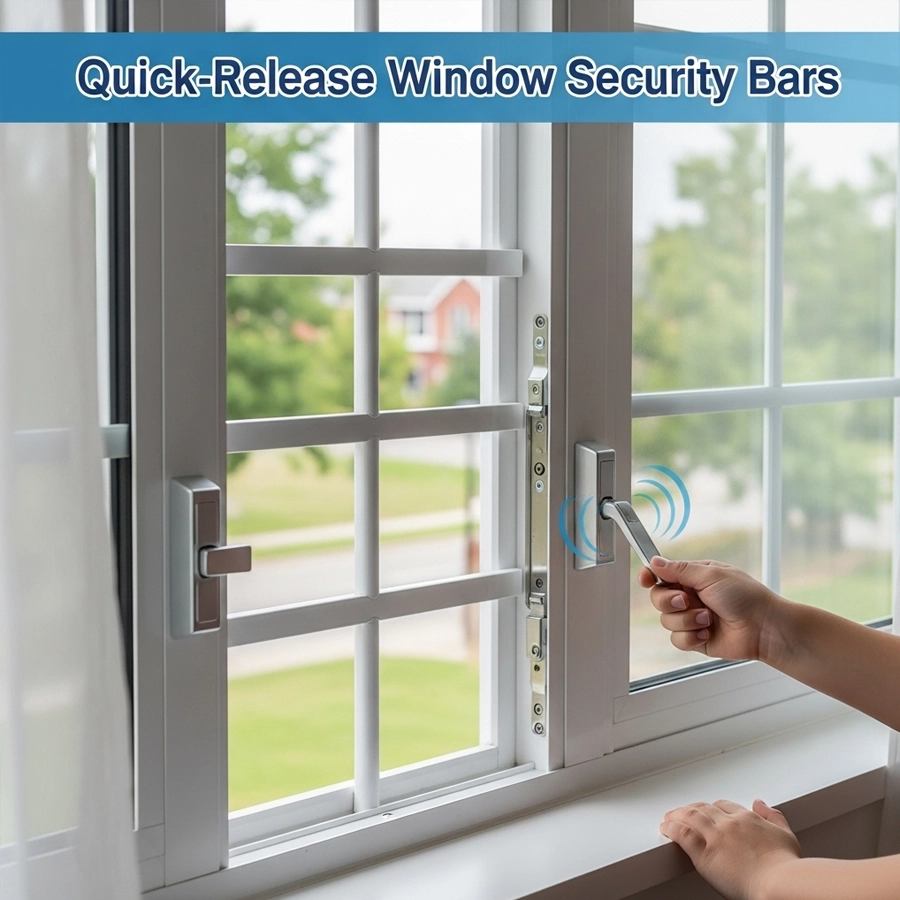
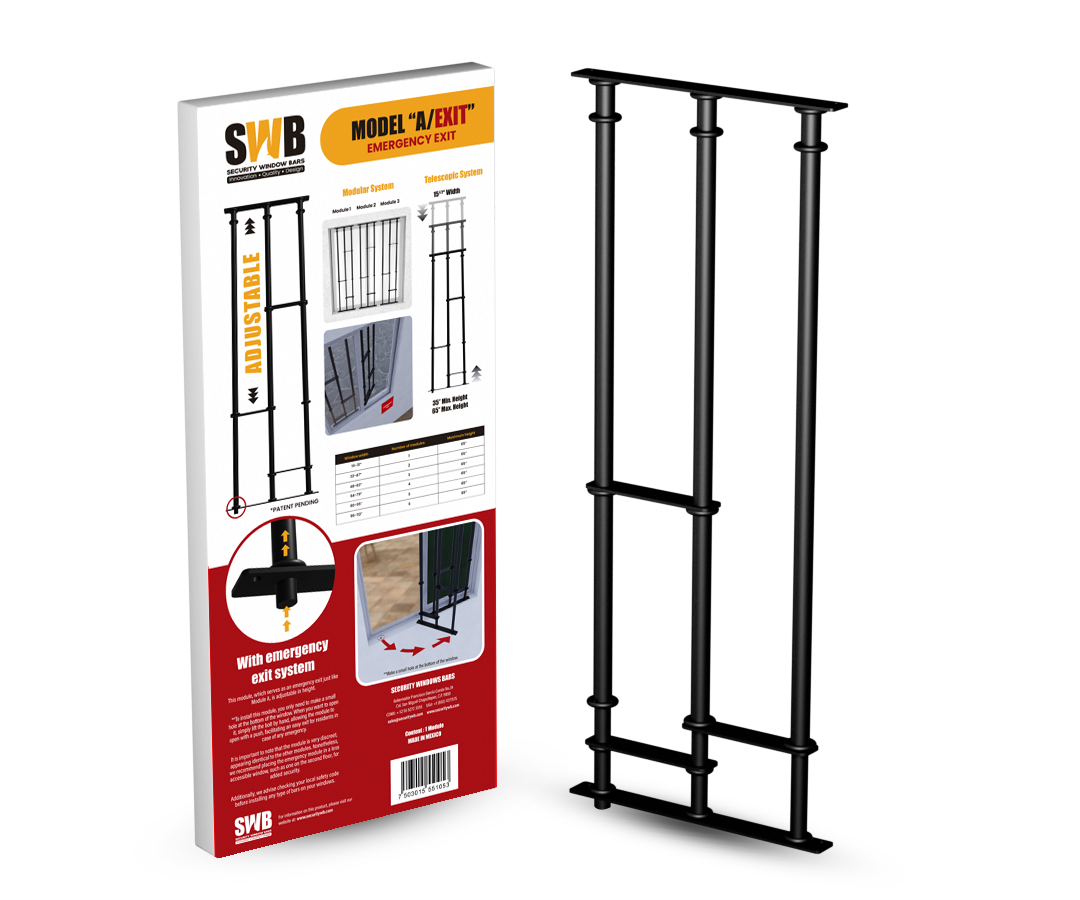
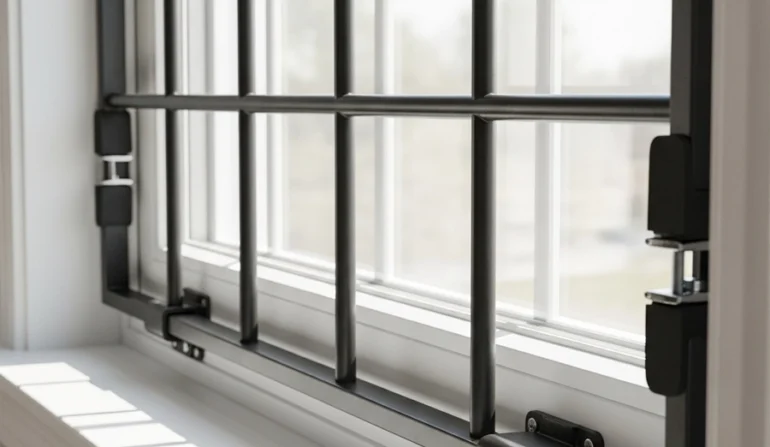
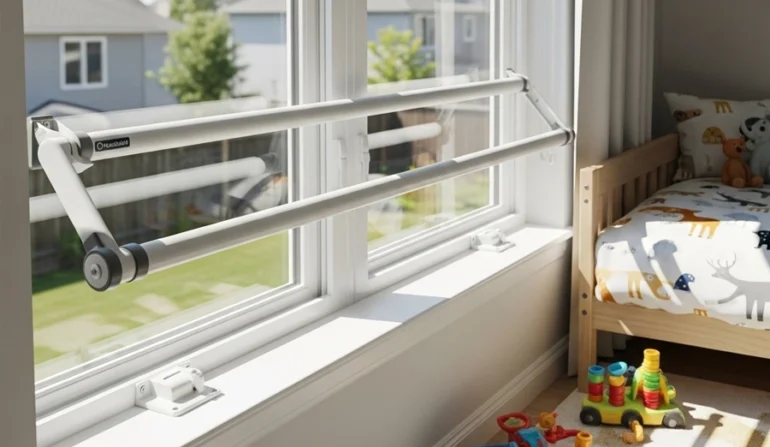
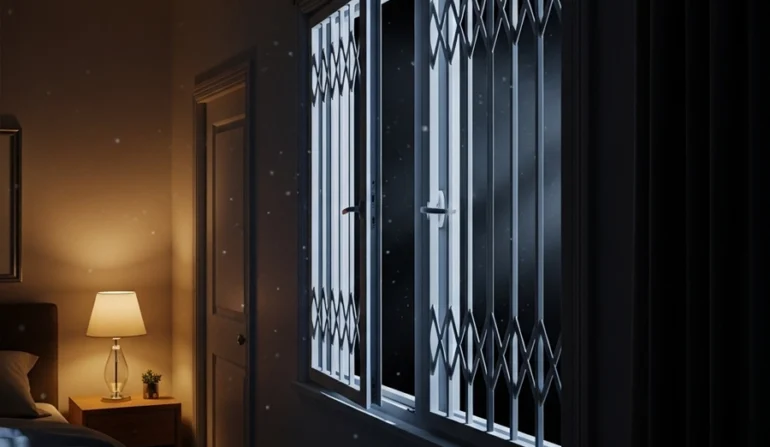
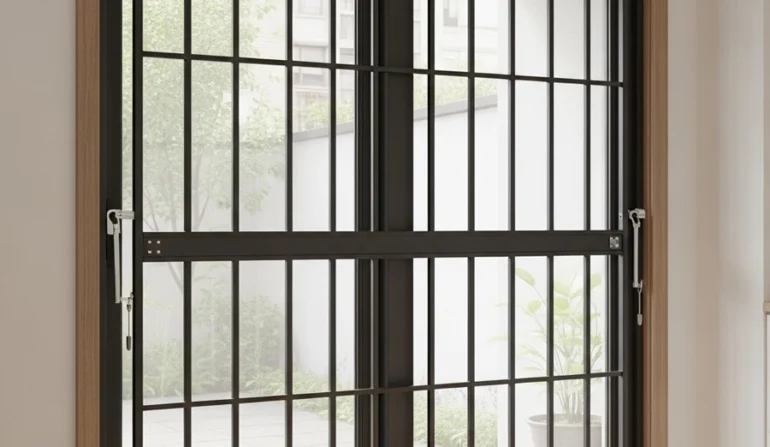
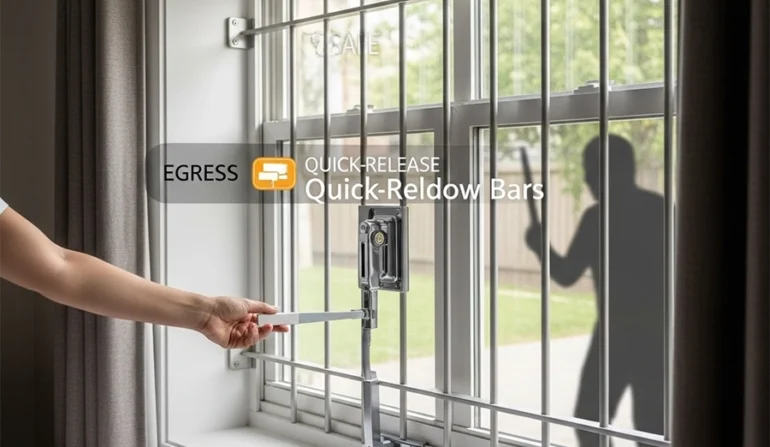
Quick-release window bars are rigid security grilles equipped with an interior-only latch that lets occupants swing the bars open in a single motion. They deter break-ins like traditional window bars, yet they avoid the biggest risk of fixed grilles: trapping people during a fire. Because the release is reachable only from the inside, you keep outside tamper attempts at bay while preserving a clear exit path.

Key advantages at a glance

  • Immediate emergency egress for bedrooms and basements.
  • Strong visual deterrence that stops most opportunistic attempts.
  • Child-manageable operation when configured correctly.
  • Compatibility with interior or exterior mounting, wood or masonry substrates.
  • Modern finishes and decorative patterns that suit your home’s style.

Why Egress Matters (and Where Codes Apply)

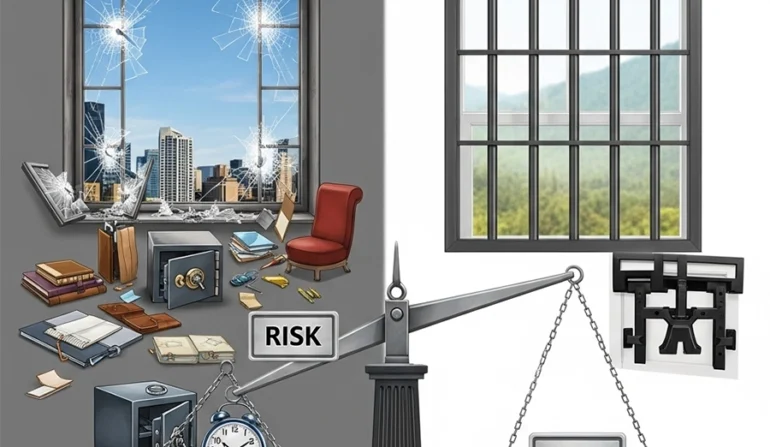
In most US jurisdictions, rooms used for sleeping require at least one egress opening—usually a door or a qualifying window. If you add bars to that window, they must open from the inside without keys, tools, or special knowledge. Although terminology varies, the principle doesn’t: people—especially kids—need to escape quickly when seconds matter.

Practical takeaways

  • Treat every bedroom, nursery, and finished basement as an egress zone.
  • If you’re not sure about local rules, choose quick-release by default; it’s the safe option everywhere.
  • Keep the release unobstructed. Curtains, blinds, and AC units must not block the swing path.

How Quick-Release Mechanisms Work

Not all releases feel the same. Understanding the mechanics helps you pick a model that’s secure yet simple to use under stress.

1) Lever-Latch Systems

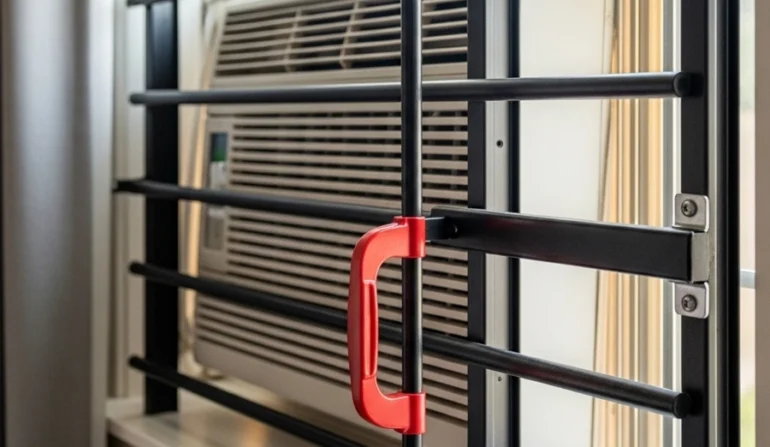
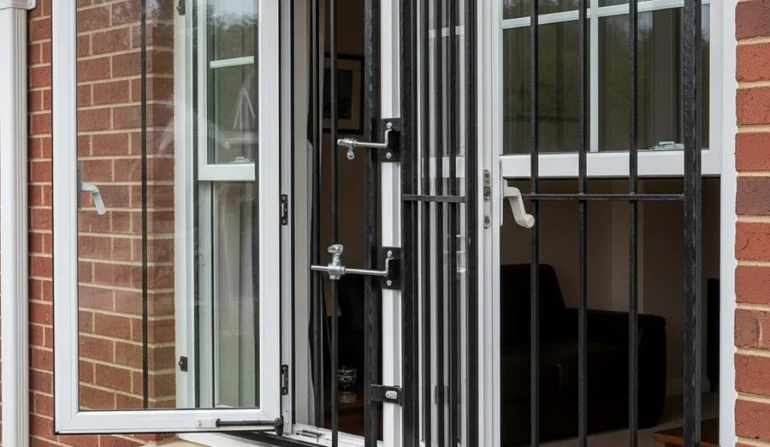
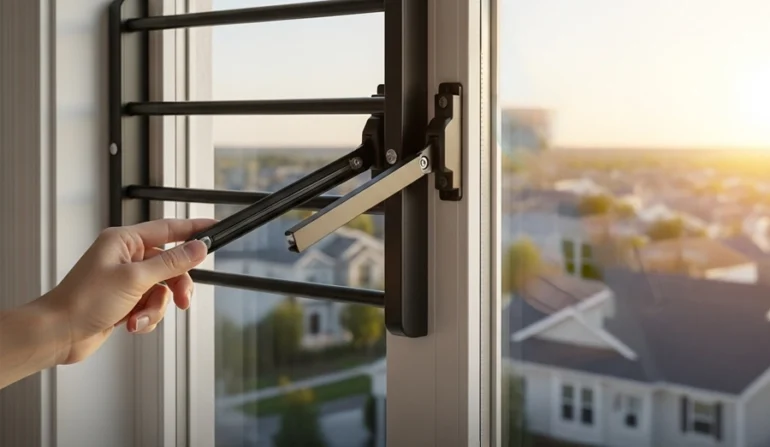
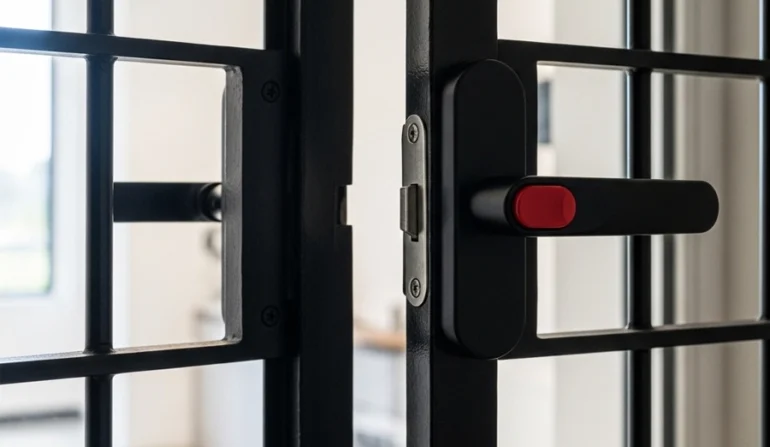
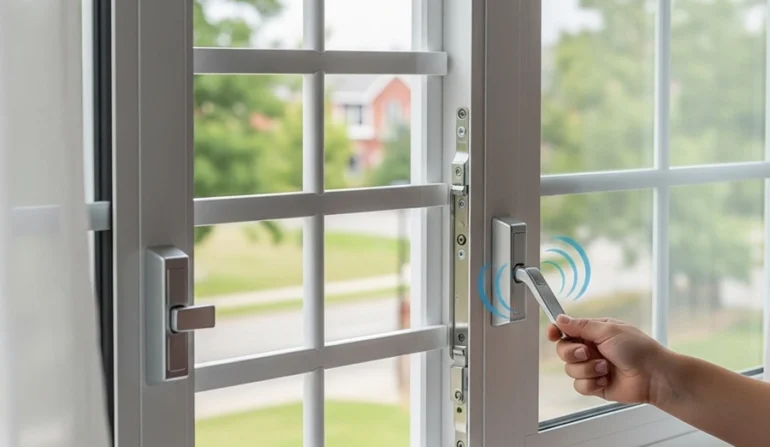
An interior lever disengages one or more spring-loaded pins. The frame then swings open on side hinges. Because the motion is intuitive, lever systems are popular for children’s rooms and senior living.

2) Pull-Pin Systems

A recessed handle controls a hidden pin that drops out of a keeper. Once released, the bar swings freely. These are compact and sleek; however, the pull force must remain low for smaller hands.

3) Lift-to-Release Systems

You lift a protected handle to clear a lock tab. The motion is upward and natural, which makes it easy to memorize. Many homeowners like this type for basements with narrow clearances.

What to insist on, regardless of type

  • One-hand, one-motion operation from the inside only.
  • Low force to accommodate kids and older adults.
  • No keys, no combination dials, no hidden fasteners.
  • Smooth swing with no binding—test it monthly.

Interior vs. Exterior Mounts for Quick-Release Bars

Quick-release grilles can mount inside or outside the window opening.

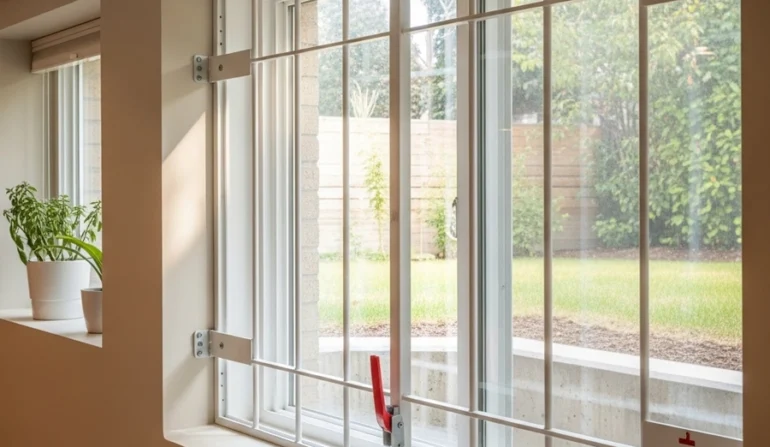
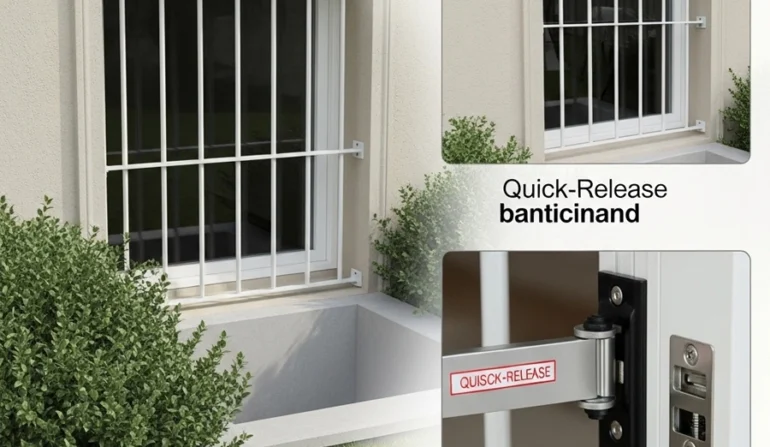
  • Interior window bars: protected from weather, easier to release, and typically simpler to keep aligned with blinds and shades. They minimize visual impact on façades.
  • Exterior window bars: great for masonry strength and façade uniformity; just ensure the release linkage is strictly interior. For bedrooms on ground floors, verify the swing arc won’t hit landscaping or well lids.

Because egress speed is critical, interior mounting is common for sleeping areas. Nevertheless, exterior mounting can work well on solid masonry when the release cable or lever remains fully inaccessible from outside.

Where Quick-Release Bars Make the Biggest Difference

Bedrooms and Nurseries

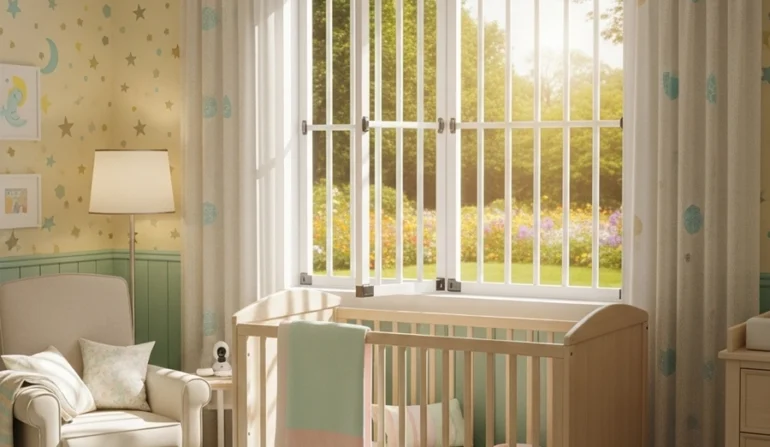
These rooms demand fast exit. Select a hinged frame with a lever-style release, mount it inside for easy reach, and keep a clutter-free “egress zone” around the window. Practice opening it with kids twice a year—before summer and winter.

Finished Basements

Basements are frequent entry points and also common sleeping spaces. Use quick-release basement window bars with hinges positioned to clear nearby walls and well openings. In deeper window wells, verify that ladders or steps line up with the swung-open frame.

Rentals and Apartments

Landlords can improve security without risking liability by choosing removable or interior quick-release bars. Renters appreciate bars that move with them and a release that’s simple to demonstrate on move-in.

Windows with AC Units

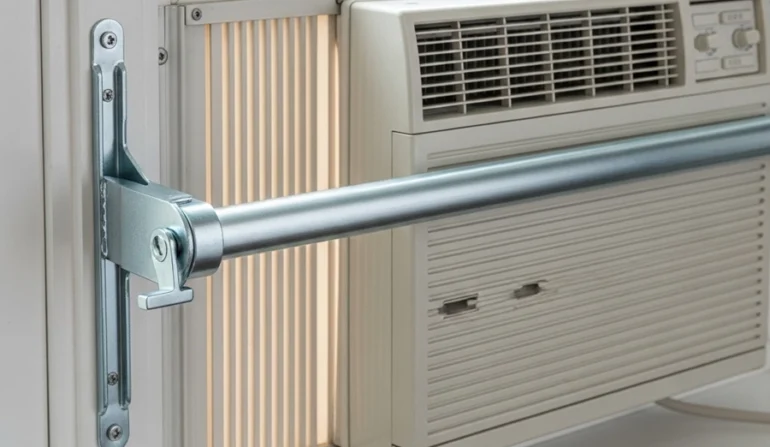
AC units reduce clearances and offer leverage to intruders. Pair an AC security bar with a hinged quick-release grille that still opens fully. Set the swing away from the unit and keep cords and hoses clear.

Choosing the Right Quick-Release Window Security Bars

Start With Safety

Make egress your non-negotiable. Look for a release reachable by anyone—from a child to a guest. If family members have limited mobility, position the handle lower on the jamb and ensure the swing arc is effortless.

Pick the Material and Finish

  • Steel offers the highest resistance for weight and cost. Choose a powder-coated finish; in coastal climates, galvanization plus topcoat extends life.
  • Aluminum is lighter and corrosion-resistant but needs thicker profiles for equivalent strength.
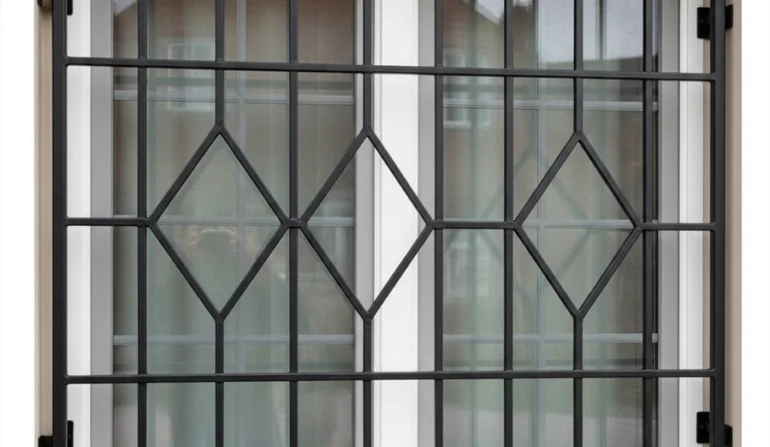
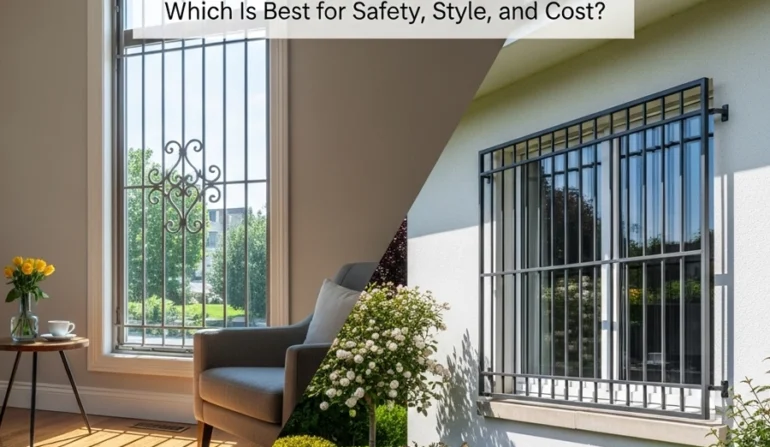
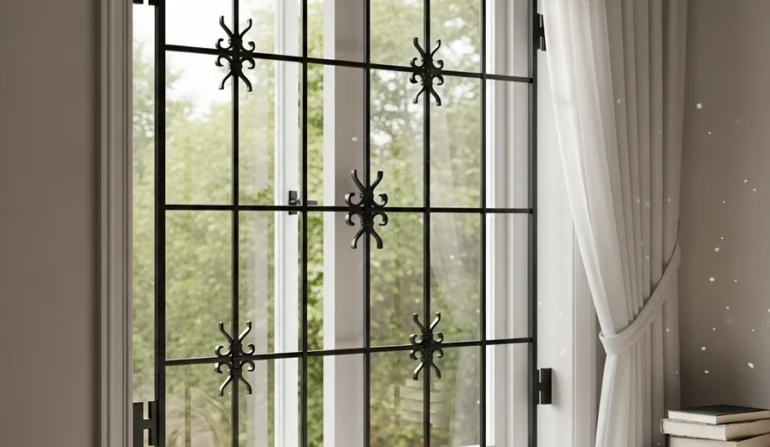
  • Decorative elements—scrolls or geometric patterns—can elevate curb appeal without compromising safety. Keep picket spacing tight enough to resist climbing.

Select the Mount and Hardware

  • Hinges: full-length piano hinges distribute loads evenly and maintain alignment; heavy duty butt hinges are also common.
  • Fasteners: lag screws for wood framing; sleeve or wedge anchors for concrete; masonry screws or shields for brick/block.
  • Tamper resistance: use security heads or capped fasteners where reachable from outside.

Ensure Child-Friendly Operation

Children panic less with muscle memory. Choose a mechanism that a ten-year-old can operate after a quick demo and label the handle discreetly (“Lift to Open”). Avoid small, hard-to-grip knobs.

Measuring and Sizing (Accuracy = Safety + Speed)

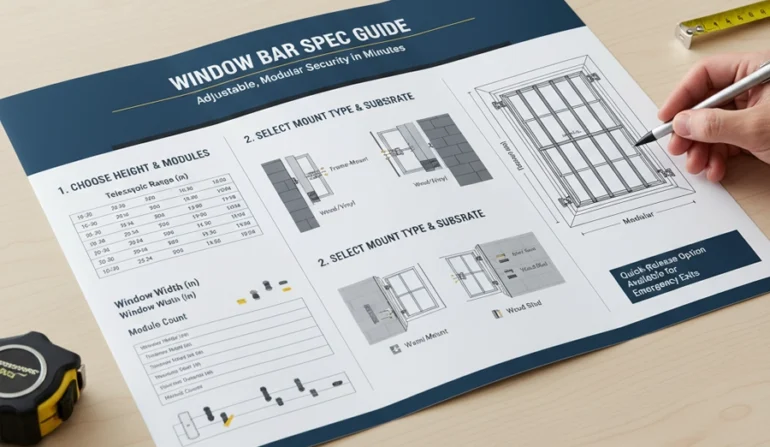
  1. Choose the mount: interior vs exterior; surface vs recess.
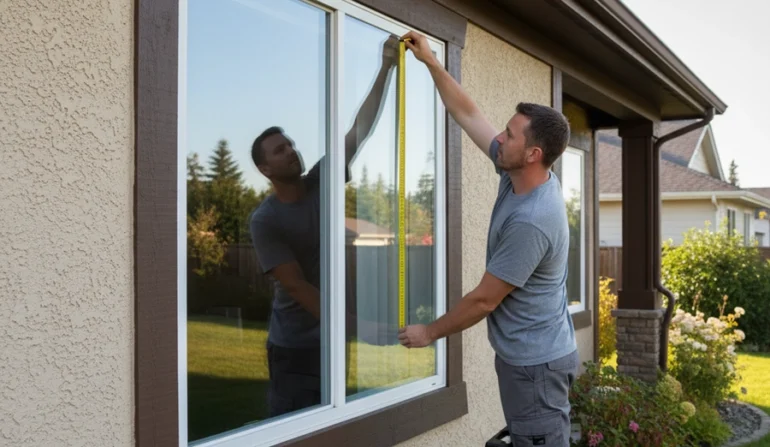
  2. Measure width—top, center, bottom—using inside edges. Record the smallest number.
  3. Measure height—left, center, right—again recording the smallest.
  4. Check diagonals to detect out-of-square frames.
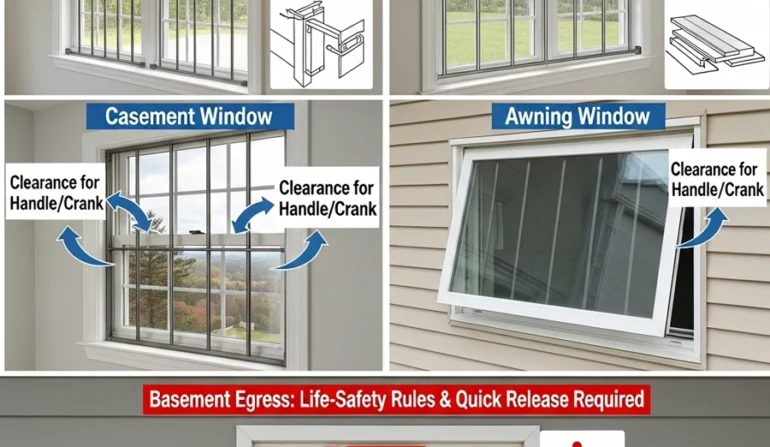
  5. Note obstructions: locks, cranks, blinds, screens, AC brackets, or outlet covers.
  6. Confirm hinge side and swing path: will the release be easier on the left or right?
  7. Allow installation clearance per manufacturer guidance so the frame doesn’t bind.
  8. Verify reach: stand where a child would stand; can they pull the release naturally?

A good fit makes the release smoother, which shortens escape time and reduces the chance of panic.

Installation: DIY vs. Professional

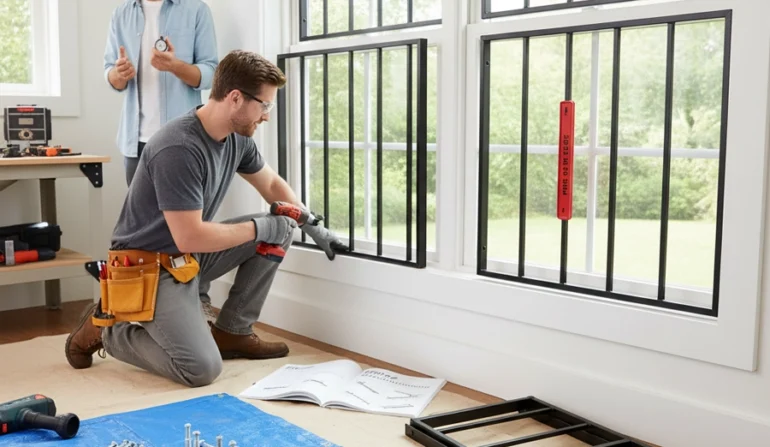
If you’re comfortable drilling and leveling—and you have a helper—DIY installation is achievable. For uneven masonry, tall ladders, or large custom assemblies, hire a pro. Either way, follow a methodical order.

Tools & Materials

Tape measure, level, drill/driver (hammer drill for masonry), wood or masonry bits, vacuum, appropriate anchors/lags, sockets, pencil, safety glasses, shims, touch-up paint, and weather-rated sealant.

Step-by-Step

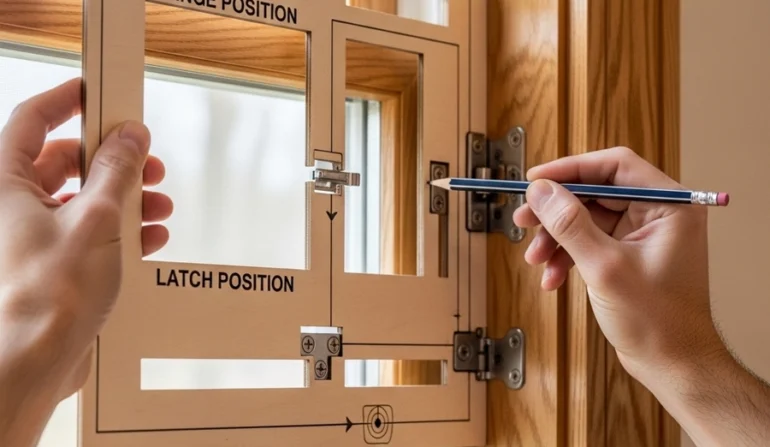
Step 1: Dry-Fit and Mark
Hold the frame, check the swing, and mark pilot holes through mounting tabs. Confirm the release is reachable and obvious.

Step 2: Pre-Drill the Substrate

  • Wood framing: pre-drill undersized for lags to maximize bite.
  • Concrete or block: use a hammer drill; clear dust from holes for anchor grip.
  • Brick: avoid mortar joints for primary anchors when possible; brick itself holds better.

Step 3: Mount the Frame
Set two opposite corners, then level and plumb before securing all points. Do not overtighten—warping can make the release stick.

Step 4: Install and Adjust the Quick-Release
Follow the template to position the lever, pull, or lift handle. Test repeatedly. The motion should be obvious even in the dark.

Step 5: Seal and Finish
Seal exterior penetrations. Inside, caulk gaps and touch up paint so the result looks intentional.

Step 6: Train and Test
Show every occupant how the release works. Run a timed practice once a month and after any furniture changes.

Testing and Maintenance (Set It and Keep It Safe)

  • Monthly drill: open the bars and exit the room; correct anything that slows you down.
  • Hardware check: verify hinge pins, springs, and latch pins are tight and corrosion-free.
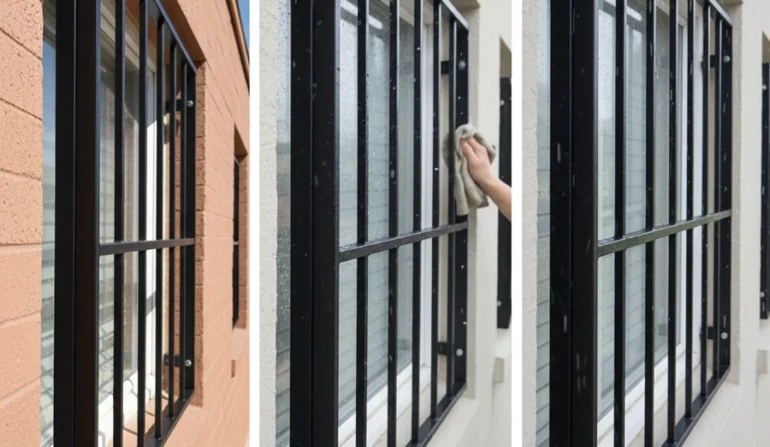
  • Lubrication: apply a dry PTFE spray to moving parts; avoid heavy oils that collect dust.
  • Clearance: make sure blinds, shades, and plants don’t re-encroach on the swing arc.
  • Post-storm inspection: check for impact damage and touch up chips before rust forms.

Design Without Compromise: Decorative Quick-Release Bars

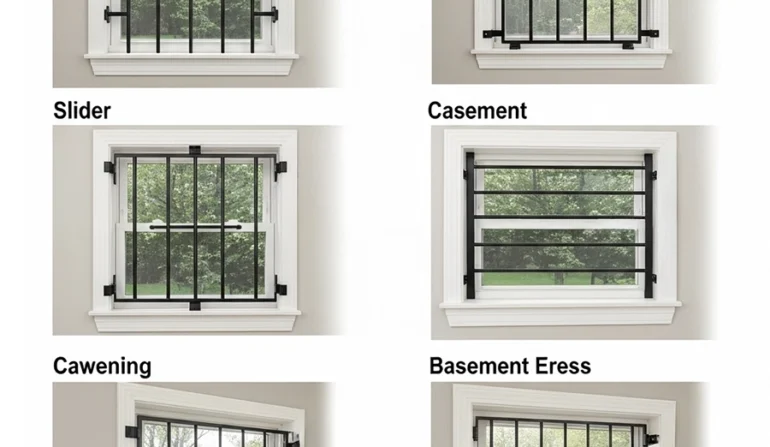
Security shouldn’t look like a prison. Modern decorative security window bars combine proportioned picket spacing, symmetrical patterns, and slim profiles with quick-release functionality. To keep curb appeal high:

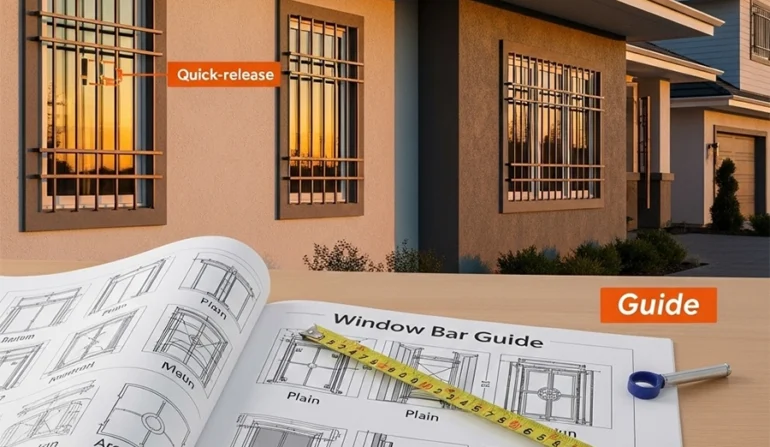
  • Match the grille pattern to your home’s architecture—craftsman grids, simple modern lines, or Spanish motifs.
  • Choose finishes that echo window frames or door hardware (black for contrast; white for quiet minimalism).
  • Align rails and pickets across side-by-side windows so the façade feels cohesive.
  • Keep projection depth uniform on multi-window walls.

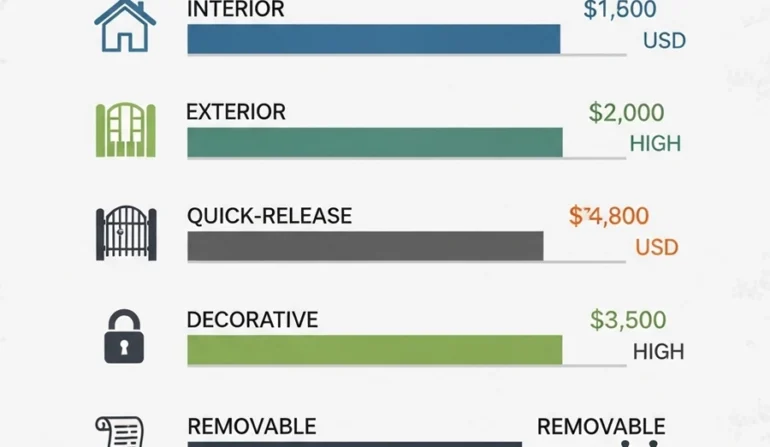
Costs: What to Budget in 2025

While exact numbers depend on size, finish, hardware, and substrate, here’s how pricing usually breaks down:

  • Bars and frame: quick-release models cost more than fixed bars due to hinges and latch hardware; decorative upgrades add time and materials.
  • Anchors and fasteners: minimal cost but crucial for performance—don’t skimp here.
  • Labor: varies by opening type; masonry takes longer than wood framing.
  • Optional services: removal and disposal of old grilles, patch/paint, and after-hours scheduling.

Because quality security window bars last for years and visibly deter attempts, they often pay for themselves by preventing a single incident or deductible.

Common Mistakes to Avoid

  • Installing fixed bars in egress rooms: this is the one error you cannot make.
  • Blocking the release with blinds or furniture: test after decorating.
  • Under-anchoring into weak substrates: use the right hardware for wood, brick, or concrete.
  • Ignoring child ergonomics: place the handle where kids can reach and operate it easily.
  • Skipping maintenance: a sticky release wastes precious seconds.

Quick-Release Bars vs. Other Solutions

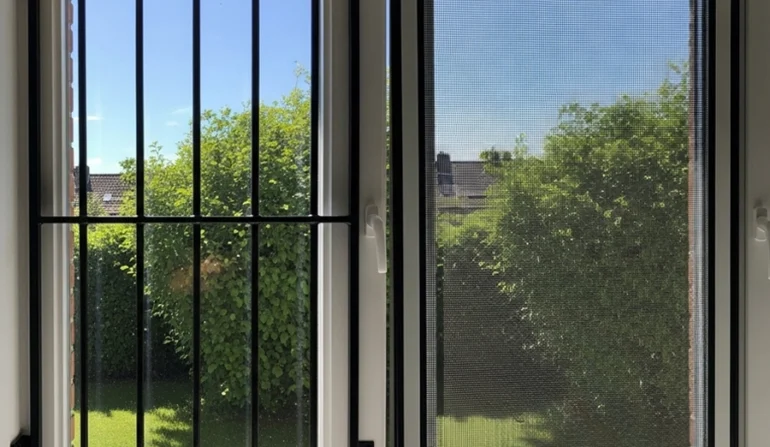
  • Security screens/mesh: discreet and breathable; however, repairs can be costly and cutting resistance varies.
  • Window sensors and cameras: great for alerts and evidence; they don’t physically stop an intruder or work during power outages without backups.
  • Fixed bars: strong, simple, and affordable, yet unsafe in sleeping areas.
  • Quick-release window bars: deliver deterrence and code-friendly egress, making them the right call for most bedrooms and basements.

Buying Checklist

  1. Room type: bedroom, nursery, or basement (egress required).
  2. Mount: interior vs exterior; recess vs surface; hinge side and swing direction.
  3. Mechanism: lever, pull-pin, or lift-release (must be one-hand and tool-free).
  4. Child-friendly height and force.
  5. Measurements: smallest width/height; diagonal check; note obstructions.
  6. Material/finish: powder-coated steel or aluminum; black/white/custom color.
  7. Hardware: tamper-resistant fasteners, full-length hinge or heavy-duty pins.
  8. Substrate: wood, brick, block, or concrete—choose anchors accordingly.
  9. Aesthetics: pattern alignment across multiple windows.
  10. Maintenance plan: monthly drill, seasonal inspection, and touch-ups.

FAQs

Do quick-release window bars meet egress requirements?


They’re designed to. The release must open from the inside without keys, tools, or special knowledge. Always verify local rules, but choosing quick-release is the safest approach for bedrooms.

Can children operate the release?


Yes—if you select a low-force lever or lift mechanism and mount it at a reachable height. Practice with kids until the motion is automatic.

Are interior quick-release bars safer than exterior ones?


Both can be safe when properly installed; however, interior mounts make the release easier to access and protect hardware from weather.

Will a quick-release system weaken security?


No. From outside, the latch remains concealed. When the window is shut and locked, an intruder cannot reach the release.

How often should I test the release?


Monthly. Also test after you rearrange furniture or install new blinds to ensure nothing blocks the swing.

What about basements with window wells?


Use a hinged quick-release bar with enough clearance to swing fully. Confirm the well has a ladder or steps that line up with the opening.

Do I need professional installation?


Not necessarily. Many homeowners install bars successfully with basic tools. For uneven masonry, tall ladders, or complex openings, hiring a pro saves time and ensures alignment.

Ready to Make Your Home Safer?

If a room is used for sleeping, quick-release window bars are the right solution. They deter forced entry and still give your family a fast, tool-free exit. Choose a child-friendly mechanism, size carefully, and test monthly. Need help selecting hardware or planning an install? Our specialists are happy to walk you through options for your exact windows.

EMAIL ADDRESS: sales@securitywb.com
SITE: www.securitywb.com
PHONE:
CDMX: +52 (55) 5272 3355  USA: +1 (650) 4371 575

Recent Post

COOKIES POLICY

Security Window Bars LLC ("SWB") uses cookies and similar technologies to improve your browsing experience and enhance the functionality of our website www.securitywb.com (the “Website”). This Cookies Policy explains what cookies are, how we use them, and how you can manage your cookie preferences.

By using our Website, you agree to our use of cookies as described in this policy.

Last Updated: 01/01/25